
Kitchen Project #206: Alessandro Giannatempo's Baked Italia
with Cherry and Barley! 🇮🇹🍒 A New Edition of My Dream Birthday Cake

Welcome back to My Dream Birthday Cake, a rotating guest series here on Kitchen Projects
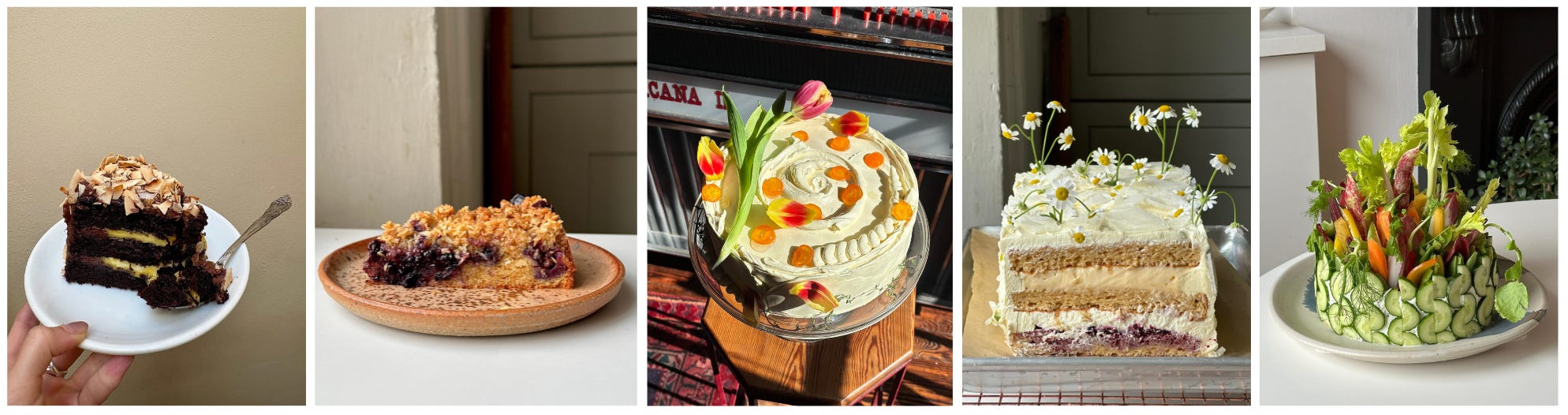
Here, we’ll invite a guest author to tell us all about their dream birthday cake. Whether that’s a simple single-layer cake, a litter of kittens made out of chocolate mini rolls, or a lasagne, this column will explore and honour the role that cakes, or conceptual cakes, play in our lives. You can read the previous editions of this newsletter here:
Today’s Edition
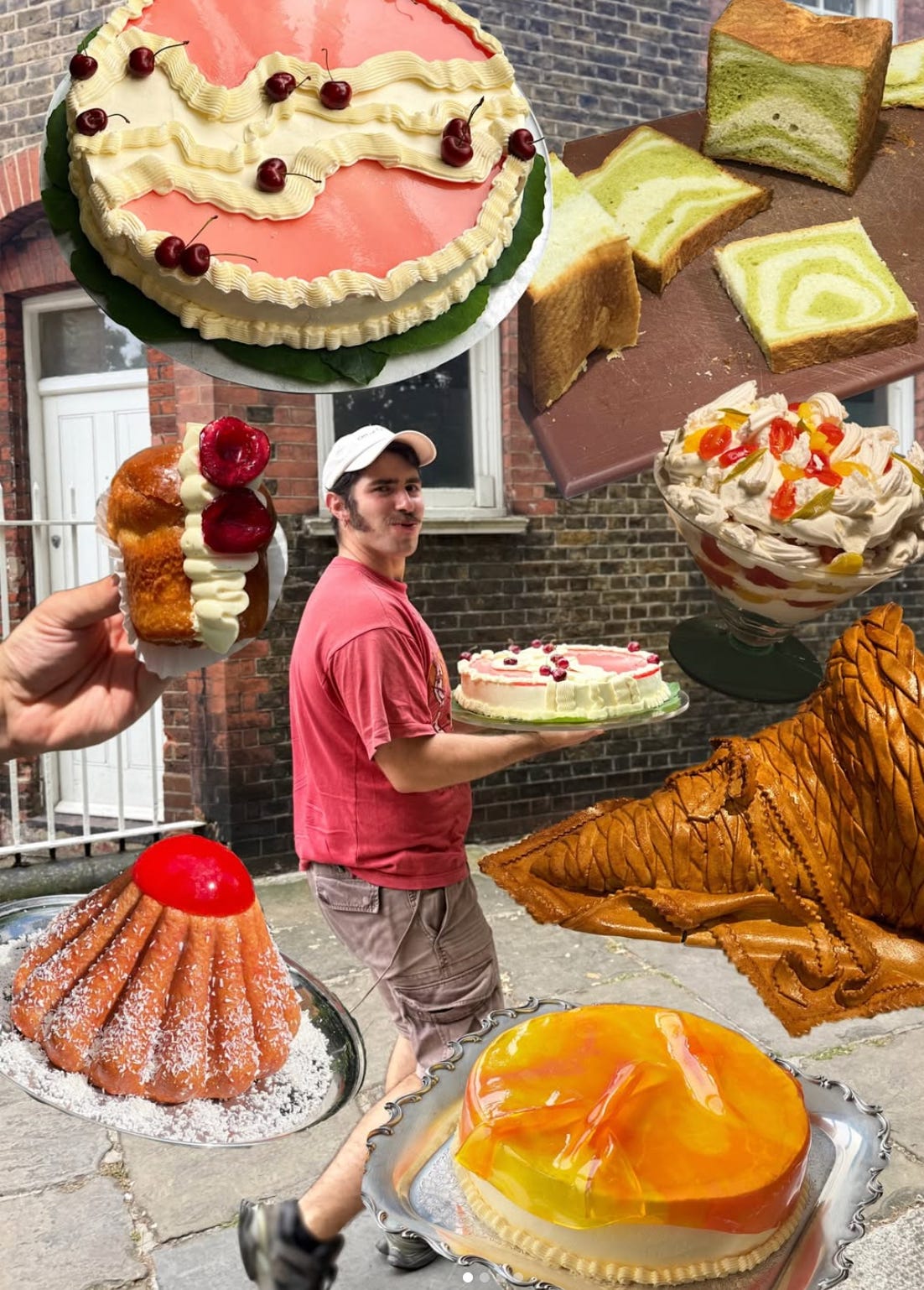
Joining us today is London-based pastry chef, recipe developer, food stylist and artist Alessandro Giannatempo; From his joyful mega-sized pastry installations, edible cornucopias and divine cake constructions, I knew we’d all be in for a treat to hear about what his dream birthday cake would be. As well as recipe development and private commissions, Alessandro often runs workshops, supper clubs and pop-ups (in London, Madrid and Sicily, no less!) which you can find out about via his Instagram. He has also written for this newsletter before - check out his excellent piece about Baumkuchen here.
So what’s the cake today? In true Alessandro fashion, it is a complete joy: Baked Italia, aka a Cherry & Barley Ice Cream Cake of Dreams!
Over on KP+, Alessandro has developed another gorgeous frozen treat: Basil & Sour Cream Ice Cream sandwiches with a Barley Cookie. How stunning!!! Click here for the recipe.
What’s KP+? Well, it’s the level-up version of this newsletter. By joining KP+, you will support the writing and research that goes into the newsletter (including the commissioning - and fair payment - of all the writers), join a growing community, access extra content (inc. the entire archive) and more. Subscribing is easy and costs only £6 per month or £50 per year. Why not give it a go? Come and join the gang!
I was born at the end of June in the northern region of Emilia Romagna, Italy. This meant a lot of ice cream cake for birthdays growing up, which always made so much sense. Summer in the Po Valley is characterised by sunny, very humid and hot days. My mum would drive to the gelateria and pick up a torta gelato and then she would keep it in the freezer ready to go. How brilliant and convenient is that?
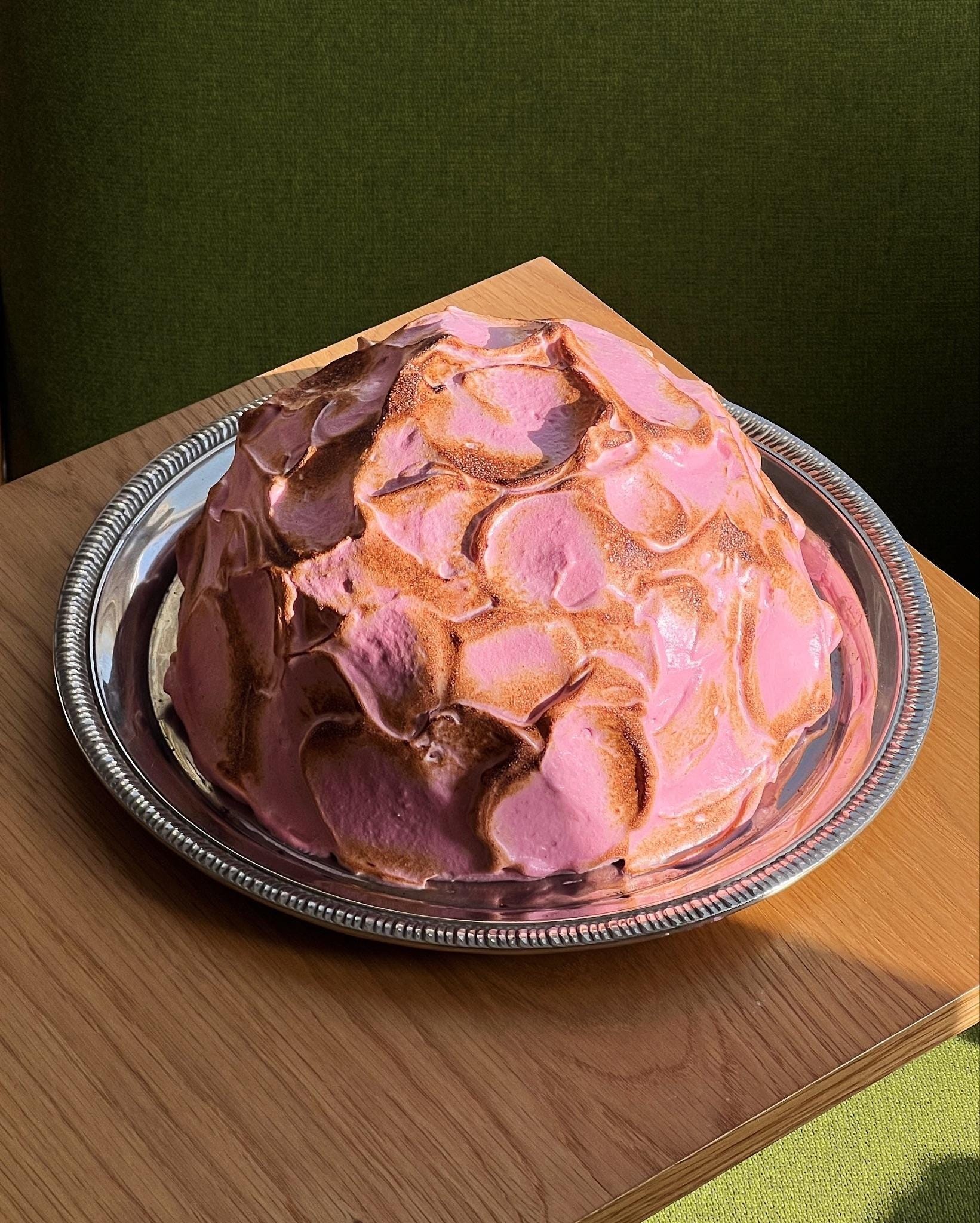
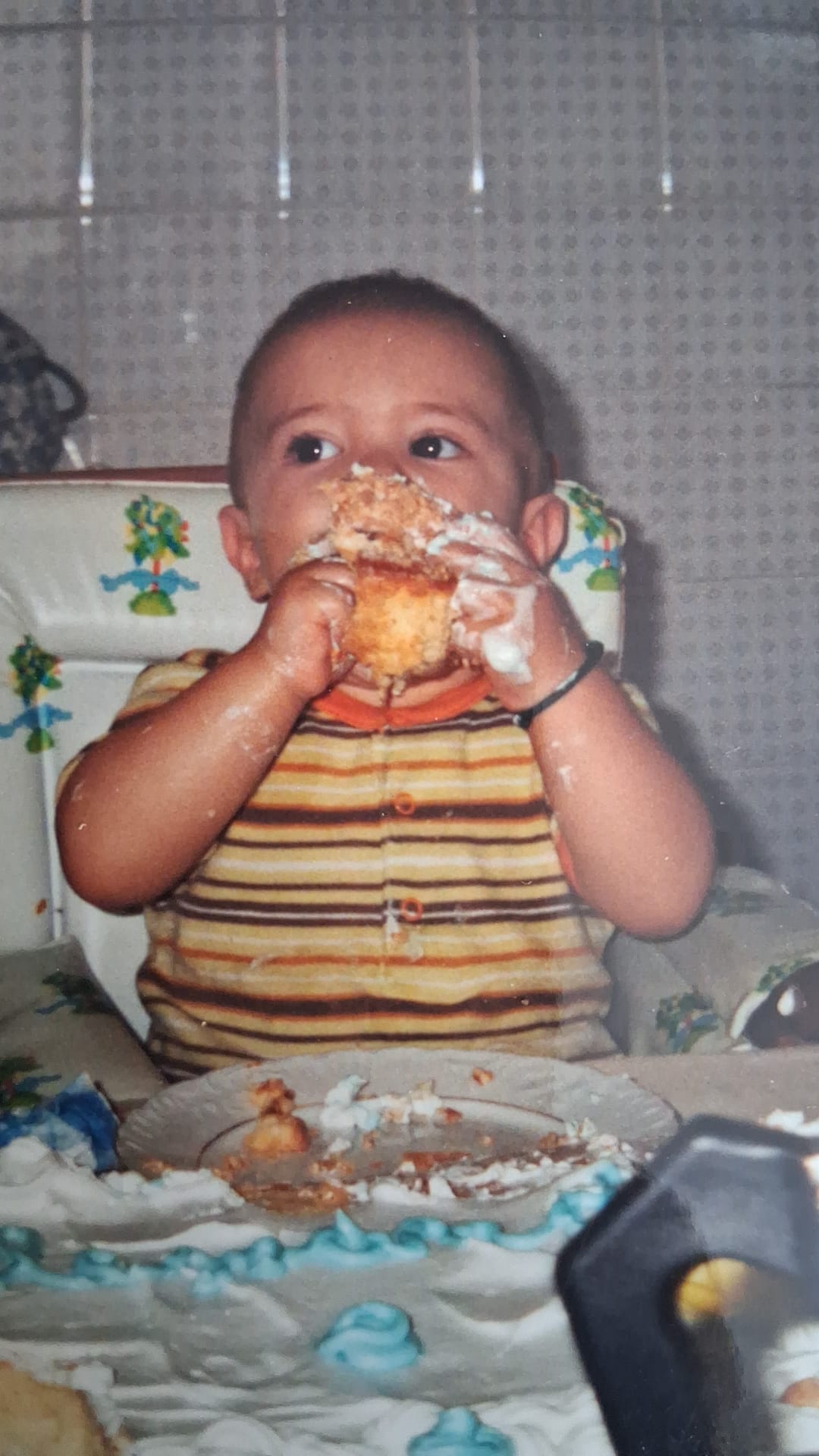
As soon as I realised how much I loved baking, I started making my own birthday cakes. I decided that I was “too old” for a frozen dessert (silly me, hahaha) and then proceeded to complicate my life with long, intricate desserts over and over again. But hey, at least I learned a lot along the way, right? It took me years to perfect my timing and not get trapped in the inevitable last-minute BUILD! FROST! DECORATE! of the cake while all my friends were waiting for me in the other room. Although I now work professionally as a pastry chef, I can’t lie to you, sometimes that rush at the end still happens. It is so me to be late to a party because I’m finishing off a cake, and I’m not super proud of it. So this year, to redeem myself and to honour baby Alessandro, I decided to work on a dessert that would have me doing all the “stressful” baking WELL AHEAD, so that on the day it would only be about enjoying, celebrating, and partying. A true return to origins.
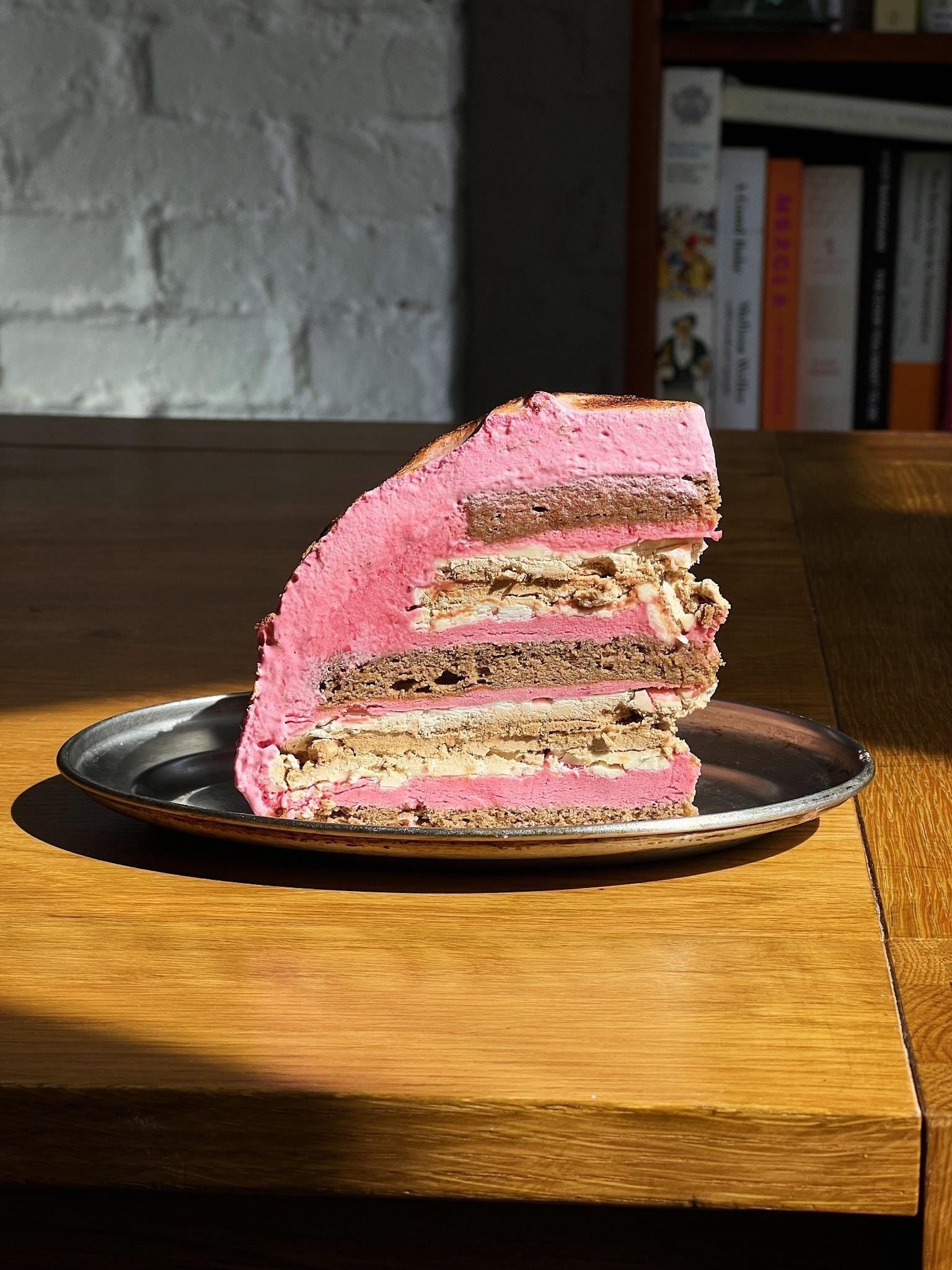
When I started thinking more in depth about frozen desserts, many came to mind: Arctic Roll, Baked Alaska, ice-cream sandwiches, Bombe Glacée, Icebox cake and probably my favourite: Torta Meringata. An Italian cake made of crispy meringue disks, whipped cream and chocolate. Very simple but so delicious and nostalgic. The juxtaposition of the light whipped cream and the crunchy layers always delighted me. When we’re talking about frozen desserts, the ultimate pleasure lies in texture, in my opinion. There are many elements of a frozen dessert I could play around with, but I wanted to explore a version that could marry all my favourites in one single dessert, and so, the Baked Italia was born. It combines soft sponge for structure, meringue for texture, and, of course, frozen filling to make it the ultimate homage to the ice-cream cake of my childhood.
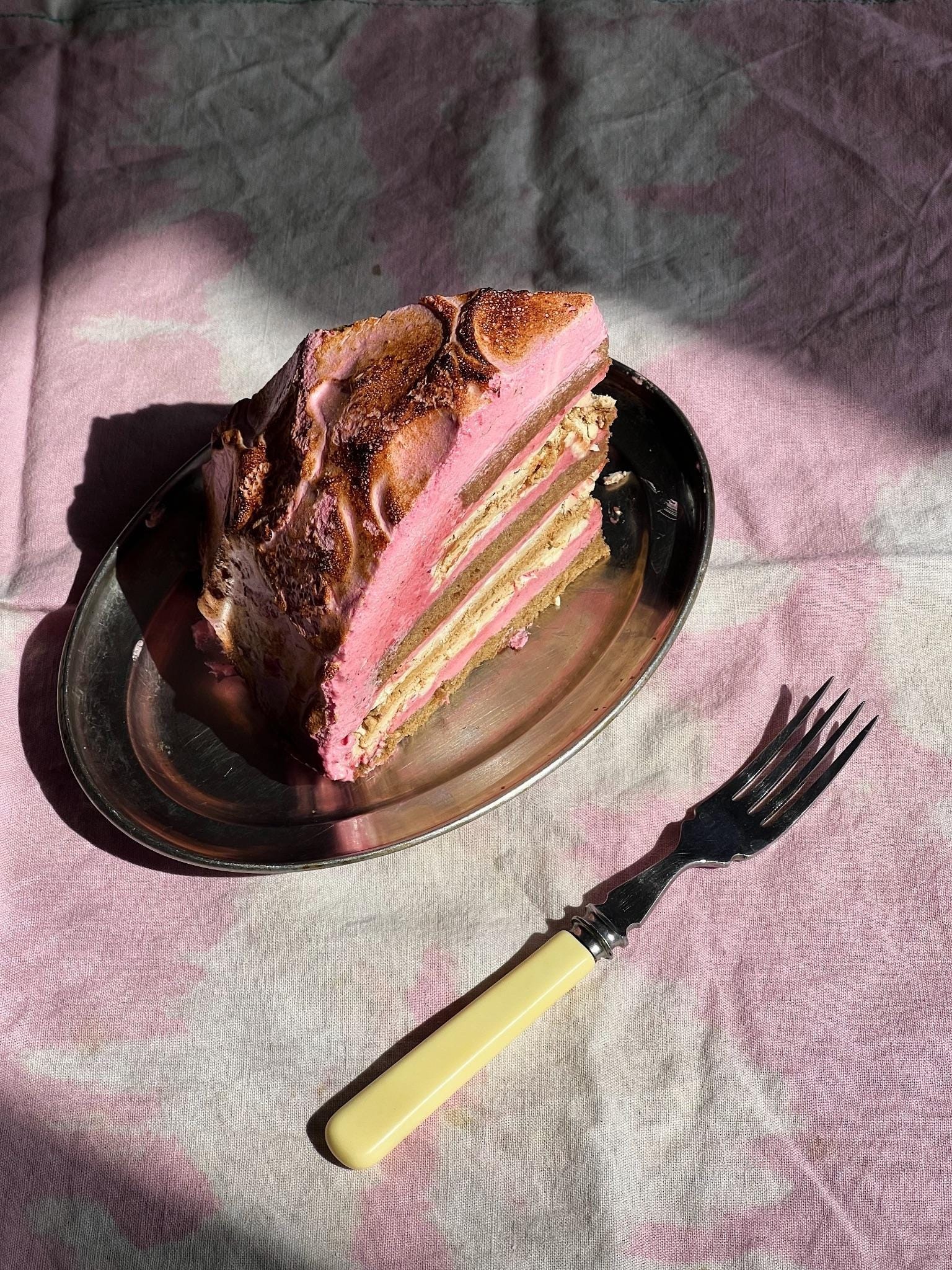
THE SPONGE
The sponge needs to be soft, airy, suitable for freezing, and very delicious. Call me lazy, but I wanted to see if I could bake both the meringue and sponge cake in one go, which would have been a win-win situation.I immediately thought of the “cake topped with meringue” genre of northern European desserts, known as Blitz Torte in Germany, Kvæfjordkake in Norway, Pinocchiotårta in Sweden, and Bedstefars Skæg in Denmark. After baking the first batch I realised that it wasn’t exactly what I was looking for. The meringue was not as crunchy and the sponge was not fluffy enough. What a bummer. But I’ll definitely keep working on this kind of cake for another occasion.
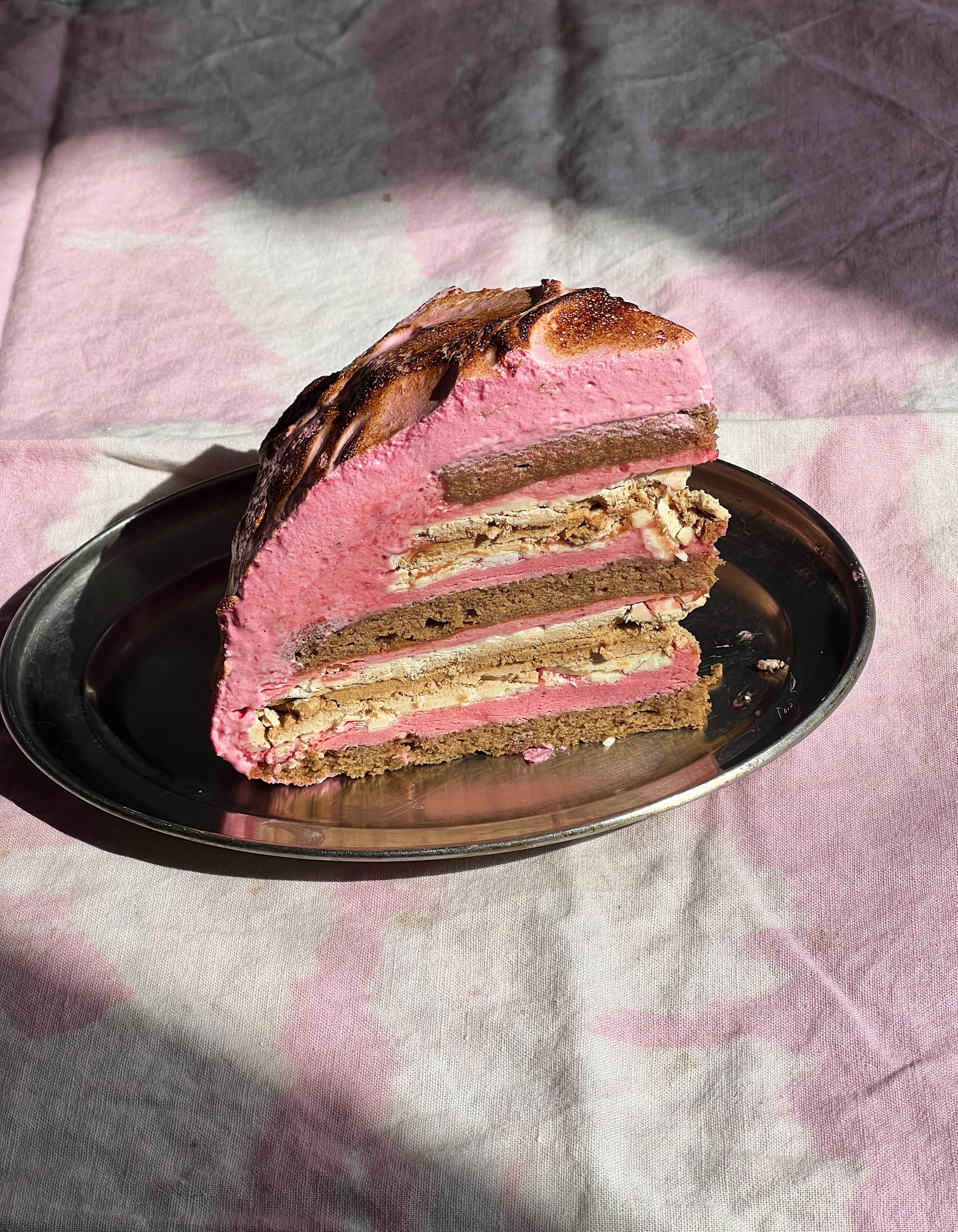
I decided to leave the two-birds-with-one-stone approach and just work on the sponge on its own. A few months ago, I developed a sponge cake recipe that I really love, and I wanted to put it to the test and see if it would freeze well and be suitable for this occasion, too. I’m thrilled to report that it did! And for a special addition for my Dream Birthday Cake, I added a secret ingredient: Orzo Solubile.
Orzo Solubile
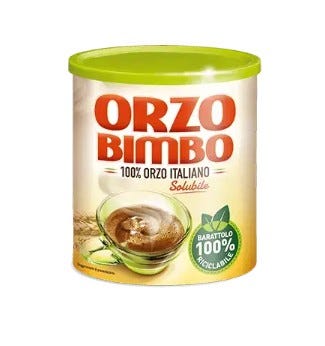
If you’re not Italian, you’re probably not familiar with Orzo Solubile; it’s a popular Italian instant powder made from roasted, soluble barley. It dissolves in water or milk and tastes nutty and very deep, similar to coffee but without caffeine and with anti-inflammatory qualities. It’s very comforting, usually consumed hot but equally delicious when enjoyed iced! Similar to Japanese Mugicha (Barley tea) but with a stronger, more concentrated flavour. More like an espresso, if you will, rather than a delicate tea. Roasted barley has been a popular beverage since ancient times, enjoyed by Roman gladiators. This modern, soluble iteration emerged during World War II, when an embargo made coffee a rare and expensive commodity. In response, many Italian companies began processing barley grains to create an alternative.
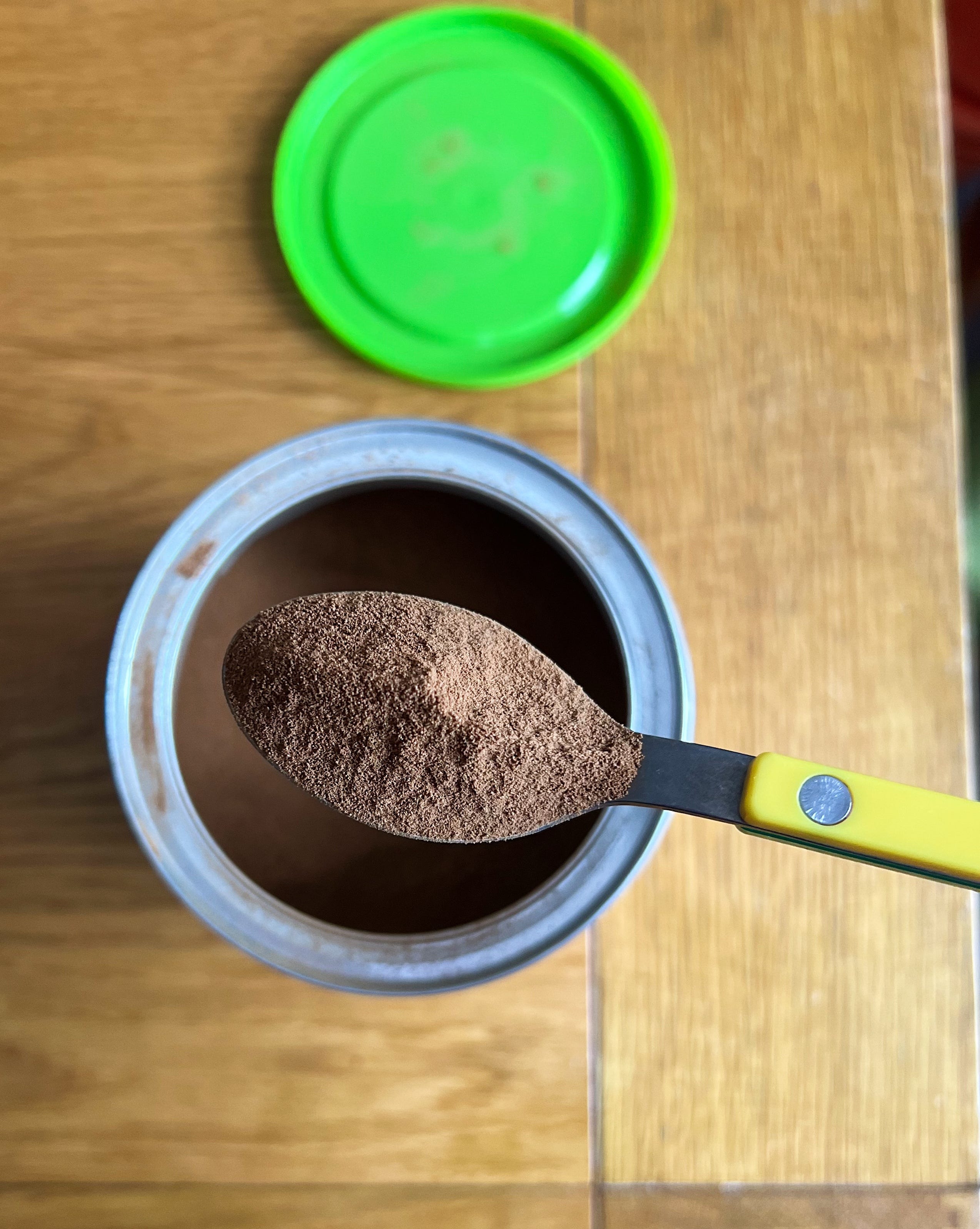
So how do we bake with it? By adding Orzo Solubile to the sponge, we can add a lot of flavour without diluting the batter or drying out the crumb too much. And after a few tweaks, we got it! The barley sponge, aka “the foundation” of our frozen dessert, was ready. Orzo Solubile is easily found at your local Italian shop or online. But in case you can’t find it, coffee alternatives like Barley cup or Whole Earth’s Wake Up brands will work just fine. You could also experiment with instant coffee granules, which would give a different flavour profile and are easily accessible, though it would not be a 1:1 swap for the quantity of the Orzo Soluble.
THE MERINGUE
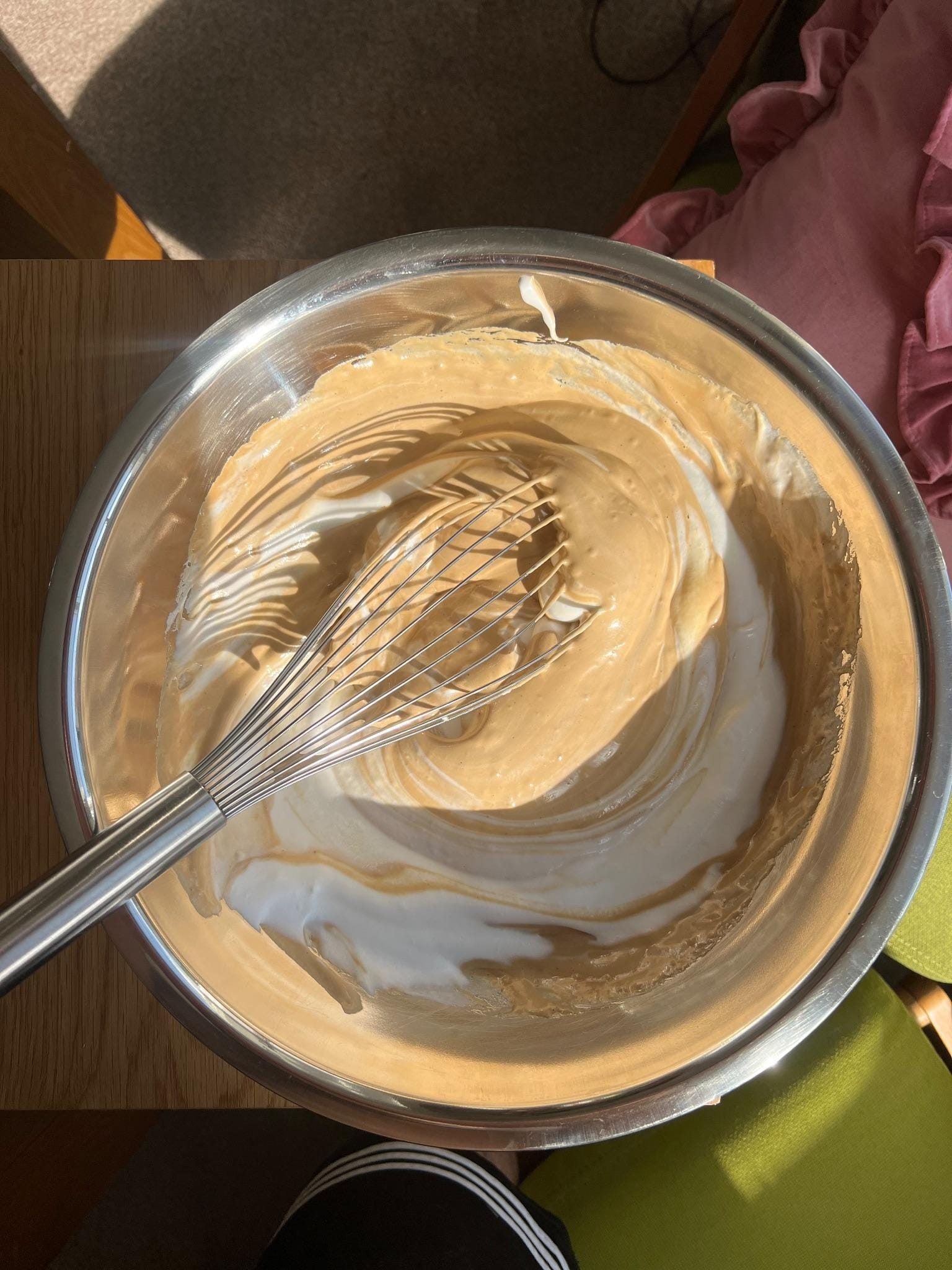
I love meringue, whether it’s crispy and crunchy or soft, marshmallowy, and deeply torched. I really wanted both textures to have their place at the table. Since the idea of baking the crunchy meringue on top of the cake was discarded, I had to find another way. I opted for the obvious choice of baking the meringue separately at a lower temperature to get the ultra-crisp texture I was looking for. As I learned from Nicola (in the plinth pavlova article), I decided to make a very stable, strong meringue using a 1:2 egg white to sugar ratio. I also added some Orzo Solubile to the meringue, because why not? Having some element of bitterness helps ground the very sweet flavour of meringue.
For the soft marshmallow-y meringue part, I decided to make a Swiss meringue to frost the cake and then deeply torch it à la baked Alaska: and the Baked Italia was born. I really wanted to have a fun pop of colour for the look of the cake, but I didn’t want to use any food colourant, so my solution was to flavour the meringue. Adding large amounts of liquid would have disrupted its delicate foam structure. Excess liquid dilutes the egg-white proteins, preventing them from trapping air, which would result in a runny and completely deflated meringue.
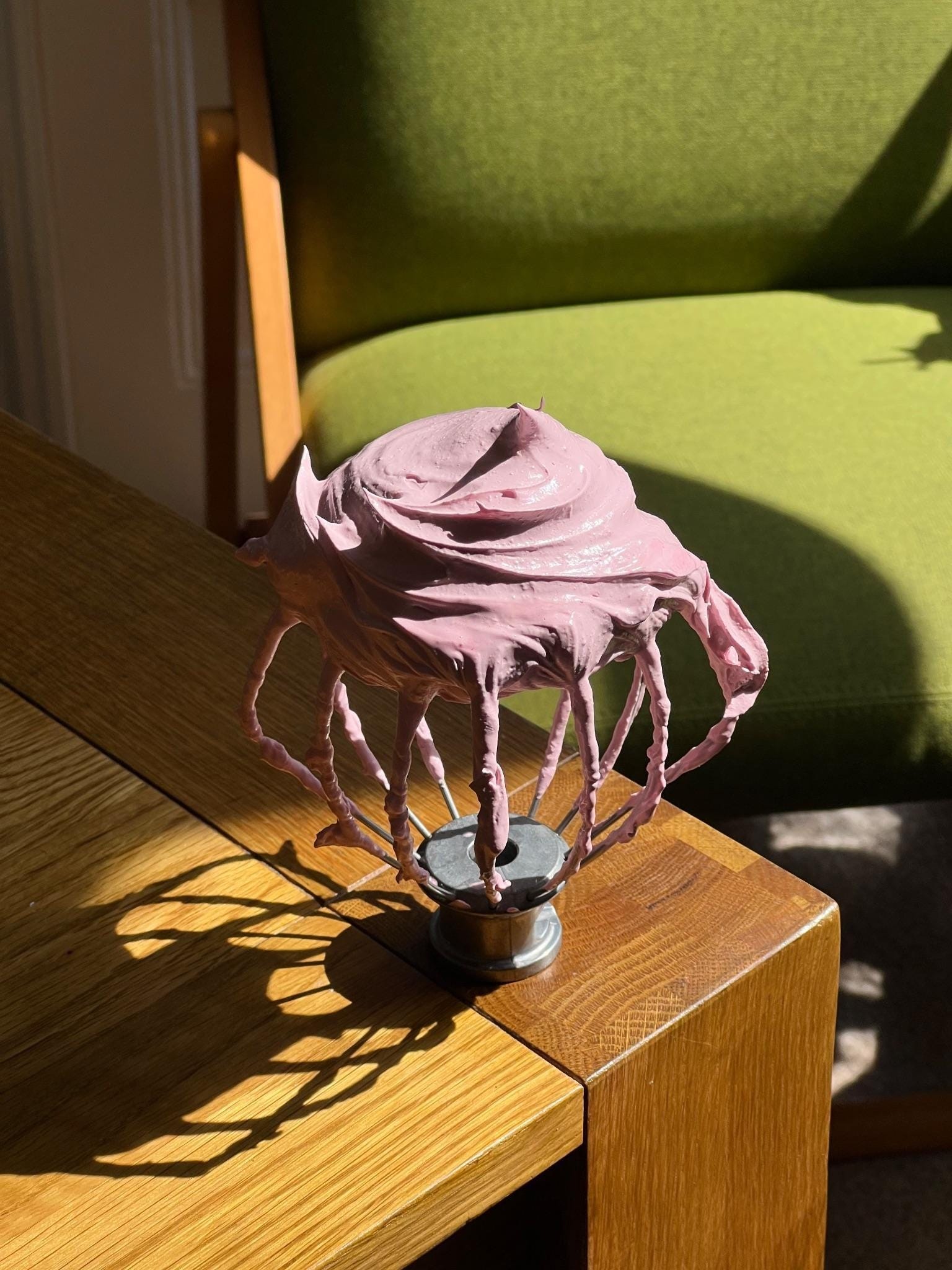
So in order to achieve the colour I was dreaming of, I thought of experimenting with egg white powder. I found it easily at my big grocery store in the baking section; otherwise, you can buy it online. Since the powder needs to be reconstituted with a liquid, I thought, why not use cherry puree instead of water? The results were great! Fun, pink, delicious, but most of all stable! This got me wondering about all the infinite ways and possibilities to flavour meringue from within! Exciting! Anyway, back to our frozen dessert…
On KP+ today
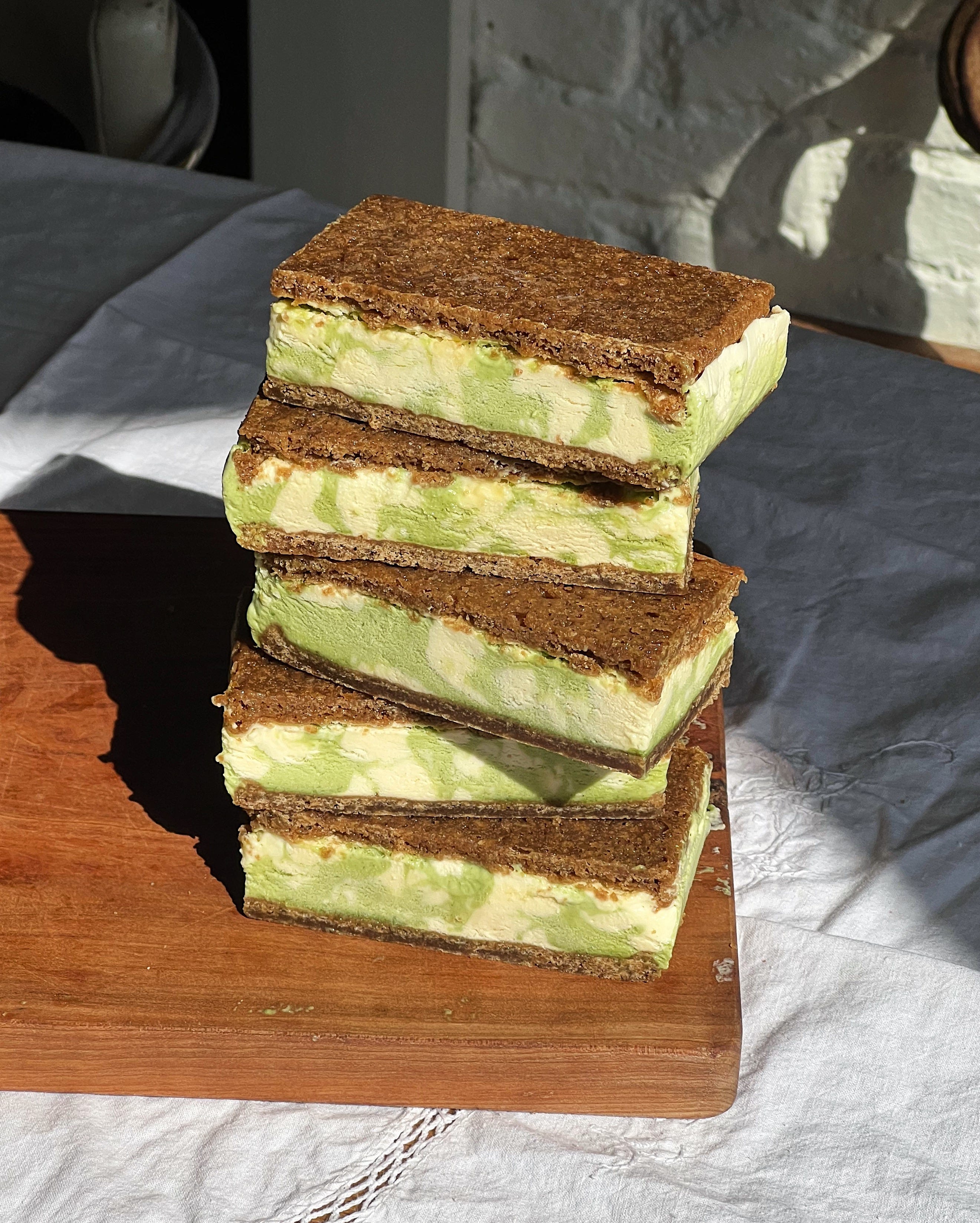
Over on KP+, you’ll find Alessandro’s recipe for Basil and Sour Cream ice cream sandwiches with Barley Cookies. What beauties!
THE FILLING
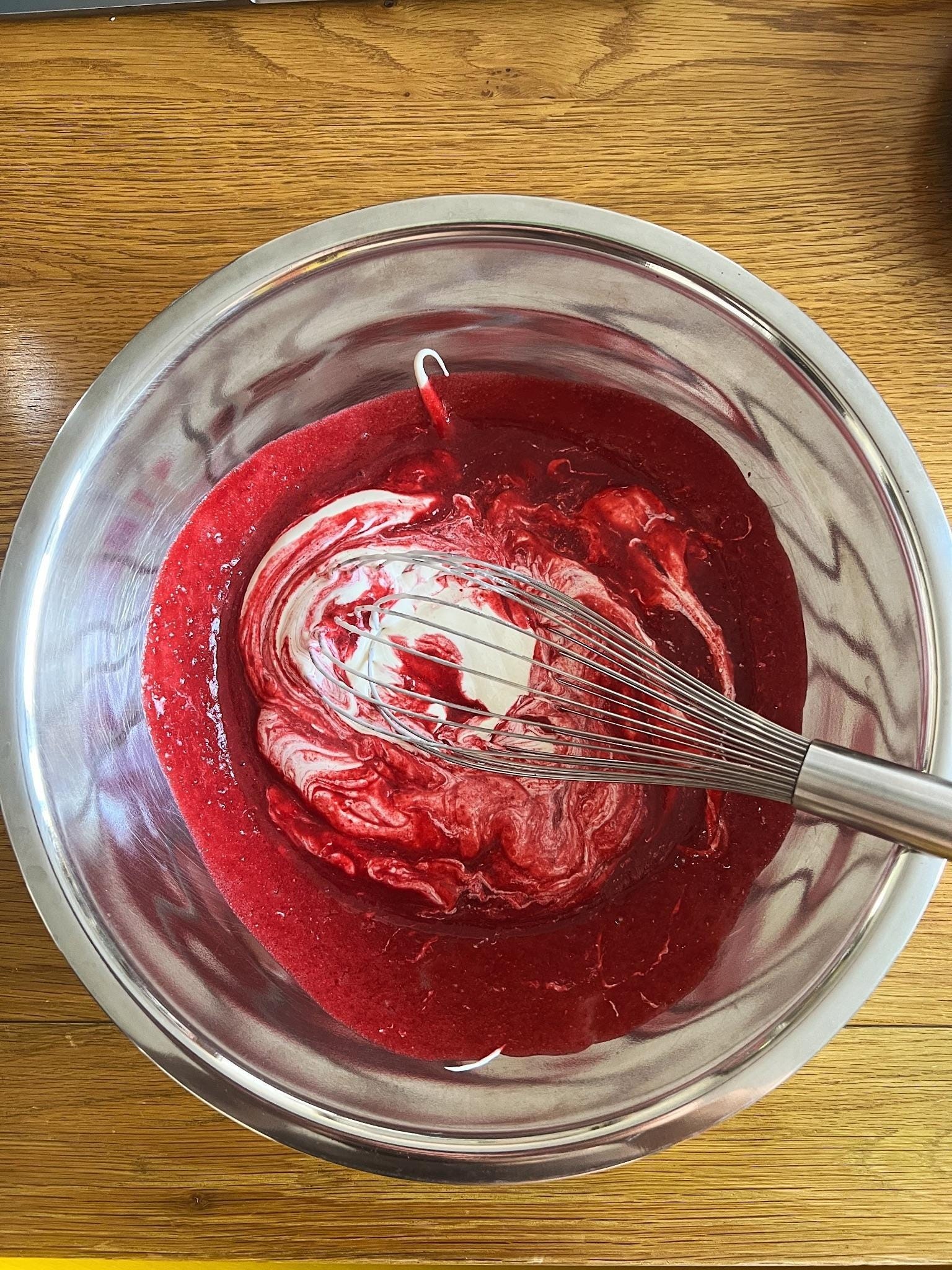
In search of the best filling, I debated between a parfait and a semifreddo. The gelato and classic ice cream were immediately out of the equation because I didn’t want to develop a recipe that would work only with an ice cream machine. The decision came quite naturally- as a result of a lot of the meringue making for the cake, there was a lot of egg yolk surplus, so parfait it was! For those who aren’t acquainted with parfait, it’s a classic French frozen dessert made from a base of cream, eggs, and sugar. All are usually aerated: whipped cream, pâte à bombe, and meringue. I’m not gonna lie, when I tell you that there are plenty of ways of making parfait and that sometimes the line with semifreddo gets so blurry that is difficult to distinguish one from the other, but Nicola has explained all about it in depth a few years ago here.
I was introduced to Parfait while learning how to make ice-cream sandwiches during my time at Fink’s, a north London bakery. There we played around with a lot of fun flavours like peanut butter and burnt caramel, Mexican horchata, and (probably my favourite) Spumoni- a mix of dark chocolate, salted pistachio and cherry. The recipe for the parfait is an adapted version of the one I used to make there - it includes gelatine as an option, which offers improved stability.
Regarding the flavour, I wanted to play with cherry, June & July’s Fruit star. If you get your hands on sour cherries, please use them! They’re fantastic! All that lovely sourness balances the dessert’s sweetness so well. You can also use frozen cherries in a pinch; just make sure to thaw them before proceeding as per the recipe.
THE SHAPE
This part was pretty easy. I always loved a spherical shape, so I knew from the get-go that I wanted to build the cake into a dome. Very classic but also very chic, in my opinion. I love the dramatic effect and its showstopping energy. But there is also a structural reason I chose this form. Layering the sponge and the parfait into a bowl makes the process easy and convenient. Just make sure that the bowl you’re using is suitable for freezing.
RECIPE: BAKED ITALIA
Serves 12-15
Barley sponge:
6 large Eggs (50-55g per egg)
90g caster sugar (I)
150g caster sugar (II)
35g water
20g orzo solubile (barley powder)
80g neutral oil (I used sunflower oil)
½ tsp fine sea salt
125g plain flour
25g cornstarch
½ tsp baking powder
Barley crunchy meringue:
60g egg whites
120g caster sugar
5g orzo solubile (barley powder)
pinch of fine sea salt
125g white chocolate, chopped
Cherry Parfait:
250g Cherries, pitted
120g Caster sugar
40g Water
2 Platinum gelatine leaves (optional - this improves stability for when you cut/hold them for longer periods of time)
120g Egg yolks (about 6 large eggs)
220g Double cream
Pinch of salt
Pinch of citric acid (optional)
Cherry soft meringue:
180g Pitted cherries (to make 130g cherry puree)
20g Egg white powder
185g Caster sugar
¼ tsp Fine sea salt
¼ tsp Citric acid (optional)
⅛ almond extract (optional)
Method for Barley Sponge:
Line a baking tray (mine is about 30x40cm) with parchment paper that extends a few cm above the tray and preheat the oven to 175 °C fan.
Separate the eggs into two large bowls (you can use standmixer bowls if you have them).
Add the 35g of water, barley powder and 90g of caster sugar to the yolks. With the help of a stand mixer or electric whisk, whisk the mixture until it is paler in colour and tripled in size, for around 4-5 minutes. At this point, stream the oil slowly while mixing until it’s all emulsified. Set aside
Using a stand mixer or electric whisk, whisk the egg whites and ½ teaspoon of salt on high speed for about 20 seconds to break them down, then continue whisking on medium speed while gradually adding the remaining sugar. Keep whisking until you obtain a glossy meringue with medium-stiff peaks, about 5 minutes.
With a hand whisk, fold the whipped egg whites into the egg yolk mixture in three additions.
In another medium bowl, whisk together plain flour, corn flour and baking powder. Sift half of the dry mix over the egg mixture. Gently fold through until barely combined. Sift the remaining dry ingredients in and repeat. The batter will be thick, airy and light.
Add the batter to the prepared baking tray and use a spatula to gently spread it as evenly as possible. This mixture is very voluminous - if it seems like it will overflow your tray, you can remove a little and bake in a ramekin for a chef’s treat! Bake for 14 minutes, or until the top is golden and it’s springy to the touch. A toothpick should come out clean.
Let the sponge cool down completely, then cut out three circles with diameters of 21cm, 19cm, and 11cm - you can use a bowl to help you. The remaining cake scraps are your chef’s treat. Soak them in coffee and eat them with vanilla ice cream for a quick, super-delicious dessert if you fancy.
Method for Barley crunchy meringue:
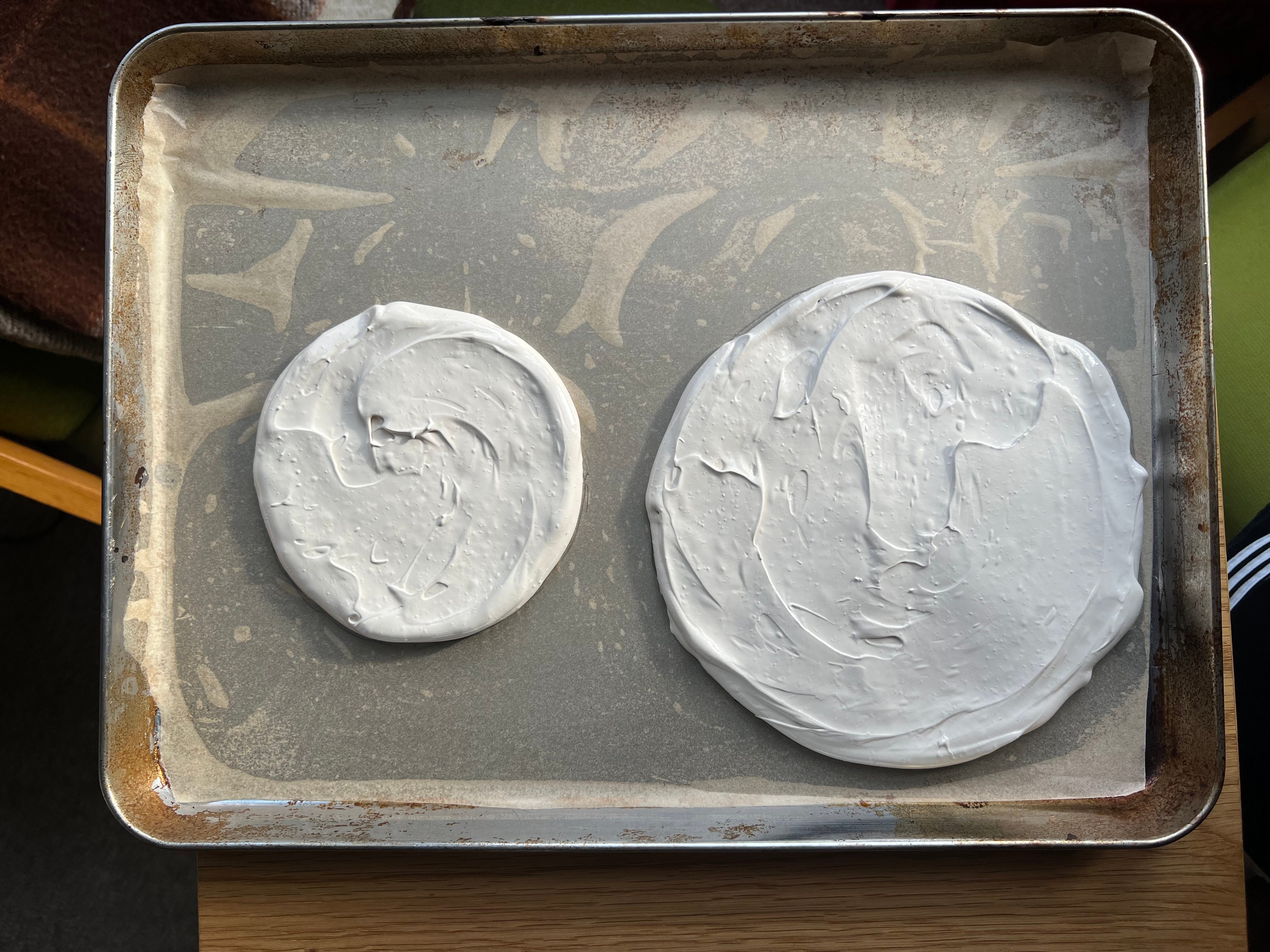
Preheat the oven to 110 °C fan, line a baking tray with parchment paper, and trace one circle 19cm in diameter and another smaller circle 12cm in diameter.
In a medium bowl, mix together the egg whites, sugar, orzo solubile and pinch of salt, set it over a bain-marie and whisk until the mixture reaches 60 °C.
Transfer the mixture to a stand mixer and whip on medium-high speed until it cools and forms stiff peaks, about 6-7 minutes.
Transfer the meringue into a piping bag and pipe the two circles. Use a palette knife to smooth the surface.
Bake for two hours, or until totally crisp and dry. When ready, the circles of meringue should lift from the parchment paper pretty easily.
Let them cool down completely
Over a bain-marie, melt the white chocolate and let it cool down slightly.
With a brush, paint the white chocolate over both meringue disks. Top, bottom, and sides. Place in the freezer on a piece of parchment paper until set — now you are ready to assemble.
Method for Cherry Parfait:
To make the cherry puree, microwave the cherries until soft and juicy (or gently heat them in a small saucepan over low heat for 5 minutes), then blitz them with an immersion blender and sieve the mixture to remove larger pieces of skin. Set aside.
If using, soak the gelatine leaves in cold water for at least 5 minutes.
Make the syrup by adding the sugar and water to a small pan, then heat over medium heat, covered, for 3 minutes. In the meantime, start whisking the egg yolk in a stand mixer on medium-high speed.
Keep cooking the syrup until it reaches 120 °C, then lower the speed of the stand mixer and slowly pour the hot syrup down the edge of the bowl, avoiding the whisk, into the egg yolk mixture. Add the citric acid and salt.
Whip on medium speed for one minute. If using, gently squeeze the gelatine leaves to release the excess water and add them to the egg yolk mixture. Continue whipping at medium-high speed until the mixture has cooled and increased in volume. 4-5 minutes.
In a medium bowl, using a hand whisk, fold the yolk mixture into the cherry puree. Make sure to mix it very well; no lumps should remain.
In a separate bowl, whisk the double cream until it’s very softly whipped, then add it to the cherry and yolk mix and fold once again until no streaks remain.
Method for assembling the ice-cream cake:
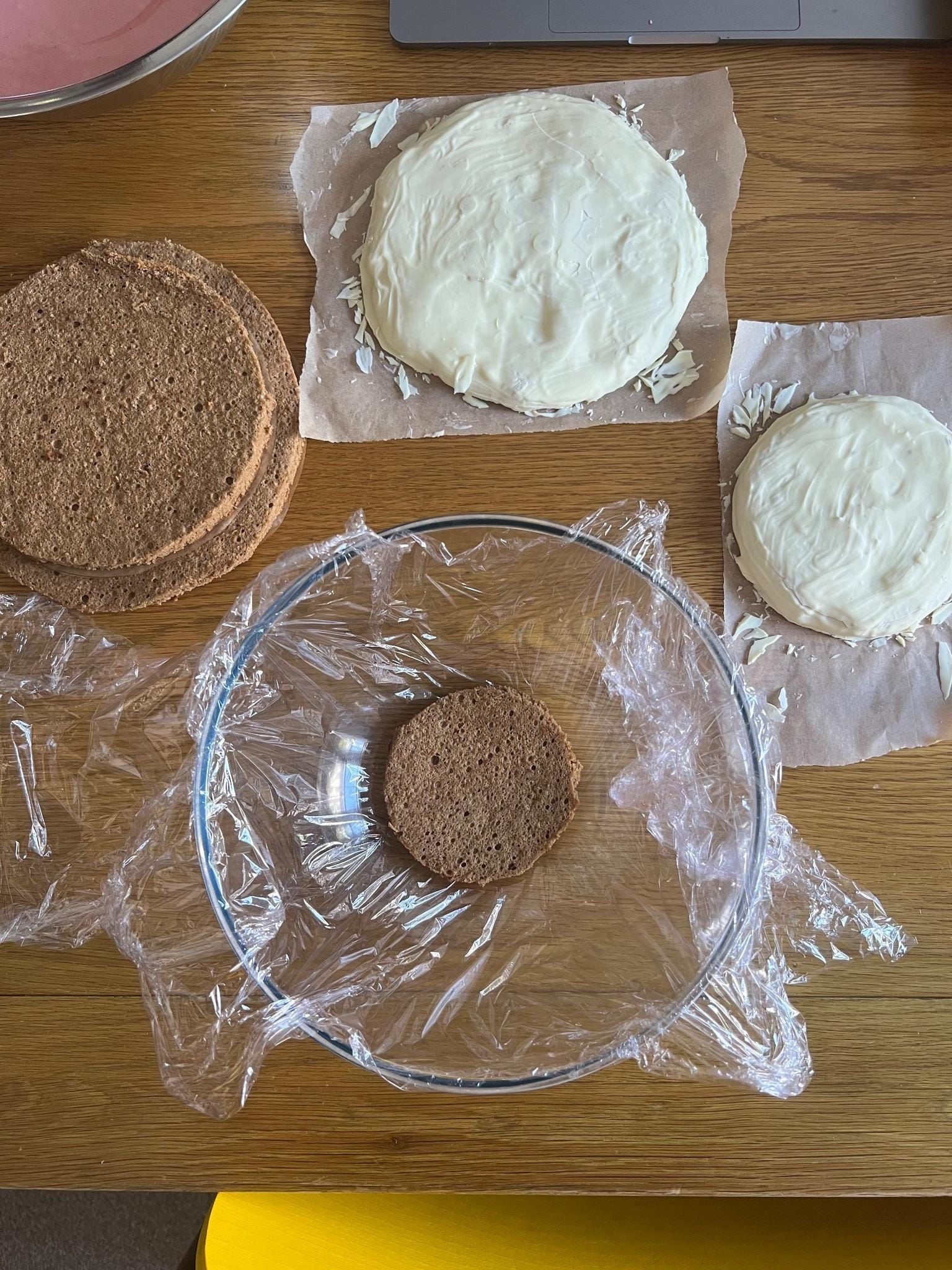
Line a medium bowl (I used a 23cm glass Pyrex bowl) with cling film, making sure to have plenty of overhang.
Start the layering process by placing a small barley cake circle (11cm) at the bottom, followed by a few big scoops of the cherry parfait (about 100g), enough to cover the sponge layer.
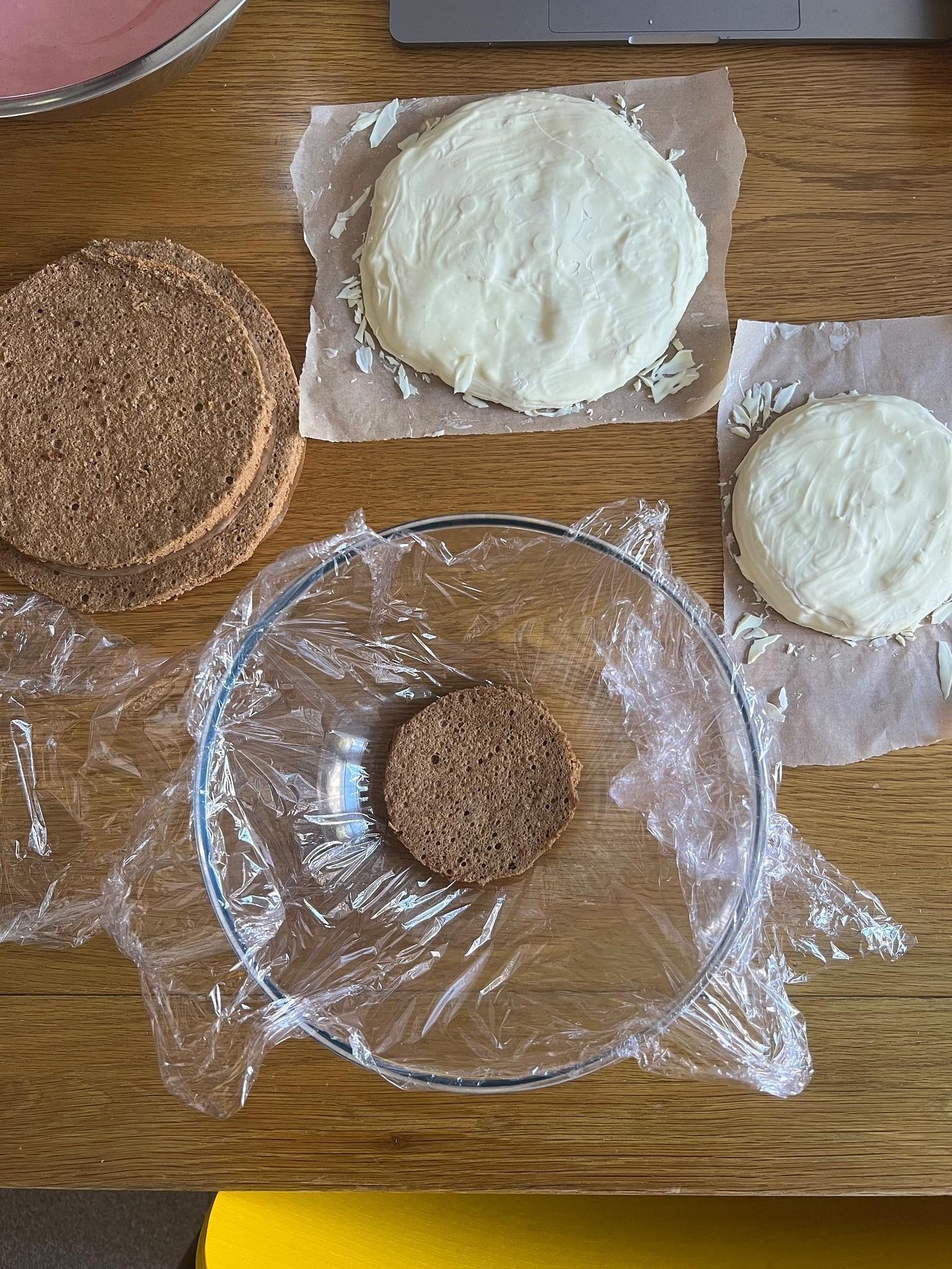
Place the small meringue disk (12cm) and cover with more parfait (around 150g). Add the medium barley cake circle (19cm), cover with more parfait, and add the medium meringue disk (19cm); cover with all the remaining parfait (about 160g), top with the last barley cake circle (21cm), and cover with the cling film, leaving an overhang.
Freeze for at least 6 hours. Preferably overnight. The frozen cake can be kept in the freezer for up to 2 months.
Method for Cherry soft meringue:
To make the cherry puree, microwave the cherries until soft and juicy (or gently heat them in a small saucepan over low heat for 5 minutes), then blitz them with an immersion blender and sieve the mixture to remove larger pieces of skin.In a medium bowl, whisk together the egg white powder and warm cherry puree until no lumps remain. Let it rest for 10 minutes to fully rehydrate. Add the sugar, salt and citric acid (if using), set it over a bain-marie and whisk until the mixture reaches 65 °C.
Transfer the mixture to a stand mixer and whip on medium-high speed until it cools and forms medium-stiff peaks, about 5-6 minutes. You can now add the almond extract if using and mix until combined.
Unmold the cake onto a platter, remove the cling film and frost it with the cherry meringue. Torch it with the help of a blowtorch.
The cake, frosted with the torched meringue, will keep in the freezer for 2-3 days.
Let the cakes temper at room temperature for 10-15 minutes before slicing and enjoying. Keep leftovers well wrapped in the freezer.
Thank you this looks amazing! Is there a gluten free alternative you can suggest for the orzo solubile?