
Kitchen Project #208: Madeleines
A lot to say about a little cake

Hello,
Welcome to today’s edition of Kitchen Projects. Thank you so much for being here.
Today, it’s all about Madeleines, the shell-shaped, buttery cake that is masterful in its simplicity. OR IS IT?!?! I can’t lie, I started this week thinking this would be straightforward, but it’s always the simplest ones that get you. (Don’t worry, we get there!)
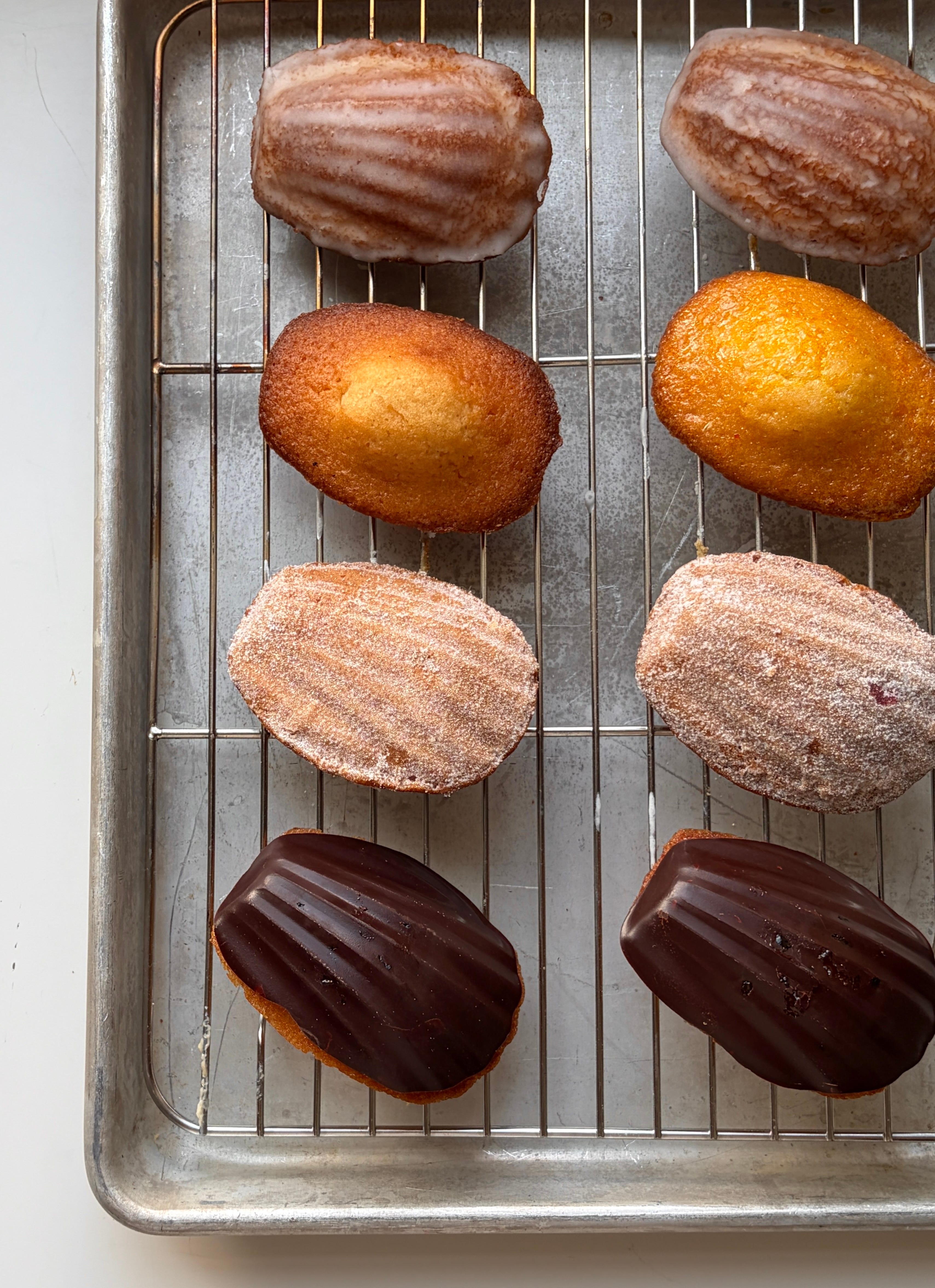
On KP+, I’ve shared a variety of ways for you to dress up a madeleine. From glazing to syruping, stuffing to sugaring, as well as ideas for adapting the batter. Click here for the recipes.
What’s KP+? Well, it’s the level-up version of this newsletter. By joining KP+, you will support the writing and research that goes into the newsletter (including the commissioning - and fair payment - of all the writers), join a growing community, access extra content (inc., the entire archive with 450+ recipes) and more. Subscribing is easy and only costs £6 per month or just £50 per year (equivalent to about £4.00 per month). Why not give it a go? Come and join the gang!
Love,
Nicola
Madeleine Madness
We’ve been here before.
We are at a philosophical crossroads. A cake quandary. We’ve touched on this issue before when we explored bundt cakes together (and I’m sure we’ll debate it again when the time is right), but now the spotlight is on madeleines. Does the shape make the cake? Or could any batter, baked into a madeleine shape, be considered a madeleine?
I asked a few pastry pros to find out their view on this little shell-shaped cake: Holly Cochrane, food stylist extraordinaire; Adriann Ramirez (aka Gay Nigella), Head Pastry Chef at Fink’s; Marie Frank, author of More Than Sweet; Matt Adlard, author of Bake it Better and The Science of Baking; and Camilla Wynne, author of Nature’s Candy and Jam Bake. I asked them what makes a madeleine… a madeleine? And pressed further, wondering if I baked, let’s say a Guinness cake in a madeleine tin, would that still be a madeleine?
The responses were surprisingly divided. Holly, Camilla, Adriann and Marie all felt that a specific batter was non-negotiable. Marie summed it up pretty cleanly: “Madeleine batter = madeleine. Everything else is a cake in a mermaid costume.” Matt Adlard took the opposite view. “For me it’s the shape and the hump.” In fact, he reckoned that if I could get a Guinness cake to produce a respectable BON (”Big Ol’ Nipple” - note that some people refer to the hump as the bump or as the nipple – do what you wish with that information), he’d happily call it a Guinness madeleine. Camilla Wynne agreed that the batter matters, but also pointed out what might be a madeleine’s defining characteristic: they’re only really at their best for about ten minutes after baking.
Where do you stand on this?! Leave a comment below and let me know!
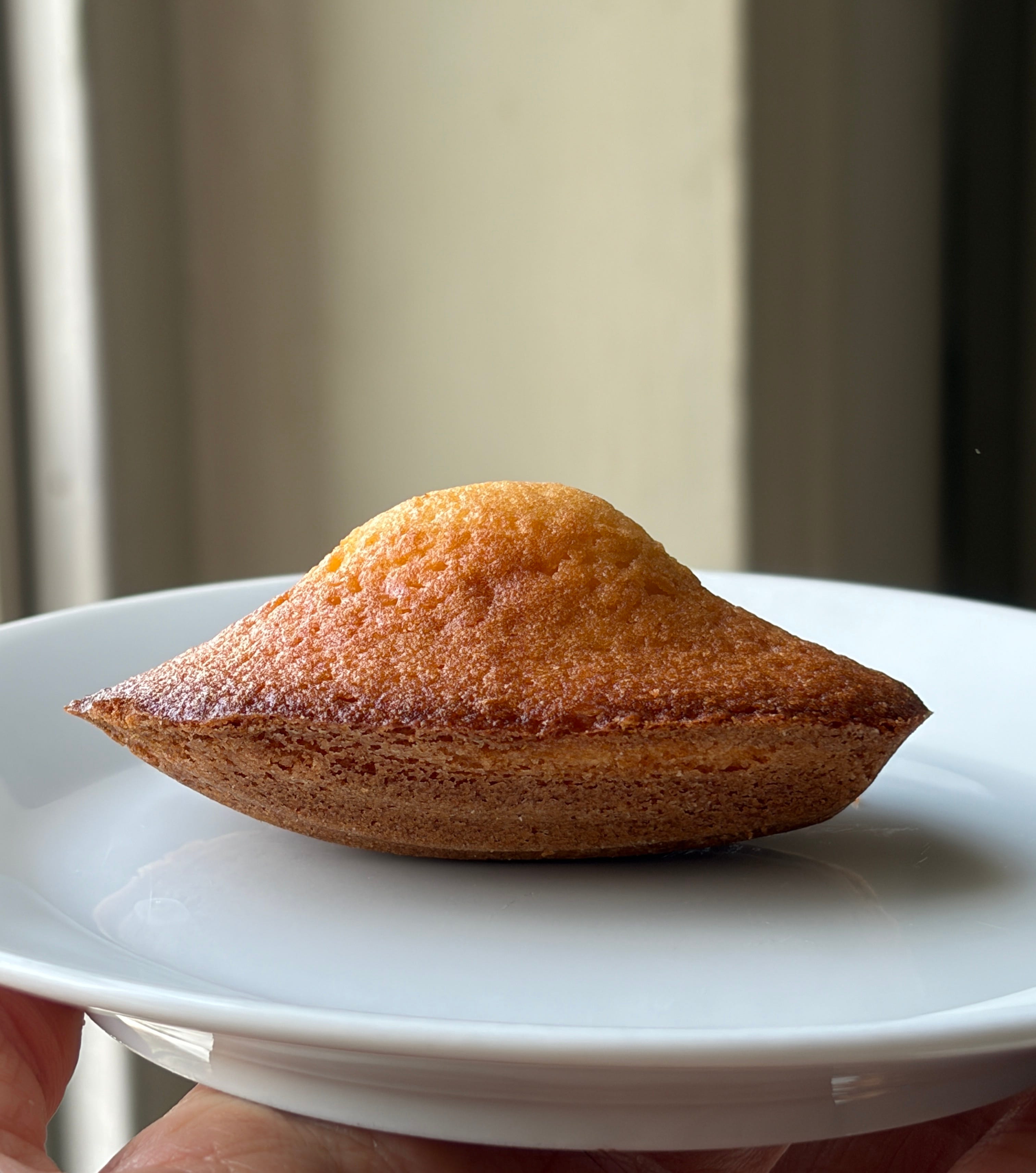
Whatever your definition of a madeleine (I’m team batter AND tin matters), everyone seemed to agree on one thing: it should have a hump. So the next question became... how do we actually get one?
The exact way to achieve this hump is a matter of great debate and, seemingly, mysticism. Spend five minutes on the internet, and you’ll find people swearing by overnight chilling, freezing the tin, or creating “thermal shock”.
Despite baking often being described as a science, I find that a surprising amount of superstition masquerades as technique. When it comes to baking, I think there are three categories of advice:
INDISPUTABLE FACTS
The choice of ingredients, accurate measuring, and sometimes the mixing method. These are the things with clear explanations that make or break the outcome.SUBJECTIVE CHOICES
These are personal decisions built on those facts. Melting your butter instead of creaming it. Whipping your eggs for ten minutes instead of five. The effects are real and measurable, but they’re rarely the difference between success and failure.DOGMATIC RITUALS
These are subjective choices (or sometimes questionable conclusions) that have somehow been elevated to the status of gospel. Never open the oven door when making a soufflé. Never use fridge-cold eggs. Only stir with a wooden spoon. Sugar and salt kill yeast! These can be repeated enough (without proper context) that they start to sound like indisputable facts (aka 1s!!!)
(NOTE: I know that I contribute to this – the internet and thus “THE WORLD AT LARGE” is proliferated with number 3s. As a recipe writer, part of my job is to convince you that my recipe is the one you should try, though I do my best to back it up with as many indisputable facts as possible. Still, I’m all too aware that environments, ingredients and other variables can change exactly how something works in my kitchen compared to yours!)
Today’s subject, the humble madeleine, is an interesting example of this. People often attribute success solely to the temperature contrast between the batter and the oven, or to the essential need for overnight resting. But in reality, the hump also has a lot to do with the ratio of ingredients, the raising agents and - drum roll please - the tins (and how much you fill them). So, shall we get into it?
The Ratio / The Recipe
As is sensible when embarking on developing a recipe, I looked into the annals of madeleine making, which basically meant a series of classic French recipes from famous pastry chefs (Hermé! Ansel! Grolet! Le Cordon Bleu!) and St John, the latter probably being the most beloved madeleine here in the UK.
The ingredients were similar across the board and didn’t stray from a familiar-looking pound cake-esque batter: eggs, sugar (usually with honey), butter (sometimes browned), flour, baking powder, as well as a splash of milk in a few of the recipes. It’s hard to separate them, to be honest.
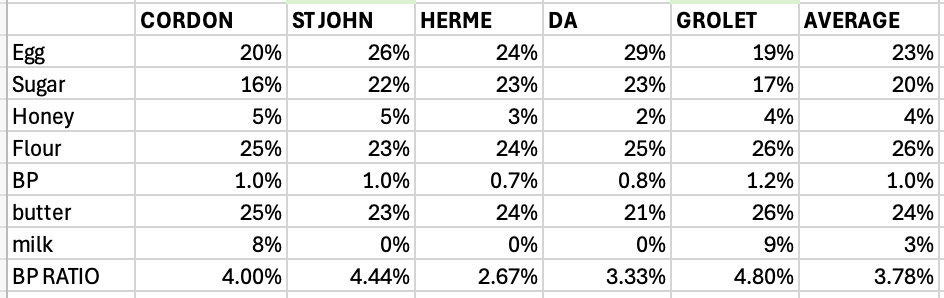
The butter generally accounted for about 20-25% of the batter, eggs 20%-30%, sugar (plus honey) also 20-25%, flour around 25% and baking powder almost universally at 1%. What differed was the handling of the ingredients, from chilling periods to whipping the eggs to browning the butter. I also made an ‘average’ recipe of these and mixed it up, creaming the butter and sugar like a regular cake (as opposed to melting the butter, which all the recipes favoured) to see what was up.
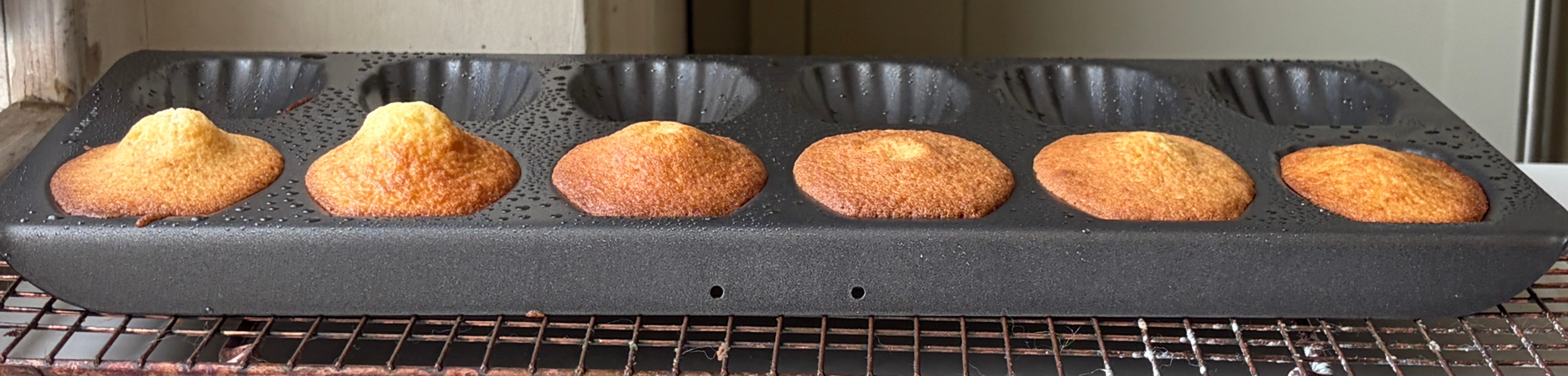
Baked immediately, only two of the batters produced a hump - Cedric Grolet’s and Dominique Ansel’s. The others, whilst delicious, remained diminutive and flat. The next day, after thoroughly chilling the batter, I baked off all the samples again. This time, every single one ‘humped’. What was going on? Even the creamed-butter sugar version performed well, despite being a complete outlier.
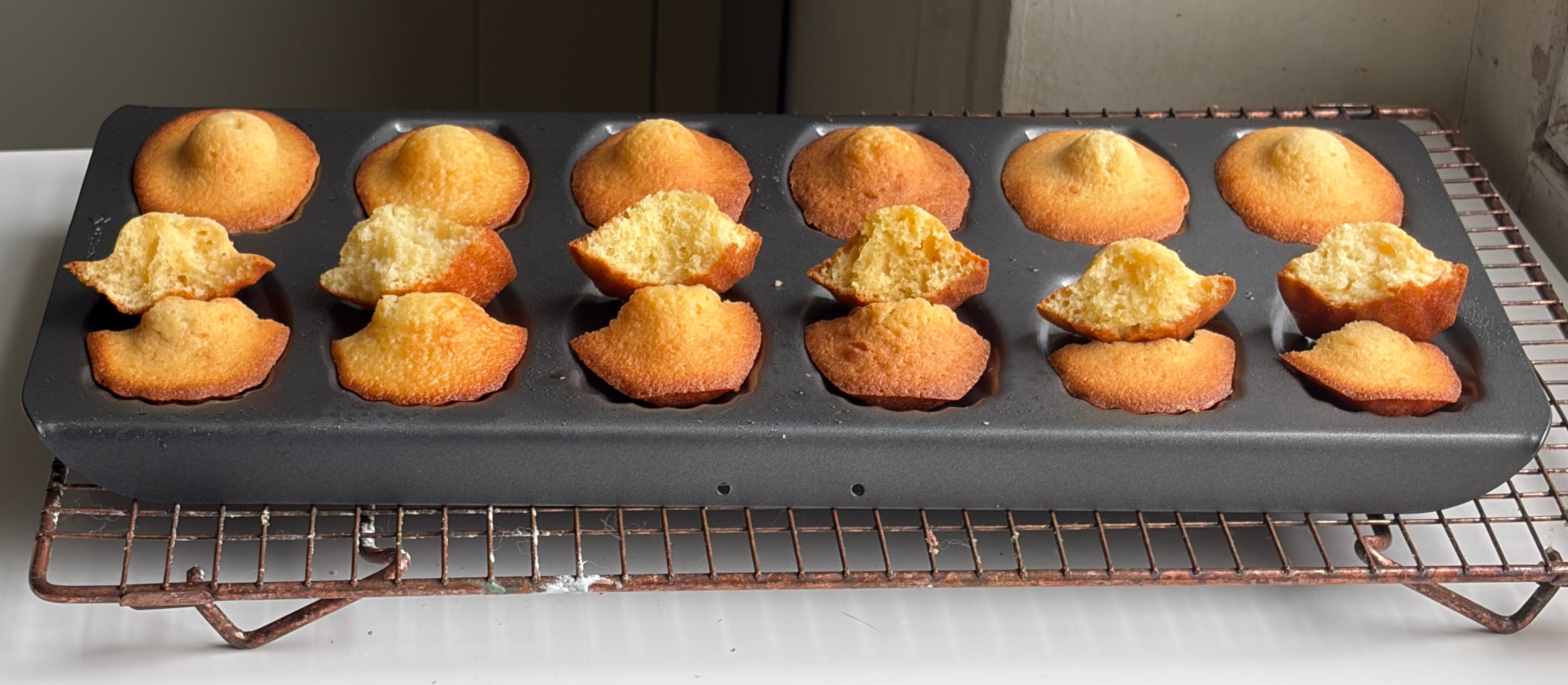
Looking more closely at the recipe, Cedric Grolet’s version had the highest proportion of baking powder, some 4.8% of the flour weight. St JOHN’s recipe uses self-raising flour, so that can be hard to pinpoint, while the others ranged from 2.7% to 3.7% of the flour weight. Knowing that the Grolet madeleine had humped immediately after mixing, while the others failed, was my first clue that the temperature difference between the batter and the oven didn’t have to be the most important factor in our pursuit of a lofty madeleine, even if it was for some formulas.
I was also happy to find out that whipping the sugar and eggs until light and airy made a relatively negligible difference to the height and eating experience of the cakes, so I’ve sacked that off completely, just to make this as straight forward as possible!
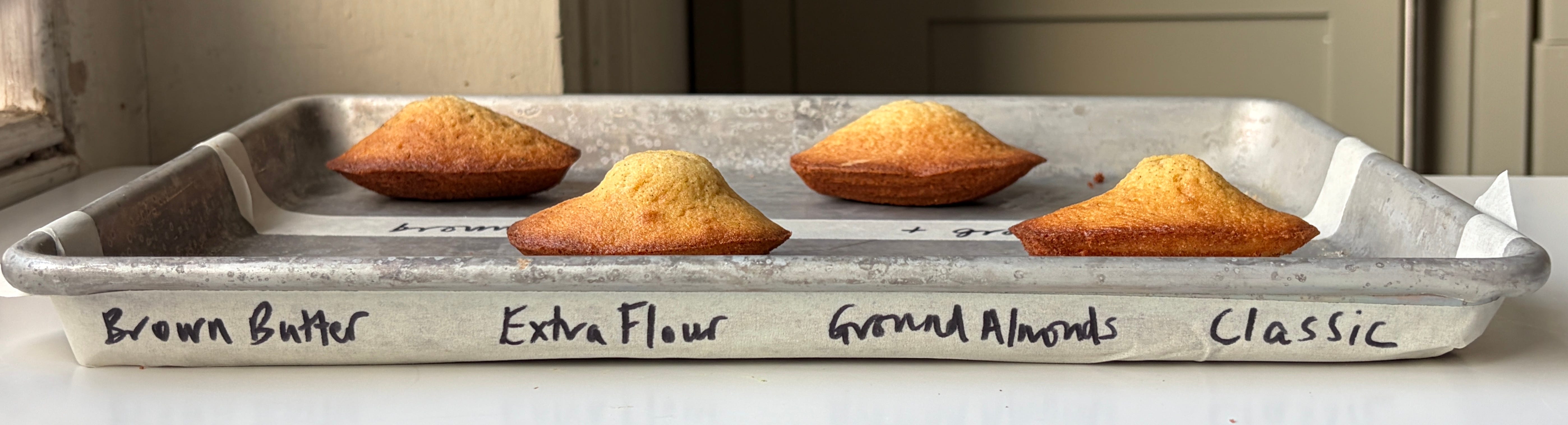
For my final batter, I drew inspiration from successful ratios, including the generous amount of baking powder, and mixed up a few batches. Eventually, I’ve landed on a ratio that is delicious and bakes reliably, whether you put them in the oven immediately after mixing or after a rest in the fridge. It is slightly higher on the flour side (and you can add even more to get a rounder bump, though it is drier) compared to some of the tests to help improve reliability. I mixed up a few variations so you can see the effect of a few factors on the final mix:
WTF Is Thermal Shock?
On my madeleine knowledge-gathering travels, I’ve discovered that the internet-at-large loves to attribute the madeleine hump to “thermal shock” or “temperature shock”, but what on earth does shock even mean?
I’ve come to understand that this “shock” refers to the temperature difference of putting something cold into a very hot oven. So then why doesn’t every cake, loaf of bread and tray of cookies owe their rise to thermal shock too? Why is this phrase seemingly reserved for madeleines?!
This is exactly the kind of confusing phrasing that makes people jump through hoops that frankly don’t need to exist. Thermal shock is a real thing. It’s what cracks your hot Le Creuset or a glass jar when it comes into contact with cold water. But that’s not what’s creating the hump on a madeleine.
I do agree that chilling the batter can help: A colder, thicker batter simply takes longer to heat through, especially when the edges set quickly in the shallow tins. If your batter starts at 3°C instead of 25°C, the centre has much further to climb before it reaches the temperatures where the heat-activated baking powder reaction really gets going. That extra time allows the edges to begin setting while the centre remains fluid (is this “thermal shock?!”). As steam and carbon dioxide continue to expand within that uncooked centre, they have nowhere to go but upwards, creating the characteristic hump.
Consider The Loaf Cake
We can’t talk about cake humps without talking about the loaf cake. Baked in deep rectangular tins, loaf cakes are famous for their mountainous centre and dramatic crack running down the middle. So what does a loaf cake have to do with a madeleine?
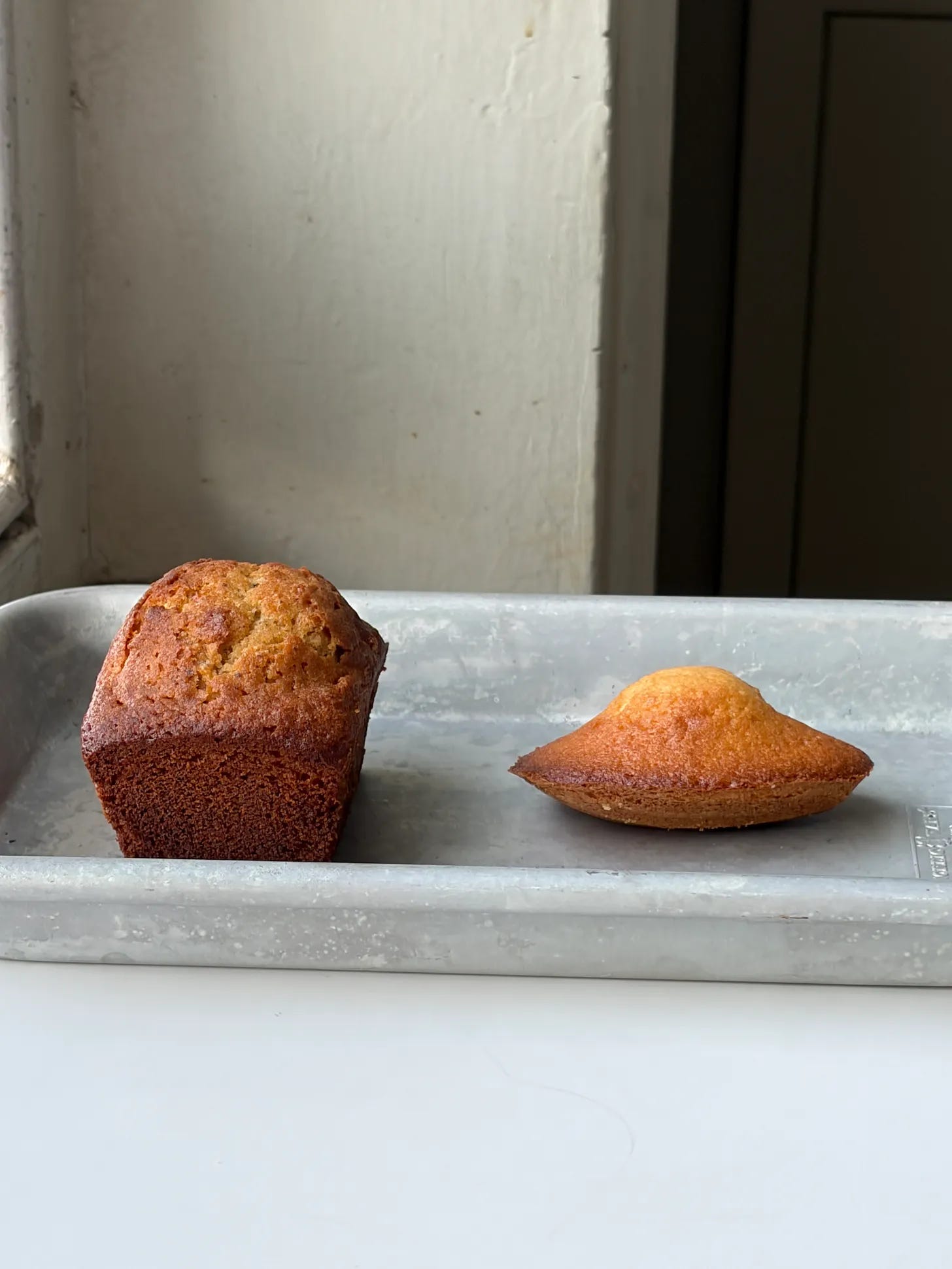
Both are baked in relatively deep moulds with a large surface area in contact with hot metal. In both cases, the edges heat up and set before the centre. Once the outer batter has gained structure, the still-fluid middle becomes the last place capable of expanding.
In a loaf cake, that expansion is concentrated along the centre line, eventually creating the characteristic crack as the batter continues to rise after the surface has begun to set.
A madeleine behaves in much the same way. Essentially, the batter doesn’t rise where it has already set (ie. the edges) and instead rises where it still can (and is still raw!). I baked off my final madeleine batter in loaf cake form so you can see how well this recipe translates.
A Case for Temperature / The Deal With Resting
Because baking powder is temperature-sensitive, we need to be careful when incorporating the ingredients. I learnt this the hard way by adding the butter to one batch while it was still too hot. The resulting madeleines barely rose, as if the batter had already spent too much of its firepower before it even reached the oven. I am aware that there is a camp of people that don’t use baking powder in their madeleines at all. While commendable, I’ve not researched this style of madeleine, and the classic batter made with whipped eggs but sans raising agents was a sorry sight indeed.
Whilst you can bake these madeleines immediately after mixing, I do think resting the batter, either at room temperature or in the fridge, has an effect. I found that rested batter behaved more predictably. My guess is that this gives the flour time to fully hydrate.
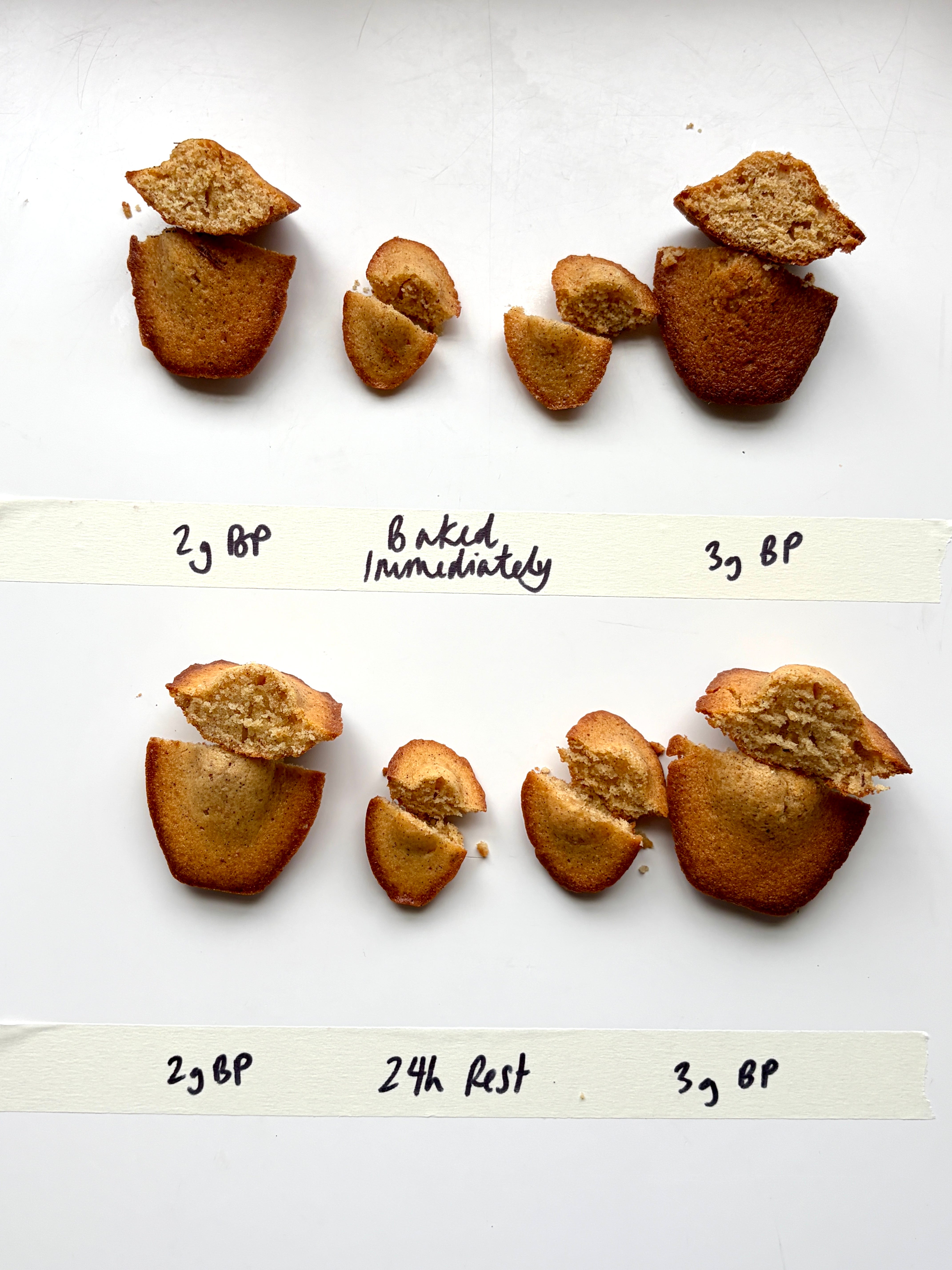
Even more interestingly, a batter I’d kept in the fridge for three days, but brought back to room temperature before baking, produced one of the best humps I’d seen. That makes me think the formulation and the resting of the batter is probably more important than baking it cold, although I suspect the importance of both depends on the formula you’ve landed on and if you have an unreliable recipe, chilling will ensure results.
The recipe you’ll get from me below doesn’t require chilling, but there's no downside to doing it, either. If you want an insurance policy or simply want to get ahead, there’s really no downside to resting the batter in the fridge. You can bake it immediately, or leave it for up to 48-72 hours. If you’re somewhere in between, an hour or two in the fridge is a perfectly sensible compromise.
All About That Bake / Of Being A Workman and Blaming One’s Tools
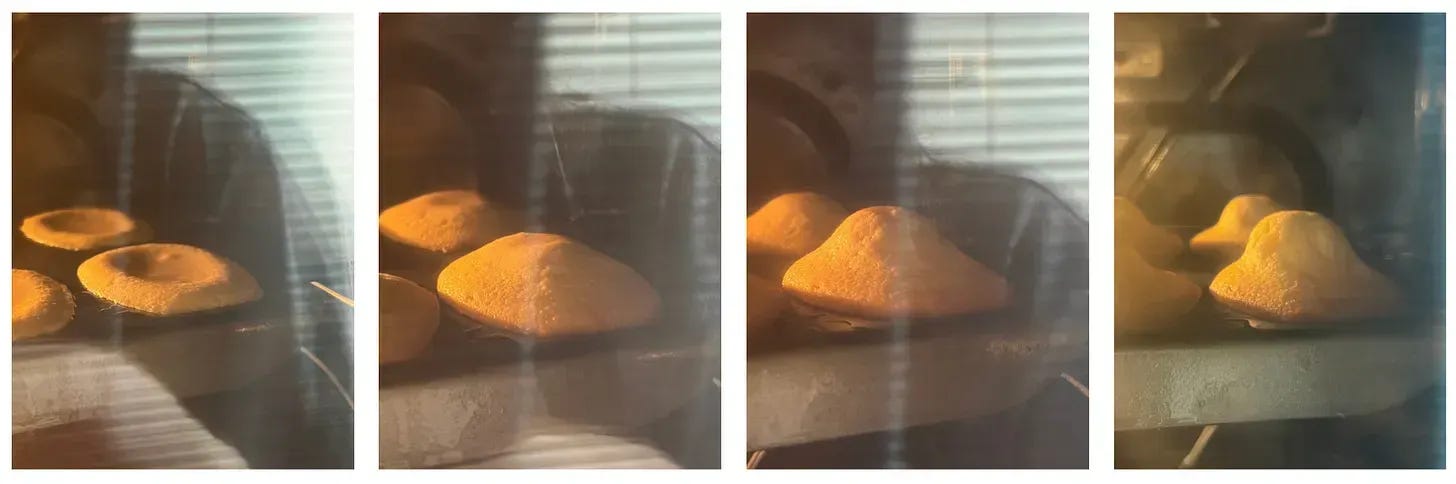
So, my travels into the land of madeleines have shown me that pretty much any cake batter, cooked at the right temperature, will form a hump thanks to the shape of the tin. In an ideal world, it goes like this: The batter goes into the oven. The fat melts, and the batter spreads, but sets before it escapes the edges of the mould. The edges and base begin to set first, while the centre remains fluid. The more fluid the centre remains while the edges are set, the more it will expand upward.
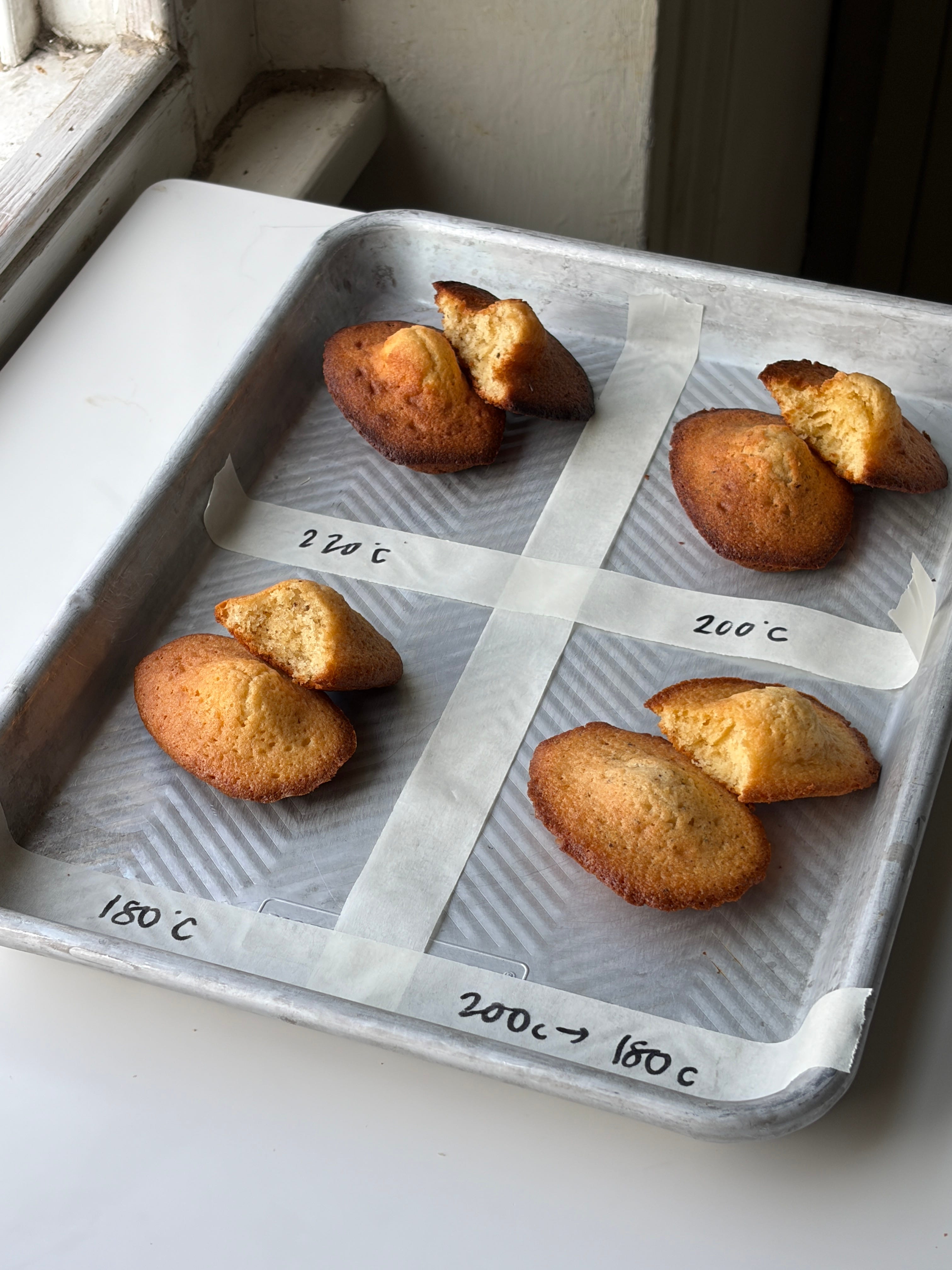
I found that the oven temperature and baking time to be among the most significant variables. You need intense heat to set the outside of the madeleine (is this the thermal shock thing?! maybe?!?!), but not so much that the crust forms too quickly on top, preventing that lovely expansion. I found the most reliable method was a two-stage baking process: preheating the oven to a high temperature, then reducing it as the bake progresses.
One other factor worth considering is the tin itself: Given the cooking process, which relies on the quick set of those bases, a good-quality tin that conducts heat well can make all the difference. This should help set the outside of the cake quickly, giving the still-fluid centre something to push against as it rises. (Side note: Matt Adlard told me that the Rolls-Royce of madeleine tins is Woojung - wow!)
It’s also why I call BS on one of the confusing madeleine rituals I see floating around the internet: chilling, or worse, freezing!!!! your tin (don’t do that!!!). The whole purpose of the tin is to transfer heat into the batter as efficiently as possible. By freezing it, you’re literally making it worse at its one job.
Regarding tin size, a standard-sized madeleine tin will produce impressive humps more easily than mini tins. This is due to all the aforementioned logic regarding heat transfer and geometry.
Batter Quantity / Lining the Tins
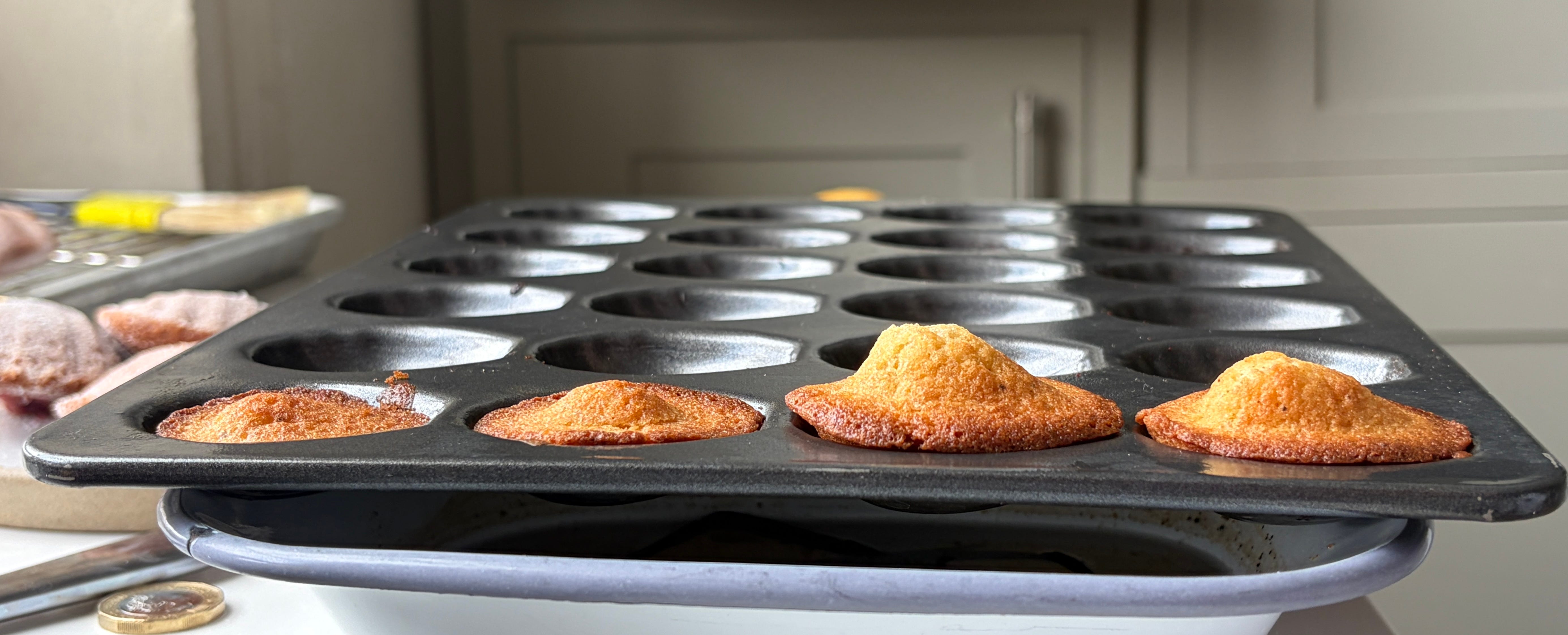
The amount of batter in the mould massively impacts the bake. The quantity you put in there changes how long it takes the centre to cook. A generously filled mould creates a larger difference between the outside and the centre, allowing the outside to set while the middle continues to expand. Too little batter and the centre cooks almost as quickly as the edges, leaving less opportunity for a pronounced hump. Just look at the difference above: Same batter, baked at the same time, just different quantities
As this will vary depending on your tin, you’ll have to go for a bit of trial and error. Most recipes suggest filling to around 85%, but I found that hard to judge, as the batter's texture would change so much depending on whether I was piping from room temp or cold. I eventually landed on 25g per cavity for my tins, and about 7g for the minis.
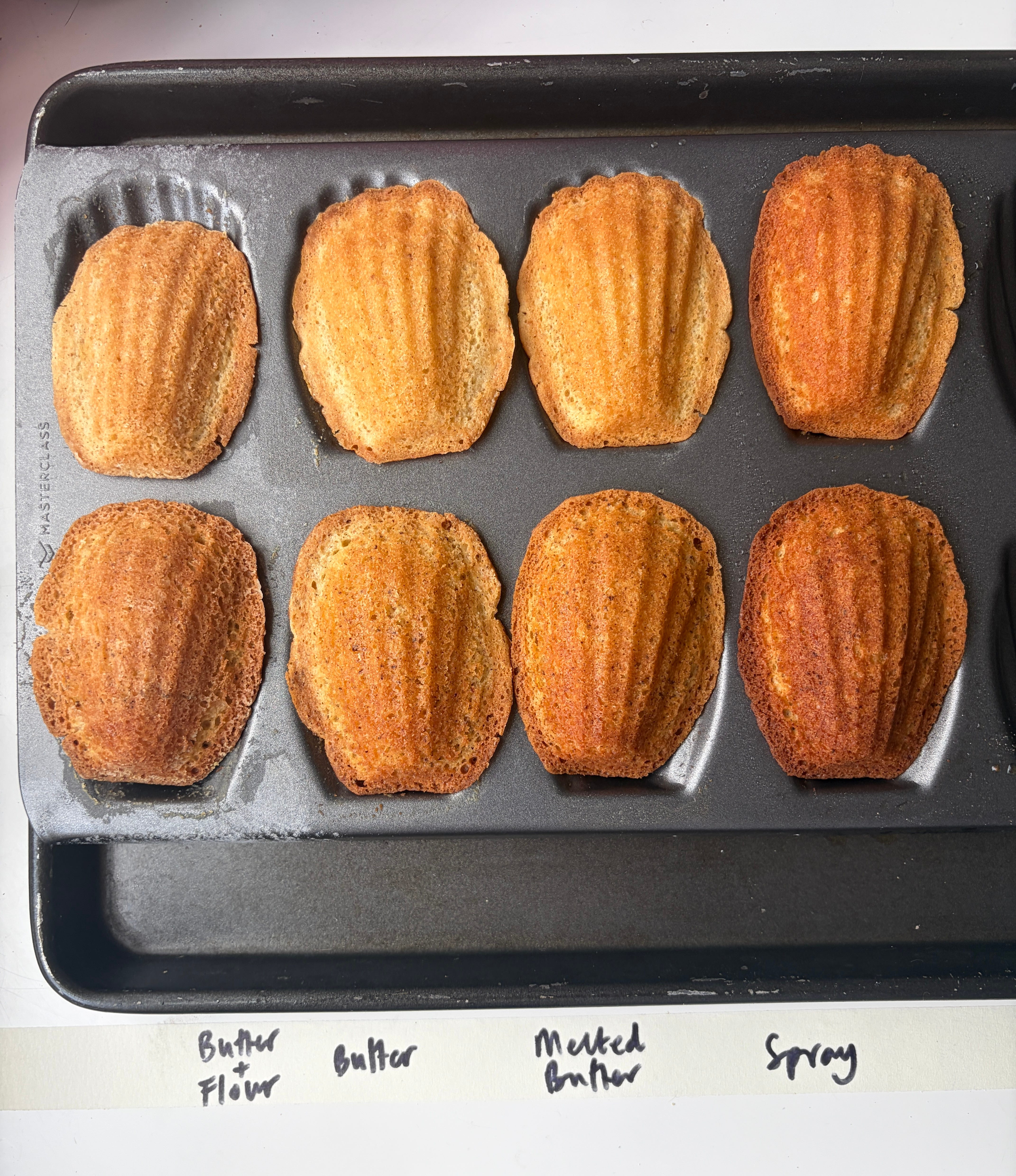
As for lining the tins, I quite like the traditional butter-and-flour method. You get a slightly crispy and very detailed pattern from the tin with this method (and a bit of residue, which I’ve come to love, ha!), although you can’t beat a good quality oil spray or simply brushing with melted butter or soft butter for ease.
What About Staling?
Madeleines are, frankly, on borrowed time the moment they leave the oven with those fluffy, buttery middles and crisp edges. Their distinctive shell shape gives them a high surface area relative to their volume, meaning they lose moisture at an alarming rate. They’re glorious for the first few minutes, excellent for the first hour, and then it’s all downhill from there IMHO.


This isn’t a flaw; it’s simply the nature of the bake. You can make the batter in advance and bake them fresh. If, however, you prefer to plan ahead, I’ve written more about extending the shelf life of madeleines as well as a few variations on this beautiful bake over on KP+
The But about the Butt
A quick aside – can someone please tell me WHY we are so obsessed about the ‘hump’ of the madeleine being the sign of success, when we go through all the effort of buying a special tin with that gorgeous, scalloped shell shape (that, honestly, can’t be used for anything else)? Almost every photo online shows the shell-side, rather than the humpy side! And even though I subscribe to the hump-gospel, I do feel like it’s a bit like insisting on getting a new outfit that has a superbly glamorous back, and only ever showing it from the front.
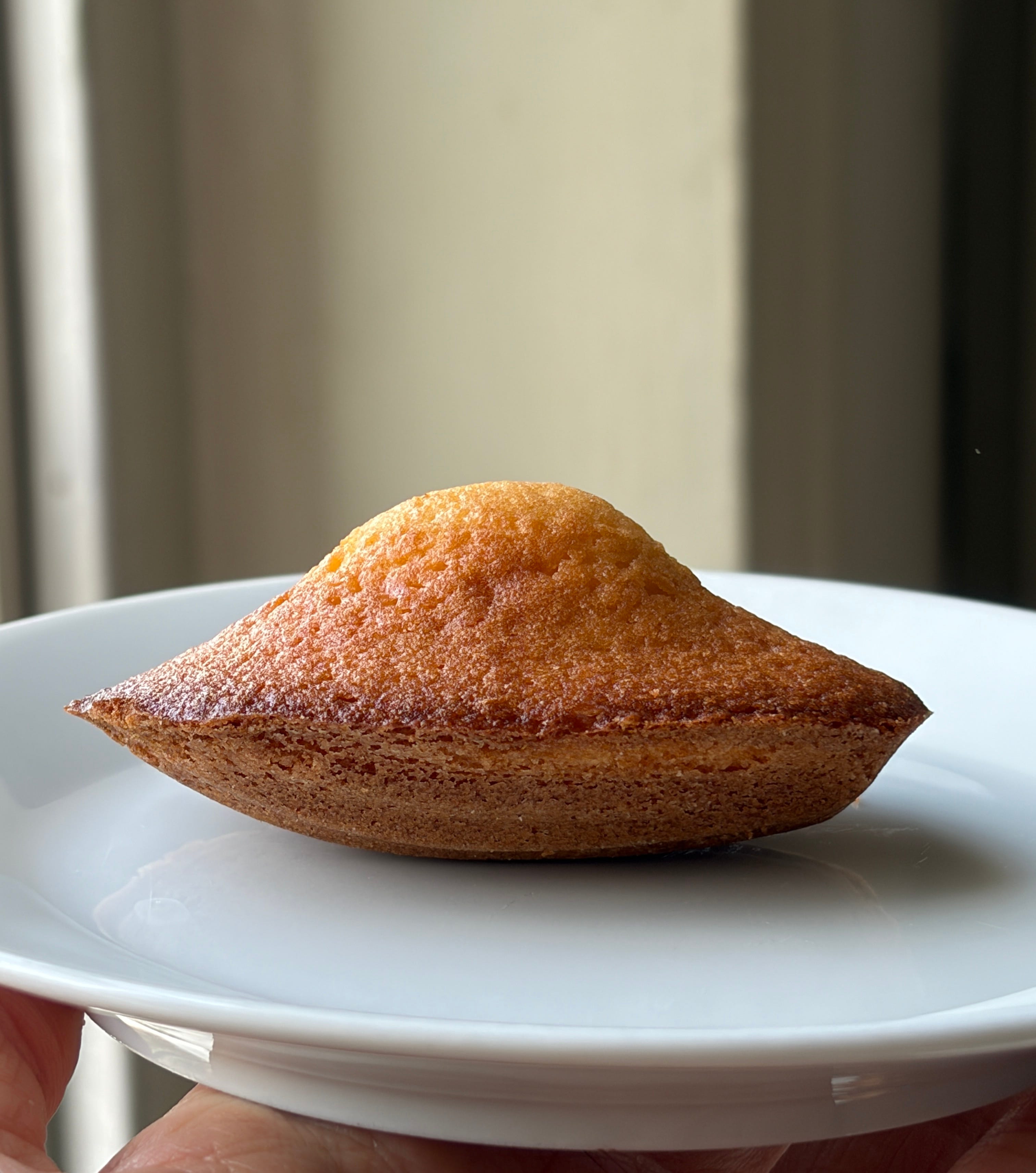
Working towards getting our madeleines to hump, I started wondering about the variety of constraints that we put on our cakes, the ‘correct’ way to do things. Why is a hump desirable on a madeleine, but would be seen as a failure on another cake? It’s difficult to keep track of it all. Where failure ends and success begins can be so blurry when it comes to baking, and though this newsletter is focused on repeating tests to achieve a result that is “correct”, I ultimately want everyone to feel free to make up their own rulebook concerning cakes. At the end of the day, what YOU like is what matters, not whether something you bake could be placed next to an encyclopedia entry. I’m all for respecting culinary traditions and appreciating the journey that cakes have gone on to make it to our own kitchens, but honouring your own taste buds is important, too.
So, if you’ve skipped to the end, here’s the cheat sheet. A good madeleine hump is formed by the interplay among batter consistency, heat transfer, and geometry. A well-balanced recipe, a good tin, enough batter, and sufficient heat will get you most of the way there. Resting the batter helps. Chilling it can help. But neither are magical prerequisites, at least for my formula.
And on that note, let’s make them.
RECIPE: Madeleines
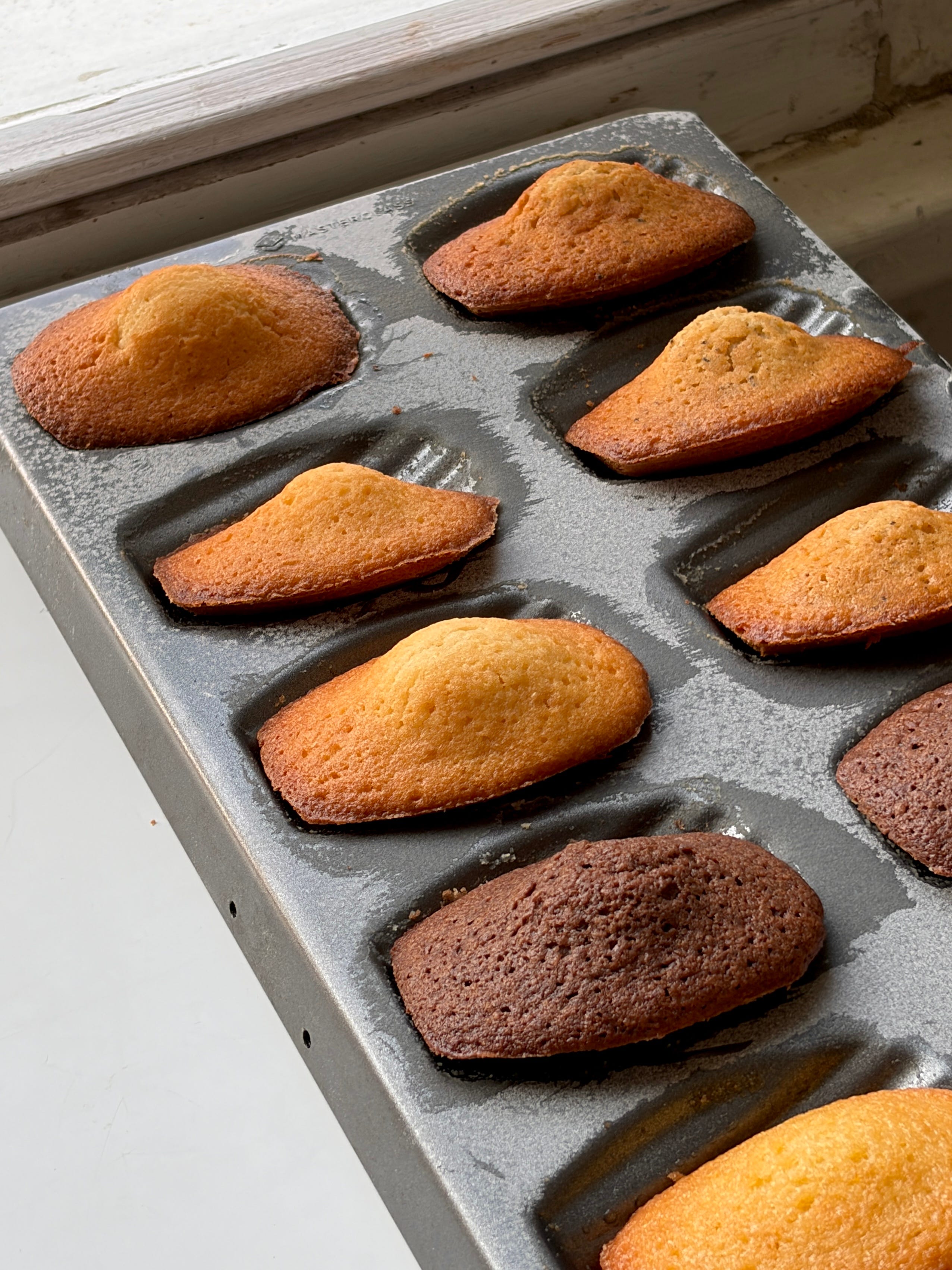
Makes about 10 regular-sized Madeleines. I have this tin.
Ingredients
70g Butter (or 85g butter to make 70g browned butter*)
1 Vanilla pod, scraped or ½ tsp Vanilla Extract
1 tbsp / 15g Whole Milk
1 Large Egg, about 55g
10g Honey
50g Caster Sugar
70g Plain Flour**
3g / ¾ tsp Baking Powder
Big Pinch of Flaky Salt
*For directions on browning butter, click here.
**For a more pronounced hump, up to 80g plain flour, but note it may stale more quickly. You could also use 70g plain flour and 10g almond flour for a more predictable hump.
Method
Melt the butter gently, then whisk in the milk and vanilla and set aside to cool to around 35-40c. The length of time this will take will depend on your environment and how much you heated the butter - you want it to be no hotter than ‘just’ warm.
In a medium mixing bowl, whisk the eggs, honey and caster sugar until well combined, about 30 seconds.
Sift over the plain flour and baking powder and gently whisk into the eggs until about 90% incorporated, then pour in half the butter and whisk until completely combined. Whisk in the second half of the butter until you have a lovely shiny batter.
Rest the batter at room temperature or in the fridge for at least 30 minutes whilst you preheat your oven, or chill the batter for up to 48h before baking (there is no downside other than you having to wait!!!)! If your batter is very fluid and your kitchen is very warm and you want an insurance policy, rest your batter in the fridge for at least 1h before baking, or until thick, cool and firm.
To prepare your tin, use a pastry brush to brush your moulds with very soft butter, then dust with flour and knock out the excess. Alternatively, use a good-quality oil spray or just brush with melted butter or soft butter.
Preheat oven to 210 °C fan. You want to preheat for at least 30 minutes to make sure it is ripping hot.
Pipe or spoon your batter into the tin. It should be almost full, about 85% - I found 25g was perfect for me, but you may need to experiment with your tins.
Place in the oven and bake for 1 minute at this high temp, then reduce to 180 °C fan and cook for a further 6-7 minutes, or until golden and the cake springs bake when you lightly press it.
Remove from the oven and carefully remove from tins, either using an offset spatula (don’t burn your fingers!) or by tipping them out onto a clean surface.
Serve warm, dusted with icing sugar if you like, or as Holly Cochrane suggested to me, with creme anglaise for dipping.
Want to know how to make your madeleines last longer? Over on KP+, we’re discussing all things finishes ft. various fillings and glazes, from the jam doughnut madeleine to the jaffa madeleine, as well as how to adapt the batter to different flavours. Click here to read more!
À la recherche du hump perdu.
Interesting details pertaining to the madeleine and the hump. Worthwhile.