
KP+: Sour Cherry Cream Pie
ft. Cream Cloud Topping of Dreams

What’s in a name? People often ask me where I get my inspiration from. Of course, there are books - oh so many good books!, eating out, travel, memory and all those good things. But the truth is, sometimes a combination of words pops into your head that just sounds good.
Ed Ruscha is a contemporary American artist who is known for his ‘Word Paintings’. Starting in the 1960s, Ruscha began incorporating words like ‘HONK’ or ‘BOSS’ into artworks, which eventually progressed into longer phrases and combinations, like ‘SPONGE PUDDLE’ or ‘BLISS BUCKET’. Ruscha explains, “Words have temperatures to me. When they reach a certain point and become hot words, then they appeal to me.”
I feel this way about recipe developing too, but unlike Ruscha, who embraces strange juxtapositions and ambiguous meanings, I’m in search of combinations that just sound so delicious, so evocative, so ‘hot’, I am compelled to make it (and hopefully you are compelled to make it, too). I can easily recall the recipes in this newsletter, like Pear Bars, Buttery Tomato Pie and Ricotta Chiffon Cheesecake, that all started this way.
All food writers, recipe developers and chefs writing menus will know the power that a combination of words can have; In her excellent book All Consuming, Ruby Tandoh writes that all over the internet ‘you’ll find searchable, compound-noun recipes like ‘sheet-pan miso maple mustard chicken’ or adjective-savvy numbers that are ‘crispy’ or ‘chewy’ or ‘crunchy’.” It’s true – a recipe must taste good, but it’s helpful if you can come up with a convincing name for it.
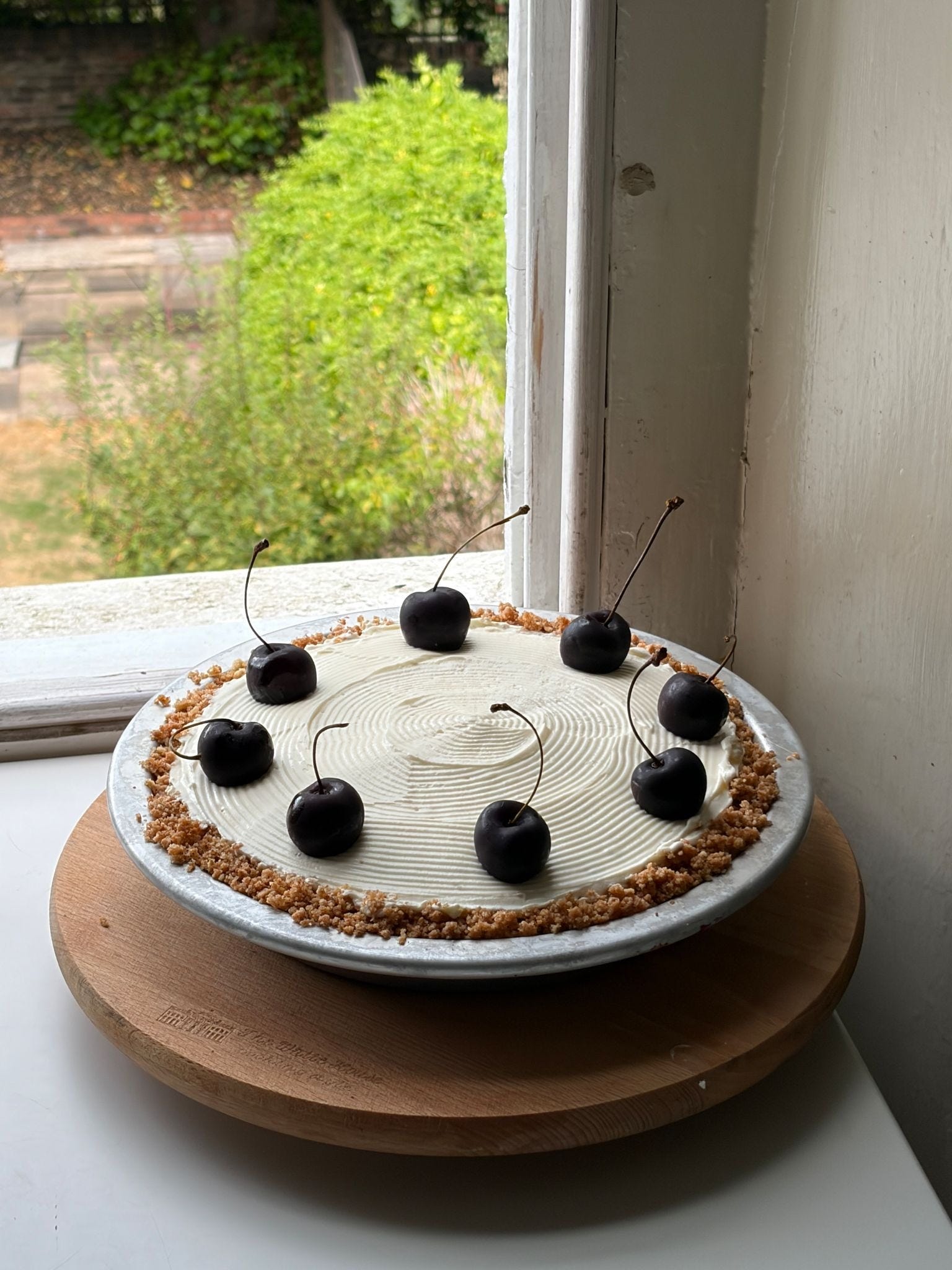
So, what combination of words stumbled into my notes app sometime last year and is just appearing now, demanding to be made: “CHERRYADE PIE”. To me, these two words, combining fizzy acid-pop excitement grounded with rich, homely butter, all at once crisp and juicy, unknowable but familiar, were Ed Ruscha hot. But what exactly would it be?! And what would make it different from Cherry Pie?!
Should it have a crumb or flaky pie crust? Should it be creamy and smooth or bursting with juicy, taut-skinned fruit? Should it be cold, or warm? Should it be left unadorned or complete with a cream top? Would there be a lemon element? What Even Is Cherryade?!
Ingredients Jigsaw
Truth be told, even when I started developing the recipe for this so-called Cherryade Pie, I wasn’t sure. With the heatwave in London, I decided to forgo the classic pie crust and locked in with a crumb crust — I bought digestives, ginger snaps and amaretti, unsure which path to take. I bought frozen sour cherries and a bag of dark, sweet cherries from Kent. I made lemon curd and cherry compote. I whipped cream, bought good ricotta, and had egg whites on standby for any kind of airy or moussey type of situation. I looked at what I had made, the components sitting there, and waited for inspiration to strike.
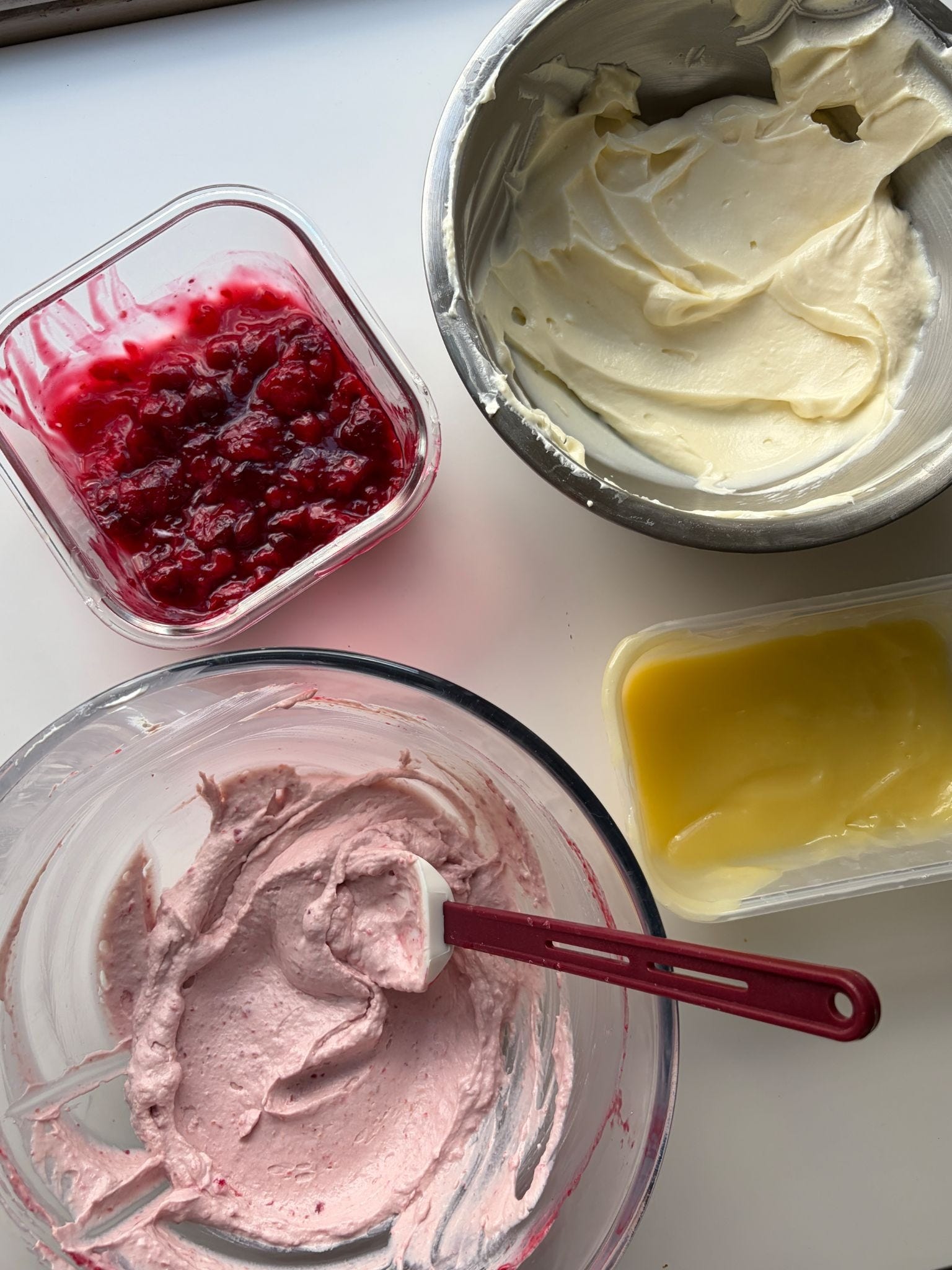
I blended the cherry compote until smooth and folded it through whipped cream. It was pink but… lifeless? All the tangy complications of the sour cherry had been blunted. I abandoned the idea of a cherry cream and quickly cooked a cherry curd based on my favourite stabilised curd recipe (here). Would it be sliceable? Hard to say, but it had plenty of cornstarch and butter, and it would at least be somewhat stable.
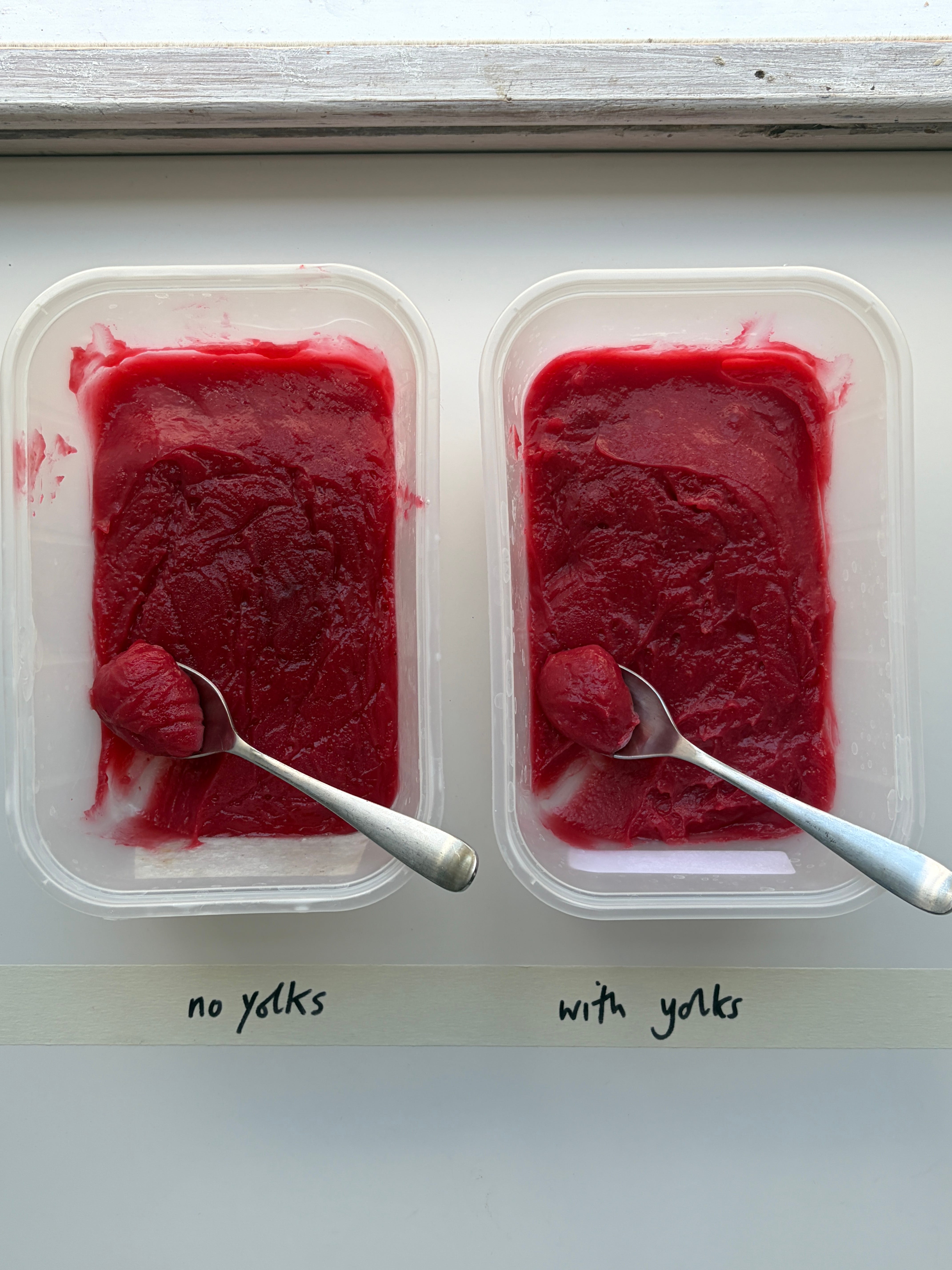
As it sat in the pan cooling, gelling alarmingly quickly (ARGH, WHY DIDN’T I PLAN BETTER FOR THIS?! DAMN YOU, HOT WORDS), I urgently whizzed up my amaretti biscuits. The 175g pack would surely be plenty? Alas, no – airy as they are, amaretti biscuits blend down to practically nothing and, seeing this collapse, I quickly called on my ye-olde-faithful digestives to pad out the crumb. 250g would usually have been far too much crumb for a 9-inch pie tin, but with the combination of dust-particle-sized-amaretti and reliable digestives, it was perfect. Dampened with butter, I pressed the crumb quickly into the tin and promptly poured in the curd.
As the curd cooled, I tasted it. It was bright and satisfyingly creamy, but lacking the sweet-shop sour cherry character I so desired. I called for the cherry compote, spread it over the curd, and then returned it to the fridge for my next move.
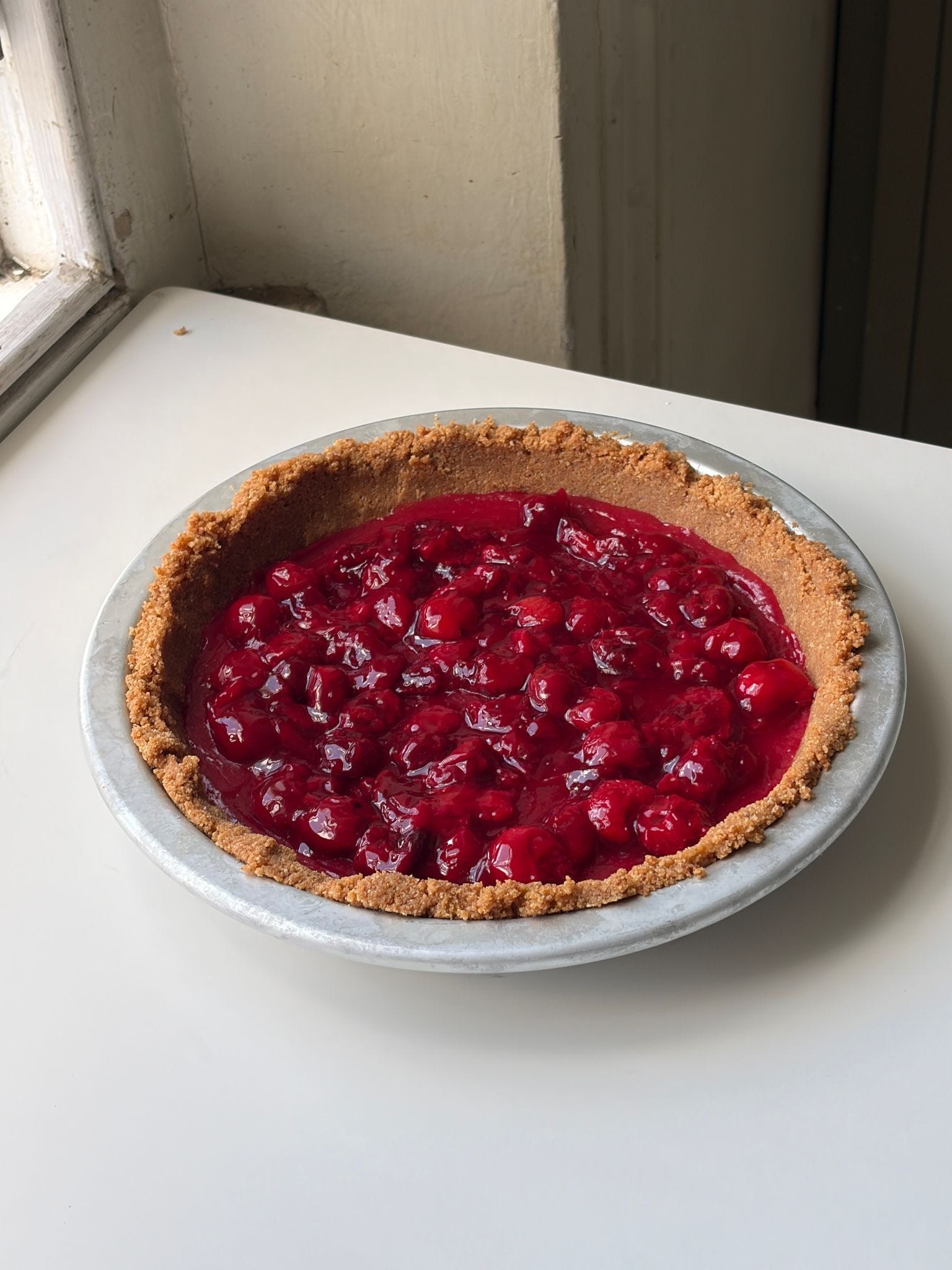
Some kind of cream topping made sense, and looking to the remaining bowls of stuff, I decided to try a combination of cream, ricotta and lemon curd. The cream provided body and fat, the ricotta added tangy milkiness without making it sloppy, and the curd would give us that mouth-puckering acidity (whilst still offering richness and fat thanks to the eggs and butter within). It was… delicious.
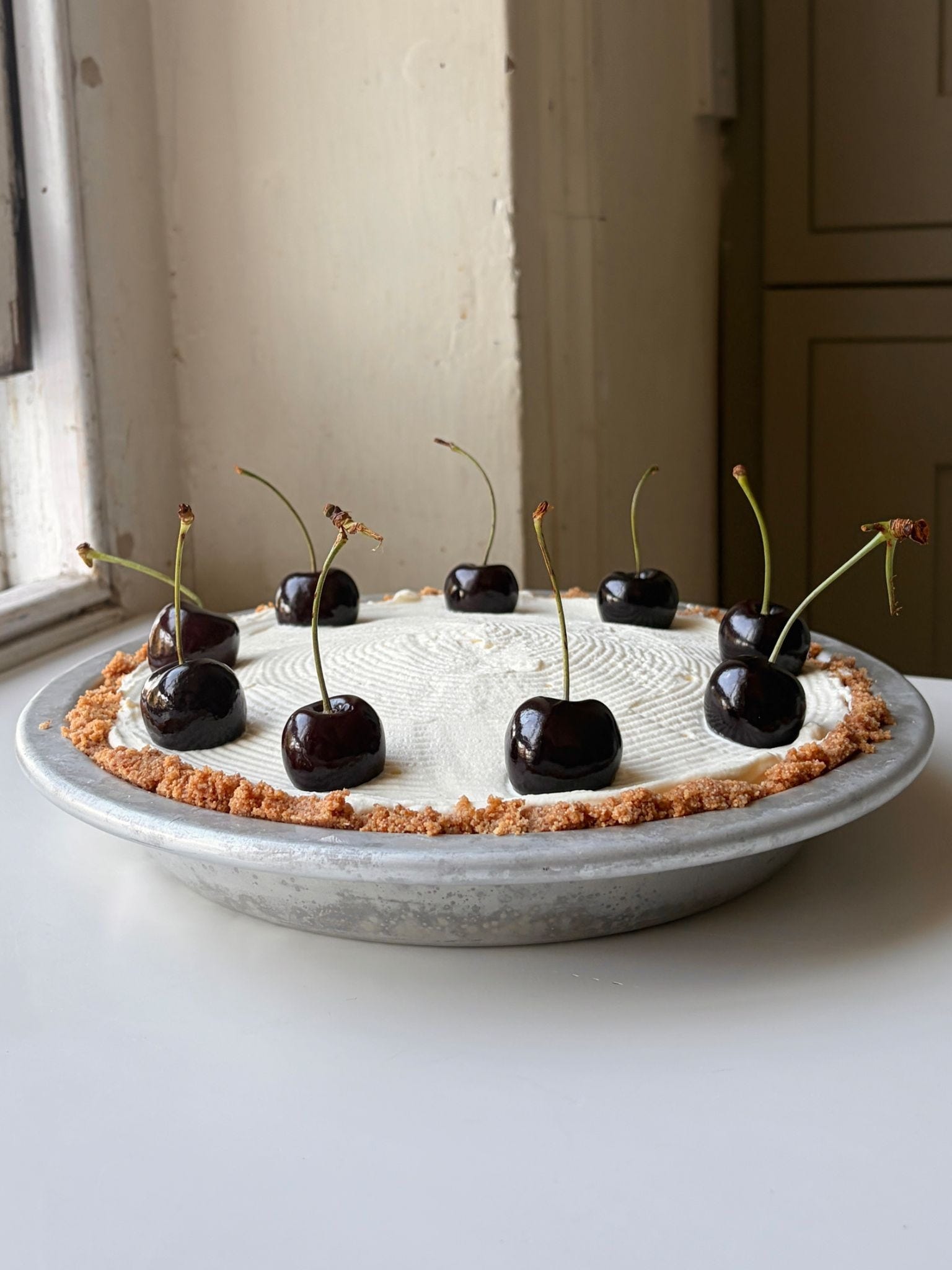
I spread it on top of the set curd, added a pattern with a serrated knife, added sweet cherries and then put it to bed for the night. Surely it would be perfect?
The First Result
Alas no. Turns out, more is not always more, especially when it comes to food. The combination of lemon and cherry was overwhelming. It was almost delicious, but somehow lacking. It was at this point I googled ‘cherryade’ and realised that cherryade doesn’t have lemon in it (embarrassing for me!!!), and as I kept taking bites, I realised the cream topping lacked airiness. It was a perfect creamy texture, but against that buttery cherry curd, it was just too rich.
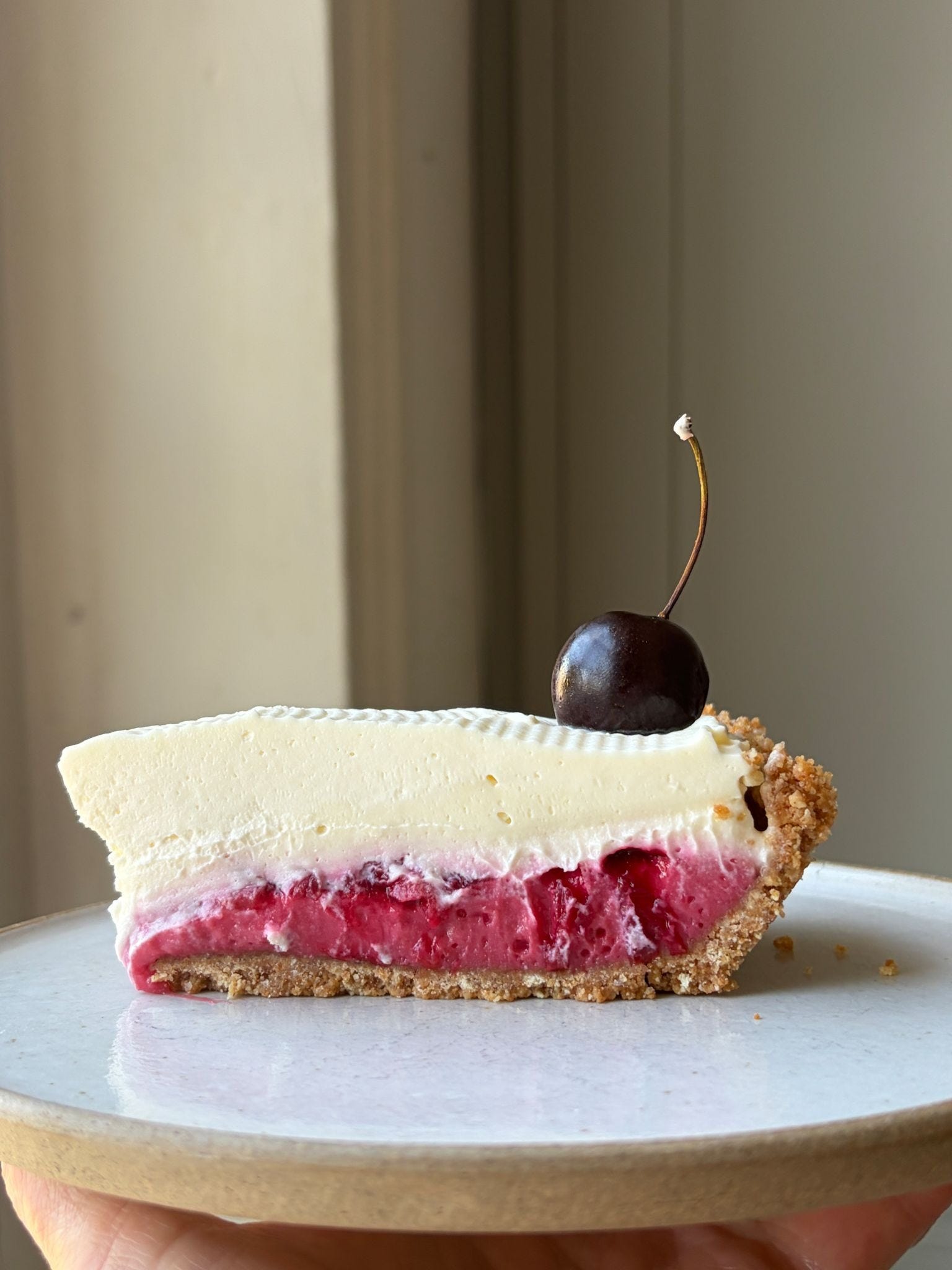
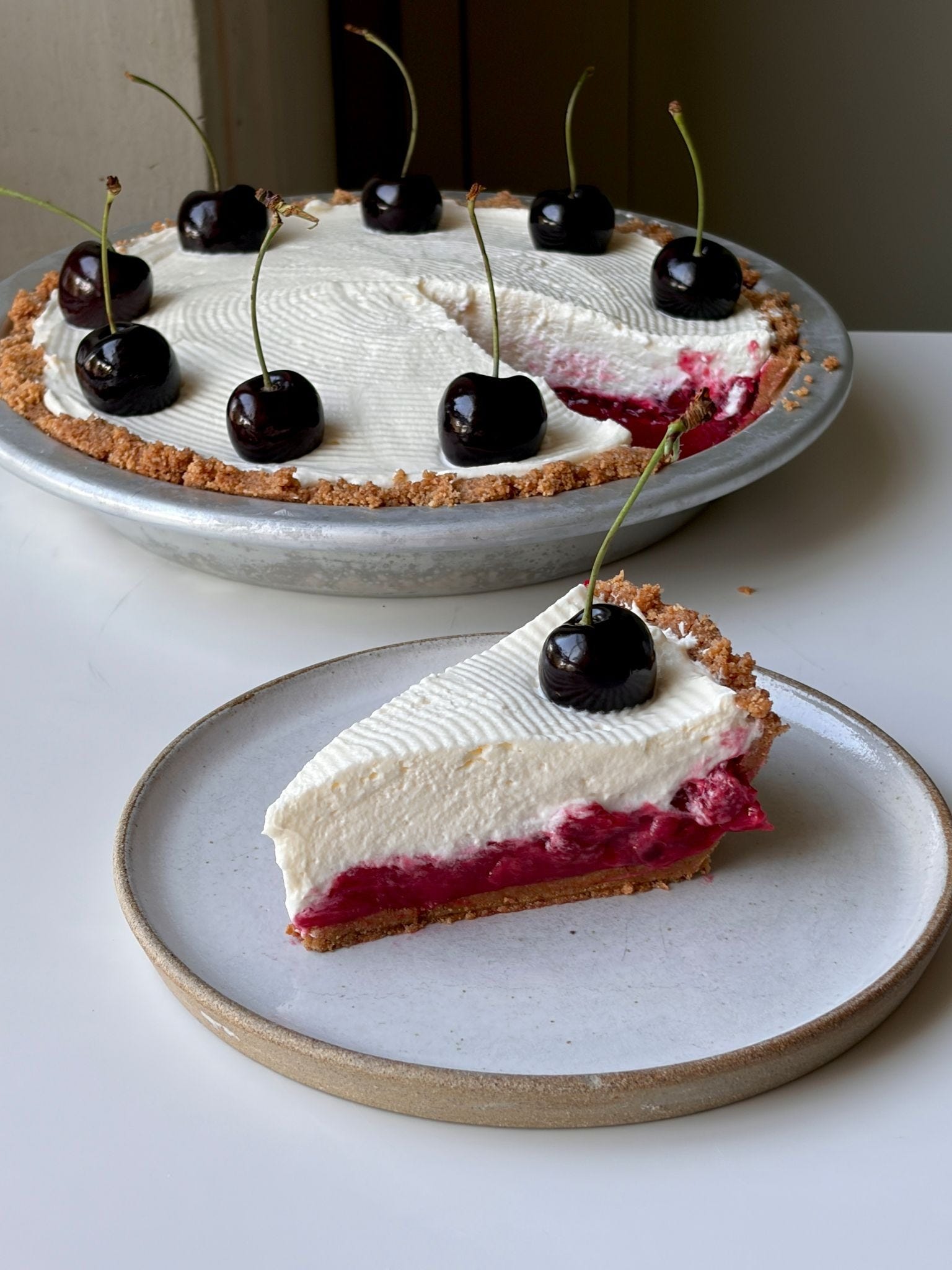
The amaretti crust was perfect, a home run! The almond flavour was perfect with the cherries, like two mirrors facing one another creating an infinity marzipan-adjacent flavour. The curd itself was almost there – it just needed tweaking to slice better and a little more tang. No changes needed for the compote, but the cream? Back to the drawing board. It was at this point that I decided to give up on this original name concept and run with something that rang true to the pie in front of me, a simple ‘say what you see’: Sour Cherry Cream Pie.
Cloud-Cream
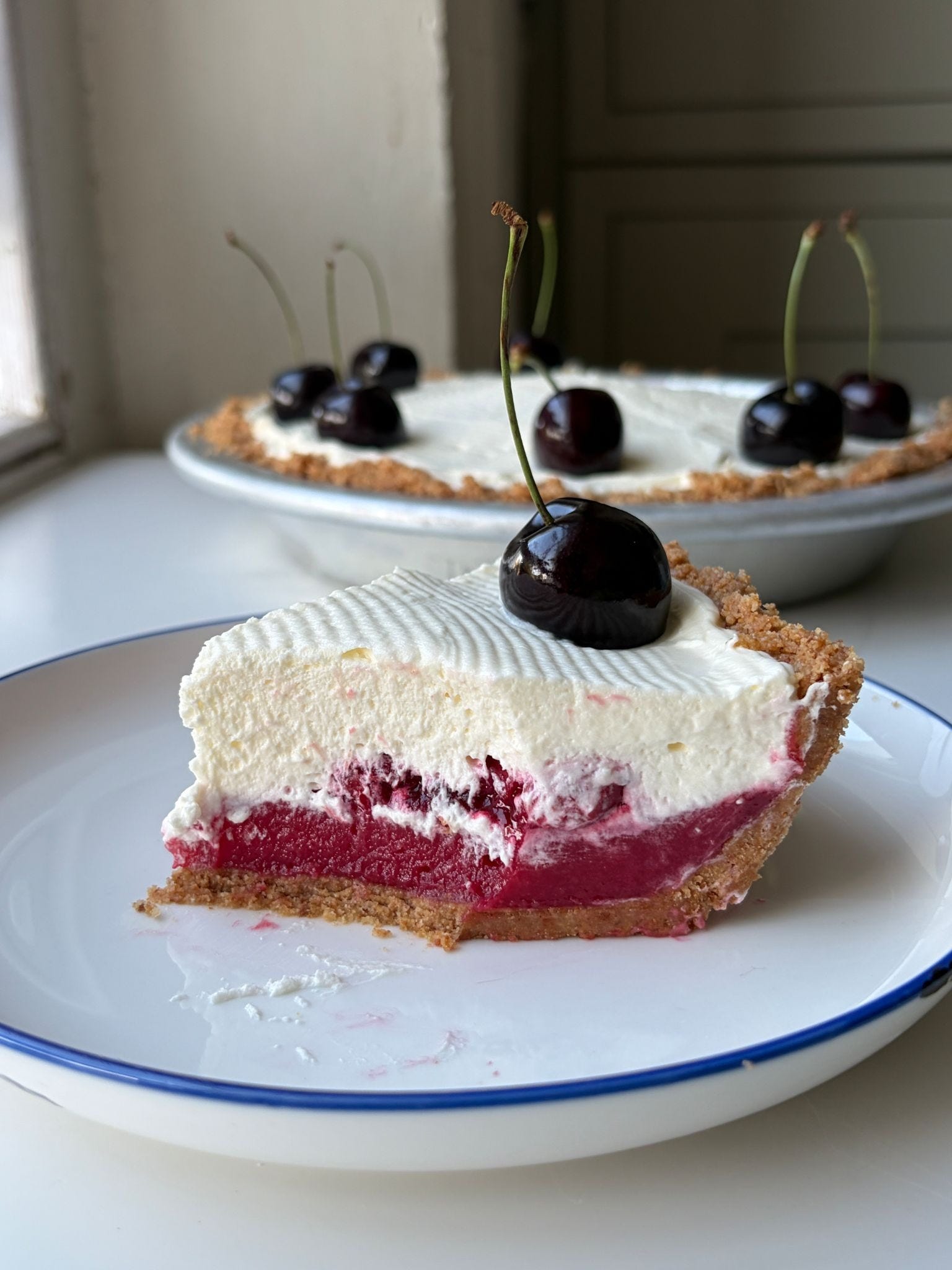
One of the best things about food in general, but, in particular, desserts, is contrast. So, if the cherry curd would remain rich, dense, and creamy, and the compote layer would offer juiciness and tartness, it would leave a clear role for the topping: airy and sweet.
I love whipped cream, but could we do one better?! I thought about my favourite airy/creamy desserts - mousses, tiramisu, etc. and started thinking about folding a meringue into whipped cream. Surely this would produce the most cloud-like whipped cream imaginable? The answer is… yes! Yes, yes it does! I mixed up a few tests, comparing Swiss (a cooked meringue) and French folded into whipped cream at various ratios.
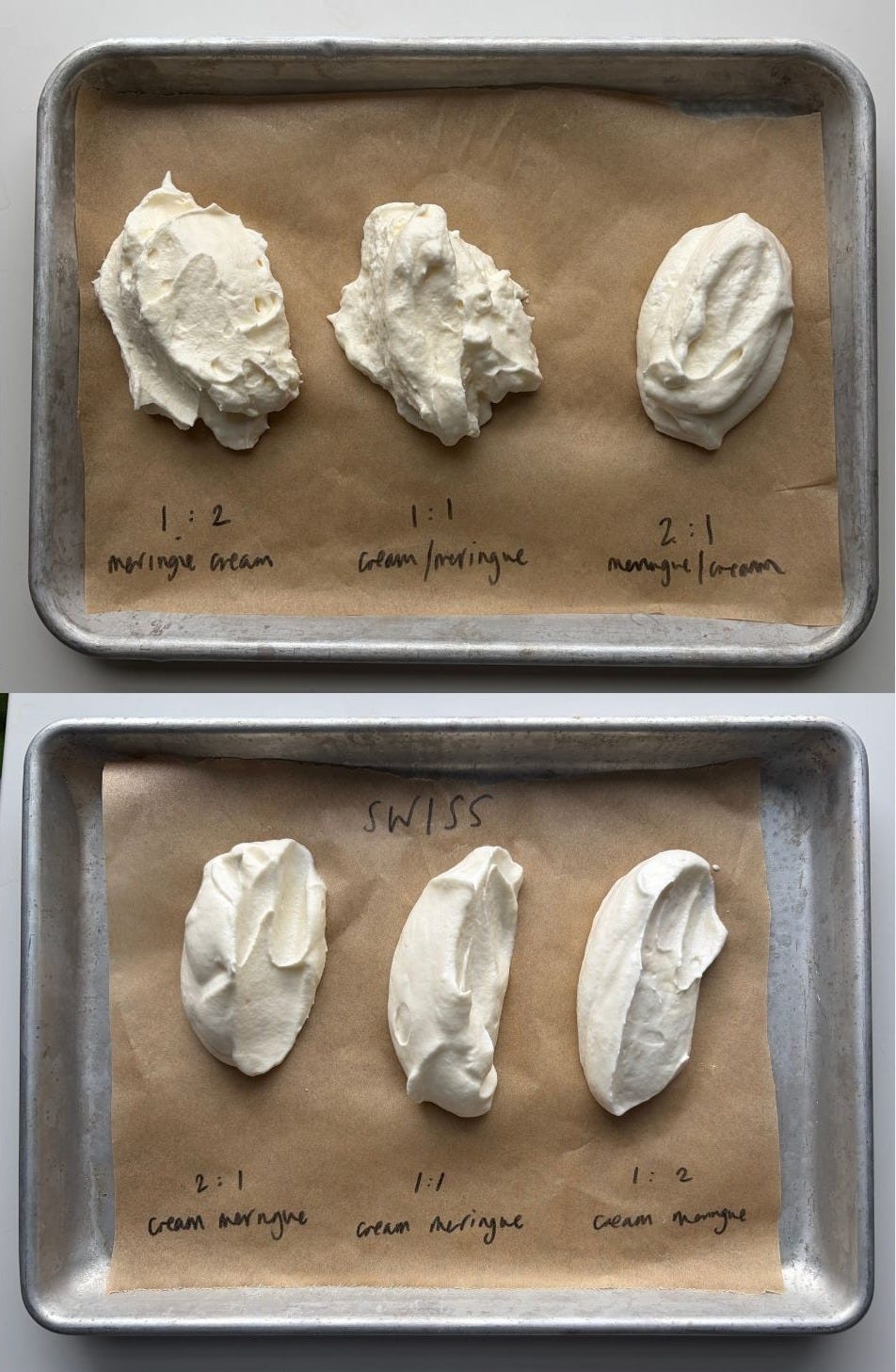
The 1:2 meringue-to-cream ratio was light and airy, evoking ‘whipped cream from a can’ vibes. The 1:1 meringue-to-cream was even lighter, while the 2:1 meringue-to-cream was closer to creamy air, though bordering on a touch sweet. The Swiss was lovely and smooth, but faintly ‘eggy’ due to the relatively low sugar concentration of the meringue I’d made.
I left these overnight in the fridge to see how they would behave:
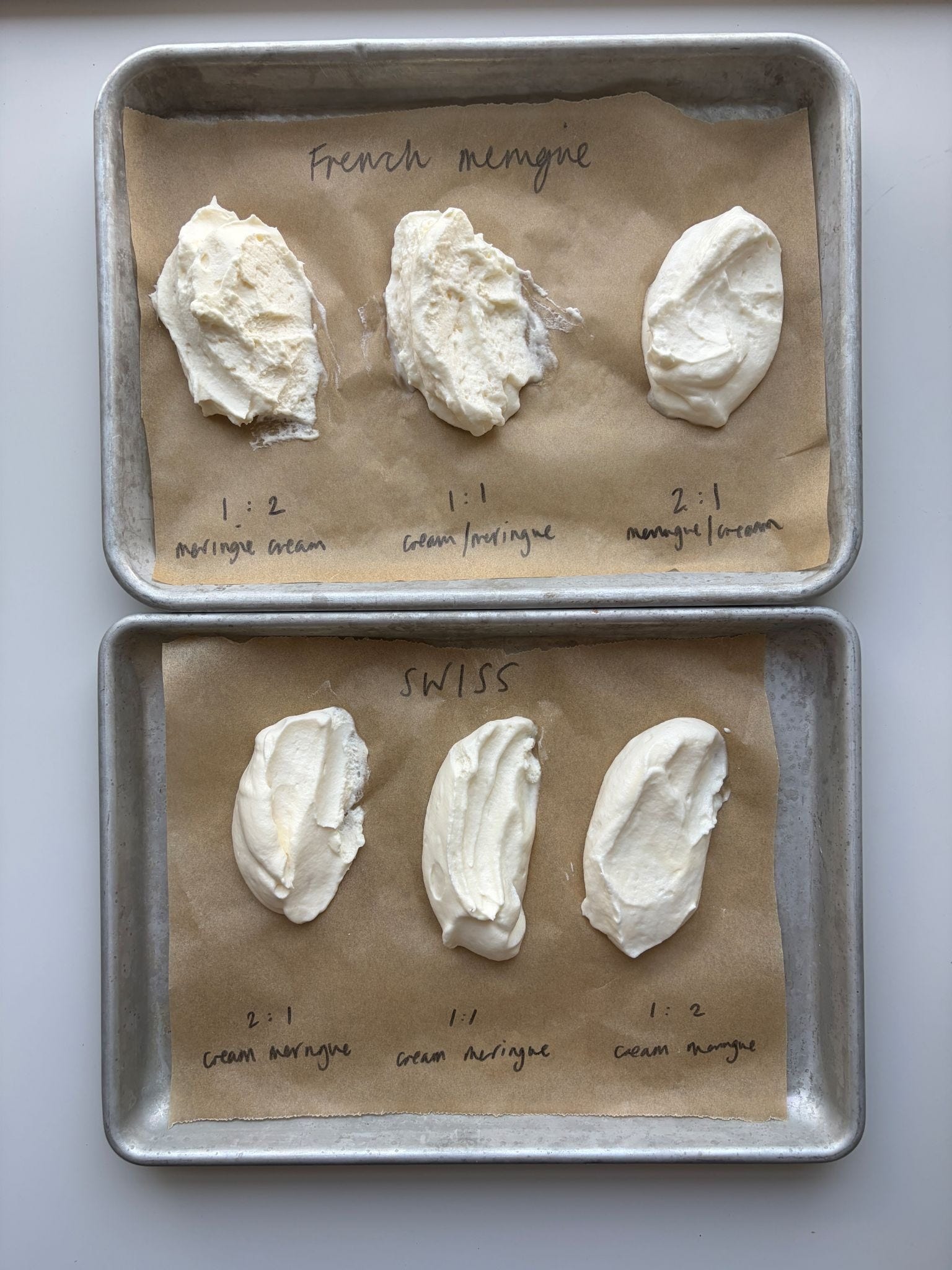
After a night in the fridge, the Swiss meringue samples hadn’t moved at all, while the 1:1 and 2:1 French had, just a little bit — you can barely see it. The 1:2 French hadn’t weeped at all.
Despite being more stable, I was leaning toward the French meringue version for its lightness. I tried another three versions of a Swiss meringue, attempting to edge out the faint egginess by increasing the sugar, but this not only sweetened the mixture, but made it very dense.
We need to think about this cream a little differently from most additions to whipped cream: Rather than thinking of meringue as a stabiliser for the whipped cream, we need to think of it the other way around. The cream’s fat network provides most of the stability, while the meringue’s role is to introduce air, lightness, and volume. From this perspective, an extremely stable, high-sugar Swiss meringue may not be necessary, which can make the cream dense and too sweet. A lighter French meringue, folded gently into softly whipped cream, can produce a more delicate, cloud-like texture, with the cream maintaining the structure and the meringue contributing an airy, almost weightless quality.


Another benefit of the meringue-infused cream is that it doesn’t split as easily or become overwhipped. The air from the meringue creates a pleasant bubbliness that prevents the cream from becoming overly stiff, meaning you can keep working with it! It does risk deflation if you faff too much, so think of this as an insurance policy more than anything else.
This was the perfect topping for the tangy cherry, a super light, gently sweet cream that makes you feel like you’re eating an airy cherry mousse sundae. As of sending this newsletter, the pie has been in my fridge for 48h and still looks great.
Alt Cream
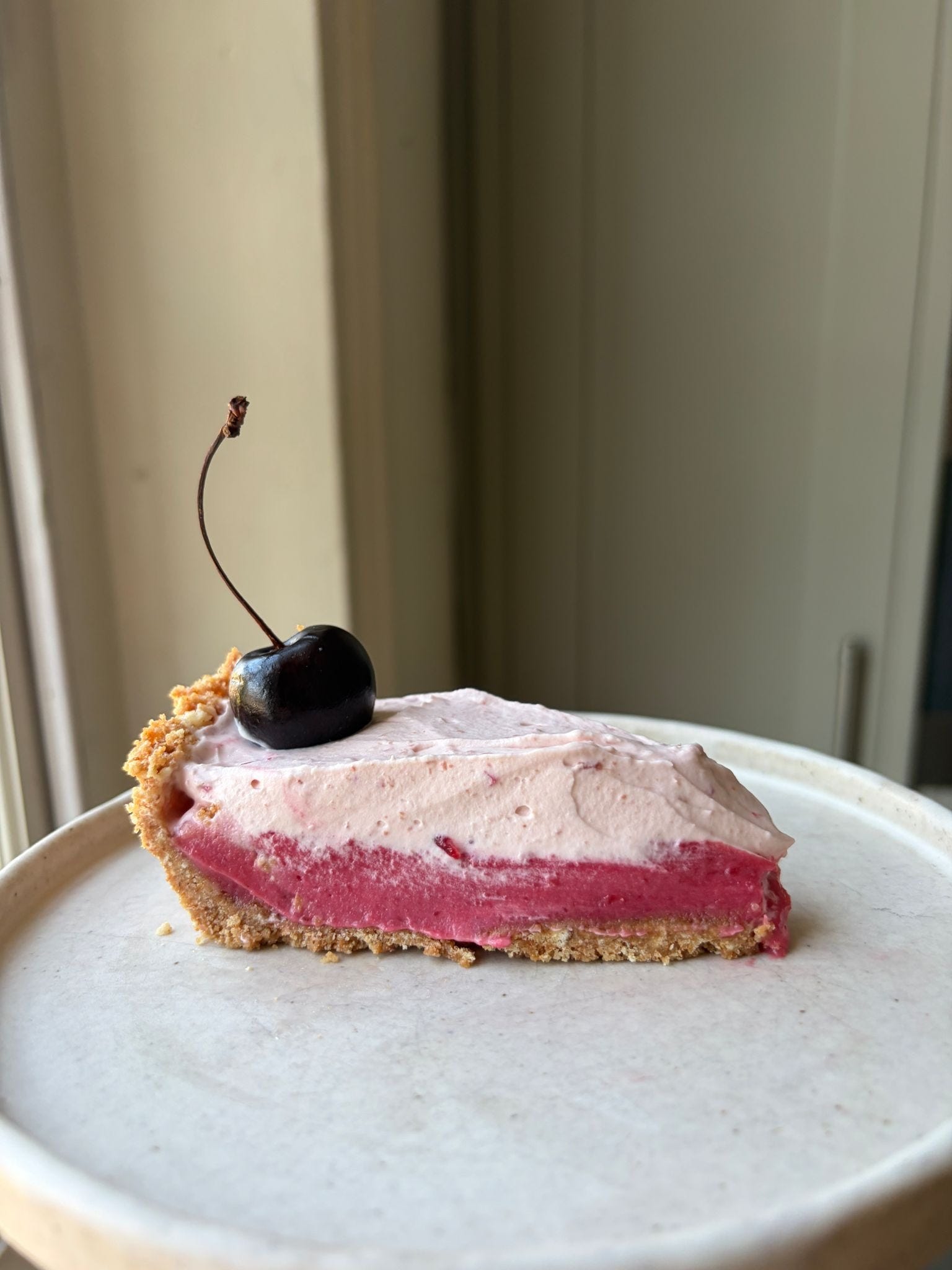
I’m aware that I’m lucky to have access to double cream here in the UK, which provides peak stability (see Brian Levy’s piece about stabilising whipped cream here). I can’t be sure how this cloud cream will respond to lower-fat cream, like in North America, so I can’t confidently recommend it unless you are serving within a few hours. So, may I offer you an alternative: Pink Cream! Aka, a little sour cherry juice stirred into cream (it’ll thicken immediately), then sweetened to taste and whipped into peaks. The double bill of pink-on-pink is cute, too.
Ok, let’s make it.
RECIPE: Sour Cherry Cream Pie with Cloud Topping
Makes 1 x 9-inch pie