
Kitchen Project #210: How To Bake With White Chocolate
Octavia is here to teach us the good, the bad, and the not-as-sweet-as-you-think


Hello,
Welcome to today’s edition of Kitchen Projects. Thank you so much for being here.
Today, our chocolate columnist Octavia Lamb (is back to ask (and answer) a brand new question about the ingredient so many people love to hate: White Chocolate. This time she asks (and tells us) if we can bake with chocolate… and if yes… should we?!
Octavia rounds off this newsletter with a delicious White Chocolate, Coconut & Ricotta Cake to show us how it is done. Over on KP+, you’ll find Octavia’s recipe for a White Chocolate, Cardamom & Berry Tres Leches Cake, the perfect ‘cold squidge’ (in her words) of a dessert this summer. Click here for the recipe.
What’s KP+? Well, it’s the level-up version of this newsletter. By joining KP+, you will support the writing and research that goes into the newsletter (including the commissioning - and fair payment - of all the writers), join a growing community, access extra content (inc., the entire archive) and more. Subscribing is easy and costs only £6 per month, or £50 per year (£4.10 per month). Why not give it a go? Come and join the gang!
Love,
Nicola
All About White Chocolate, part II
by Octavia Lamb
“I can’t stand white chocolate, it’s too sweet”
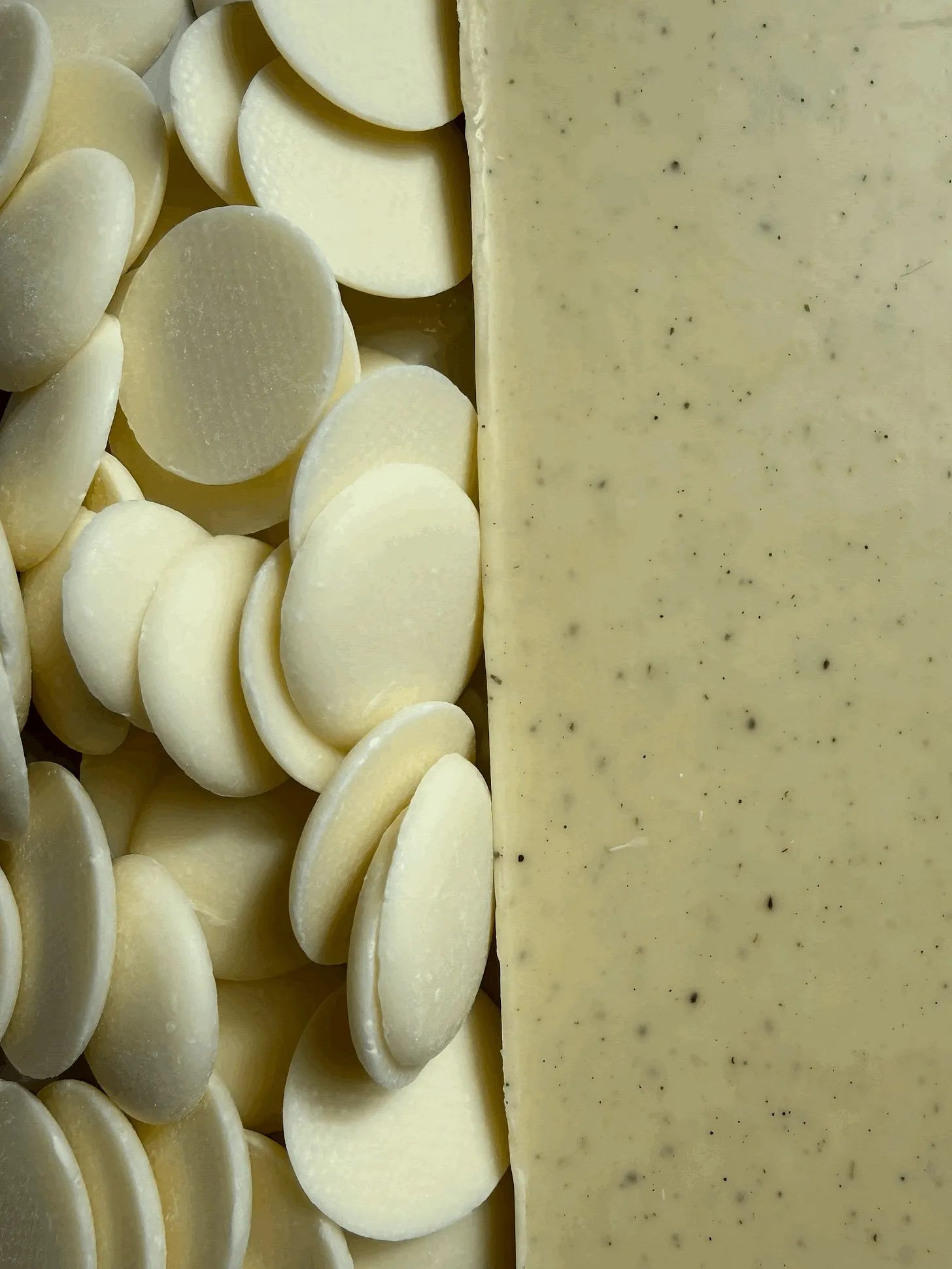
The above sentence may well resonate with some of you- and to some extent, I actually agree. A few neat cubes of the wrong example can indeed leave the eater feeling positively crystallised. And this is a shame, because it seems that these bad, extra sugary apples have tarnished all white chocolate with the same extra sugary brush, causing many to triumphantly declare their disdain as something of a reflex whenever the subject arises.
But while it’s often crossed my mind to counter such proclamations by noting that there is plenty of white chocolate out there far more balanced, and far more interesting, than some milk or dark ‘chocolate’, I’m not actually here to spar with the ‘I Hate White Chocolate It’s Too Sweet Club’.* Instead, here I am proudly waving my ‘YES, IT’S A SWEET SUBSTANCE’ flag.
*N.b. For those of you who were really hoping to thrash it out, you can find a robust debate on the pros/cons/validity of white chocolate here.
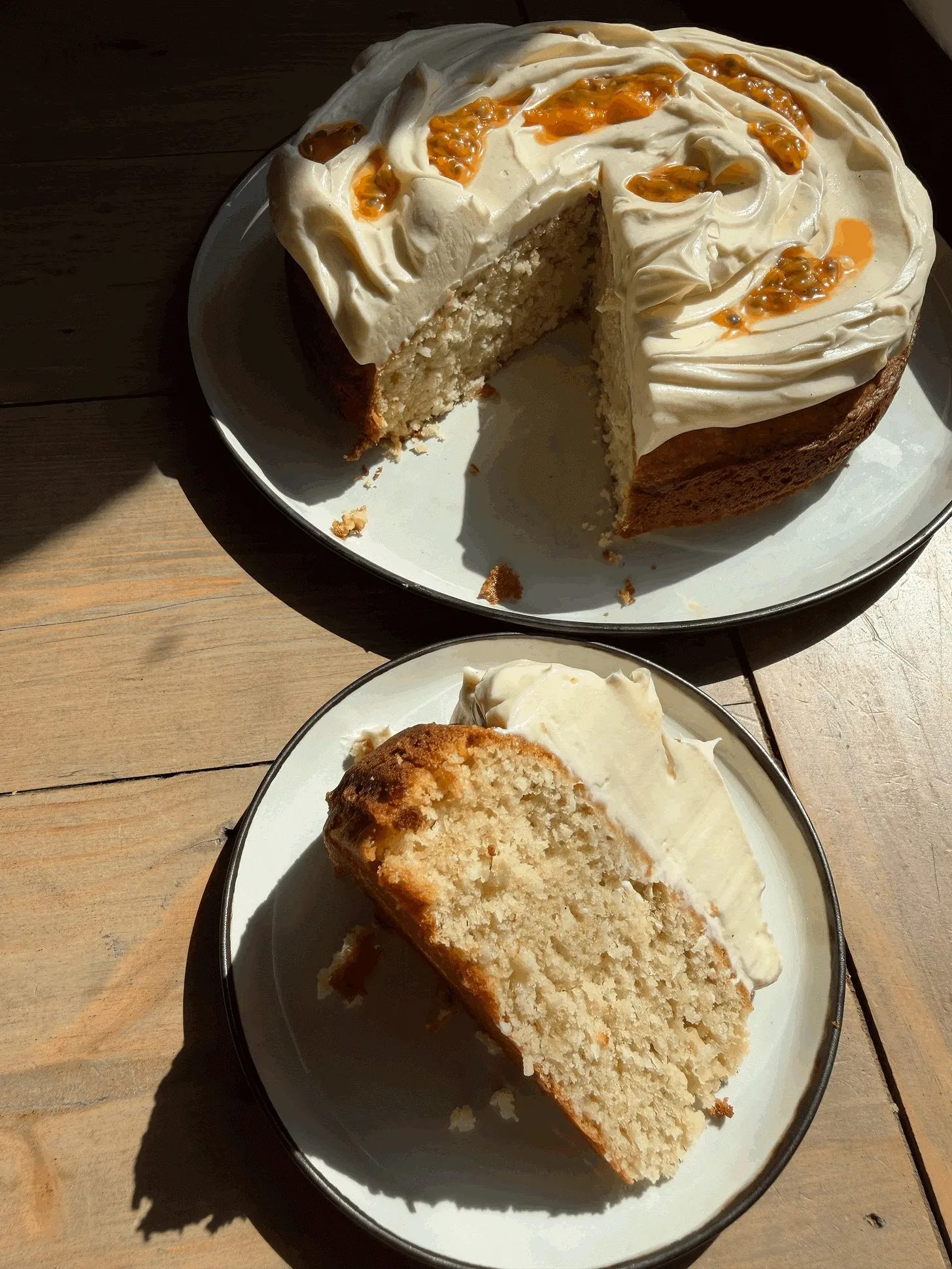
Yes. Today, we are throwing the lasso around white chocolate, harnessing its sweet, sweet potential and creating cakes running on the stuff. On the menu: a summery White Chocolate, Coconut & Ricotta cake with Whipped White Chocolate Cream Cheese ganache & Fresh passion fruit, and, for those thirsting for a cake absolutely DRIPPING with white chocolate, head over to KP+ for my White Chocolate, Cardamom & Berry Tres Leches Cake- a perfectly cold squidge of a pudding for a hot day, or any day really, but particularly one in which berries are at their seasonal best.
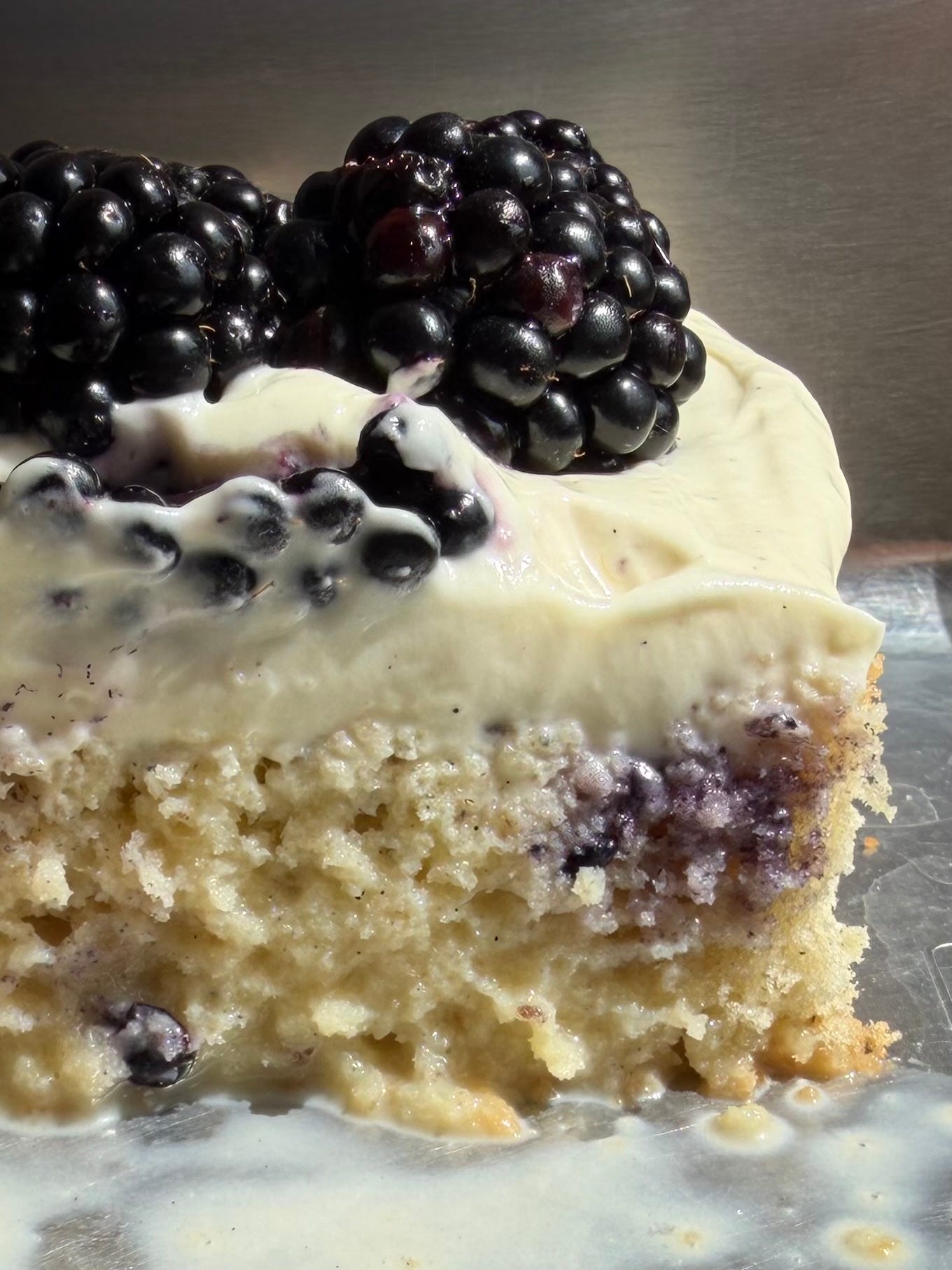
But let’s just back up a second. Why do such a thing? This experiment all started with a (seemingly) simple question posed by Nicola: could white chocolate be used as a sweetener instead of sugar? Almost as soon as I set about answering this, I found I had my own follow-up question: should white chocolate be used as a sweetener instead of sugar?
Allow me to expand. I’m sure this is news to absolutely nobody here, but chocolate is not cheap. The cheap stuff is no longer cheap, and the REALLY cheap stuff isn’t even chocolate anymore. Caster sugar costs on average £2.25/kg in the supermarket, and while white chocolate varies greatly in quality and cost, we’re looking at prices of up to £58/kg on the highstreet (to make this feel less of a traumatic price tag, a quick google informed me the price of saffron can reach £15,000/kg, making chocolate a relative bargain, dear reader!). But it still stands that if we’re baking it into our cakes, it better pay back dividends. For me, this became a personal mission to make a cake that left no white chocolate lover feeling shortchanged.
A Flavour of What’s to Come
So, what exactly can we expect to taste in a white chocolate cake? Let’s ban the word “sweet” for just a second and push ourselves to find a second adjective. Creamy? Anything else?! Well, according to some of my favourite white chocolates’ flavour profiles (yes, I did interview the bags of chocolate in my kitchen; yes, I had a great time), it turns out we can expect quite a lot:
Valrhona Ivoire & Opalys - “Ivoire white chocolate’s notes of condensed milk* and vanilla recall the sound of children’s laughter as they share moments of pure joy together”. “Delicate, like a shimmering spring snow shower. Opalys is a white chocolate with the merest hint of sweetness whose delicate milky, vanilla flavour conjures up all the purity of a shimmering mountaintop snow shower in spring”
Pump Street - “Custard, toffee, cold buttermilk. A creamy, rich white chocolate made with cocoa butter pressed in-house. Carefully balanced to deliver indulgence in every bite.”
Original Beans - “Sweet impressions of banana milk and cocoa butter slowly paint a golden portrait of life in the Yuna River Valley”
*Aha, this is not our first white chocolate/condensed milk rodeo. See All About White Chocolate Part 1 for more!
My Milk Solids Bring All The Boys To The Yard
Ok so we’re after a cake principally tasting of, but not limited to, childhood memories, shimmering snowstorms, and a splash of Custard, no biggie! However, in spite of the brief and beautiful odyssey that just swept us from mountaintop to river valley, we seem to have still circled back to the same, inescapable starting point - ‘sweet’ and ‘creamy’.
As well as ‘condensed milk’, we have words like ‘buttermilk’, ‘delicate milk’, and, yes, ‘creamy’ cropping up. Memo received! All of this is to say that the most valuable player in white chocolate is, of course, the milk powder. White chocolate is our favourite portable, pocket-sized piece of cream, and who doesn’t love the sound of a cake built on a base note of luscious milk?
But I still think we can dig deeper; if you know where to look, white chocolate can be so much more than what meets the eye. Reading back, we also have a few mentions of everyone’s favourite edible orchid coming through, which leads me onto the following:
A quick word on the relationship between chocolate and vanilla
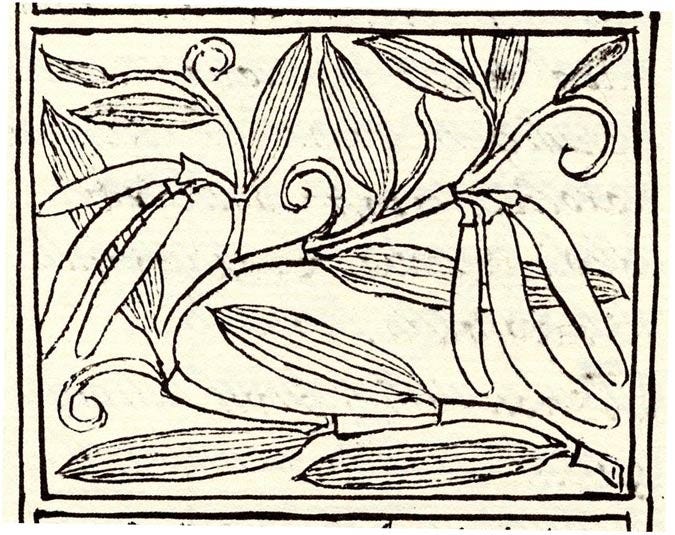
As the saying goes: Beans that Grow Together…remain intertwined through the annals of time, right?
The pod of the Vanilla planifolia orchid, or the black flower, as the Aztecs called it, was one of the first spices used by Mesoamerican cultures to sweeten and flavour their drinking chocolate. I say they were onto something, as we’re still here doing it hundreds, if not thousands of years later. White chocolate and vanilla have become two particularly interlinked flavours, and I think most of our taste buds interpret vanilla’s presence as a very comforting and nostalgic one. Mix this together with a touch of sweetness and milk, and I think we’ve arrived at the very taste of childhood that Valrhona was referring to.
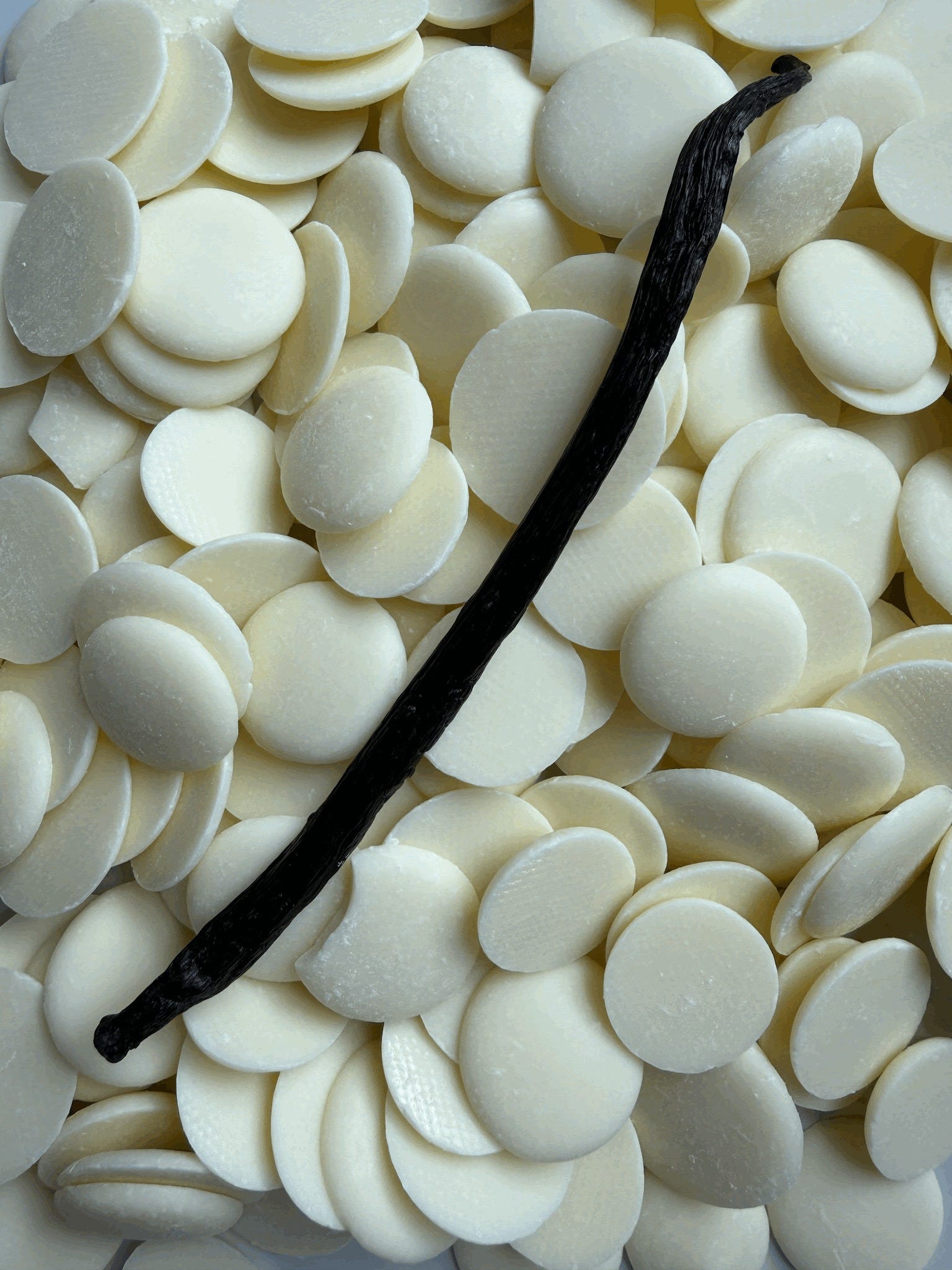
In the case of milk and dark chocolate, especially of the craft variety, you wouldn’t expect to find vanilla in the ingredients list as this tends to be a sign that the maker is covering up the taste of poor quality cocoa. However, with the exception of brands such as Pump Street and Original Beans, pretty much all white chocolate contains some vanilla, and while I love tasting pure, unadulterated chocolate, I also don’t think the addition of a little vanilla is a bad thing.
However, as with milk and dark chocolate, vanilla can be used as a rug to hide all manner of sins, and in such instances its use gets a bit out of hand. Even worse, the vanilla itself gets replaced with synthetic “flavouring”. Always check the ingredients and give such chocolate bars a wide berth.
While it may be a bit of a stretch to class this as historical reenactment, we can at least officially justify treating ourselves to a real vanilla pod to perfume this cake as an important and historically informed application.
Last But Not Least
I’ve left the most crucial ingredient till last, the ingredient that pulls this all together to create a chocolate cake, and not a milk powder vanilla cake. The cocoa butter. White chocolate can be broken into two categories based on the type of cocoa butter used: natural or deodorised. Deodorisation is the fairly widespread process of chemically and physically removing the inherent flavour from the cocoa butter, normally done to beans of lower quality to remove their bad taste (a sliding scale anywhere from bitter, burnt plastic to overly-funky manure! A result not only of poor beans but also poor handling post-harvest), but it also removes any and all flavour.
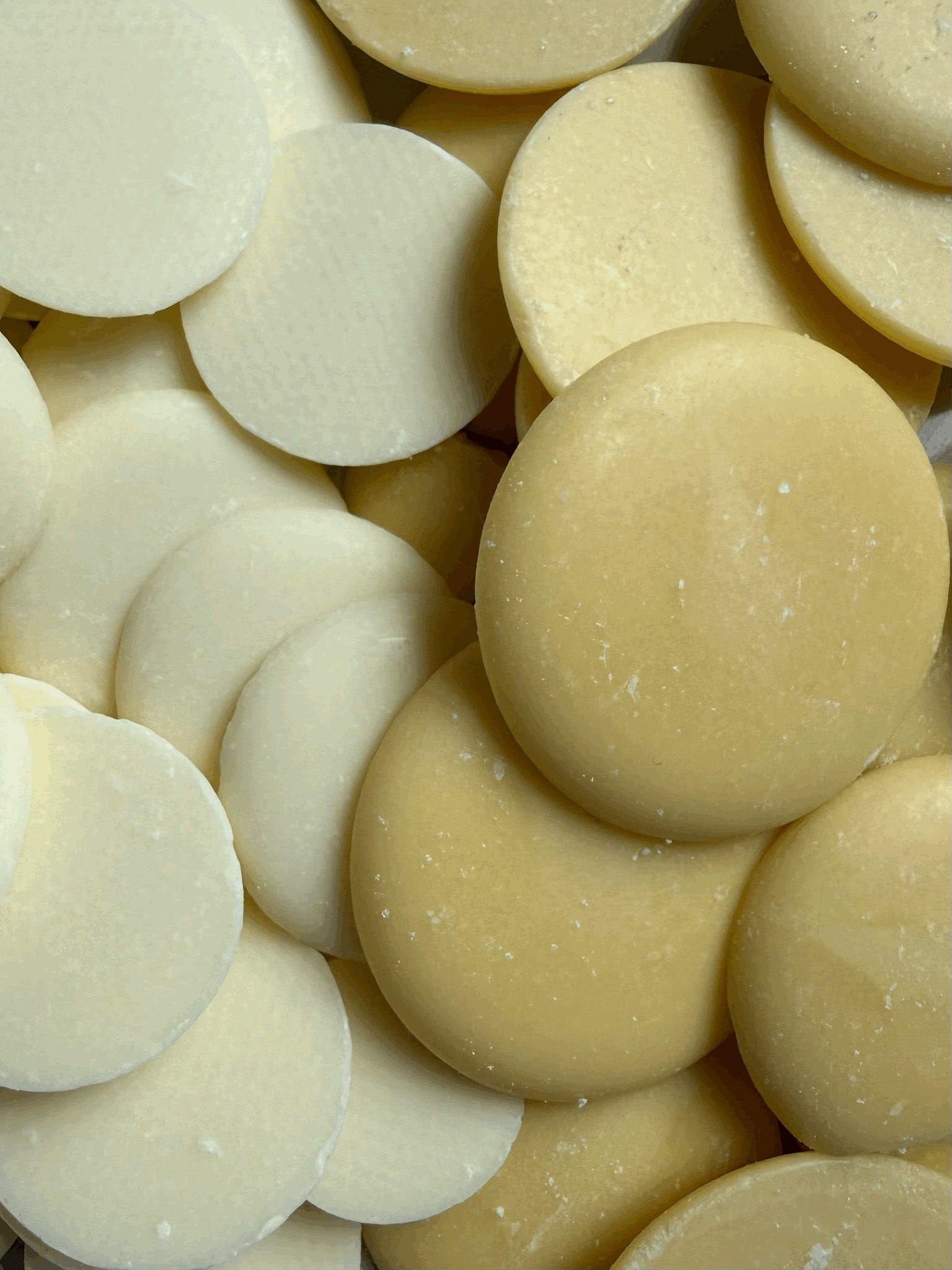
Speciality producers like Islands, Original Beans, and Pump Street press their own cocoa butter from their beans and keep it natural, which gives the chocolate far more identity- if you’ve never tried craft white chocolate before, I’d urge you to seek some out as it’s quite a different experience.
I tested my cake with natural and deodorised white chocolate, and I enjoyed both! The deodorised one (I used Valrhona Ivoire), being the kind of white chocolate we all grew up on, tasted just as familiar as you’d expect. But the subtly exotic notes of the natural white chocolate peeking through the cake really made it extra special- a reminder that we’re enjoying the luxury of a cake made with the beans of a completely outlandish fruit grown on the other side of the world.
The Problem With White Chocolate Cake
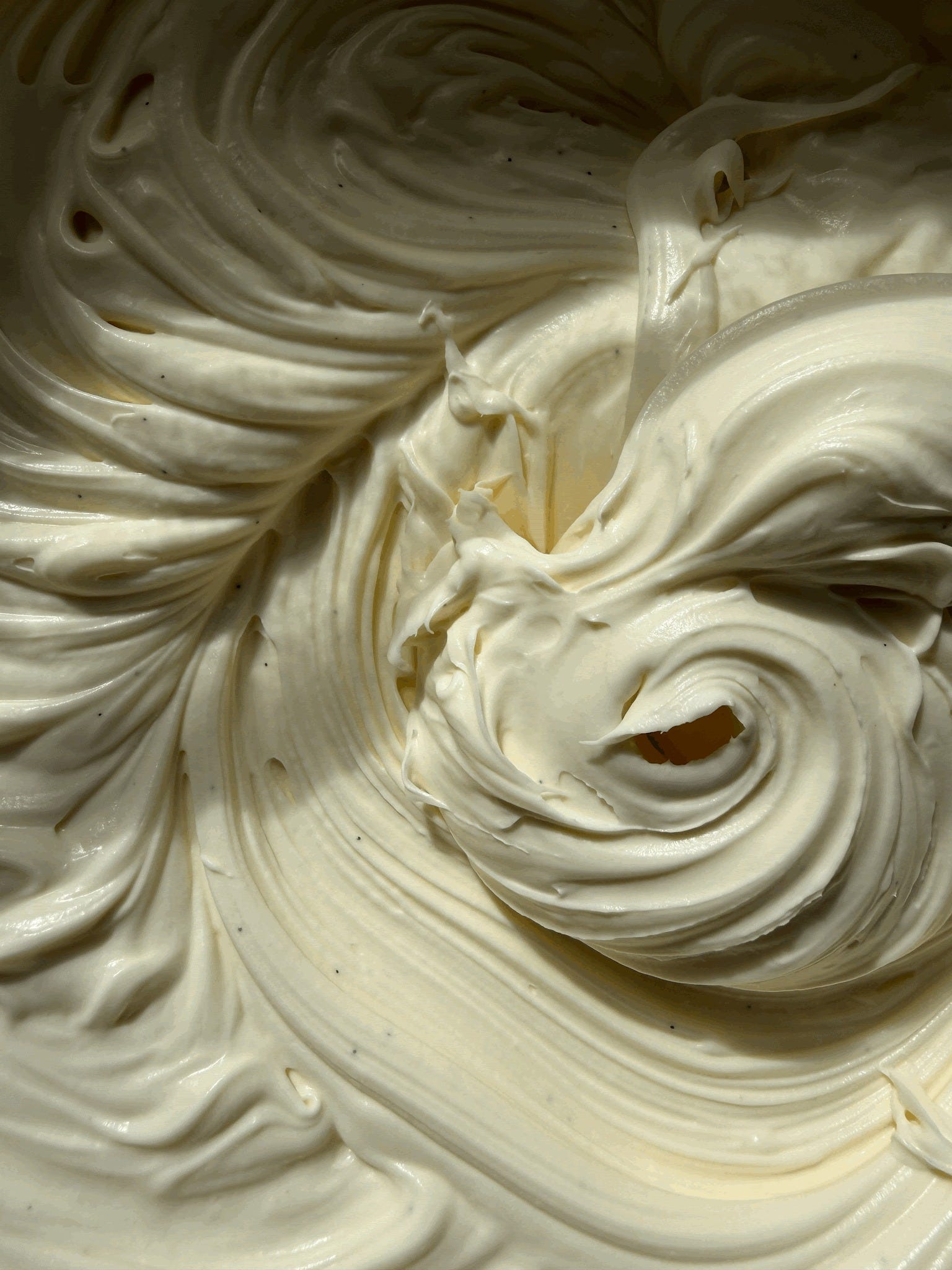
To summarise, we’re aiming for a creamy, lightly sweet, vanilla-y, white chocolate cake. Sounds great! But here’s the thing: flavour isn’t the only quality white chocolate brings along.
It’s easy enough to sweeten things such as Custard, cheesecake, or ice cream with an amount of white chocolate without much strife, all being creamy, spoonable things- the whipped ganache in the coconut cake and the soak and topping of the tres leches are examples of this. But cake? With a moist crumb, even rise and a lovely golden crust? Chocolate says no.
You’ll probably have already noticed that most classic chocolate cake recipes principally use cocoa powder instead of actual chocolate. And this is with good reason, for however much I love chocolate, it really is a structural inconvenience. This explains why, typically, in a white chocolate cake, most of the white chocolate will be found in accompanying elements and not the actual cake. But I really wanted to find out how much white chocolate I could weave into the very DNA of this cake. And so began a level of scientific endeavour similar to that put into the discovery of DNA itself (I just checked and this was a century-long process, so I may exaggerate slightly).
Lessons In (White Chocolate) Chemistry
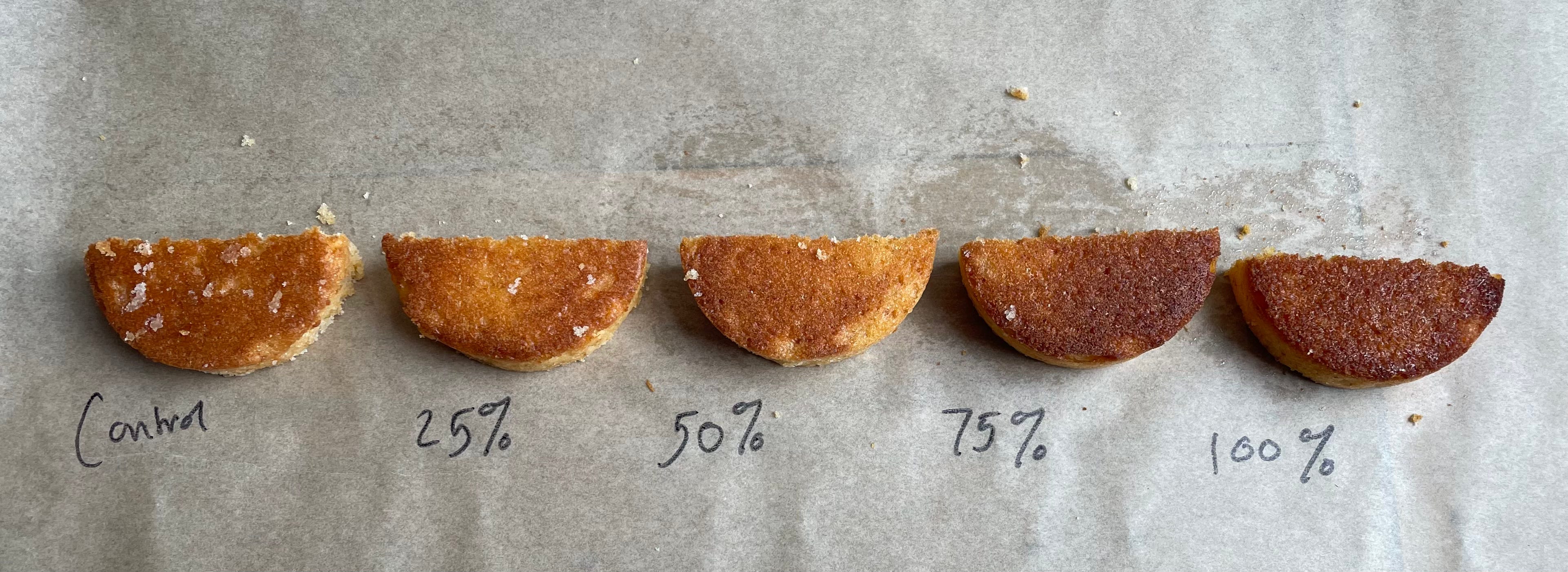
As a starting point, I thought I’d do a very literal, incremental like-for-like swap from sugar to chocolate just to see what would happen. Bad things happened.
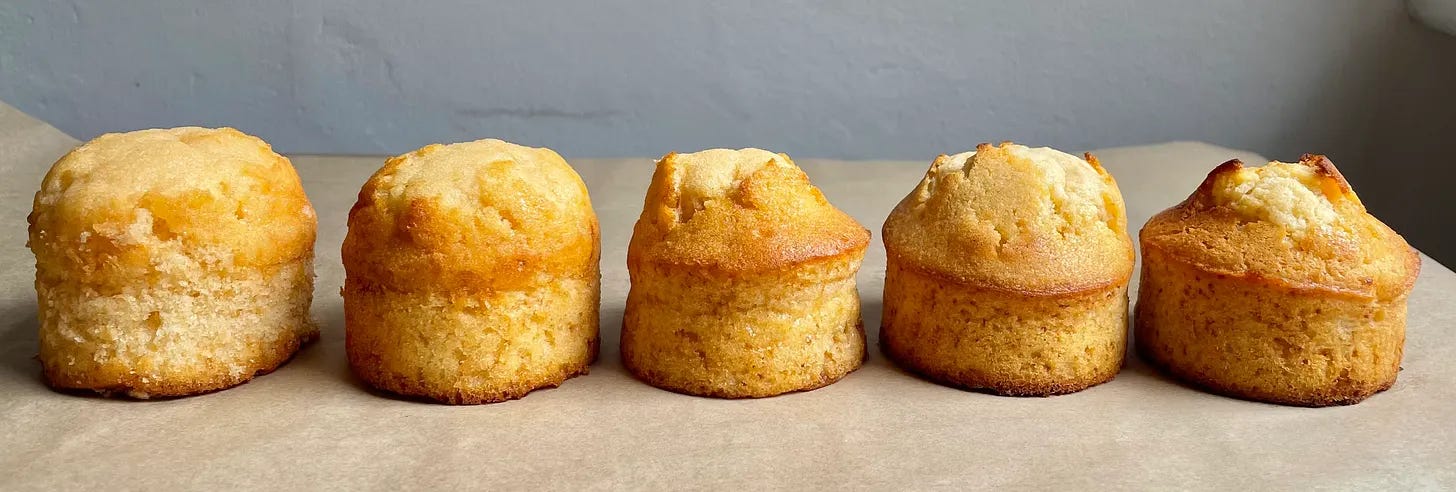
The further down the line we went, I noted the following things:
They became less and less sweet till the final one tasted like a scone.
The texture became claggy.
The rise got progressively worse till we arrived at the sad little hut-shaped cake at the end.
The crust was getting darker, which wasn’t necessarily a bad thing till noticing that the base of the final one had burnt after not much more than 10 minutes in the oven.
Perhaps most importantly, by the time we’d replaced our entire sugar quantity with chocolate, it still didn’t taste of white chocolate; in fact, it didn’t really taste of anything.
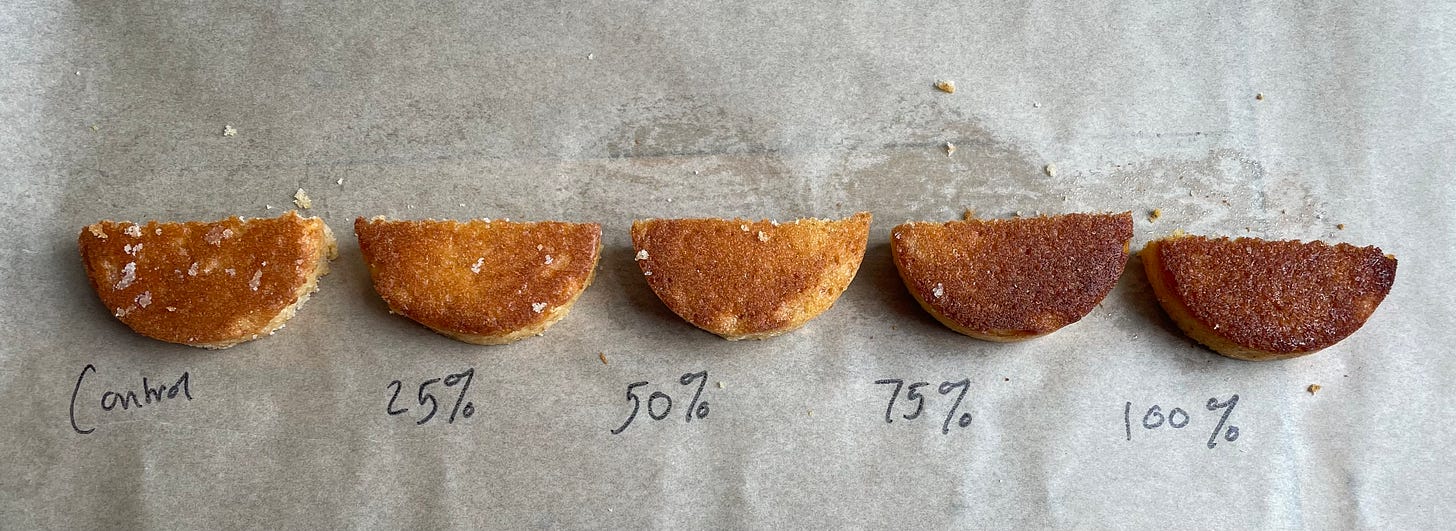
white chocolate vs sugar tests
But why were such things happening? Well, because no matter what some people say, white chocolate isn’t actually pure sugar. We, the enlightened, already know this of course, but let’s just take a quick look at the ratios to see exactly what we’re adding to our cakes.
So which white chocolate should we bake with?
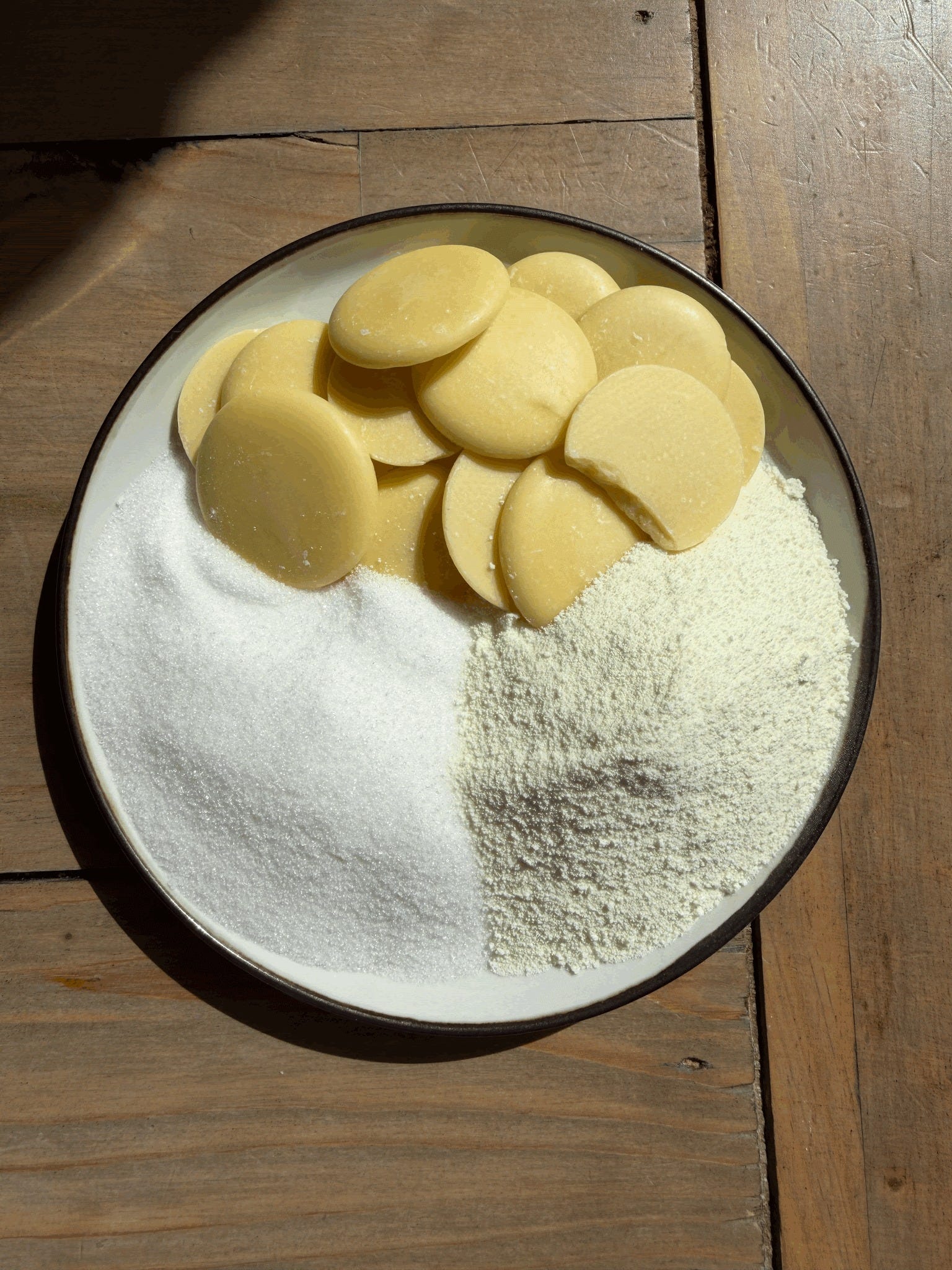
The quality white chocolate brands I’ve mentioned throughout this piece are all ones I’d happily recommend for use in baking, both because of their superior quality and the ethics behind them, but it’s worth noting that each brings their own characteristics to your cake due to the balance of sugar, milk powder and cocoa.
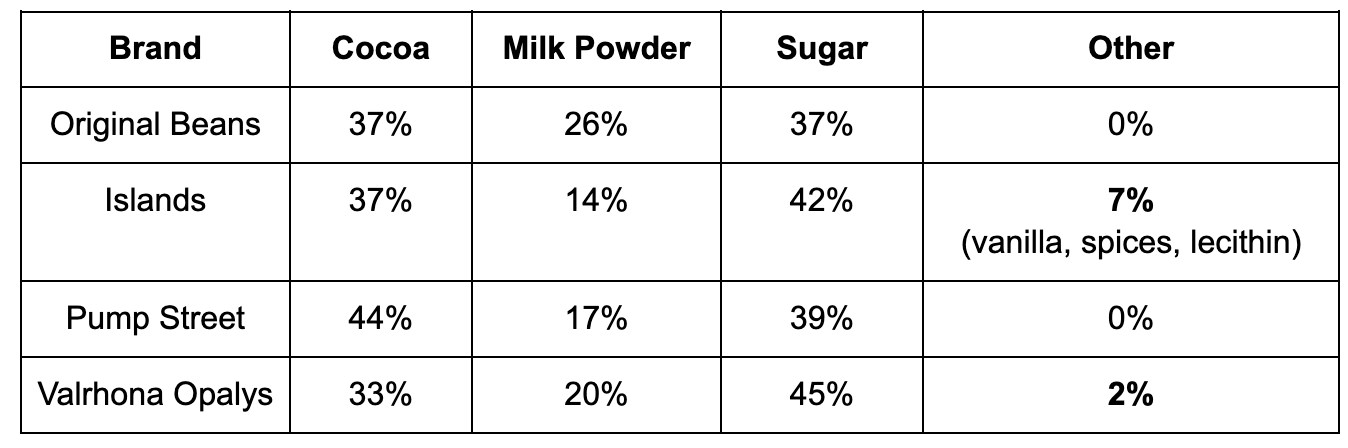
I know that the quest here today was to use white chocolate primarily as a sweetener, so you may think that the extra sugary ones (the sugariest that I found was Waitrose white belgian chocolate at 62.6% sugar!! Please write in if you find a sugarier one!!) would be handy, but given they have little to offer beyond sweetness, suspect ethics, and an entourage of dubious additives this to me just seems to be a rather gratuitous way to sweeten a cake.
The good-quality white chocolates tended to have a sugar content of ~40-45% (an honourable mention to Green & Black's at 51%, as this was the nicest of the supermarket white chocolates I tested). But along with the sugar, we’re also adding a lot of fat via the cocoa butter and milk powder. By swapping sugar for chocolate, we’re inviting new flavour, but we’re also eschewing crucial sweetness and structure.
Sugar Refresher Course
Those of us who have studied the scriptures of Kitchen Projects don’t need much more education on the role of sugar in cake, but here’s a brief reminder. First things first, it’s giving flavour- as I mentioned, the 100% white chocolate cake, which therefore contained a very small amount of sugar, tasted of absolutely nothing. But sugar goes beyond simply sweetening/flavouring cake; crucially, it’s also tenderising it and giving a neat rise. Sugar holds onto liquid, locking in moisture and stopping it erupting out of your cake as steam - preventing an overly dry and domed cake. You can see in real time that my little test cakes had experienced their own volcanic eruptions for this very reason- the liquid, without sugar holding it in place, had split the crust of the cake open to burst out. They’d also just started to concertina and collapse in the middle. So we’re going to need to add in some supplementary sugar to keep our cake sweet and soft and standing upright.
Cocoa Butter vs Butter Butter
The other key consideration when making chocolate cake is that cocoa butter is the hardest fat on the block. At room temperature, butter is perfectly soft to the touch, while cocoa butter isn’t moving an inch until it starts to melt rapidly at body temperature. Butter, at ~81% fat, still has an amount of water in it, but chocolate, which has a complicated relationship with water, has none, leading to a drying effect on cake a step further than butter. The cakes I made with the highest proportion of white chocolate were drying out by the minute, leaving no space for butter, no matter how much it pains me to say it.
White Chocolate Dream Cake Loading
I really did hold on to packing as much chocolate as possible into this cake for as long as I could until I conceded that it has its limitations in this context, namely the two following points:
Chocolate catches: Within reason, this is a beautiful, wonderful thing called the Maillard Reaction, and we thank it every day for biscuits, brown butter and blonde chocolate, but left unchecked, it brings us blackened, burnt misery. I’ve kept the amount of chocolate as high as possible in this before it started to give the cake too dark an edge. Once baked, we get a lovely creamy flavour on the inside, and on the outside we can see the little biscuitty flecks of where the milk solids have toasted.
The aforementioned drying effect. To counteract this, I had a two-part strategy. Firstly, oil; it’s pretty commonplace to find chocolate cakes made with more oil than butter to restore a bit of moisture. However, for all the merits of white chocolate, it simply doesn’t pack the same punch that dark chocolate does, and the idea of a white chocolate and plain neutral oil cake just wasn’t setting my heart aflame. This felt like the perfect opportunity to inject a little more fun into the cake. At this juncture, being a chocolatier, the pull to supersize a bounty was just too much, so white chocolate and coconut oil it is. Secondly, to add a little extra moisture AND continue the fresh milk energy where chocolate left off, we’re passing the baton onto our hero ingredient of the day- ricotta! Ricotta cakes are some of my favourites: the texture, the flavour, the moistness, all of it. I’m so thrilled that it’s here to work hand in hand with white chocolate today.
RECIPE: White Chocolate, Coconut & Ricotta Cake
Makes 1 x 8-inch cake
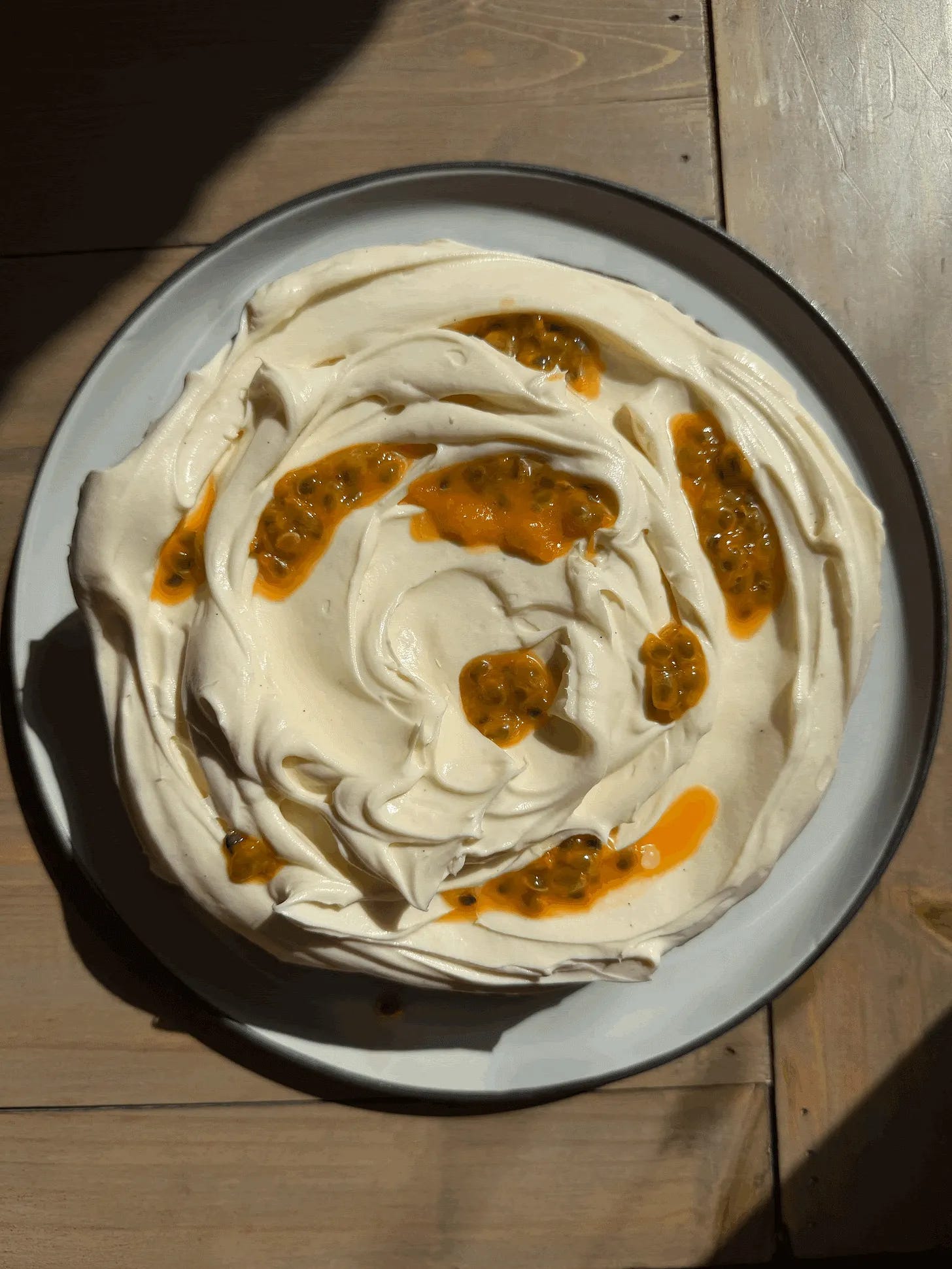
In my line of work, I am usually bound by the laws of water movement, PH levels and oxygenation, also known as shelf life. As such, when it comes to baking there is absolutely nothing I love more than the opportunity to pair chocolate with fresh fruit. White chocolate is a natural partner to passion fruit, which is, to me, the very flavour of a sunny day, and here the brightness of its fresh pulp takes this cake to another level.
I’ve specified white chocolate with a 40-45% sugar content so that the chocolate we use has plenty of the other things that make it taste like white chocolate, not just sugar. However, use what you can, I’ve tested this cake with Islands (available on Ocado) and Green & Blacks, which is available in most UK supermarkets! and you can take the caster sugar down a little bit to mitigate if needed!
Perhaps because of the time I spend making tiny fiddly chocolates, this one-layer, one-bowl wonder makes me very happy. No need for an electric whisk; we’re basically just going to make a ganache and keep stirring in more ingredients until it transitions into cake. Wrapped, this cake will keep at room temperature for a couple of days, but once decorated is best enjoyed on the day.
I’ve paired this with my go-to whipped white chocolate ganache, which includes a good amount of cream cheese and salt to balance the sweetness. Use this everywhere white chocolate takes you. But beware, it’s not stable enough to support layer cakes!
Whipped White Chocolate Cream Cheese Ganache
120g white chocolate, ideally 40-45% sugar (Valrhona, Pump Street and Islands are all good brands; Green & Blacks works too)
180g double cream
145 cream cheese, room temperature
½ tsp vanilla bean paste or extract
A pinch of flaky sea salt
White Chocolate Coconut Ricotta Cake
110g good quality white chocolate, see above
55g virgin coconut oil
50g canned full fat coconut milk, I used Biona. Opt for something with minimal additives.
100g ricotta
1 tsp lemon juice
1 vanilla pod, split and scraped, or 2 tsp vanilla bean paste
A pinch of flaky sea salt
130g caster sugar
2 large eggs
55g desiccated coconut
135g plain flour
1/2 tsp baking powder
1/4 tsp bicarbonate of soda
To serve:
1-2 fresh passion fruits
Method
For the whipped ganache: Melt the white chocolate in a medium heatproof bowl either in the microwave or in short bursts in the microwave at 500-600 watts, stirring regularly. Once melted, use a whisk to stir in your cream cheese till there are no lumps left.
Warm your double cream, vanilla and salt in a small saucepan over a low heat till steaming. Pour this into your chocolate mix and stir it together with your whisk- no need to whisk vigorously as we’re just looking to combine at this stage, not aerate- that comes later. Leave to cool to room temperature and then cover and chill in the fridge overnight or for at least 8 hours.
For the cake: Preheat your oven to 180c /160c degrees fan. Lightly grease and line your 8-inch round cake tin.
In a medium heatproof bowl, melt your chocolate and coconut oil either in the microwave at 500-600 watts in short bursts or over a bain marie, stirring it regularly.
Meanwhile, warm your coconut milk in a pan over a gentle heat. When your chocolate and coconut oil is fully melted, use a whisk to stir in the coconut milk, followed by the ricotta until fully combined and no small lumps remain. Add your lemon juice, vanilla, salt and sugar and mix together, followed by your eggs, one by one, mixing well after each addition. Stir in your desiccated coconut.
In a small bowl, mix together your flour and raising agents, then, sift this onto your coconut mix and stir together till combined and no streaks remain.
Pour into your cake tin, transfer to the oven and bake for 33-36 minutes, or until a knife or skewer inserted into the middle comes out clean, or with one or two damp crumbs still remaining. Leave to cool in the tin for 10 minutes before removing, then leave to cool fully before decorating.
To finish: When you’re ready to serve, whisk your chilled ganache for about a minute or so on high speed with an electric whisk till thick and luscious, holding its shape when the whisk is removed, to about medium-hard peaks. If still a little loose, whip briefly again, but be careful not to take to fully stiff peaks, as it may split.
Pile your whipped ganache onto your cake and swoop artfully, creating little ravines as you go to fill with pools of fresh passionfruit.
Once decorated, this cake is best enjoyed on the day, but will keep in the fridge for 2 days. Just remember to get it out of the fridge at least 30 minutes before you want to serve it as it’ll firm up in the cold.
Which ganache recipe is the correct one?
Why are there two ganache recipes? This sounds so good!