
Kitchen Project #193: Flemish King Cake / Galette Flamande
Move out the way Galette Des Rois, Camilla Wynne has something to say!


Hello,
Welcome to today’s edition of Kitchen Projects. Thank you so much for being here.
Today, we have a new candidate for your January Epiphany bake: The Flemish King Cake, a discovery by Camilla Wynne. This lesser known pastry, with soft brioche and rich custard-y filling, is deeply worthy of your attention, a wintry cousin to the tarte tropezienne, but still very much itself.
Over on KP+, Camilla shares a mini version of these delights that utilise Eggnog (which is for LIFE not just for Christmas - don’t be duped by January propaganda), for all its flavour and extraordinary emulsifying purposes, and a crumb topping: Mini Spiced Custard King Cakes. Click here to make it.
What’s KP+? Well, it’s the level-up version of this newsletter. By joining KP+, you will support the writing and research that goes into the newsletter (including the commissioning - and fair payment - of all the writers), join a growing community, access extra content (inc. the entire archive) and more. Subscribing is easy and costs only £6 per month or £50 per year. Why not give it a go? Come and join the gang!
Love,
Nicola
Flemish King Cake
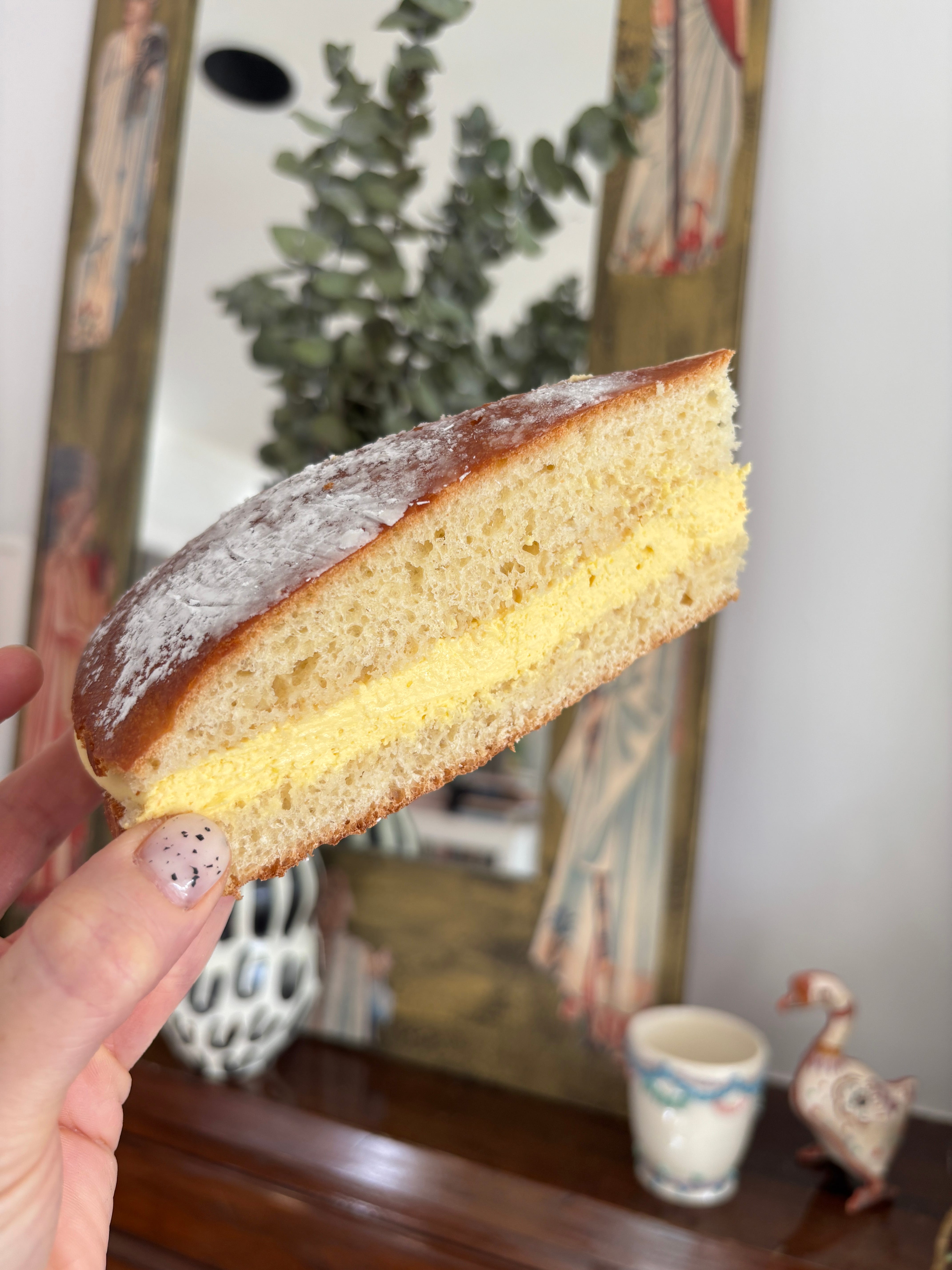
It’s rare but delightful, after over 20 years in the business of desserts, to discover something new. Scrolling one day, as one does, I came across a reel of a large, flat, round brioche being split, dunked in syrup and filled with cream. I knew I must have it. As an avid fan of filled brioche pastries such as Tarte Tropezienne and German Bee Sting Cake, this confection was irresistible. Lucky for me, it was a video from a pastry shop in my city—one of many international outposts of Aux Merveilleux de Fred, a French pastry shop specializing in the eponymous meringue and chantilly creations, merveilleux.
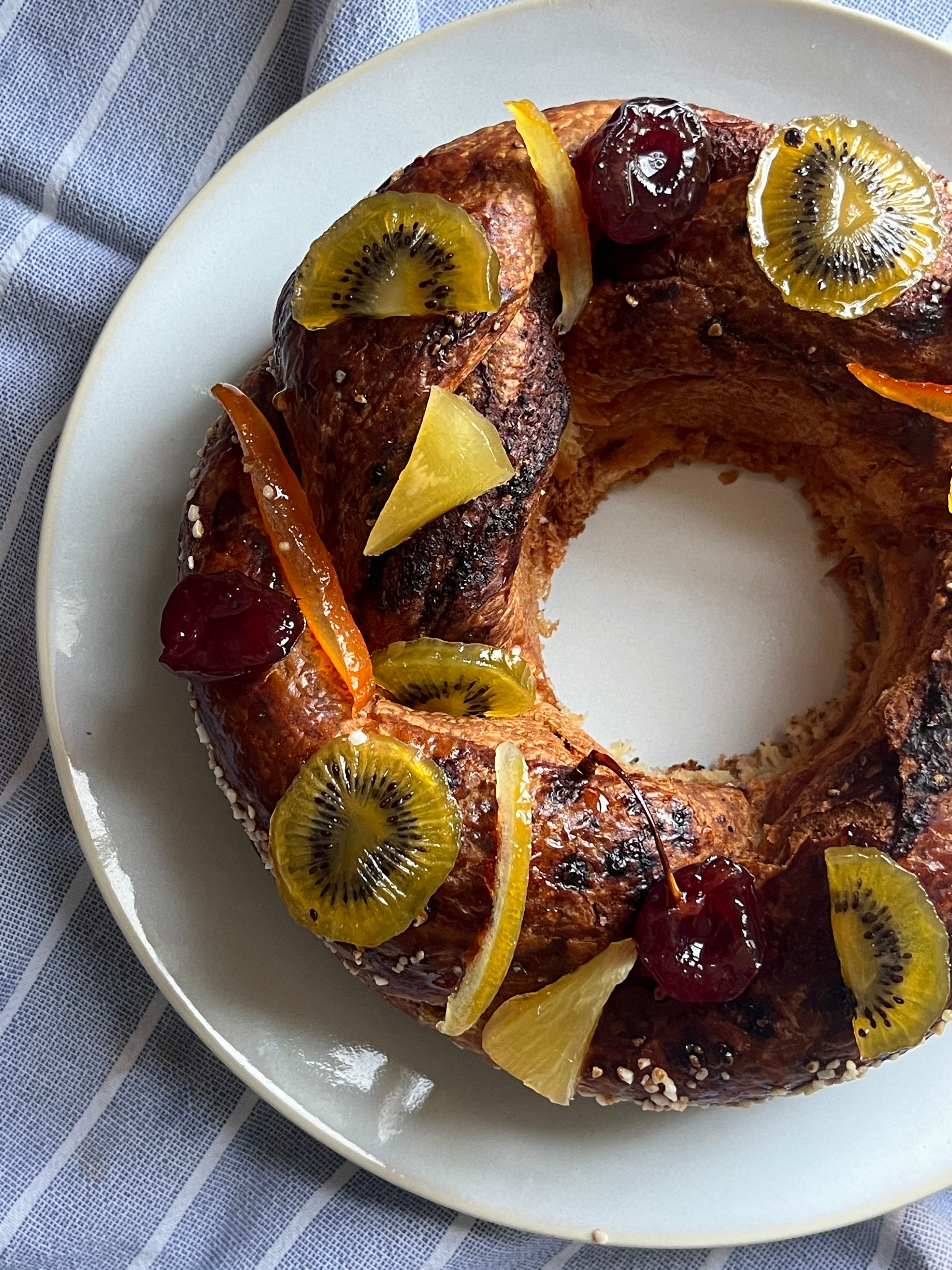
The baking traditions of northern France, from whence Aux Merveilleux de Fred hails, are lesser known than many other regional French pastries. When you say galette de rois, for example, I think most people would think of the large round of puff pastry usually filled with frangipane. That’s what you’d get at any French pastry shop I’d ever been to. Perhaps some might know of the brioche-based galettes des rois from Bordeaux and Provence, decorated with candied fruit and pearl sugar. But no one I know had ever heard of the northern French specialty, galette flamande (aka Flemish galette aka galette des rois beurrée dunkerquoise). There’s nary mention of it in the French culinary reference tome, Larousse Gastronomique!
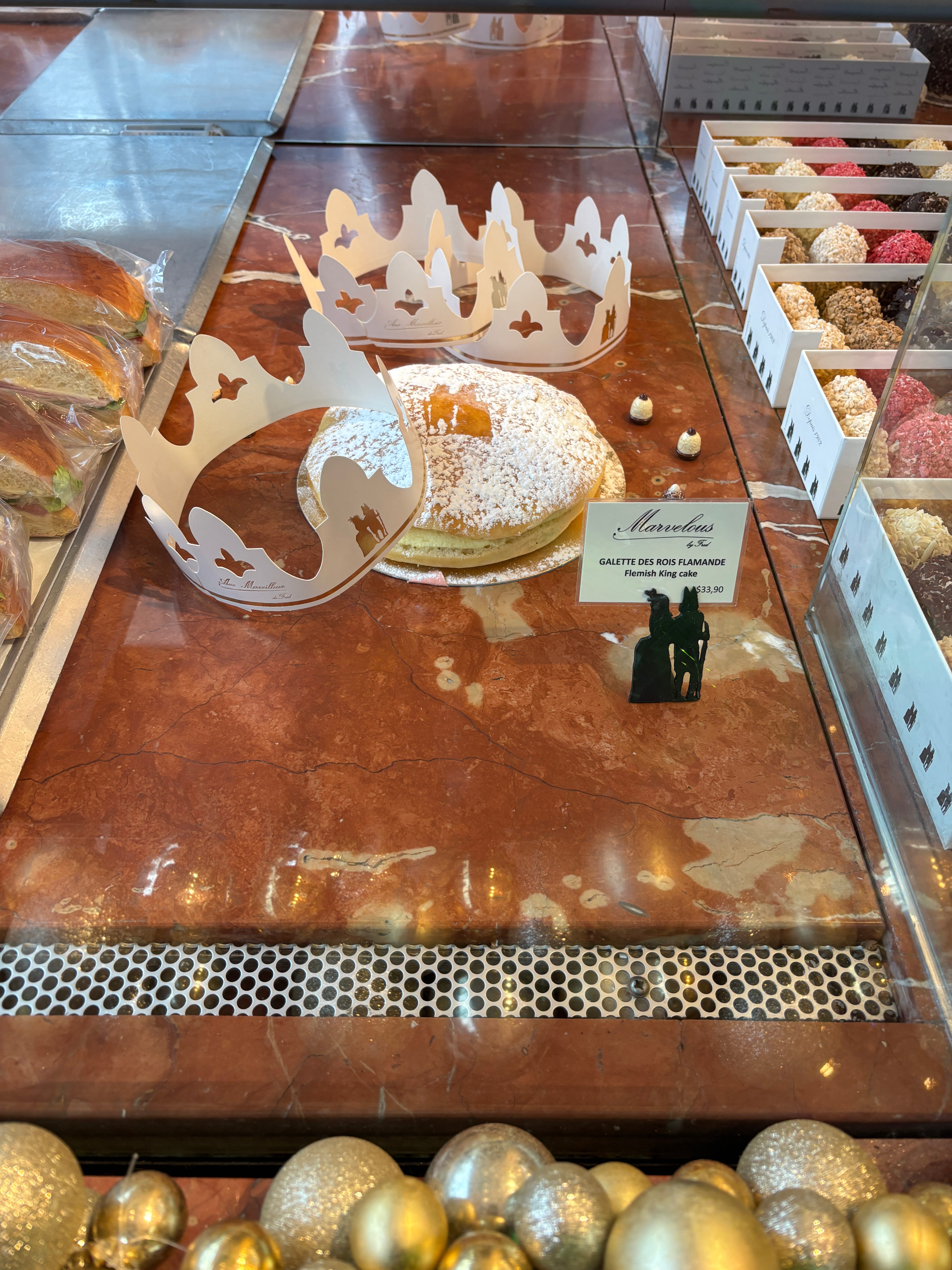
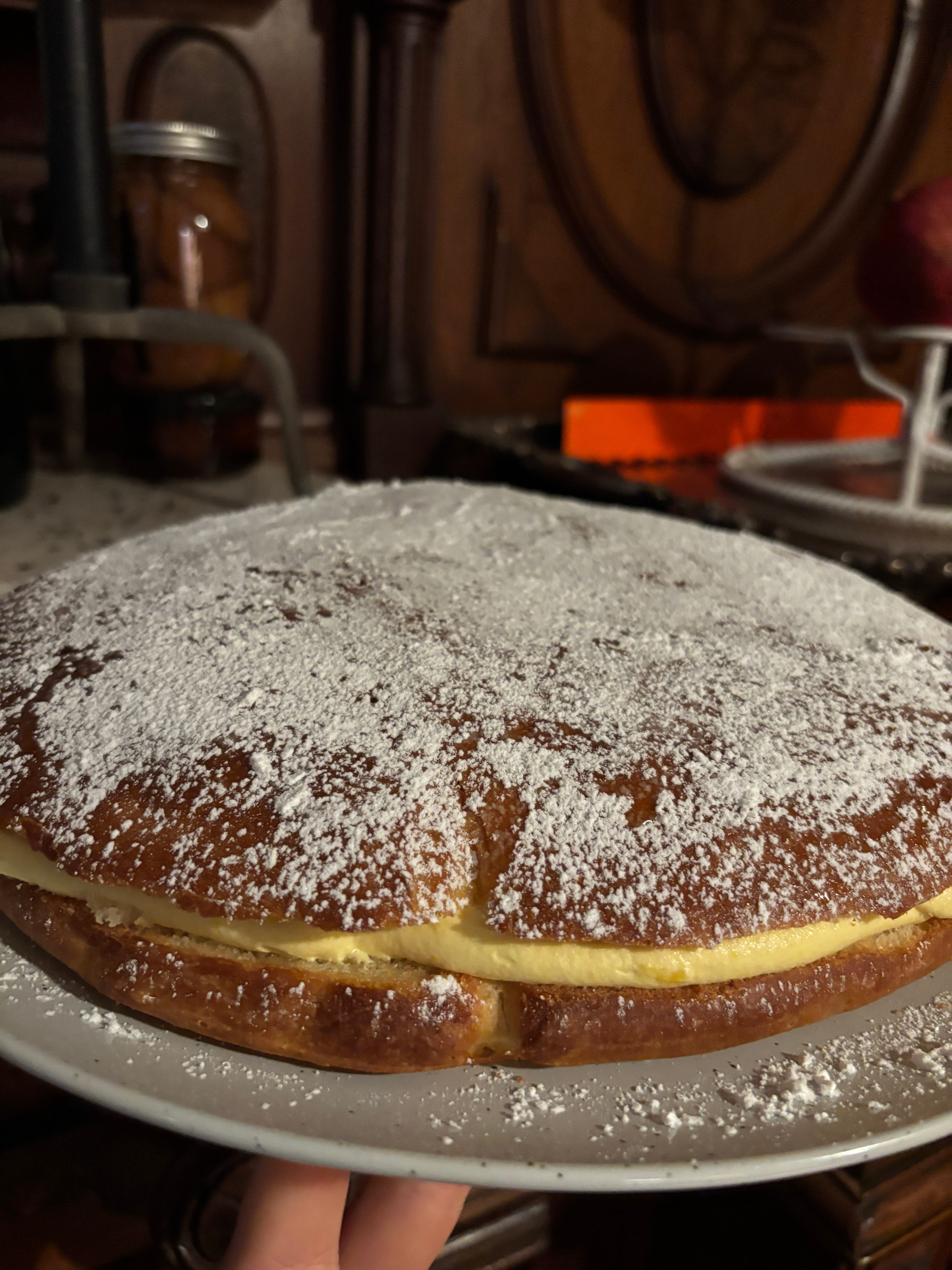
A galette is a flat, round cake, though the term may also refer to a buckwheat crepe and certain cookies, while à la flamande is a preparation applied mostly to vegetables and can denote a braise or simply a garnish. The term Flemish (flamande) itself dates from the medieval County of Flanders, its inhabitants known as Flemings, encompassing a region that is now variously a part of France, Belgium and the Netherlands. Flemish history seems much more complicated than I have the bandwidth to cover here, and what’s most important is that they came up with a very, very good treat that is too little known worldwide. The Flemish galette is much as I would imagine the child of a baba au rhum and a whoopie pie, but king-sized. Where has it been all my life?
The King of Cakes
As I mentioned, I would most often expect to get a fragipane-filled puff pastry creation when ordering a galette des rois, but there are many different cakes meant celebrate Epiphany—Portugese bolo rei, Swiss and German dreikönigskuchen, Spanish and Latin American roscon de reyes, American king cake (See the variation: “Queen Cake” on Kitchen Projects)... Also known as Three Kings Day and Twelfth Night, Epiphany is on January 6th, a Christian feast day celebrating the manifestation of Jesus. That said, the cakes are usually available from just after Christmas and throughout the month of January, or even until Mardi Gras.
Such a feast can be traced back to pagan rites, which were adopted by Christianity (technically the three kings are the three wise men but it was apparently changed so as not to seem too pagan), and now the consumption of the cakes is likely largely secular. Traditionally a bean was hidden in the cake and whoever found it in their slice was variously declared king or queen and/or made to buy a round of drinks or expected to bring the cake the following year. To prevent cheating, the bean was replaced by a porcelain bean, though in some places a small plastic figurine of the baby Jesus took its place, or a wide variety of incredible little detailed ceramic fèves.
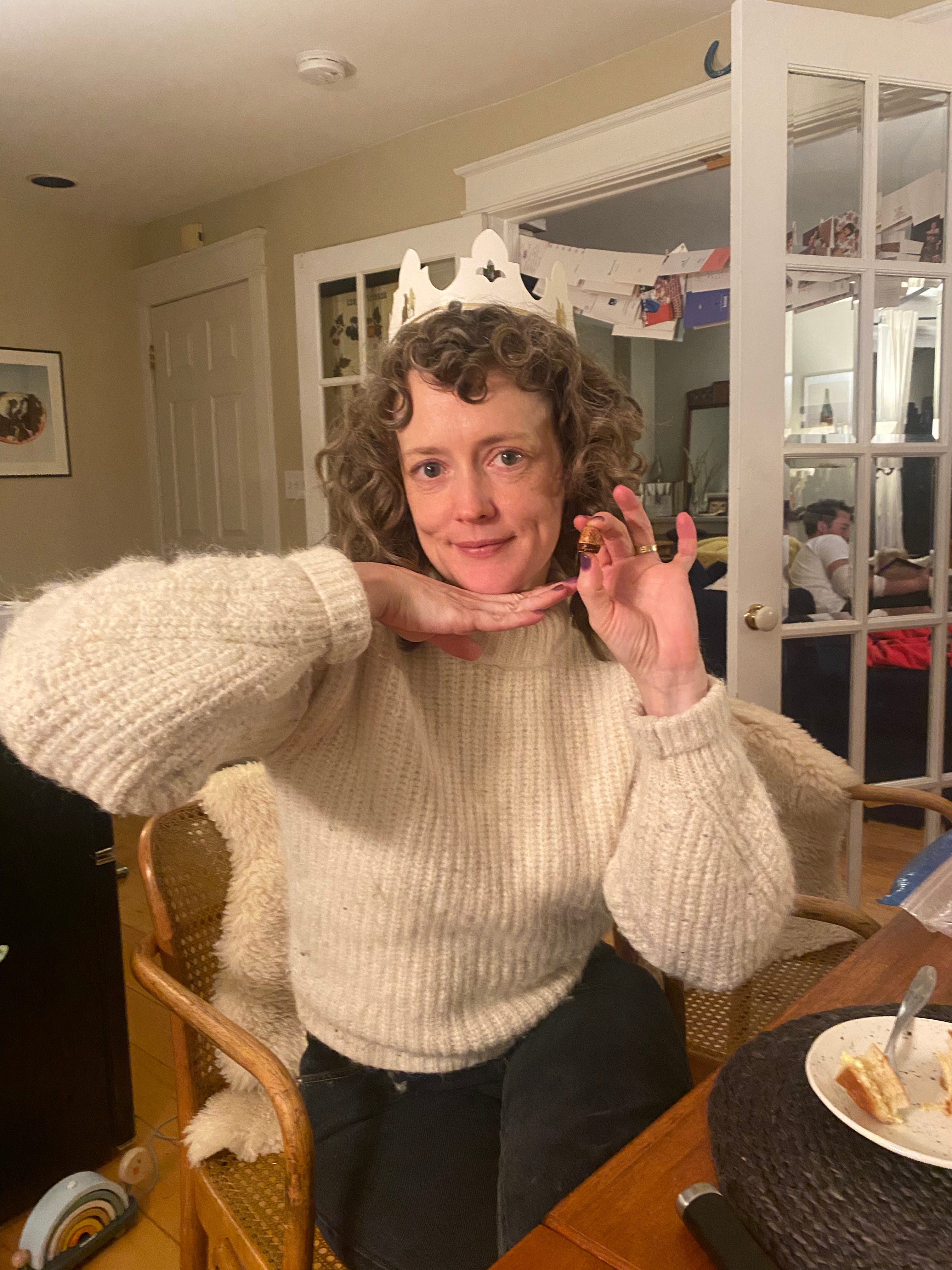
In the Flemish galette from Aux Merveilleux de Fred it’s a little ceramic merveille. I now own two!
On KP+: Mini Flemish King Cakes
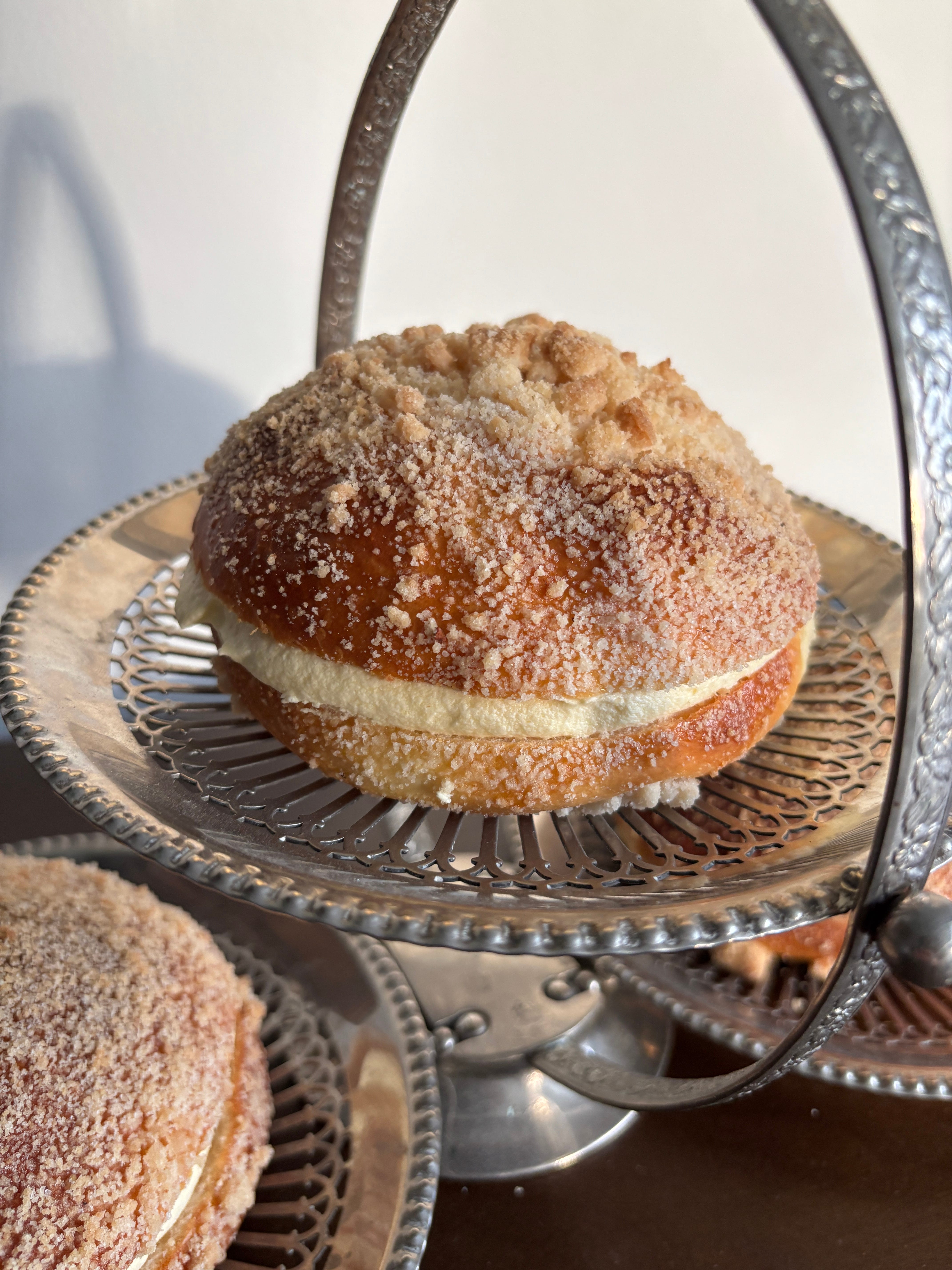
Over on KP+, Camilla shares a recipe for individual / mini king cakes, fortified with EggNog, covered with a crumble topping and spiced delightfully for winter.
The Battle of the Crèmes
That the Flemish Galette starts with a flat, round brioche is undisputed, but there are different perspectives on how to fill said brioche. I’m almost certain that the one I tried from Aux Merveilleux de Fred is filled with mousseline—pastry cream whipped with butter until light and silky. I hate to say it, but one clue was that the cream was slightly split, which can happen when the butter isn’t properly emulsified. This can’t happen with, say, crème legere, which is pastry cream lightened with whipped cream.
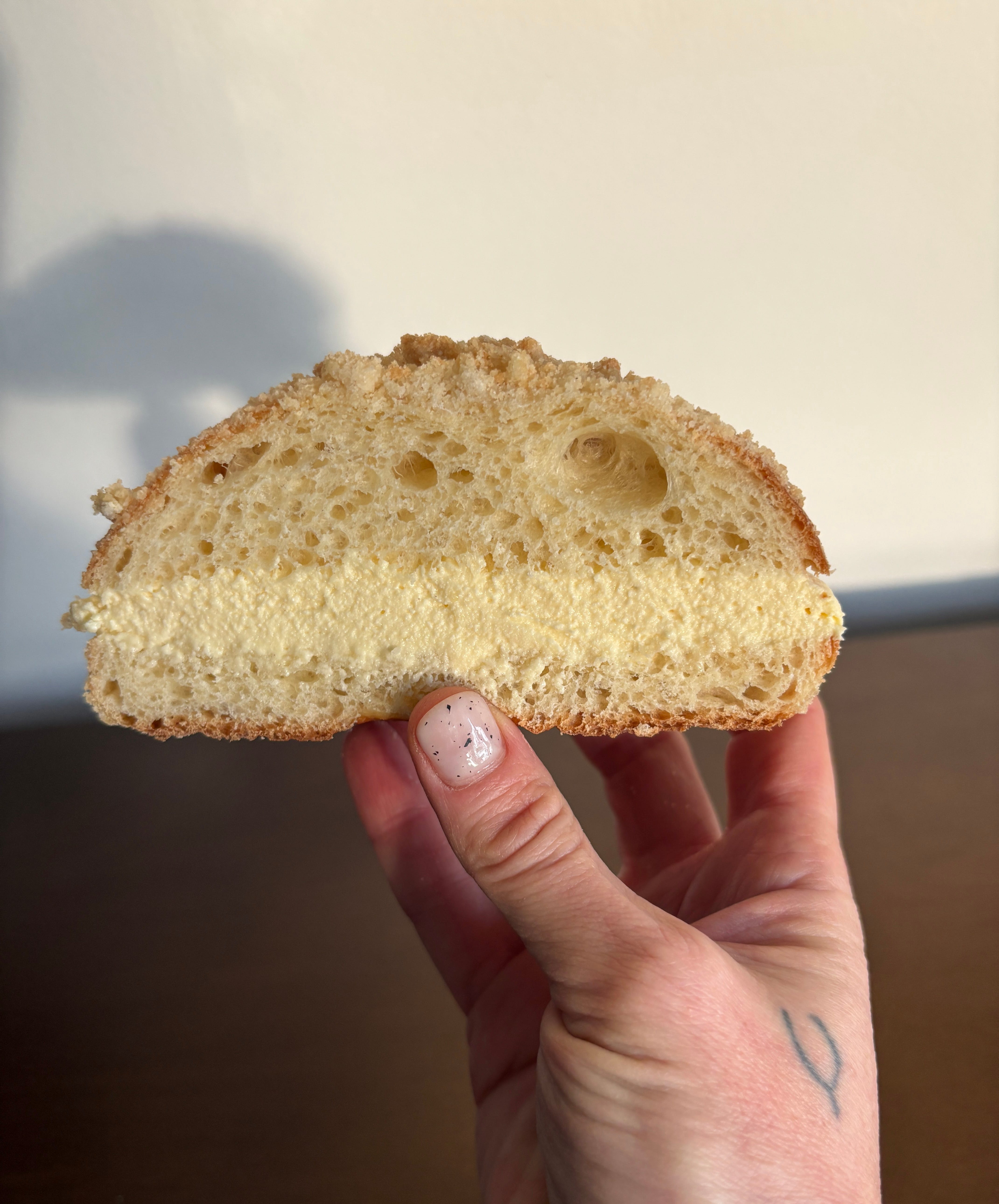
That said, some bakers from the region fill theirs with straight up buttercream, or else a 50/50 mixture of pastry cream and buttercream, or even crème diplomat, a gelatin-stabilized crème legere. Because there’s so little information out there about Flemish Galette, I looked as well at fillings for its cousin, the Tarte Tropezienne, which also has a number of different takes, mostly similar to the Flemish Galette fillings, but even including a super-fussy cream that’s a combination of pastry cream, whipped cream and buttercream.
I made a batch of brioche and divided it into 4 to make smaller galettes that I tested with different creams to determine my ideal filling. I used my pastry cream from Jam Bake as the base, and I mostly used Nicola’s ratios for various pastry cream-based fillings from Sift. I chose not to test crème diplomat, as I didn’t want the gelatin locking all the moisture in place, but rather for the brioche to have a chance to soak up a little of the cream’s humidity. Nor did I try with straight up buttercream—I’ve had enough buttercream on cakes all year! It’s time for some specialty French creams.
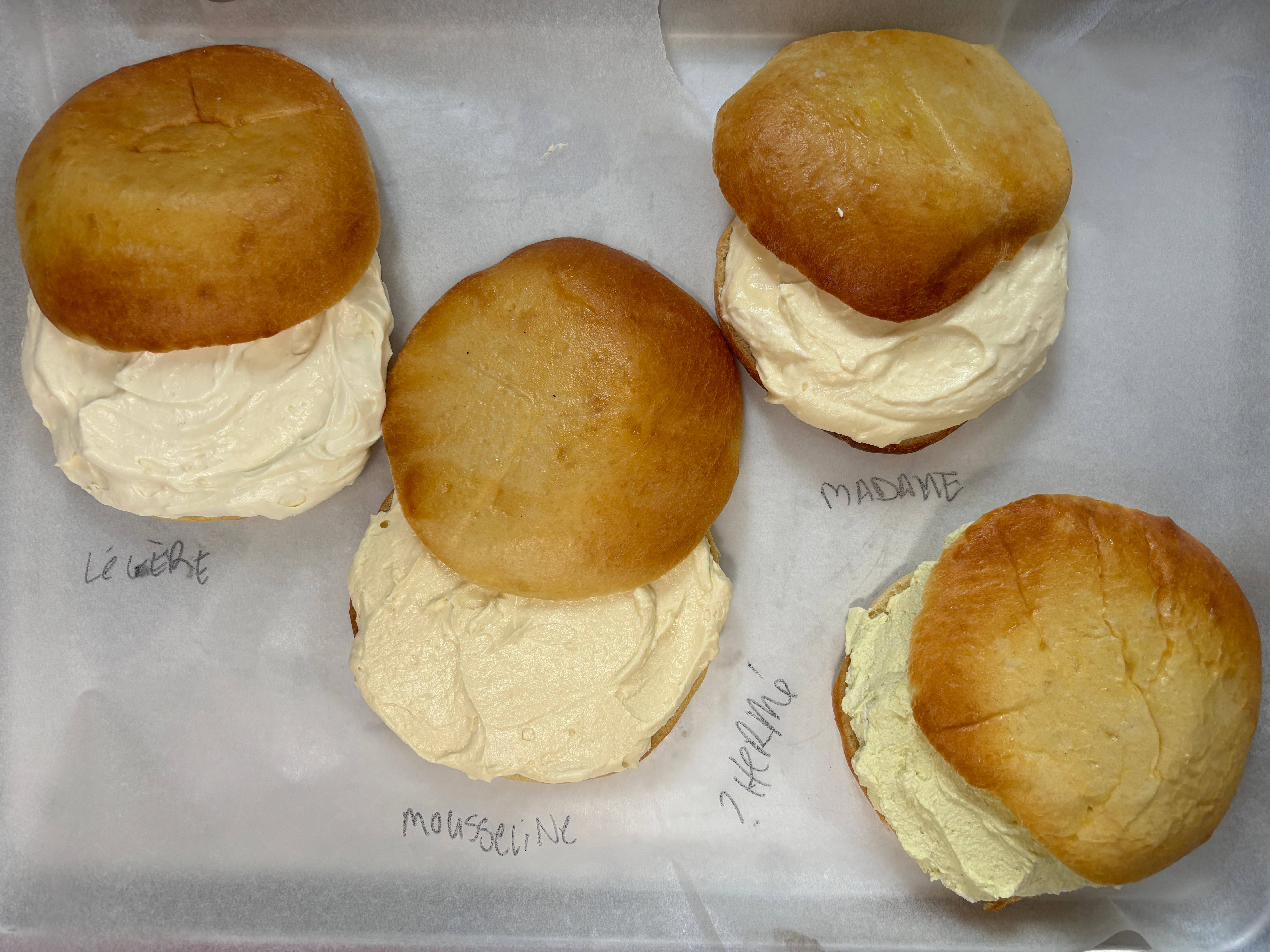
The results
Mousseline—While I chose to forgo testing buttercream, that is really an umbrella term for a lot of different preparations, and actually crème mousseline is very similar to German buttercream, a thick vanilla custard whipped with butter. I used 30% of the weight of the pastry cream in butter. This filling is creamy, but denser than the others when chilled. Though not the favorite of my tasters, who preferred the lighter creams, this was tied for #1 for me.
Crème légère—This is a classic cream, probably the one in the list people are most familiar with. Whipped cream is folded into pastry cream to make it lighter and airier. I folded in 66% of the weight of the pastry cream in whipped cream. Tasters loved it, but I just couldn’t abide the squish when cutting. The soft cream oozed out! I think the ideal cream should be slightly firmer to stand up to the texture of the brioche.
Crème madame—A lesser known cream, this is a mousseline-légère hybrid, adding 20% each butter and whipped cream to the pastry cream base. For me, it tied with mousseline for #1. The butter brings more richness and firmness, but you still get a little of that lightness everyone loved about the crème légère.
Hermé cream—Excuse the name, but I haven’t seen this cream composition anywhere else that I recall, so I’ve named it after the pastry chef (Pierre Herme) in whose book I discovered it. He uses this melange of pastry cream, buttercream and whipped cream to fill his Tarte Tropezienne. This combines 166% buttercream and 125% whipped cream with the pastry cream base (though with these ratios it’s more of a bit player than a base). You might notice a slightly green tinge in the photos—I only had pistachio buttercream in the freezer and wasn’t about to make a whole batch of buttercream just for this test, which is my main beef with this cream. Most of us don’t have buttercream and pastry cream just hanging around and would balk at the idea they make three separate preparations to combine for one filling. Besides which, there’s so much less pastry cream in this preparation that the custardy backbone of it all really gets sacrificed.
Madame Mousseline
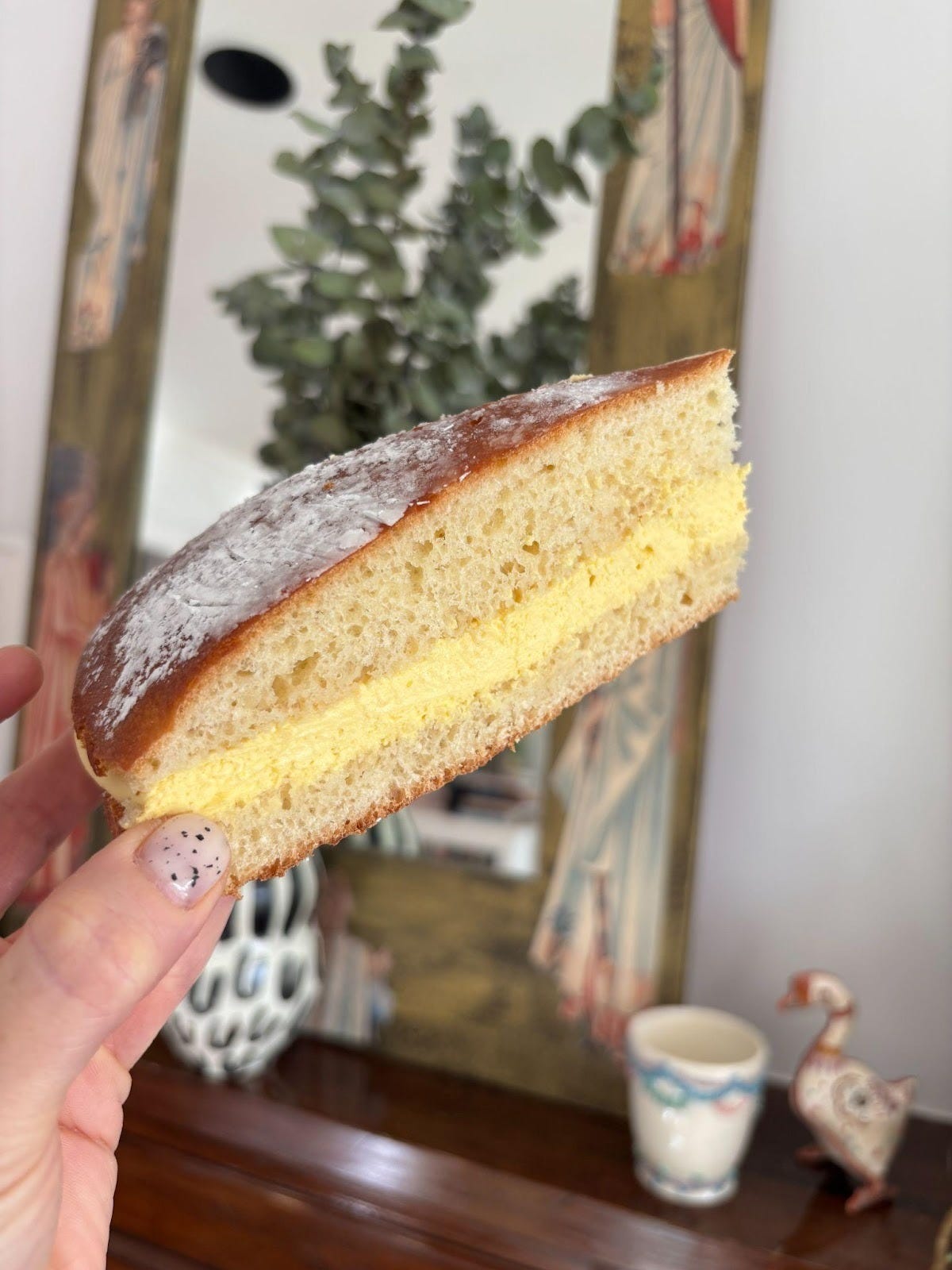
In the end, I settled on a preparation I call Madame Mousseline, which is really just a slightly richer crème madame, using 5% more butter and keeping the same 20% whipping cream. A little rum in there enlivens the flavor and makes me think of the holidays, but you can leave it out or replace it with something else. Kirsch would be most traditional, but there’s no reason not to use bourbon (perhaps replacing the sugar in the pastry cream with maple sugar)—or no alcohol at all. We’ve been seeing hojicha everything lately, and I would certainly not say no to it in Flemish Galette form. The creamy richness of filled brioche is an excellent canvas for bolder flavors. Or you may just like to savour the transcendent taste of good butter, which is truly the star of the show here. Don’t skip the syrup, though, even if you’re leaving out the rum. The brioche benefits from a sweet soak for texture and longevity.
A Mousseline Revelation
I am lucky enough to have a whole little room in my house devoted to pastry (thank goodness because my kitchen is extremely small). It’s an addition, with two skylights and windows on the 3 walls facing outside. That means it gets a lot of beautiful light, but also that it gets quite hot in the summer (I can melt butter by leaving it on the work bench under the skylight at high noon) and is quite cool in the fall and winter. My room temperature butter is never particularly soft. Hence, making mousseline in my workroom requires a lot of judicious application of live fire in the form of a propane torch. Cold pastry cream and cool “room temperature” butter don’t easily meld and become silky.
I wondered to myself why we chill pastry cream before turning it into mousseline. I don’t chill the custard for my custard buttercream before beating in the butter, after all—and that comes together much more easily! I just cook it, strain it into the bowl of the mixer, then beat it on high until it’s room temperature, which takes less than 10 minutes, much in the same way the meringue for a Swiss meringue buttercream is cooled.
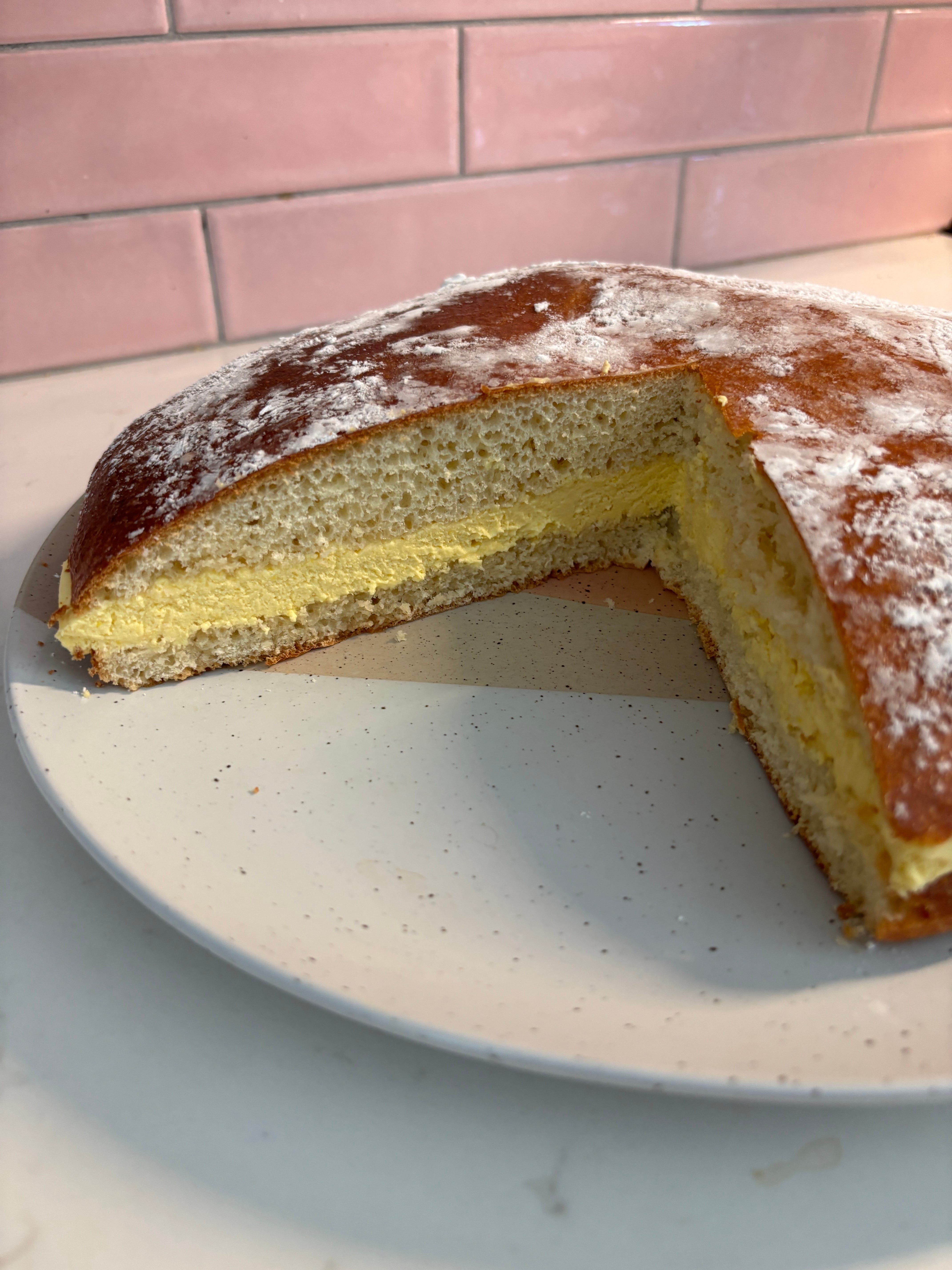
Likely the practice in making mousseline owes to the fact that it was usually made in pastry shops, where they would make large batches of pastry cream that would then be put to use in a variety of different ways, many of which require pre-chilling. I wouldn’t, for instance, want to fold delicate whipped cream into a just-warm pastry cream. But if you’re just making pastry cream to then transform it into mousseline (or Madame Mousseline!), there’s no sense in chilling first. You’ll save loads of time and effort by just whipping it until cooled—or, if you’ve got cool butter, until just barely warm. When I make pastry cream this way, I leave out adding the butter at the end and simply add it to the butter I’ll whip in to make the mousseline.
Emulsification is truly an art, which requires you to balance the temperatures of different substances. It takes practice! But when in doubt, just whip the hell out of it. The warmth generated by the movement itself should eventually result in success.
RECIPE: Flemish King Cake
For the brioche:
285 g all-purpose flour*, divided
90 g whole milk, at room temperature
25 g sugar
3.75 g instant yeast
2 eggs
1 tsp vanilla extract
½ tsp salt
100 g butter
1 yolk + 1 Tbsp, cream for egg wash
*This was tested with flour between 12-13% protein. Check the protein of your flour - it is possible strong bread flour will work better if you are making this in the UK.
For the filling:
240 g whole milk
66 g egg yolks
66 g sugar
16 g cornstarch
6 g all-purpose flour
2 tsp vanilla extract
Heaping 1/8 tsp kosher salt, or fine sea salt
80 g whipping cream
129 g unsalted butter, at room temperature
1 Tbsp dark or amber rum
To finish:
100 g simple syrup
25 g dark or amber rum
Icing sugar, for dusting
Method
To make the brioche, start by making a sponge. In the bowl of a stand mixer, combine 35 g of flour with the milk, sugar and yeast. Cover and set aside for 30-45 minutes (it should start to bubble). Add the remaining flour, egg, vanilla and salt, then fit the mixer with the dough hook. Mix on low until flour is incorporated, then knead on medium high for about 10 minutes. (Alternatively knead by hand for 15 to 20 minutes.) The dough should be smooth and bouncy. Add the butter a few tablespoons at a time and knead until incorporated. Dough will be shiny and slap against the sides of the bowl. Transfer to a buttered bowl, cover and let rise in a warm place until doubled in volume, about two hours. Gently deflate and wrap in plastic wrap. Refrigerate overnight.
The next day, preheat oven to 400°F / 180c fan
Line a rimmed baking sheet with parchment paper. Unwrap dough and roll into a 10-inch circle. Place on prepared baking sheet, then cover and let rise in a warm place until puffy, until springs back slowly and only partially when prodded, about an hour.
Make an egg wash by whisking together yolk and cream. Brush proofed brioche with egg wash. Bake for 10 minutes, then lower heat to 350°F /160c Fan and continue to bake about 5 more minutes, until golden and an instant read thermometer inserted in the center reads 93C / 200°F. Let cool completely on a wire rack.
To make the filling, start with the pastry cream. Heat the milk in a medium pot over medium heat, just until steaming. In a medium bowl, whisk the egg yolks with the sugar, cornstarch and flour.
While you whisk, pour the milk into the yolk mixture in a slow, steady stream. When it’s all incorporated, return to the pot and cook, whisking constantly, over medium heat. When it comes to a thick boil, continue whisking for about 30 seconds, then remove from heat.
Strain through a fine mesh sieve into the bowl of a standing mixer. Add the vanilla and salt, then whisk pastry cream on medium-high until it has cooled to room temperature, 5 to 10 minutes. Meanwhile, whip cream to firm peaks. Refrigerate until ready to use.
Reduce speed to medium and add butter a few tablespoons at a time. Increase speed to medium-high and continue whisking until mixture is silky and smooth. Whisk in rum then fold in one third of whipped cream to lighten the mixture. Fold in remaining whipped cream. Transfer to a pastry bag fitted with a large plain tip.
To assemble, in a small bowl combine simple syrup and rum. Use a serrated knife to split cooled brioche horizontally. Brush both cut sides generously with rum syrup. Pipe filling onto bottom half, leaving a ½-inch border, then top with other half (hide a bean or ceramic figure first, if you like!), pressing gently so that the cream comes to the edge. Refrigerate at least one hour before serving. Dust with icing sugar. Galette Flamande is best the day it is made but leftovers will keep, covered and refrigerated, for up to 2 days.
If you would like to read up more about Flemish food history, I highly recommend Regula Ysewijn’s books. ‘Dark Rye and Honey Cake, Festival baking from the Low Lands’ is both a great cook book as well as covering rich history about food.
This looks very much like “Alman pastası” (literally German cake/torte) that became an overnight craze in Türkiye in the 80s (still holding on) and which i could never understand where it came from. Wonder now if this was the inspiration. It started with a bakery in Istanbul called Motta and took off. I wish i could add a picture, if you google alman pastası you’ll see it looks exactly like this.