
Kitchen Project #191: All About Marzipan
Is this the ultimate baking DIY? With Camilla Wynne!


Hello,
Welcome to today’s edition of Kitchen Projects. Thank you so much for being here.
Today, it’s All About Marzipan, an absolute Christmas staple, c/o our resident patron saint of both crafting and Christmas: Camilla Wynne! As well as her master marzipan recipe, she also shares a recipe for delicious marzipan-based cake Pain de Genes.
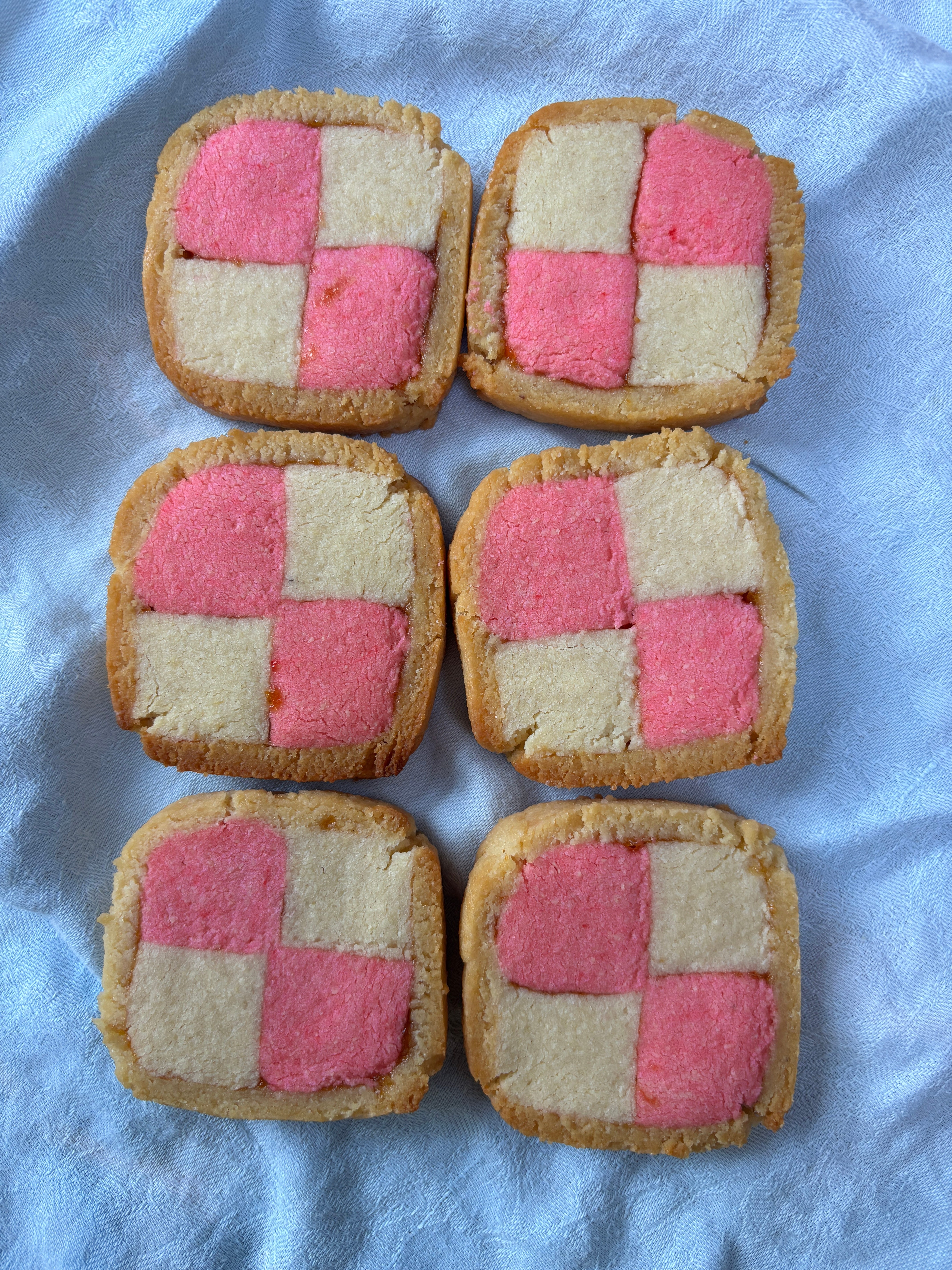
Over on KP+, Camilla shares an excellent use for marzipan: Batterburg Cookies. Buttery almond shortbread wrapped with apricot jam and marzipan, baked til crisp in the centre, and chewy on the edge. Click here to make it.
What’s KP+? Well, it’s the level-up version of this newsletter. By joining KP+, you will support the writing and research that goes into the newsletter (including the commissioning - and fair payment - of all the writers), join a growing community, access extra content (inc. the entire archive) and more. Subscribing is easy and costs only £6 per month or £50 per year. Why not give it a go? Come and join the gang!
Love,
Nicola
Kitchen Projects: The 12 Days of Christmas

It is DAY 7 of the festive recipe advent calendar, meaning we are over half way! Here’s what we’ve enjoyed so far…
Day 1: Peppermint Teacakes
Day 2: Prune and Cherry Chutney by Camilla Wynne
Day 3: Panettone Chiffon by Rose Wilde
Day 4: Smoked sea salt and honey butter caramels by Sarah Lemanski
Day 5: Chocolate-topped individual fruitcakes by Bronwen Wyatt
Day 6: Fancy Reindeer Chow by Tanya Bush
Day 7 (TODAY!)!: Battenberg Cookies by Camilla Wynne
All About Marzipan
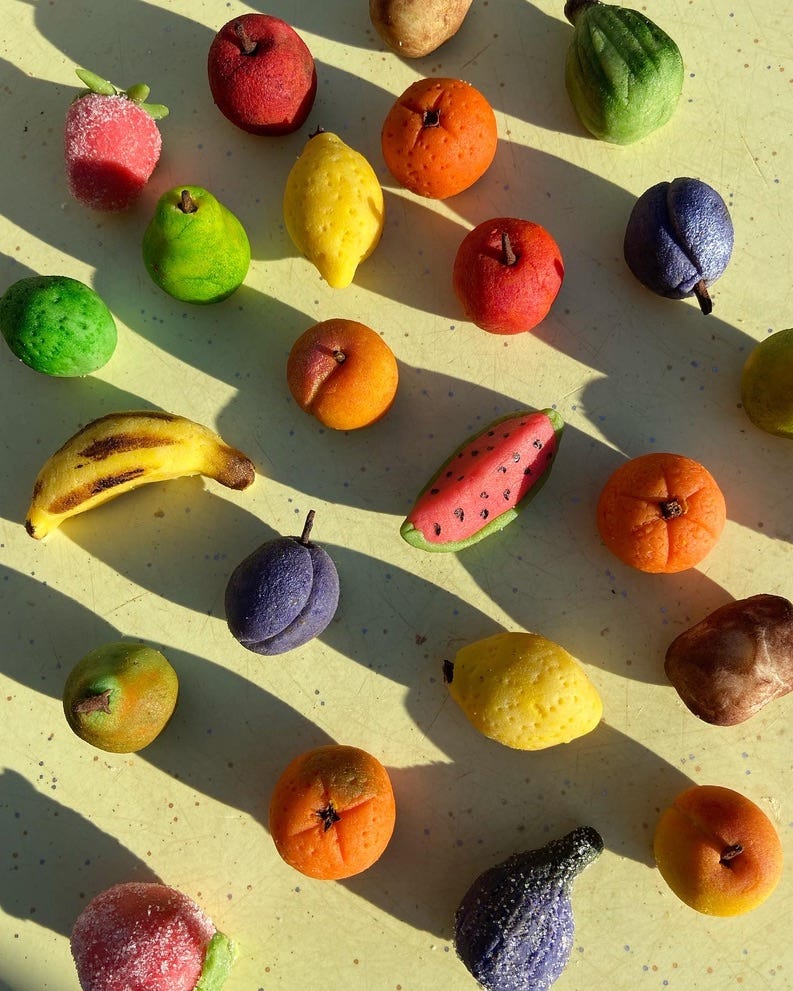
As a child, I’m not sure there was any confection that delighted me as much as marzipan fruits and figurines. At the chocolate shop in the mall, I went straight for the box of marzipan fruits, eschewing the caramels, nuts and fondants. Every year at Christmas what I was most delighted to find in my stocking was a realistic looking marzipan pig with a mushroom in its mouth.


It’s a very old confection (with a predictably unclear origin), dating from at least the Middle Ages (perhaps back to 6th C Persia!), so it surely has staying power, but I do worry it might be falling out of fashion. I’m of the opinion that marzipan is woefully underused in modern baking. We see it appear in classics like stollen or Simnel cake, but rarely does it feature in modern pastries, at least where I’m from (though I am glad princess cake is seeing such worldwide popularity). What a shame! It’s such a versatile blank canvas, rich and delicious, ready to be flavored in infinite ways, then shaped, rolled or blitzed into just about anything. I’m here to make the case for exploring more creativity with marzipan. To that end, I’ve gone on a deep dive into the methods and flavorful possibilities of marzipan.
Or Is It Almond Paste?
I’ve long been stumped by the difference between marzipan and almond paste. Turns out there’s a good reason why. While they tend to refer to the same substance in the UK, in North America almond paste contains more almonds than sweeter marzipan, but in Europe it’s the exact opposite! How confounding. To simplify matters here, we’re just going to talk about marzipan.
Marzipan Methods
While many countries make many different types of marzipan using different methods, when I think of store-bought marzipan it’s the German variety. Almonds and sugar are coarsely ground, heated until dry then cooled and possibly combined with glucose, icing sugar, starch and/or sorbitol. Doesn’t sound like a very accessible method for a home cook, does it? Fortunately, we also have the French method, which is said to produce a whiter, finer but less flavorful marzipan.
In the UK, homemade marzipan is often made simply by blitzing almond meal with sugar and an egg white or perhaps some orange juice. (I’ve also seen this called German marzipan on the internet, to further muddle the issue.) Most reference books, however, are clear that this is not real marzipan. Which isn’t to say you shouldn’t make it if you like it! I made a batch just to see how it held up against the French variety, and it’s certainly quick and easy. That said, the resulting paste is coarser and becomes crusty more easily (on account of the sugar barely being in solution). I would argue that the French method takes only a few more minutes and produces a more stable, malleable final product with better longevity.
A Tale of Two French Marzipans
I learned to make French marzipan from an old confectionary book that had been placed clearly as a prop in an Airbnb I stayed at about 5 years ago. It was the first time I’d seen marzipan made that way, and I was intrigued (so intrigued I admit I took home the book!). Over the years I have adapted the recipe, making it countless times and teaching others my method both in person and online. It’s not complicated but it does require a thermometer as well as some practice judging when the sugar syrup has cooled enough to add the ground almonds. If allowed to cool too much, the sugar can crystallize when the almonds are added, resulting in little nubs of crystallized sugar throughout. They are a bit fondant-like and can be squished and kneaded in, but it’s a lot of extra work.
That said, just because I love a recipe doesn’t mean there isn’t a better method out there. I, sometimes to my chagrin, am a fan of trying out a method I’ve never seen before even if I’m not sure if it will work. Because what if it does?! I love the myriad paths you can follow in baking to reach the same end.
I refer often to the Culinary Institute of America Chocolates & Confections book (tome, really) by Peter P. Greweling, which describes a different method for French marzipan than my own. While mine relies on ground almonds, this version starts with whole almonds, which are blanched, coarsely ground, combined with a less concentrated sugar syrup then cooled on a marble slab before being ground to a paste in a food processor.
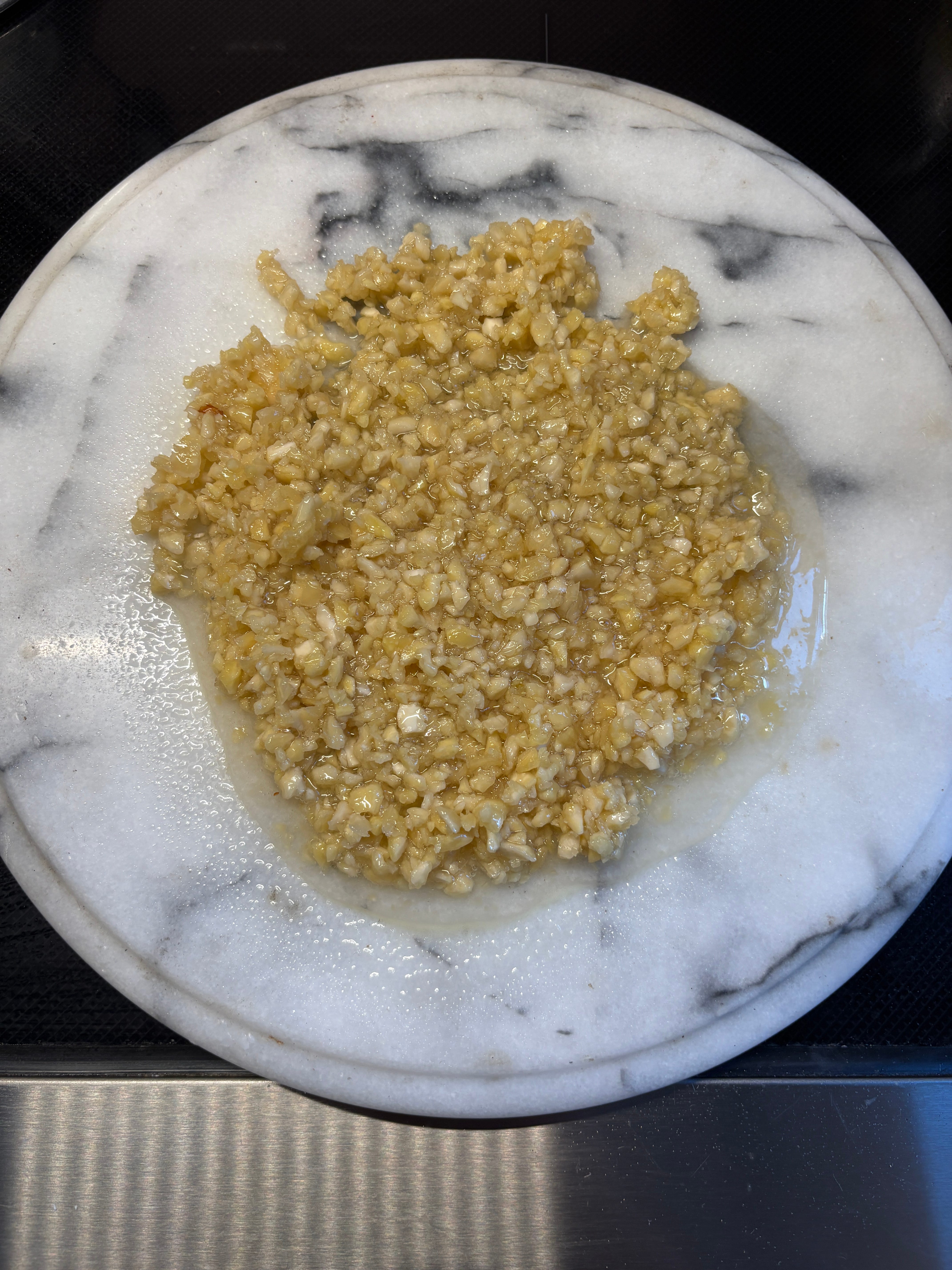
Now, just on the basis of dishes alone I would consider my recipe superior, but the CIA recipe did make a very nice marzipan (though no nicer than mine). Fascinatingly, it was very, very soft for about 24 hours, so much so that I thought the recipe had failed, but eventually it solidified into a firm and malleable marzipan. Interesting, but not great if you need it right away.
Most importantly, though, in spite of the fact that I have a high quality food processor, it’s still a home food processor and not an industrial one, and as a result I had to pick out quite a few little bits of almond from that marzipan when rolling it out later on. On the basis of smoothness alone I would choose my ground almond-based recipe, but if you have a robot coupe and an abundance of whole almonds, know that it’s an option.
The Finer the Almond Flour
Of course, ground almonds are not all alike. They can vary widely from coarse to fine, which didn’t occur to me when I pitched my recipe to a company that makes a beautifully fine almond flour. Their test kitchen just couldn’t get the recipe to work, which was making me feel absolutely nutty, since I’d made it successfully countless times. In the end they sent me a bag of their almond flour and it turned out that to get the same consistency as I did with the one I typically use I had to add a full third more, adding 64 g to the initial 200 g. I’m just relieved it worked in the end!
All that to say, keep this in mind when you make the recipe. If you’re using a product labelled almond flour rather than ground almonds or almond meal, you may need to add more almonds to achieve the correct consistency. On the plus side, it should be slightly smoother since the nuts are ground so finely.
Different Nuts…Are Different!
All this talk of almonds, but they’re not the nut in town. In Mexico, where the Spanish brought a taste for marzipan, it’s been adapted to local ingredients like peanuts or pumpkin seeds. In the Philippines you can find pili nut marzipan. Where there’s a nut there’s a way to make it a delicious sweet paste! In fact, even apricot and peach kernels are used to make persipan—they’re flavourful and cheaper than almonds.
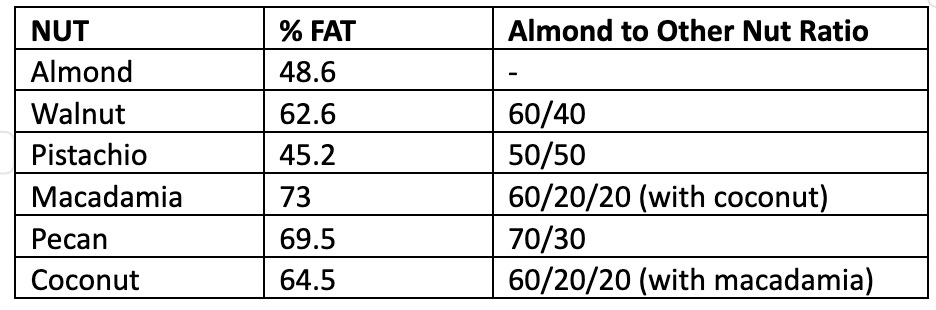
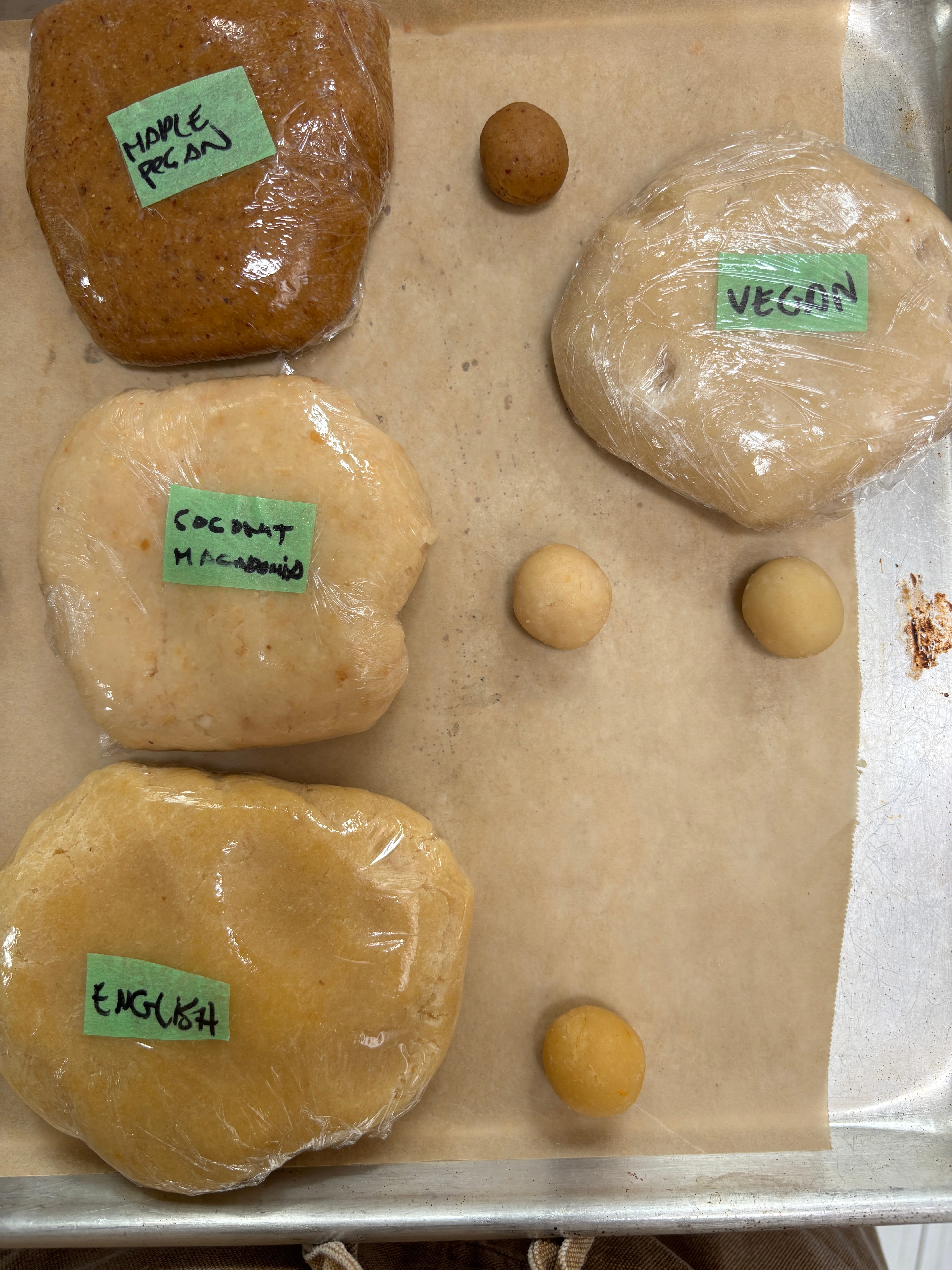
That said, almonds’ relatively low fat content keeps the marzipan from getting oily or splitting, so when experimenting with substituting some almond for another nut, I based my ratios on their fat content, subbing out less almond in the instance of fattier nuts.
To Toast or Not to Toast
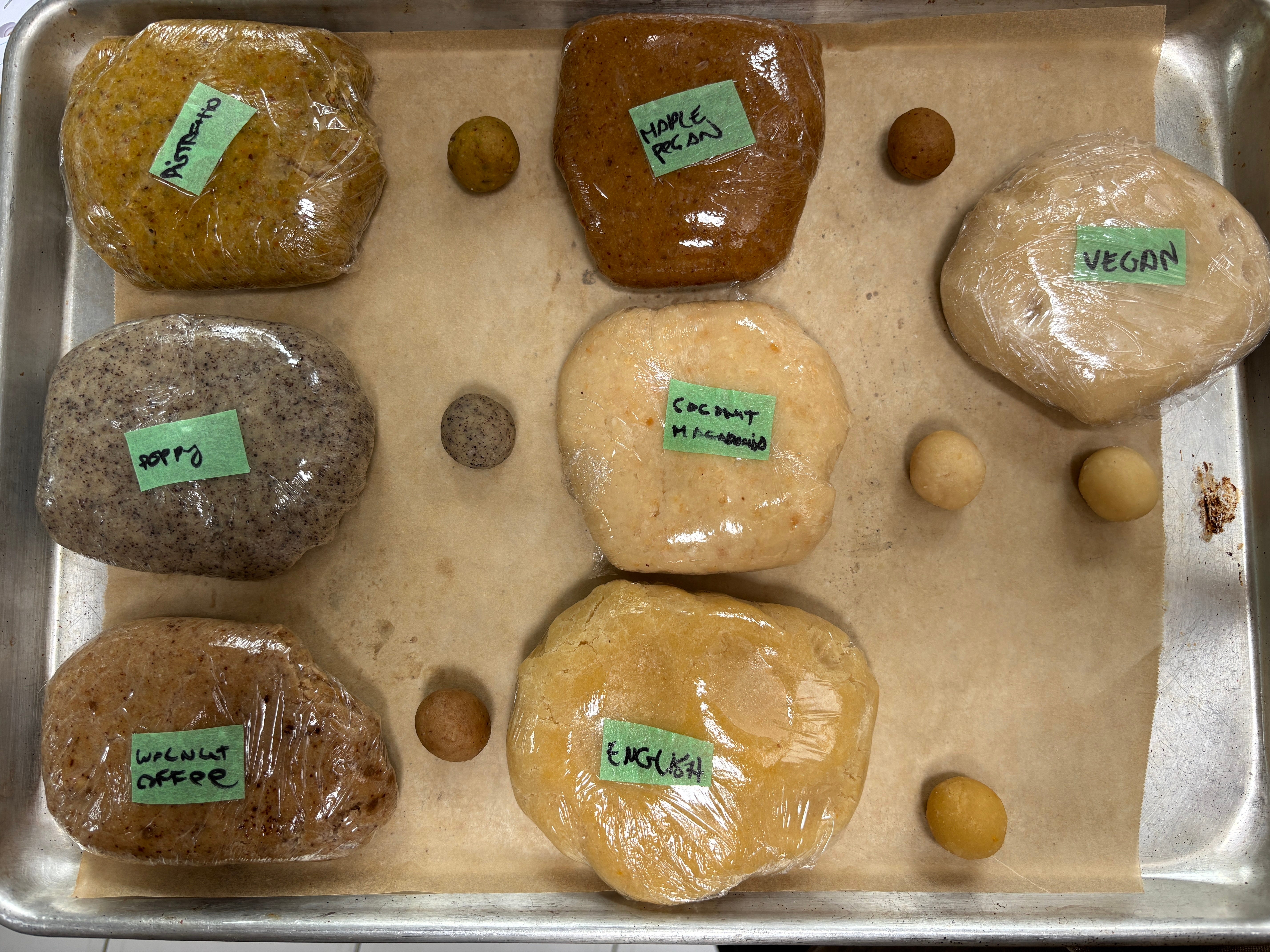
Like a lot of people, I like to toast nuts. They generally taste better that way! It’s natural to wonder how a toasted marzipan would taste. I had a package of toasted, salted shelled pistachios in the kitchen from another project, so I ground some up and replaced half the ground almonds in the recipe. Man, was it ever loose! It practically slithered out of the pot onto my work bench. I had to knead in 50% more almond flour to get the right consistency.
Ultimately it wasn’t a problem—it still tasted great, and I used it to make a gorgeous pain de Genes a few days later. Still, I was a little puzzled. I had thought, if anything, the resulting marzipan would be tighter, as I presumed any humidity in the nuts would be eliminated by toasting. I noticed, however, that in the CIA book the variation for toasted almond marzipan instructs you to cook the syrup 13 degrees Fahrenheit higher than the original using raw almonds, which should result in a thicker final product.
My only hypothesis is that because toasting nuts damages their cell structure and releases oils, their increased oiliness leads to a looser mixture. Still, I can report no adverse effects from just kneading in more almond flour to get the right consistency, at least not in a batch this small. Next time I’d experiment with cooking the syrup to a higher degree!
Beyond Nuttiness
While varying the nut composition seems like the most obvious way to change up the flavor profile of marzipan, there are so many more possibilities. The other main ingredient, sugar, can also be replaced. I only tested with maple sugar, but different varieties of brown sugar could no doubt work.
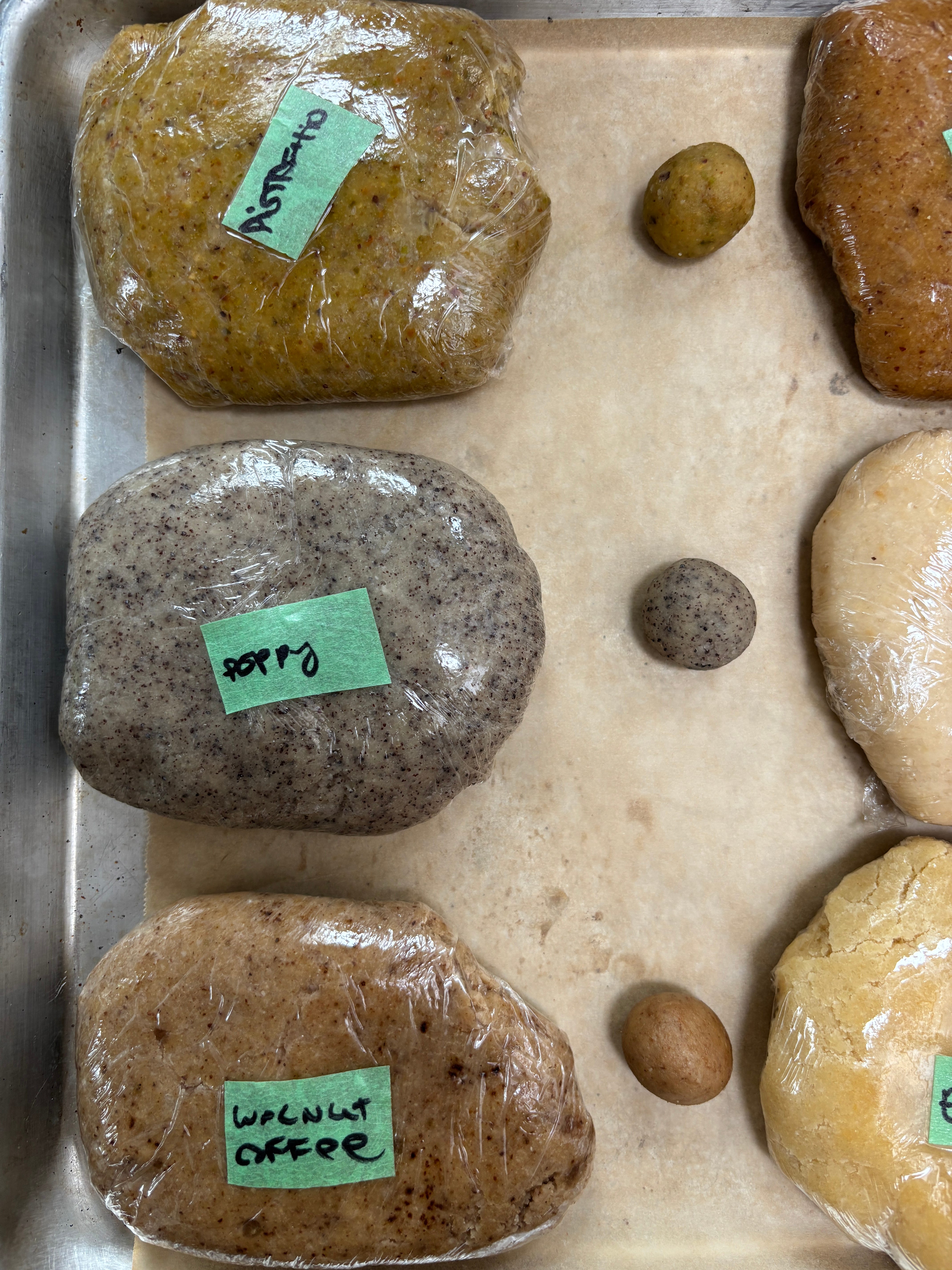
Then there are other inclusions, such as poppyseeds. I added 2 Tbsp coarsely ground along with my ground almonds and even that provided powerful flavoring and a moody dark color (excellent in pain de Genes). No doubt black or white sesame would be equally good. I added 1 tsp of espresso powder to my walnut marzipan along with a healthy pinch of salt for a classic pairing. I kneaded a few teaspoons of whisky into my maple pecan marzipan. Orange liqueur might be fun. Zest too. Extracts would also be a good option, be it almond, noyau, fior di Sicilia or historically accurate rosewater. Spices I’m itching to try adding include mahleb and cardamom. And then there’s the whole world of freeze-dried fruit! There is a whole world of homemade marzipan flavors waiting to be explored.
Veganizing

To create a vegan version of my French marzipan, I inadvertently let a vegan chef do the heavy lifting. My friend Etty, who is also a skilled ceramicist and maker of mini model food, wanted to join an online marzipan fruit class I was teaching and, as a chef, didn’t want to use store-bought. They substituted reduced aquafaba (aka chickpea water) 1:1 for egg white, and when I tried it I never would have known the difference. Even if you aren’t vegan it’s an economical alternative to egg whites as long as you like to eat canned chickpeas. Just reduce the liquid from one can of chickpeas by 75% and go from there.
Now Do With It What You Will
Once you’ve made your homemade marzipan, it’s time to use it. One of the most amusing and delightful applications is to make little sculptures of fruit and other foods. Children obviously love them, but they also make excellent cake decorations and undeniably liven up a cookie platter or confection box. One little marzipan sesame seed bagel I made has been displayed in a little plastic baggie affixed to a friend’s fridge for years. But don’t be sad if people do eat them! Harold McGee writes that “Leonardo da Vinci made marzipan sculptures for the Milanese court of Ludovico Sforza in 1470, and wrote that he ‘observed with pain that [they] gobble up all the sculptures I give them, right to the last morsel.’” Isn’t that the idea? I guess that’s why he was never really known as a pastry chef—we must accept that our masterpieces are fleeting.
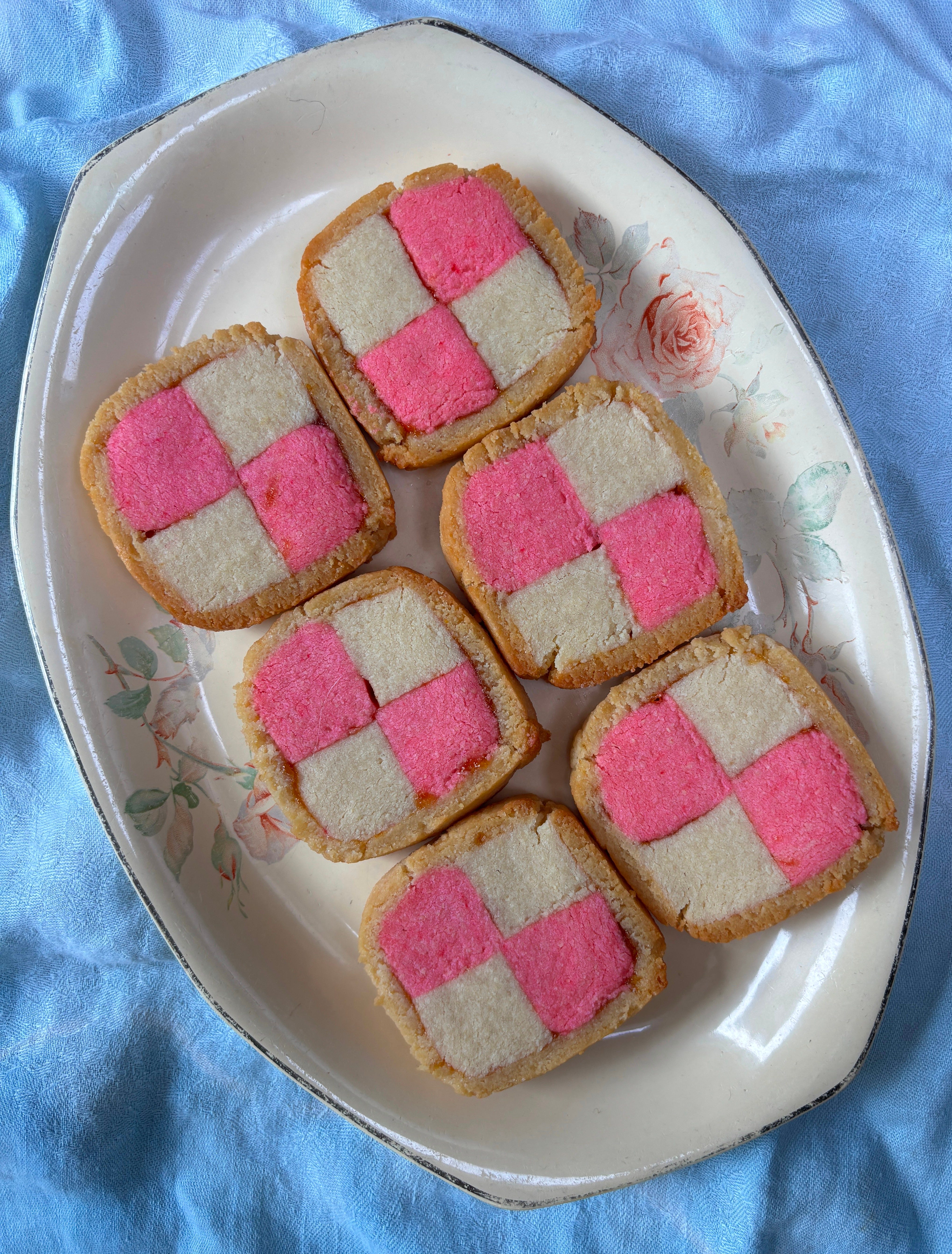
You might also make Battenberg cake (or cookies, recipe here!), Simnel cake, cassata or Swedish princess cake. Perhaps fruitcake or stollen or chocolates. Or, even, something entirely new. I cannot wait to see.
RECIPE: French Marzipan

This recipe doubles well and can be used in so many different ways—cover a fruitcake, bake into a stollen, dip into tempered chocolate, fashion into fruits (and more)… the list goes on and on. You’ll find it’s at least as easy as going to the store to buy marzipan—and guaranteed to be fresh. Most importantly, it’s ready to be played with by substituting different nuts or sugars, adding spices or liquor or freeze-dried fruit powder. The possibilities are truly endless.
Makes 450 g
Ingredients
200 g sugar
pinch cream of tartar
200 g ground almonds
30 g egg white
1/8 tsp kosher salt, or fine sea salt
Icing sugar, for dusting
Method
Dust a heat-resistant surface with icing sugar and fill a heatproof bowl halfway with cold water.
In a small pot, combine sugar, cream of tartar and 80 g water. Bring to a boil over medium-high heat, stirring at first to dissolve the sugar. Cook to 240°F / 115°C on a candy thermometer.
Remove from heat and plunge the bottom of the pot in the bowl of cold water. Stir the mixture until the syrup begins to thicken and turn opaque. It should be the texture of thick honey and a sort of pale silver.


Remove the pot from the bowl of water and stir in the ground almonds, egg white and salt. Return pot to stove over medium-low heat, stirring constantly, until mixture is thick and homogenous, about 2-4 minutes.
Transfer mixture to prepared surface and knead with icing sugar-dusted hands until smooth and pliable. If it is too hot to touch, let it cool for 5 minutes. You can also use a dough scraper to help you as it is quite sticky.
Use immediately or wrap tightly in plastic and store in a cool place until needed.
RECIPE: Pain de Gênes
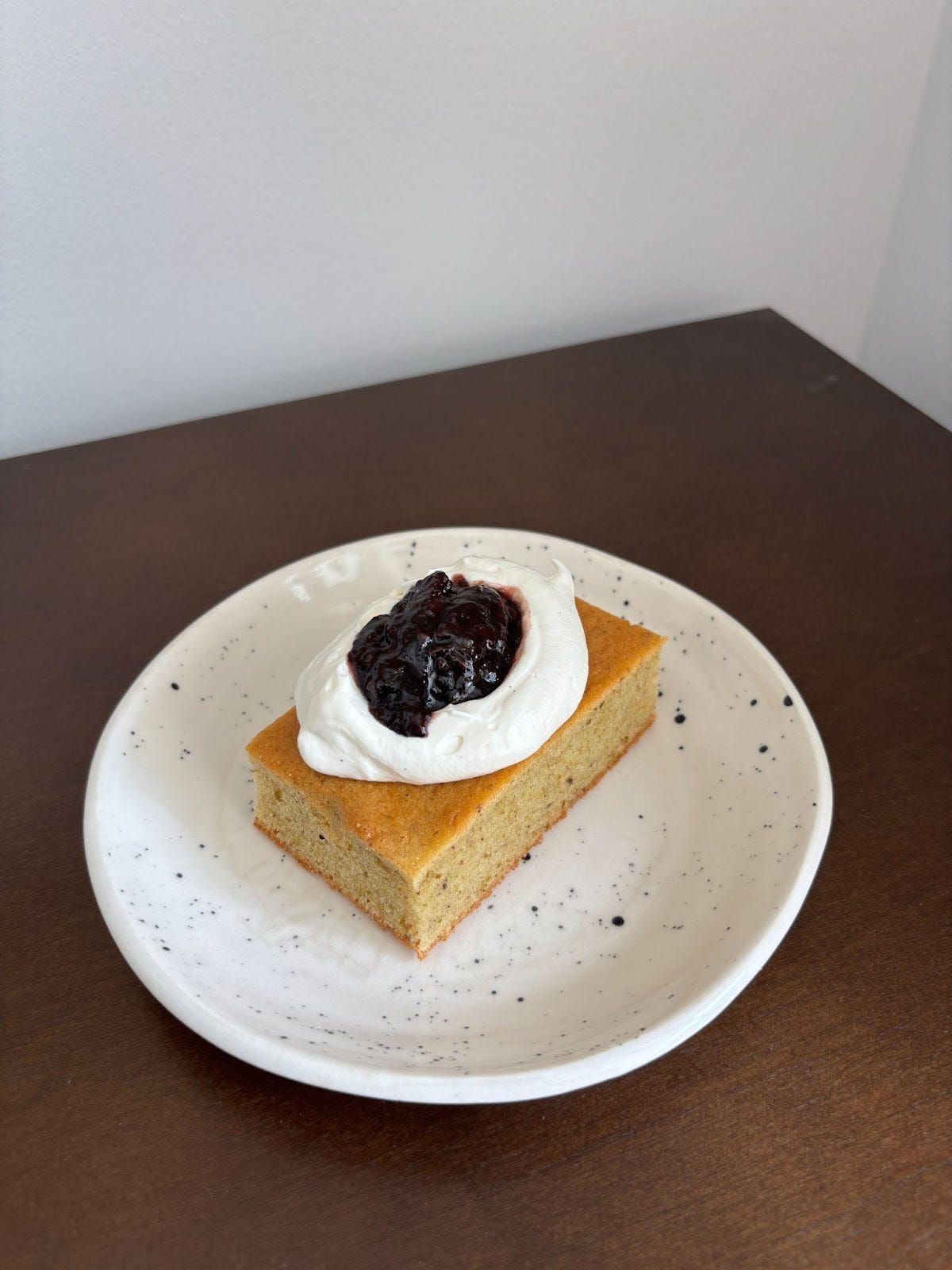
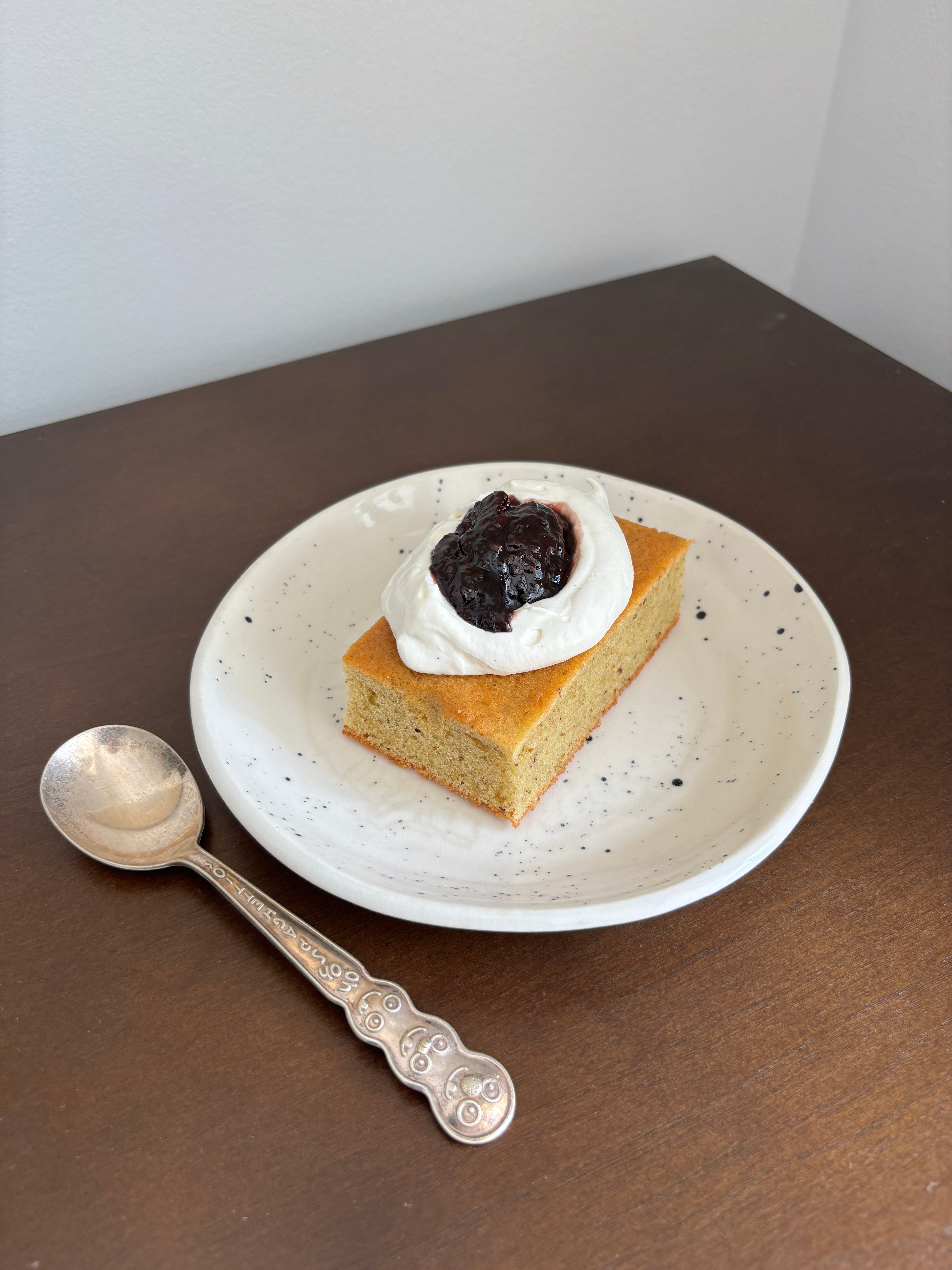
I’ve seen this classic, yet little known, cake made with ground almonds on occasion, but the way I learned to make it, from my first mentor Patrice Demers, was with marzipan. It truly couldn’t be easier, as long as you have a food processor—you just whiz it all up and bake it. The result is quite unique, almond scented and spongey in a bouncy sort of way. The fun really starts when you make your own marzipan to use as the base. I made it this way with toasted pistachio marzipan and served it simply with whipped cream and loganberry jam. I also made the batter with poppyseed marzipan which I baked in a 10-inch round pan, cut in half and filled with vanilla custard buttercream and apricot-tokaji butter.
Yield: Makes one 8-inch square cake
Ingredients
250 g marzipan
250 g eggs
100 g melted butter
40 g all-purpose flour
1 ½ tsp baking powder
½ tsp kosher salt (in UK, flaky salt is preferable)
Method
Preheat oven to 160c fan / 350°F. Grease an 8-inch square pan and line with parchment paper.
Crumble marzipan into the bowl of a food processor. With the motor running, slowly add eggs until fully incorporated. Drizzle in butter until fully incorporated. Add flour, baking powder and salt; pulse until smooth and homogenous. This batter is quite runny - don’t be alarmed.
Transfer batter to prepared pan. Bake until cake bounces back when gently prodded and a toothpick inserted in the middle comes out clean, 30 to 35 minutes.
Cool completely on a wire rack (it may pull away or shrink from the sides a little - not to worry, this is normal) before unmolding, trimming edges and slicing.
Making Camilla’s marzipan for the first time was truly life changing for me!
My parents came from Germany and I was raised on this stuff. I appreciate the detailed instructions and will try to make own. When making a variety of cookies and cakes, I often substitute almond paste for a portion of the sugar. Even chocolate chip cookies are enhanced with the subtle flavor addition.