
Kitchen Project #178: Peach Cobbler
Bronwen Wyatt takes on the classic


Hello,
Welcome to today’s edition of Kitchen Projects. Thank you so much for being here.
I have been waiting ALL YEAR to read, make then publish Bronwen Wyatt’s recipe for Peach Cobbler and I’m so excited we are finally here. An absolute triumph.
Over on KP+, pastry chef Stroma Sinclair is sharing her recipe for poached peaches with verbena jelly. I tried this at her pop-up Fizzy! Wobbly! Melt! at Quince Bakery (along with her co-hosts Louis Thompson and Fiona Fitzpatrick) and knew in that moment I HAD to get this recipe for you. It’s so much fun! Click here for the recipe.
What’s KP+? Well, it’s the level-up version of this newsletter. By joining KP+, you will support the writing and research that goes into the newsletter (including the commissioning - and fair payment - of all the writers), join a growing community, access extra content (inc. the entire archive) and more. Subscribing is easy and only costs £6 per month or £50 for the whole year. Why not give it a go? Come and join the gang!
Love,
Nicola
SIFT dinner and talk at Cafe Murano this October
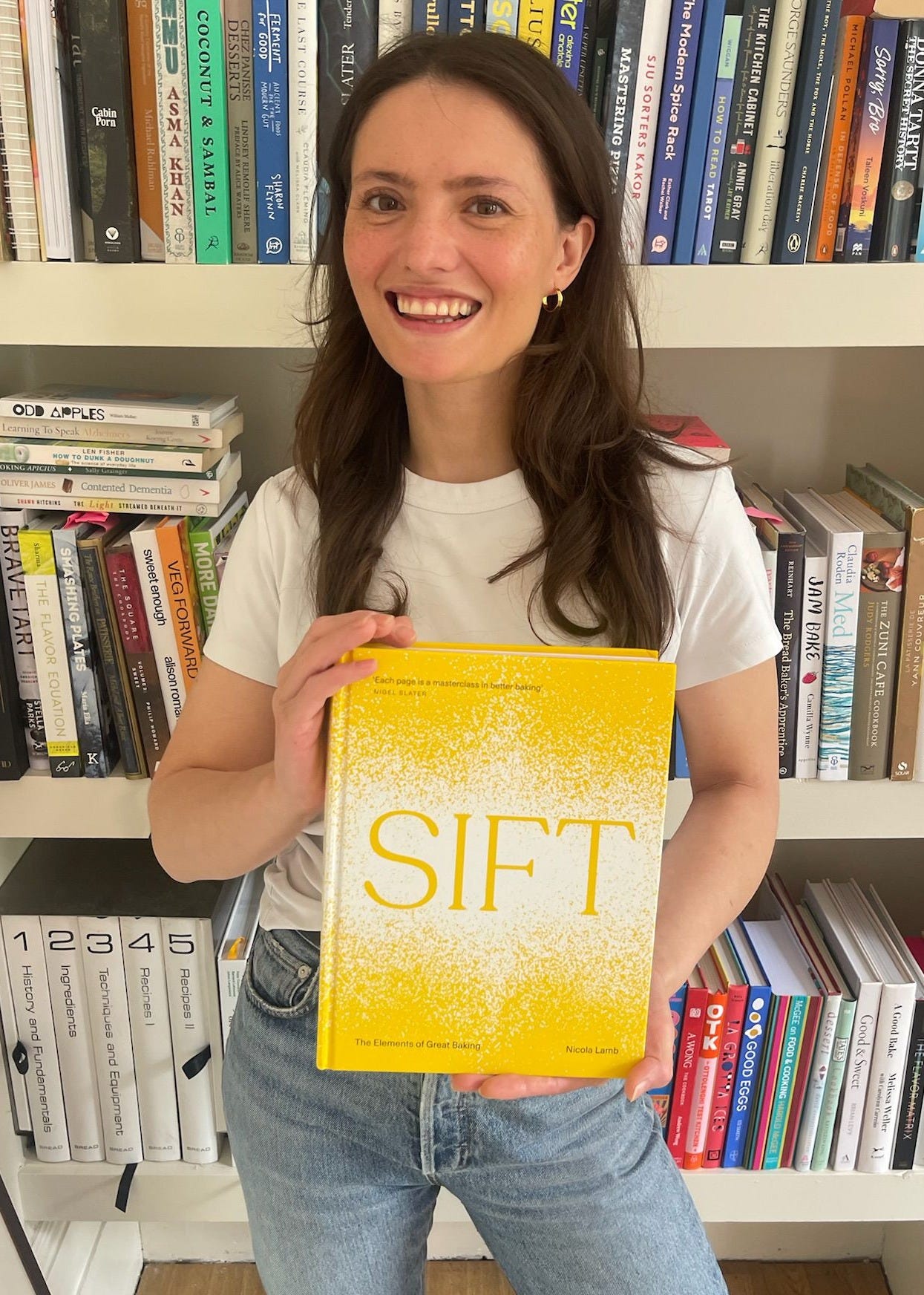
I am very excited to share that Mark Diacono has invited me (& SIFT) to be part of his Cookbook Club dinner series at the gorgy Cafe Murano in London this October. Taking place on 26th October, the final Sunday of the month, at Cafe Murano Bermondsey, Mark and I will have a good old chat about all things cookbooks and the SIFT journey so far. Your tickets will also include a bespoke two-course dinner inspired by the book as well as wine, cocktail & nibbles on arrival. It’ll be the best of times. Come join us!
What is a cobbler, anyway?
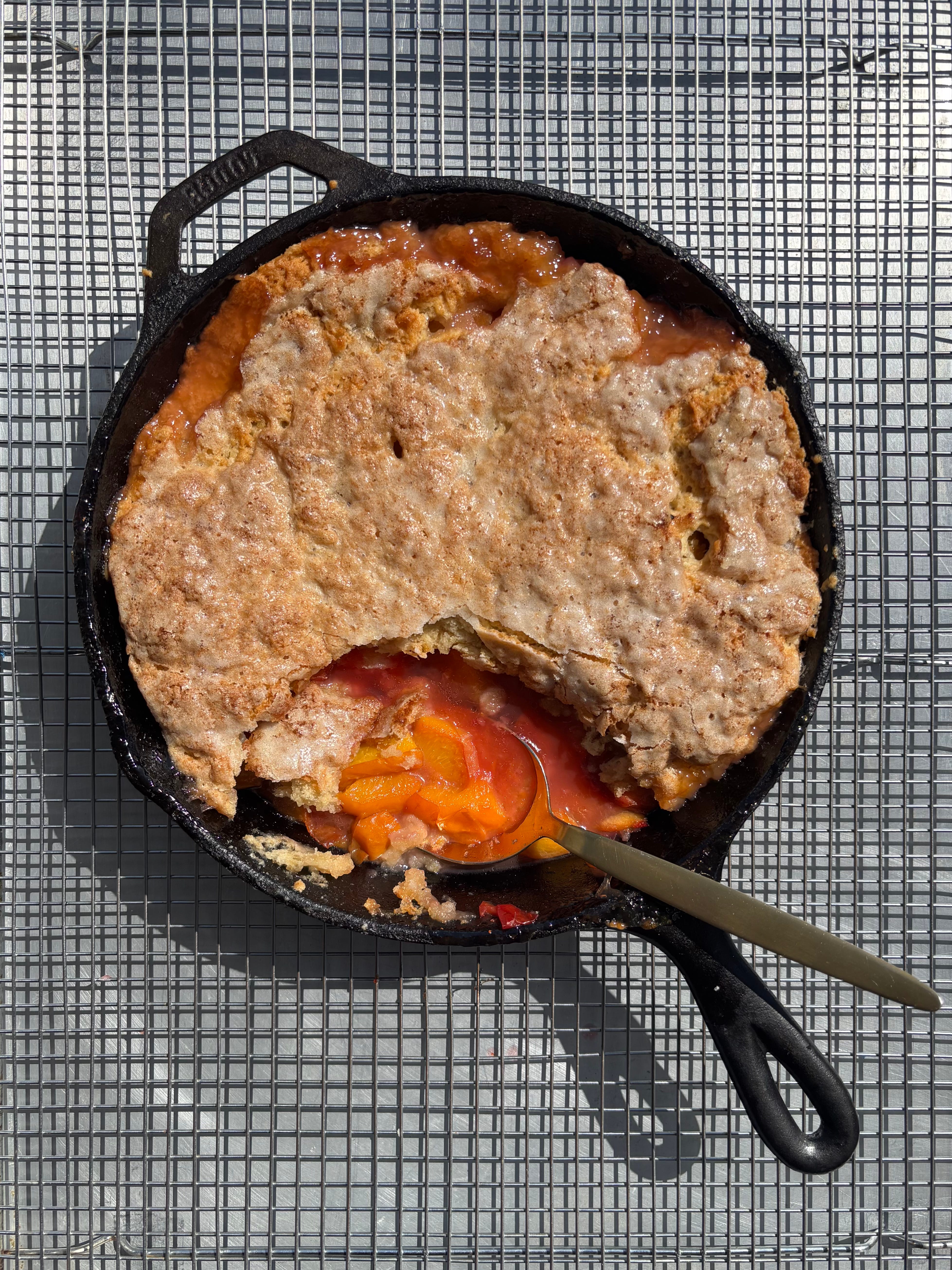
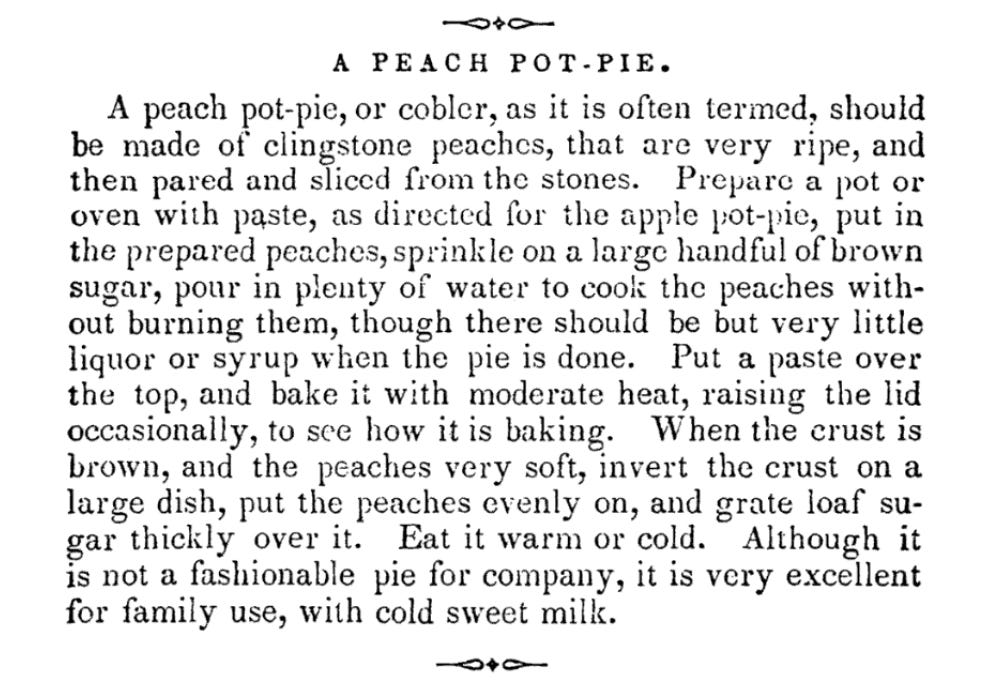
Perhaps the earliest reference to peach cobbler is the 1839 cookbook The Kentucky Housewife by Lettice Bryan, who wrote, “A peach pot-pie, or cobler as it is often termed, should be made of clingstone peaches, that are very ripe, and then pared and sliced from the stones… Eat it warm or cold. Although not a fashionable pie for company, it is very excellent for family use, with cold sweet milk”.
I think the phrase “not a fashionable pie for company” might be burned into my brain now, because it's true - a cobbler is a humble dessert. There’s not much opportunity for fanciful embellishment, like you might crimp or stamp on the border of a double-crust pie. Perhaps even less so if you were to follow Lettice Bryan’s recipe, which seems to involve inverting the “cobler” like you would a tarte tatin:
In its most basic form, a cobbler is part of a family of desserts that I’m calling “hot fruit plus carbs”. They can be made quick and dirty, with whatever fruit you have on hand, often apples, peaches, or berries. Despite this simplicity, the formula is endlessly ripe for riffing. A small tweak to the consistency of the batter, the timing and heat of the bake, and the order in which the batter/crumble and fruit are layered might produce an entirely different regional dessert. As home cooks have taken liberties with the basic form over the centuries, a vast array of hot fruit + carb desserts were born, each with its own peculiar name:
Crisps and crumbles consist of hot fruit baked with a crunchy streusel on top, often featuring nuts or oats.
Betties or brown betties feature fruit, usually apples, layered with bread or cookie crumbs and baked.
Slumps, grunts, and pandowdys generally hail from New England, Pennsylvania, and the Maritime Provinces of Canada. These feature either a dumpling-like topping or a thick American-style pie crust, sometimes deliberately broken up over the fruit so that the fruit juice bubbles up over the surface. Grunt and slumps are often baked on the stovetop in a pot with a lid, like you might for chicken and dumpling stew.
Sonkers, peculiar to Appalachian North Carolina, feature quite a lot of syrupy fruit baked in a deep dish with either a lattice crust or a thick pancake-like batter poured over top. They are frequently served with a side of “milk dip”, a dairy-based sauce thickened with cornstarch.
Buckles and dump cakes feature a thick cake-like batter poured over fruit.
And last but not least, cobblers often feature a biscuit dough scattered over fruit, though (confusingly!) there are also versions that feature top and bottom crusts more similar to American style pie crust, as well as cake-like versions that veer into buckle territory.
For years, the only cobblers I knew featured a biscuit-style topping. Peach cobbler is in fact, the first dessert I can remember making, though I was so little that the memories are hazy. I recall standing at my great-aunt Jewel’s kitchen counter in Texas, watching her drop biscuit-like dough onto thick slices of peaches laid out in a casserole dish. We ate the cobbler warm with vanilla ice cream in the evening, or as cold leftovers, straight from the fridge, for breakfast. When I called my mom to pick her brain, she said that Jewel made both biscuit-style cobblers (likely with the convenience product Bisquick) and cake-style cobblers. My mom’s grandmother did the same, using both canned peaches (sourced from friends and neighbors rather than the store), and the fresh peaches they grew on their own property. In surveying recipes from a broad spectrum of sources, I could see that there was no clear consensus about what, exactly, a cobbler must be.
The Biscuit Family Tree
While reading America’s Test Kitchen’s excellent reference and recipe book When Southern Women Cook I learned of another, more obscure peach dessert that involves wrapping stone fruit halves in store-bought crescent roll dough and simmering them in lemon-lime soda. While this version sounds vaguely horrifying to me (or am I intrigued…), the recipe reminded me of another dessert - the blackberry dumpling. Stay with me here on this tangent!
I first heard about blackberry dumplings from a former colleague who grew up “down the bayou” (the colloquial term for the coastal area of Louisiana south of New Orleans). Blackberries are cooked with sugar until they exude enough juice to form a thick syrup. Drop biscuits are then formed and simmered in the blackberry syrup until cooked through. The resulting dumplings are served warm with vanilla ice cream.
If we think of a dumpling as a drop biscuit simmered in fruit, and a cobbler as, often, a drop biscuit cooked on top of fruit, then we can begin to see the connecting threads between a slew of other biscuit-like recipes. This is when I really clocked that the cobbler represents a branch in the North American Biscuit Family Tree, a noble lineage descended from UK-style scones. Having just completed my deep dives on biscuits and shortcakes, I could recognize that even many of the “dump cake” style cobbler recipes were, in fact, kin to “butter swim” or pan-style biscuits. I could now slot the cobbler types into four basic categories:
The “butter swim” style, where a fatless batter is baked with a large amount of melted butter and fruit, the three elements intermingling as the cobbler bakes. Sometimes the melted butter is placed in the pan, topped with dough, then fruit, then more dough. Sometimes the dough is spread over fruit and topped with cubes of cold butter, which melt and are absorbed as the cobbler bakes.
Drop biscuit style, where a wet buttermilk biscuit batter is dropped in irregular heaps onto fruit and baked.
Shortcake style, where a cream-enriched biscuit dough is either punched out into rounds or draped en masse over the fruit and baked.
And then our outlier, the cake-style cobbler, where a stiff cake batter is spread over fruit and baked. Sometimes this style is topped by a sugar-and-water crust (more on that soon). “Texas style” cobbler, often made with blueberries, similarly features a high ratio of a thick, pancake-style batter to fruit.
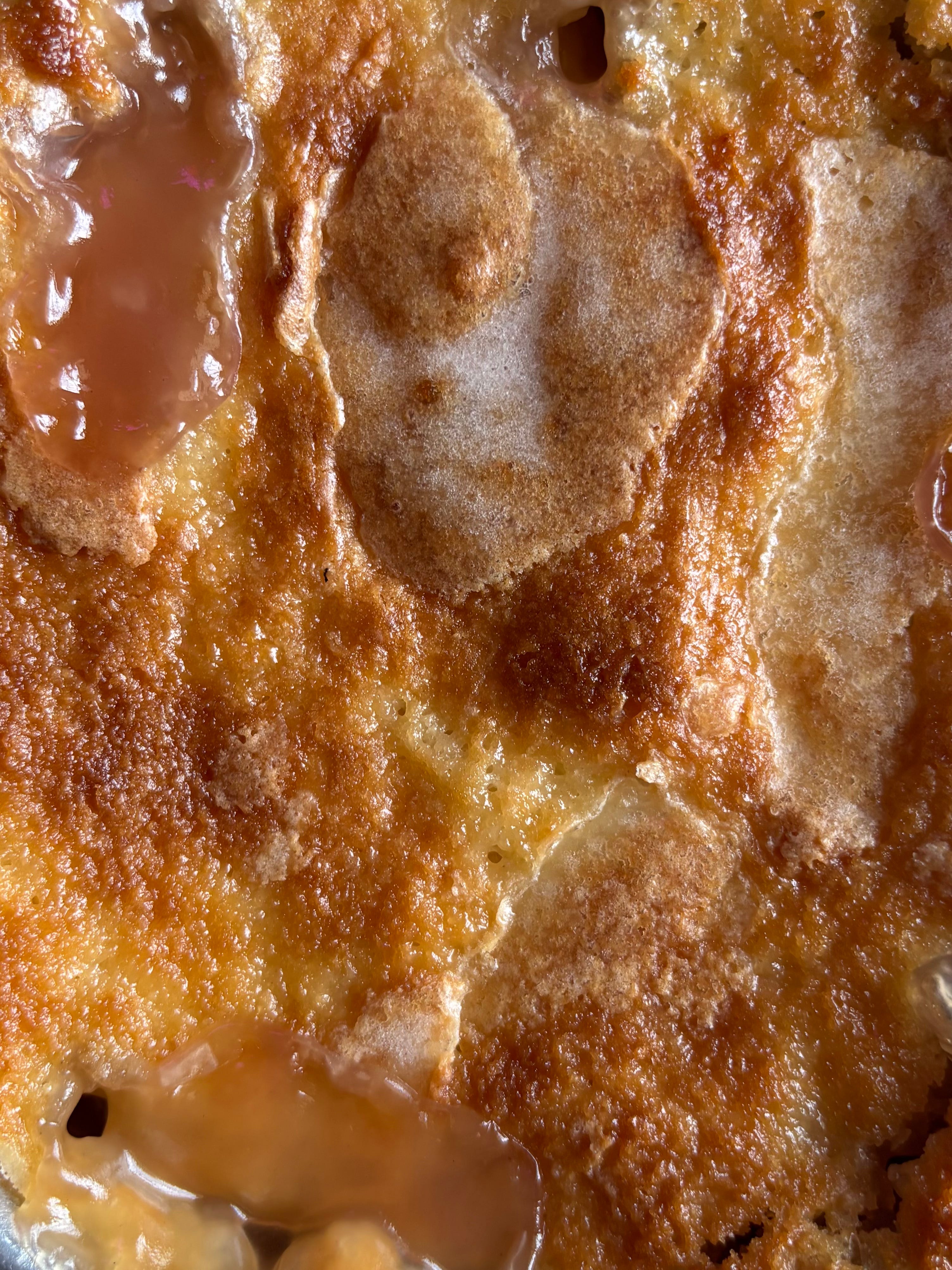
I decided to bake cobblers from each category and investigate further. For my initial tests, I prepared the same peach mixture for each cobbler - a blend of fresh peaches sweetened with a little sugar. I then prepared two “butter swim” cobblers - one with butter melted straight into the pan, and one with cold butter dotted on top before baking. Next I followed a recipe for a cake-style cobbler with a “hot sugar crust”. This recipe, developed by Renee Erickson, calls for a thick cake batter to be spread over peaches. Just before baking, a quarter cup each of sugar and water are drizzled over the batter. The heat of the oven melds the two into the surface of the cake to produce a thin and crispy sheet of sugar, which caramelizes in the places when it mingles with the peach juice bubbling up through the cake.
I then prepared two drop-biscuit style cobblers. For the first, I used a recipe that recommended the method popularized by Edna Lewis, where melted butter is mixed into cold buttermilk until it re-soldifies. For those not familiar with her work, Edna Lewis was a scion of Southern cooking. She ran a Manhattan-based restaurant for several years in the late 40’s and early 50’s, becoming a favorite stop for Marlon Brando, Tennessee Williams, and Truman Capote. Later, Lewis’ work as a teacher, food historian, and cookbook author highlighted the essential contributions of African-American and enslaved people to American cooking.
For the second, I broke down cold butter into flour and leavener, like you would for a traditional biscuit recipe. Both of the drop-biscuit style cobblers called for buttermilk as the main liquid, and to spoon irregular lumps of dough over sweetened peaches. For my last cobbler test, I prepared my shortcake recipe as written, punching out rounds of dough to top the peaches.
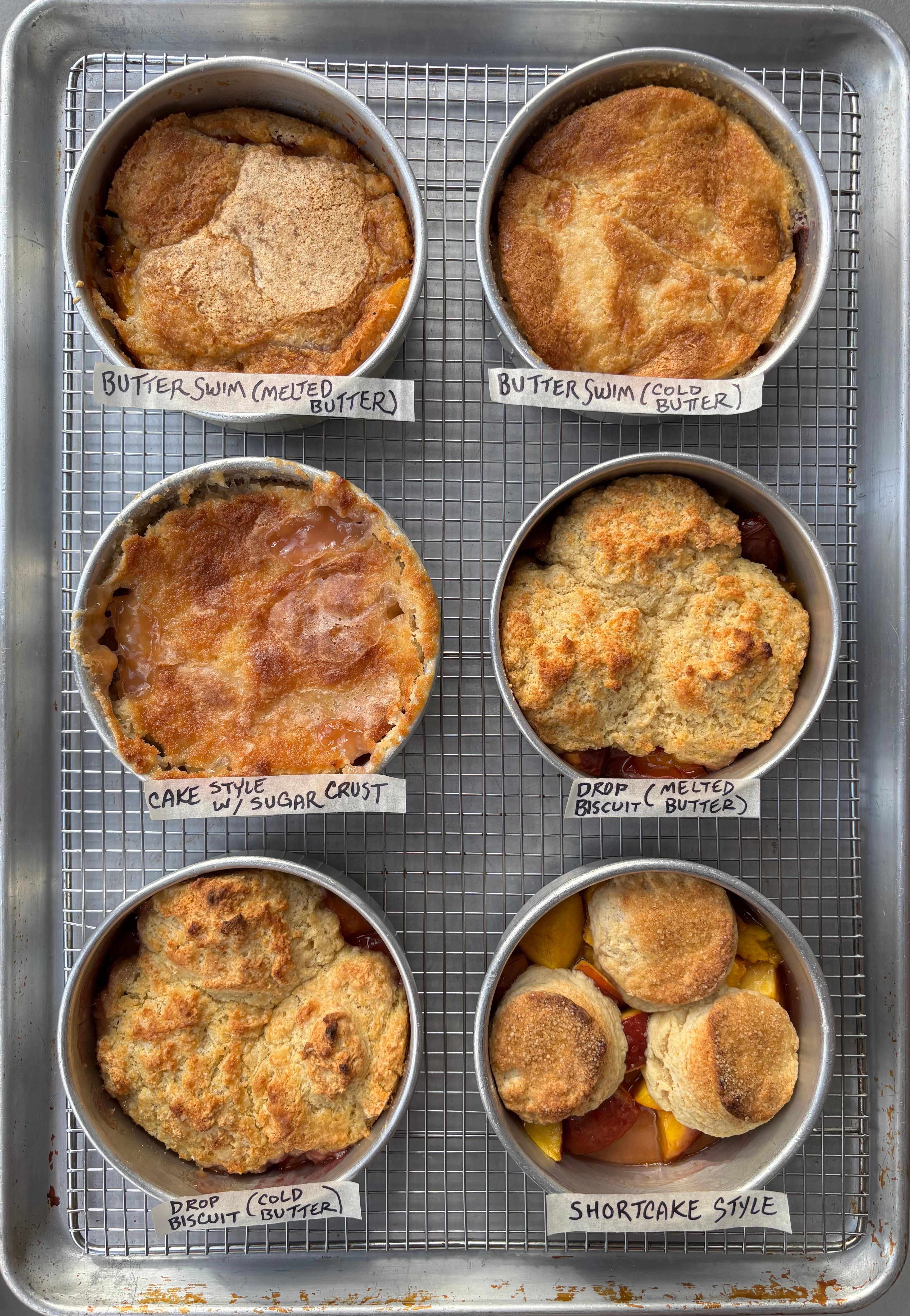
The first two cobbler tests, what I’m calling here the “butter swim method”, each had their charms. The first in particular, where a stiff, fatless batter is baked in a dish with mingled peaches and melted butter, baked up with a crispy top that held a range of textures: crispy-chewy at the border, buttery-tender in the middle. The second, where cold butter cubed on top to melt in the oven, was a little less crispy but still appealing, almost like a fluffy dutch pancake. The third, cake-style cobbler with the hot sugar crust was a delight, a thick buttery cake with syrupy peaches baked into the bottom and a crispy layer of sugar on top. All three of these recipe tests were, however, quite sweet, and all called for roughly equal parts batter and fruit - less fruit than I hoped for in my own dream cobbler recipe.
Next, I tried the three biscuit/shortcake style cobblers. The two with drop biscuit batter baked up very similarly. I found that, while I liked the craggy tops of the biscuits, the muted sweetness and bracing acidity of the buttermilk batter leaned almost savory and felt jarring against the peaches - almost like the two weren’t melding into each other enough. The shortcake version was better, with the yielding richness of the shortcake dough making way to the bright sweetness of the peaches. But honestly this version looked a little silly, with the shortcakes flopping over in a sea of fruit, and the thickly-rolled shortcakes felt underbaked in the center.
Ultimately, I decided against fine-tuning the first three cobbler styles. I wanted a recipe that allowed the fruit to shine, and these felt more like rich cakes filled with peach slices - or more buckle-like, if that term were more widely familiar. I wanted more fruit! And I believed the biscuit-style cobblers held more of that potential. The buttermilk drop biscuits also felt less promising than the shortcake, which could work with some fine tuning.
It’s here again that I turned to the work of the brilliant and kind Cheryl Day, who tops her own peach cobbler with a shortcake dough that is rolled out as one broad piece and nestled into the top of a dish of peaches (rather than being individually punched out as rounds). I was also keen to explore whether I could borrow the hot sugar crust technique to add some textural fun to my own cobbler recipe.
The Next Tests
Having determined that I preferred the sweeter, richer shortcake topping, I set about adapting my shortcake recipe to hit all the notes I wanted for my cobbler - a high ratio of fruit topped with a thinner layer of shortcake dough with a crispy top. First, I decided to omit the egg from my shortcake recipe, substituting it for an equal weight of cream instead. I didn’t need the extra structure here to create a tall shortcake. In fact, I decided to roll my cobbler-biscuit-crust on the thinner side to really let the fruit shine.
I’d also decide if pre-cooking the fruit would give my shortcake dough a jump start. Many cobbler recipes call for topping hot fruit with the biscuit dough, and some have you stew the peaches till quite soft and broken-down before putting the carb layer on.
I prepared two identical cobblers, each topped with a thin sheet of shortcake dough. For the first, I pre-baked the peaches in the oven for twenty minutes, and for the second, I topped room-temperature unbaked fruit with the dough For both shortcake rounds, I doused the tops with quite a lot of cream and sugar, hoping to mimic the crisp of hot sugar crust.
While parbaking the peaches did cause that biscuit crust to cook faster, it didn’t seem to affect the ultimate texture of the shortcake layer, and I didn’t like how broken-down and caramelized the peaches were, almost disappearing in the bottom of the dish. The fruit in the second cobbler better maintained its structure, with large chunks of peaches still remaining. If your peaches are ripe, they shouldn’t need to be pre-cooked, and if your peaches aren’t ripe, you shouldn’t be using them to make cobbler.
Both of my initial cobbler tests had a nicely crispy crust, but not nearly as crispy as I’d hoped. I’d used cream out of habit, but was there a chance that the water used in the original hot sugar crust recipe would produce a crisper top layer?
I tested four different ways of applying sugar to the top of the cobbler to see - water, melted butter, cream, and egg wash.
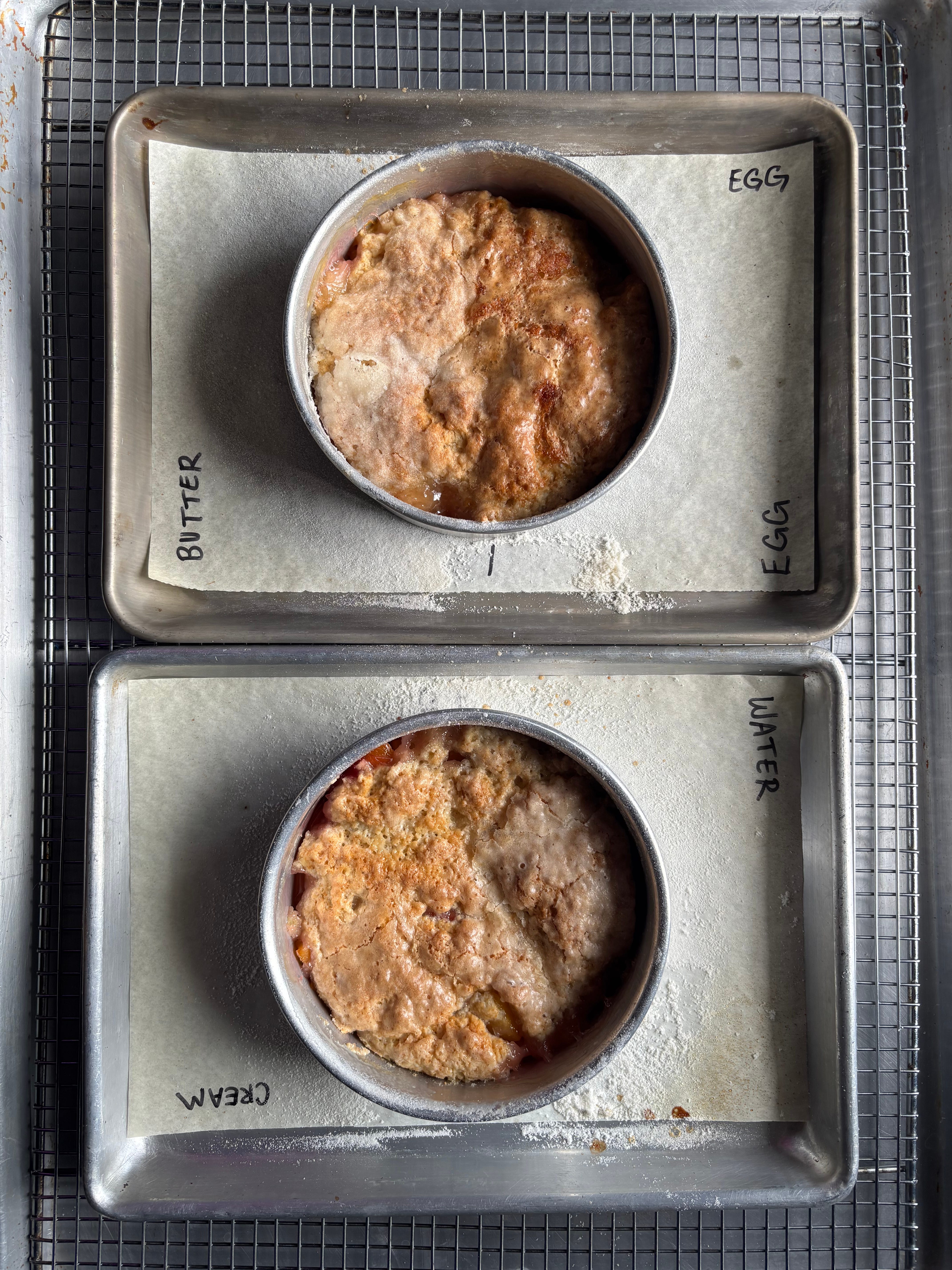
Excuse the chaos of this photo - I did a side-by side test of four washes on two cobblers, each sprinkled with sugar. And surprisingly, the water wash was the crispest, remaining pleasantly crunchy even an hour after the cobbler was baked.
Could I push it even farther? I thought about palmiers, those irresistibly crunchy cookies made of puff pastry rolled in sugar. For my next test, I rolled my cobbler topping in granulated sugar and tested out brushing the sugar coating with a layer of water, and then doubling up on my water/sugar layers.
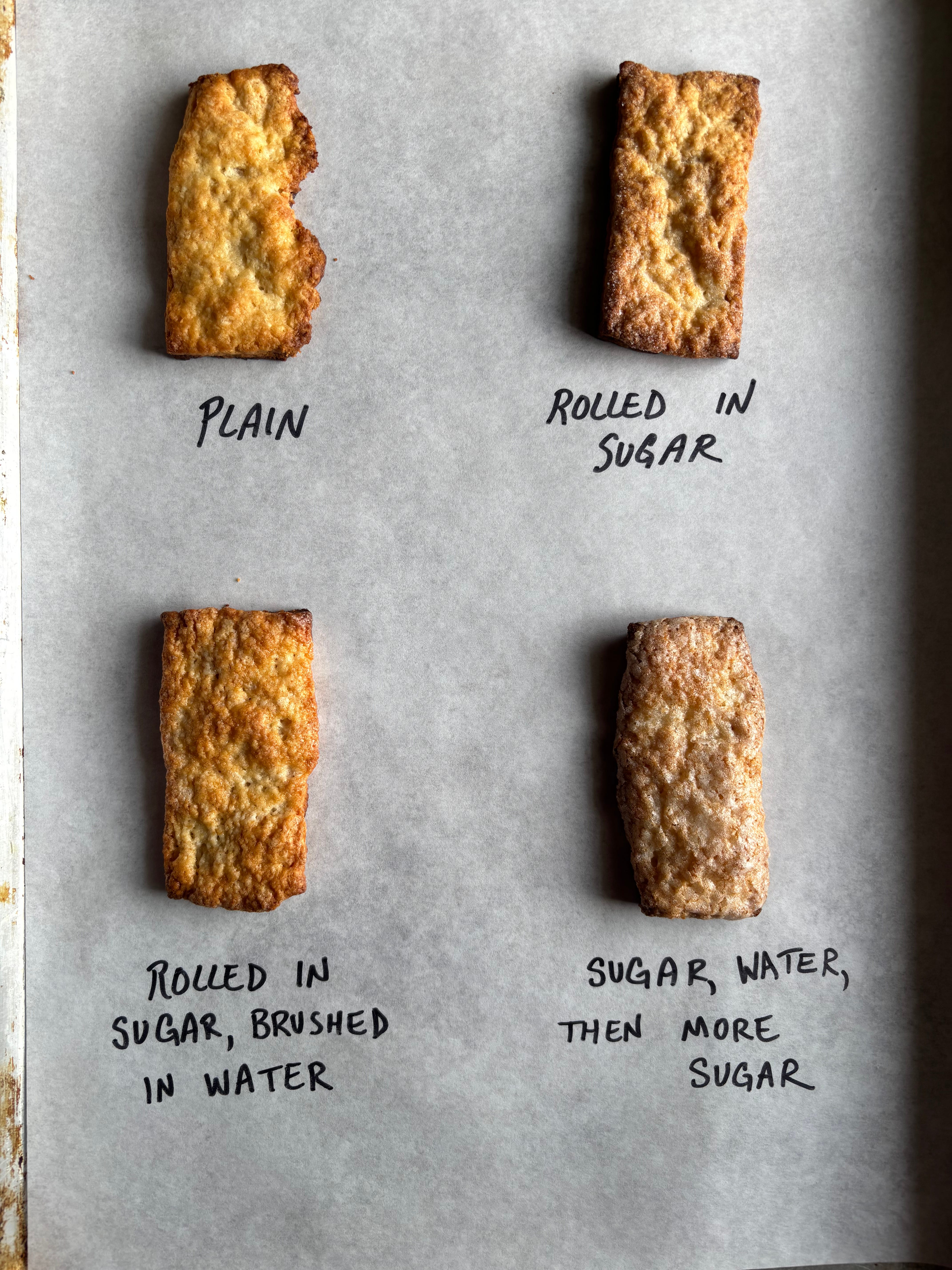
As you can see here, the version rolled in sugar, brushed in water, and topped with more sugar produced the shiniest, crispiest, prettiest crust—the most akin to the hot sugar crust topping of the cake-style cobbler I loved.
On Peaches
Next, I turned to the peaches.
We get a range of peaches in New Orleans, usually grown in central or northern Alabama, where the winters are a little cooler, or from as far afield as Georgia. As is the case with a lot of southern fruit, the folks at the farmer’s market might call them “yellow peaches” or “peaches” but rarely identify a more specific varietal - unlike markets in California, where you’ll hear romantic names like July Flame, Redhaven, or Elberta bandied about.
To be honest, though, I bought my stone fruit for these tests from Costco. Their stone fruit is shipped in half-sized flats where each peach is cradled in an individual nest, and as such are nearly always riper and more fragrant than the greenish, underripe peaches you see stacked in other supermarkets. I promise I don’t get paid by Costco to say this, but I truly believe the shipping method makes a huge difference, allowing the peaches to be picked when they’ve had more chance to ripen.
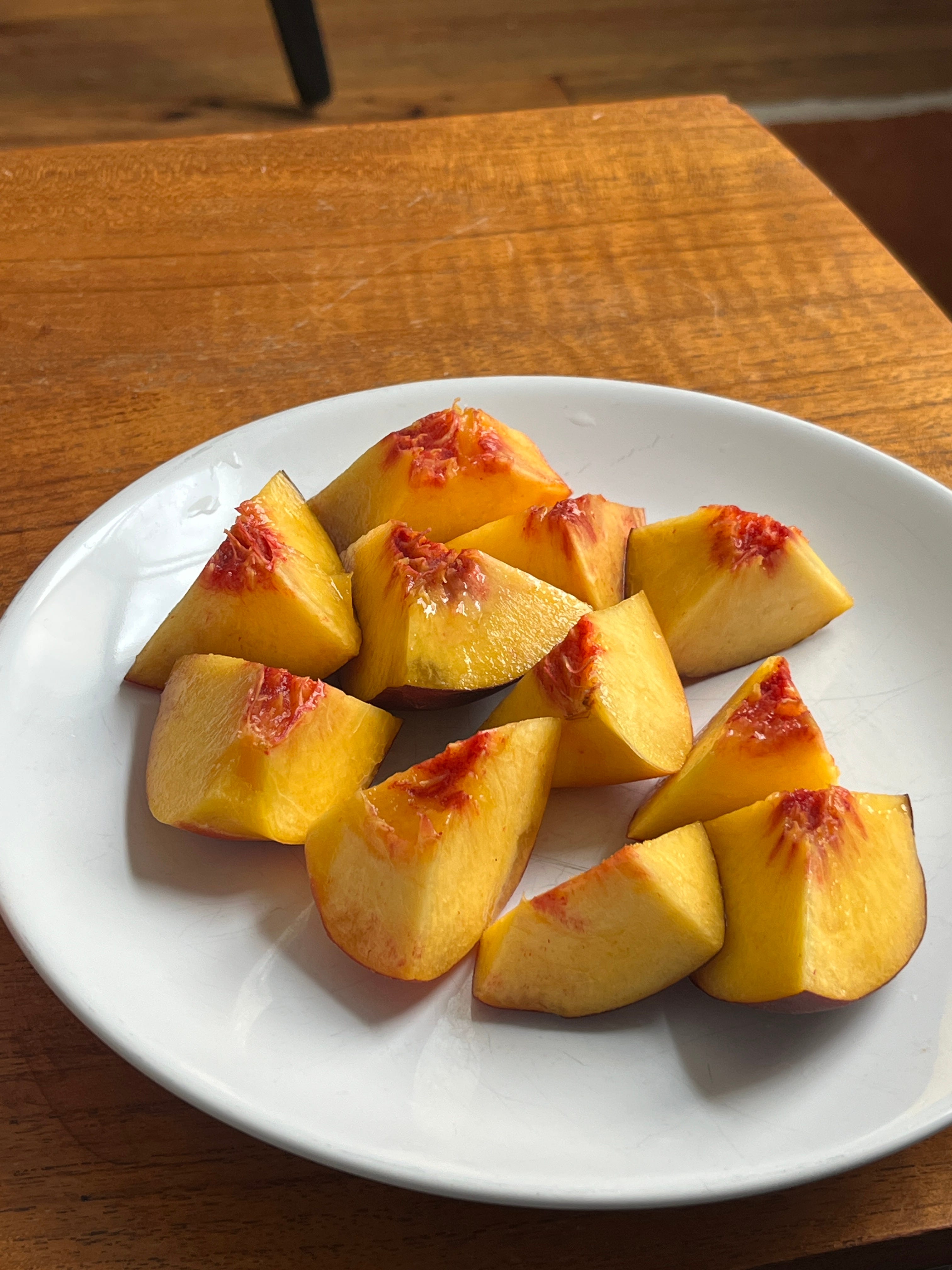
When I went on my shopping trip to pick some up, I was also tempted by the flats of intensely-scented nectarines, so I bought those too. I figured they’d be fine to test the cobbler - no one could tell just from a photo if the cooked fruit was a peach or a nectarine, right? Reader, I should have started by reading Nicola’s piece on nectarines and peaches and saved myself the guilt, because I have since learned that nectarines are, in fact, a variety of peach. I was also pleased to learn that Nicola agrees that white peaches tend to be less flavorful than yellow. Perhaps a perfect white peach would be delicious eaten out of hand, but I prefer yellow peaches or nectarines for my cobbler.
ON KP+ TODAY


Whilst we’re on peaches, Stroma Sinclair is here to share her recipe for Poached Peach Butts with lemon verbena jelly and cream. Simple summer perfection.
I’m also particular about doing as little as possible to peaches when they’re ripe. I don’t see any reason to cover up their flavor with common cobbler spices like cinnamon or nutmeg, and I’ve never understood the mania for peeling peaches. I’d read somewhere that a lot of the flavor of a peach is concentrated in the skin, so I decided to test both side by side to see. I also prepared a batch of cooked peaches with brown sugar instead of white, and on a whim, a batch prepared with noyaux sugar.
If you’re unfamiliar, noyaux is the name for the nugget at the center of the peach pit, and produces a gorgeous bitter almond flavor when crushed and baked or cooked into preserves. It’s also a little - or a lot - poisonous, depending on who you ask. Camilla Wynne has already written an incredibly thorough piece on noyaux for Kitchen Projects, with lots of tips and caveats for using noyaux safely, so definitely start there! I’ll echo her by saying I’ve been eating noyaux for years and have never gotten ill from it. My favorite way to use noyaux is to toast the peach pits for 10-15 minutes at 350 degrees F, crack them, and then grind the noyaux with sugar in a spice grinder. I find pre-toasting the pits makes them easier to crack, which I do by wrapping the pit in a dish towel and smashing it with a hammer. The sugar lasts for ages (it may be moist at first but will dry out slowly) and can be spooned into any number of bakes. I usually use about 4-5 pits per 200 grams of sugar, though you can use less if you’re cautious.
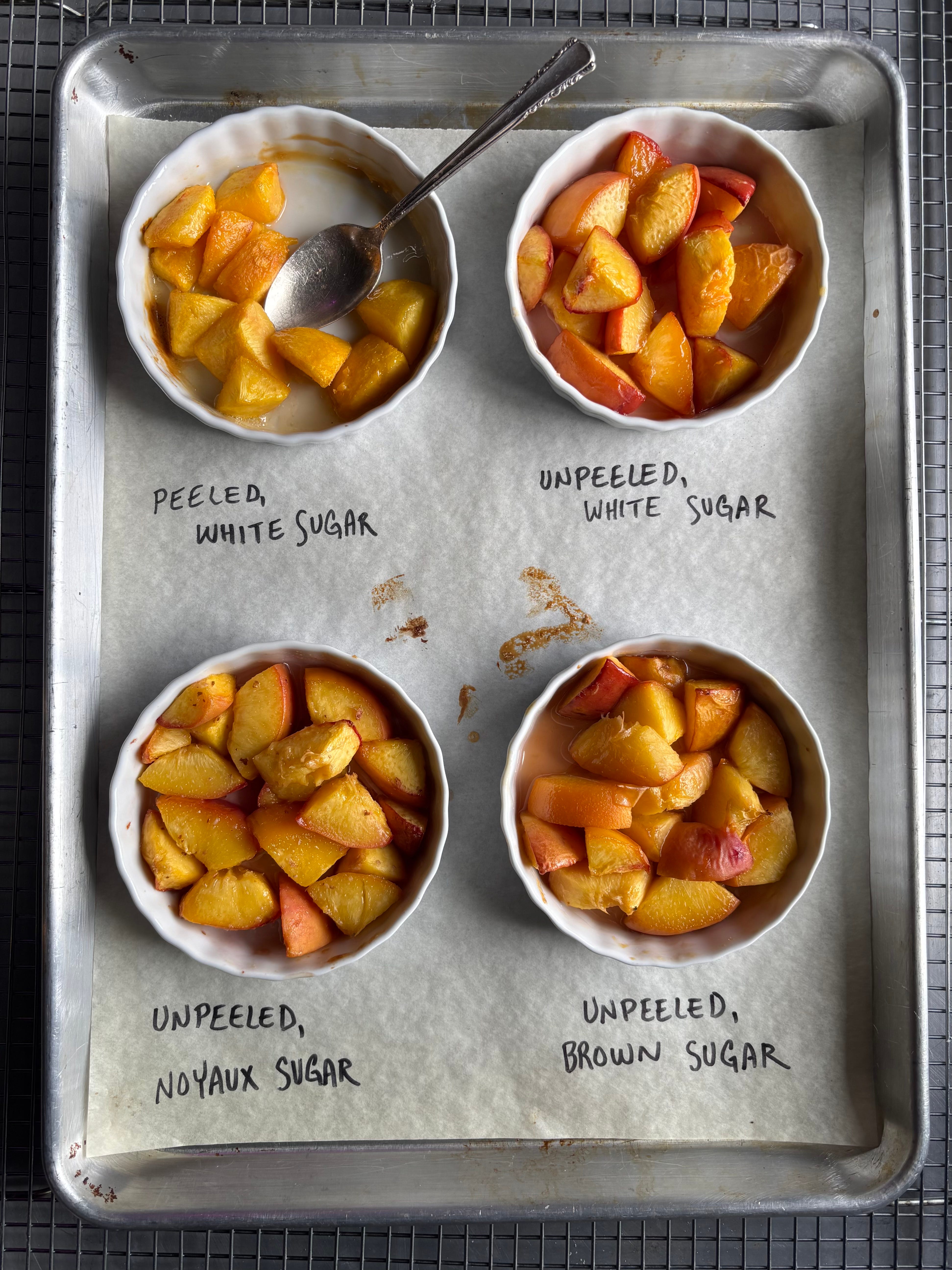
After tasting it, I found that the peeled peaches did seem to lack the zip of the unpeeled peaches, great news for all of us who are secretly a little lazy. The brown sugar peaches were delicious but I found the caramel notes of the sugar distracted me from the true peach flavor. Both the plain white sugar and the noyaux sugar were my preferred options for the peaches. Using just a little of plain white sugar brought out the natural tart sweetness of the peaches and let them sing. The noyaux sugar offered a rounded base note, grounding the fruit in subtle almond flavor.
The Final Cobbler
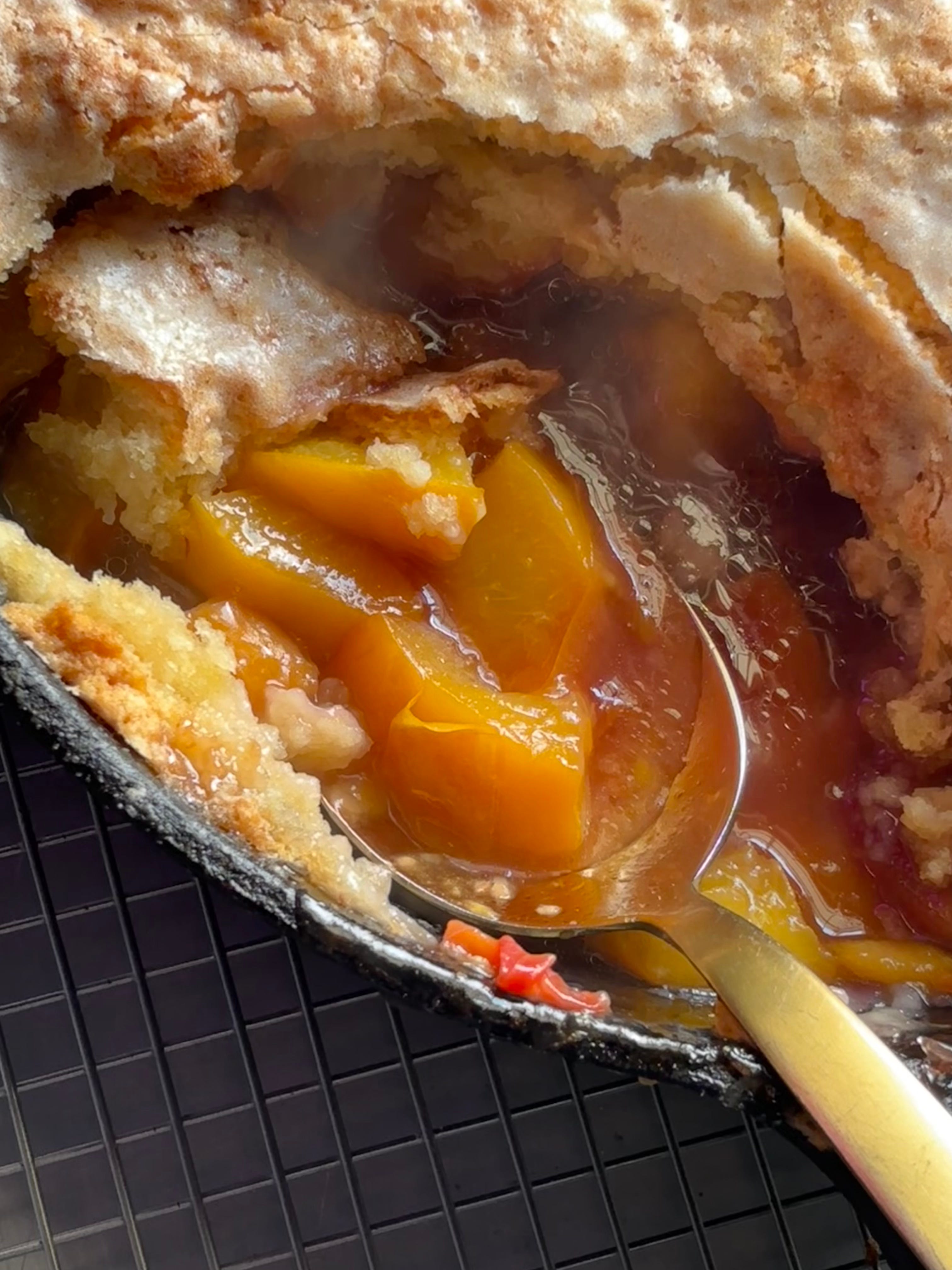
After a little more fiddling, I ultimately tweaked the method of my shortcake dough to feature a range of butter sizes. First, I break down half of the butter into breadcrumb-sized pieces, for tenderness. The other half of the butter I smushed to larger, flatter pieces, like you might for an American style pie dough. The result is a cobbler crust like a rumpled bedsheet, dimpled and buckling over the fruit. Depending on the peaches or nectarines you have on hand, you can bump up their tartness with a little lemon juice (something I’d definitely recommend if you’re planning on serving your cobbler with ice cream). And last, a little cornstarch tossed with the fruit thickens the peach juice as it cooks.
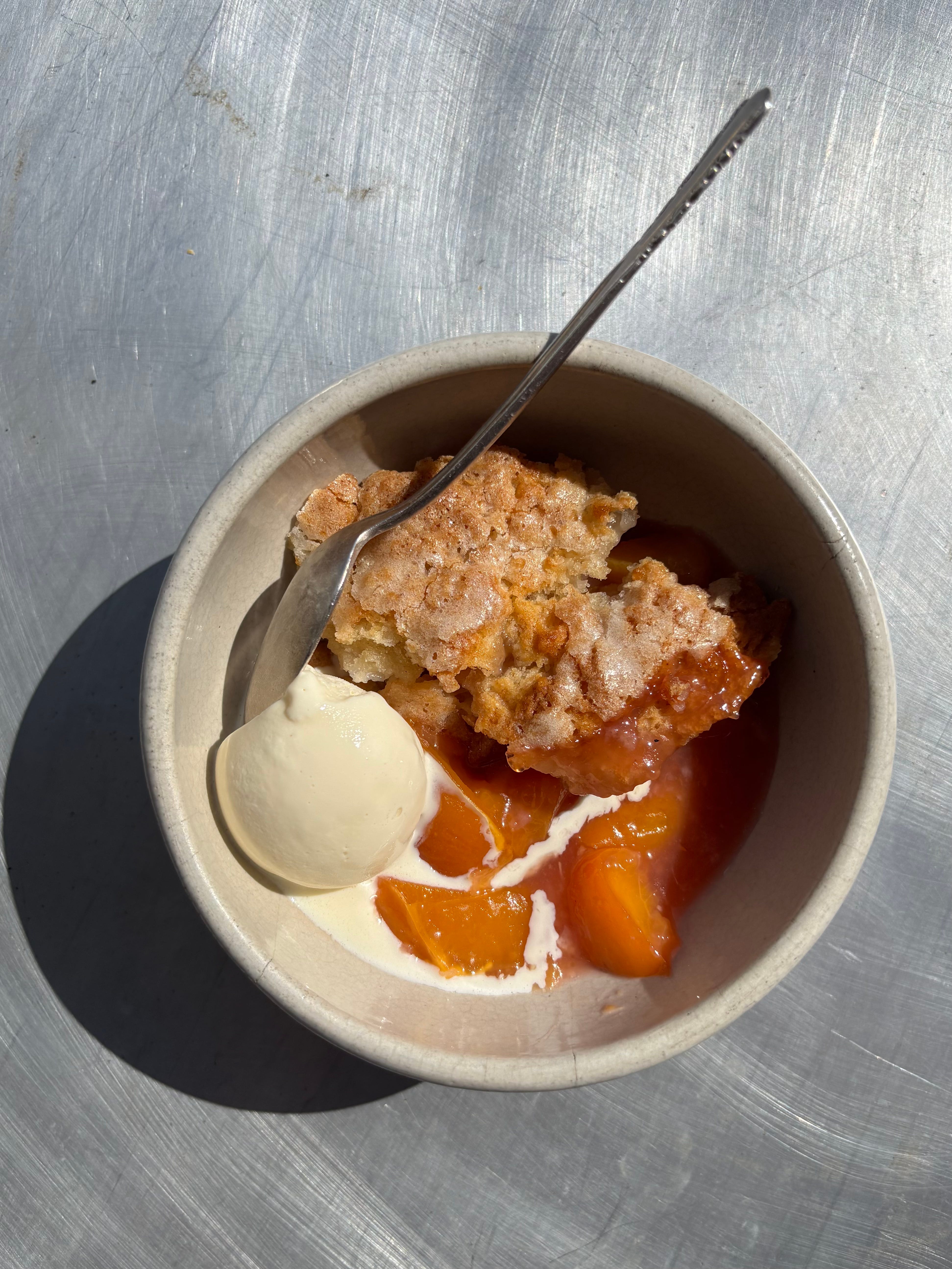
As you break into the sugar crust, you see a layer of impossible soft shortcake dough steaming over the lightly cooked peaches. If you have one, baking in a cast iron pan offers a delicious roasty note to the edges of your cobbler. This is also an incredibly easy recipe to scale up or down. If you have a 6” cake pan or similar small baking dish, you can prepare a one-third batch of the following recipe to make a cobbler for two. And of course, you can throw any variety of fruit under a cobbler crust - peaches are especially good mingled with blueberries, blackberries, cherries, or plums.
I tested the sugar crust with both caster/superfine sugar and American-style granulated sugar and they both worked well.
Recipe: Peach Cobbler
I baked my cobbler in a cast iron dish that is 9” / 23” centimeters at the base, with sides that slope out to about 10”/ 25 cm at the rim. You could also use a 10” / 25 cm cake pan, or casserole dish with a capacity between 10 and 11 cups. If you’re in a rush, you can omit the sugar crust and simply brush your cobbler with melted butter and sprinkle it with sugar. It will still be tasty!
To make the noyaux sugar, toast the peach pits for 10-15 minutes at 350F / 180C / 160C Fan and allow them to cool. Then crack two or three of your peach pits (see earlier in the piece for technique and tips) and grind them with the 60 grams of sugar.
I tested this recipe in a still oven at 425 F / 218 C. If you’re using an oven with a fan, you may want to bump the temperature down to 375 F / 190 C and keep a close eye on your bake time, which may go faster - in tests, it took 30 minutes in an oven with a fan
For the crust:
200 grams all purpose flour
20 grams granulated sugar
2 teaspoons baking powder
½ teaspoon kosher salt
¼ teaspoon baking soda
85 grams butter, cold, cut into 1cm cubes
160 grams heavy cream, cold
2 teaspoons lemon juice
½ teaspoon vanilla paste (or extract)
About 50 grams granulated sugar, for rolling
For the peaches:
About 3 lbs / 1360 grams fresh, ripe peaches or nectarines (about 8 medium-sized fruit)
60 grams granulated sugar, or noyaux sugar (see note)
2 teaspoons cornstarch
2 teaspoons lemon juice
Method:
Combine the flour, sugar, baking powder, salt, and baking soda in a medium bowl and whisk to combine. Stir the lemon juice and vanilla into the cream.
Toss half of the cold cubed butter in the flour to coat it. To break up the butter by hand, pinch the butter chunks and continue to toss them in flour until they have mostly broken down roughly to the size of bread crumbs. Alternately, tip the flour/butter mixture into a food processor and pulse until you’ve achieved a coarse texture. Tip the flour back into the bowl and toss the remaining butter cubes in the flour to coat them. Pinch them flat and continue tossing them together until you have a shaggy mix of butter sizes mingled in the flour. If your butter starts to feel warm or greasy, pop the bowl in the freezer until the butter firms up again.
Add the heavy cream to the butter/flour mix and stir with a rubber spatula or a wooden spoon until the mixture is mostly hydrated. Give it a gentle knead by hand to bring it fully together so there are only a few dry patches.
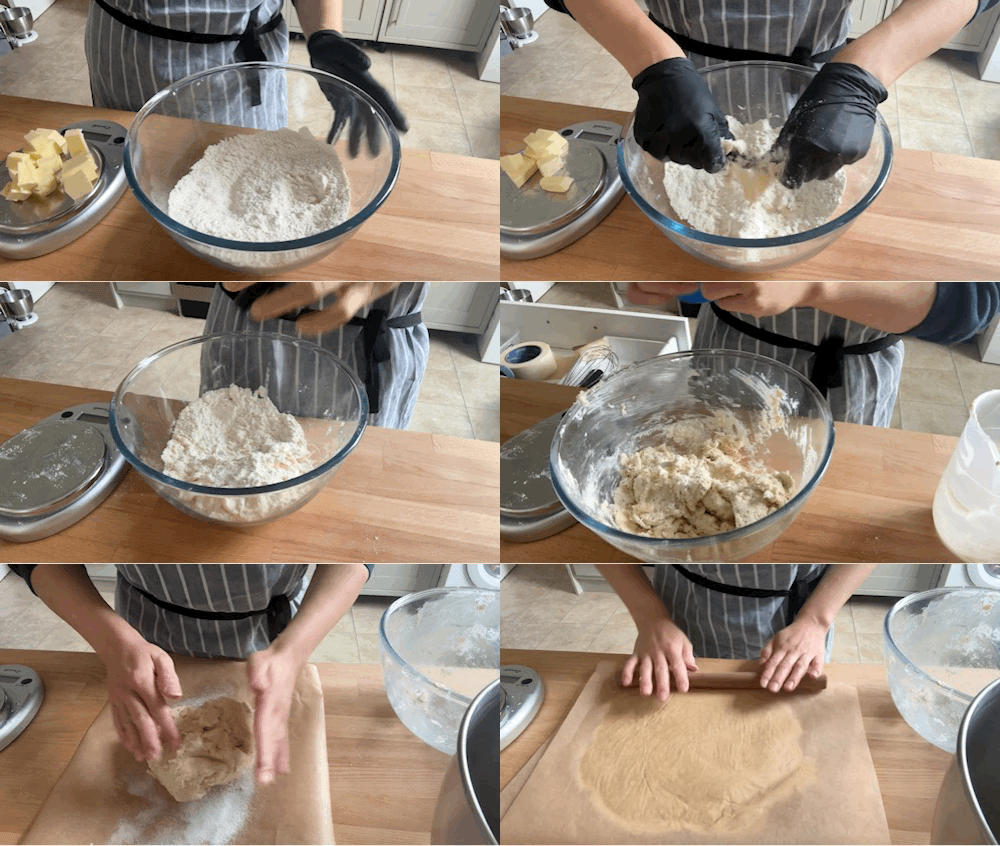
Lay two sheets of parchment paper on your counter. Sprinkle one with about 25 grams of granulated sugar. Place your dough in the center and flatten it with the heel of your hand, sprinkling it with a little flour if it feels tacky. Lay the other sheet of parchment on top and roll the dough into a roughly 9” circle (if you’re using an oval casserole dish, roll the cobbler dough out in a shape that will fit neatly just inside the rim). Use the parchment to slide the dough onto a sheet tray and place it in the freezer until it’s quite firm, at least half an hour.
Preheat your oven to 425 F / 218 C / 200c Fan.
Core your peaches or nectarines. I started with about 3 pounds of whole, stone-in fruit to get 2 pounds 8 ounces / 1270 grams cut fruit. To cut, I slice the fruit along the longitudinal dimple and rotate each half in opposite directions until the fruit loosens from the pit. I then slice each half into quarters, and each quarter in three pieces to produce large chunks of fruit. If you aren’t working with freestone peaches, you can trim the fruit away from the pit with a knife.
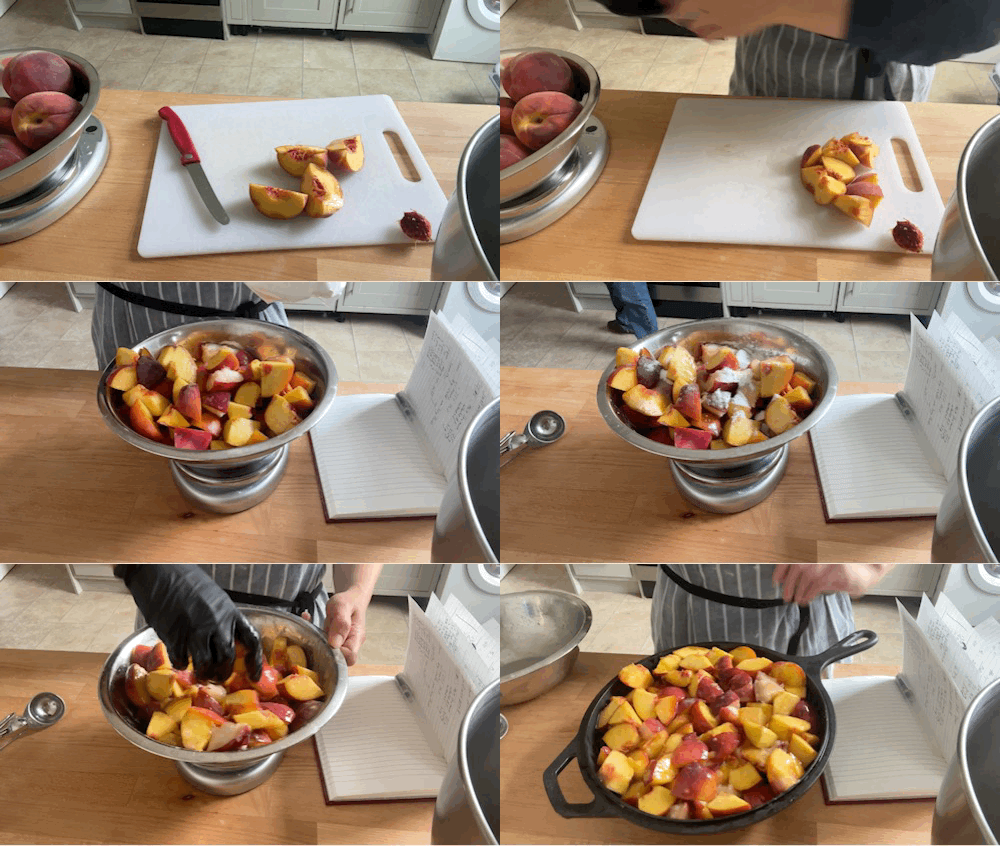
When the oven has reached the correct temp and your cobbler dough is well-chilled, toss the cut peaches in the sugar, cornstarch, and lemon juice and tip them into your pan (no need to grease it). Remove the cobbler dough from the freezer. Peel the top layer of parchment off the chilled dough. Using the bottom layer of parchment, flip the cobbler dough over onto your pan. You should now have a cold disc of sugar-topped cobbler dough on top of your peaches. Brush the surface with cold water and apply another sprinkling of sugar on top of the dough. Cut a few slits here and there to let steam escape as the cobbler bakes.
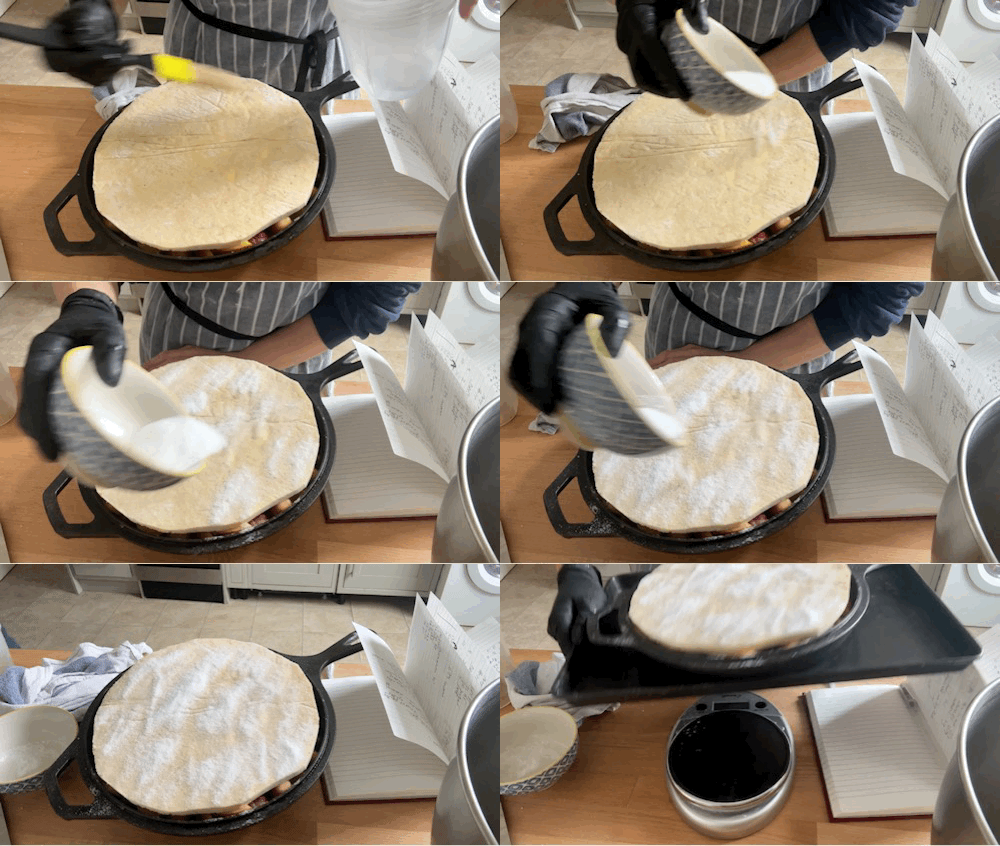
Set your cobbler pan on a sheet tray to catch any spills and place in the center of your preheated oven. Bake for 35-40 minutes or until the peach juices bubble along the border of the cobbler and the surface is a deep golden brown topped by a thin layer of shimmery sugar crust. Allow to cool for ten minutes before serving.
Bronwen Wyatt is a baker, recipe developer and writer based in New Orleans. Known for her inventive cakes and online baking classes, she collaborates with brands on original recipes and consults with restaurants on their pastry programs.
She also writes a newsletter Bayou Saint News exploring baking, food trends, and more. You can follow her on instagram @bayousaintcake here.
 | A guest post by
|
I made this! It was excellent and really easy. The crust was 10/10 🥰
Looks amazing!