
Kitchen Projects: Love Letters to Ingredients
LOVE IS IN THE AIR (and the pantry)

I was never much of a Valentine’s Day enthusiast in my personal life. But ever since I started working in kitchens and baking professionally? OH BOY, do I love it! While I can’t speak for all of us, I think pastry chefs, in particular, love a theme.
Whilst the savoury side of things are always stuck making the same old ‘romantic’ classics (lobster, oysters, gratins, that kinda thing), you’ll find bakers and pastry chefs everywhere having the time of their lives; The once-a-year-used heart cutters are pulled out of the ‘miscallenous crap’ drawer, good-quality food colouring is ordered from specialist websites and we get to indulge in all of our basest decorative desires, so long as it is, at minimum, utterly fanciful.
Across London this weekend, you’ll find handwritten love messages on cookies at Finks, Fondant Fancies at Toad, Marriage Scones at Quince and rose petal-adorned choux at Le Choux. I mean, if you’re going to tell someone you adore them, what says love like standing in a queue together in pursuit of something sweet?
A few years ago on this newsletter, I had the pleasure of inviting a few of my favourite writers and chefs to Kitchen Projects to share a series of love letters to ingredients. I adored that edition so much that I knew it had to make a comeback. So, welcome to this year’s Valentine’s Special.
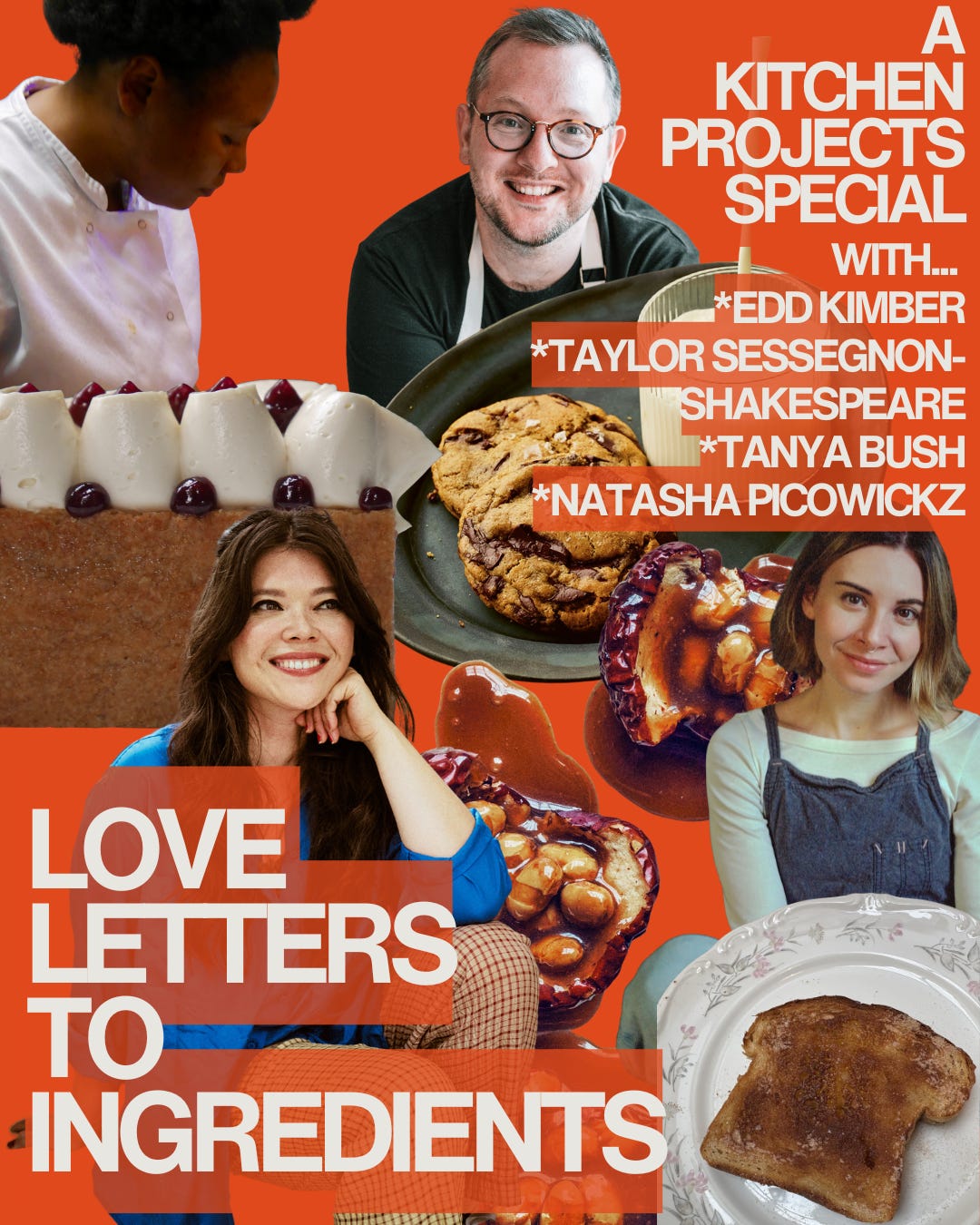
This year, I am so thrilled to welcome four incredible writers and chefs to share their sweet nothings to their favourite ingredients: Edd Kimber (best-selling author, whose book Chocolate Baking comes out in just a few weeks), Taylor Sessegnon-Shakespeare (the London based pastry chef who probably makes all your favourite desserts), Tanya Bush (pastry chef, co-founder of Cake Zine and author of ‘Will This Make You Happy’, out soon!) and Natasha Pickowicz (pastry chef & author of More Than Cake and the recently released Everyone Hot Pot).
From chocolate to tea, cinnamon toast to jujubes, these declarations of adoration will certainly get you in the mood (to bake, obviously).
JUJUBES
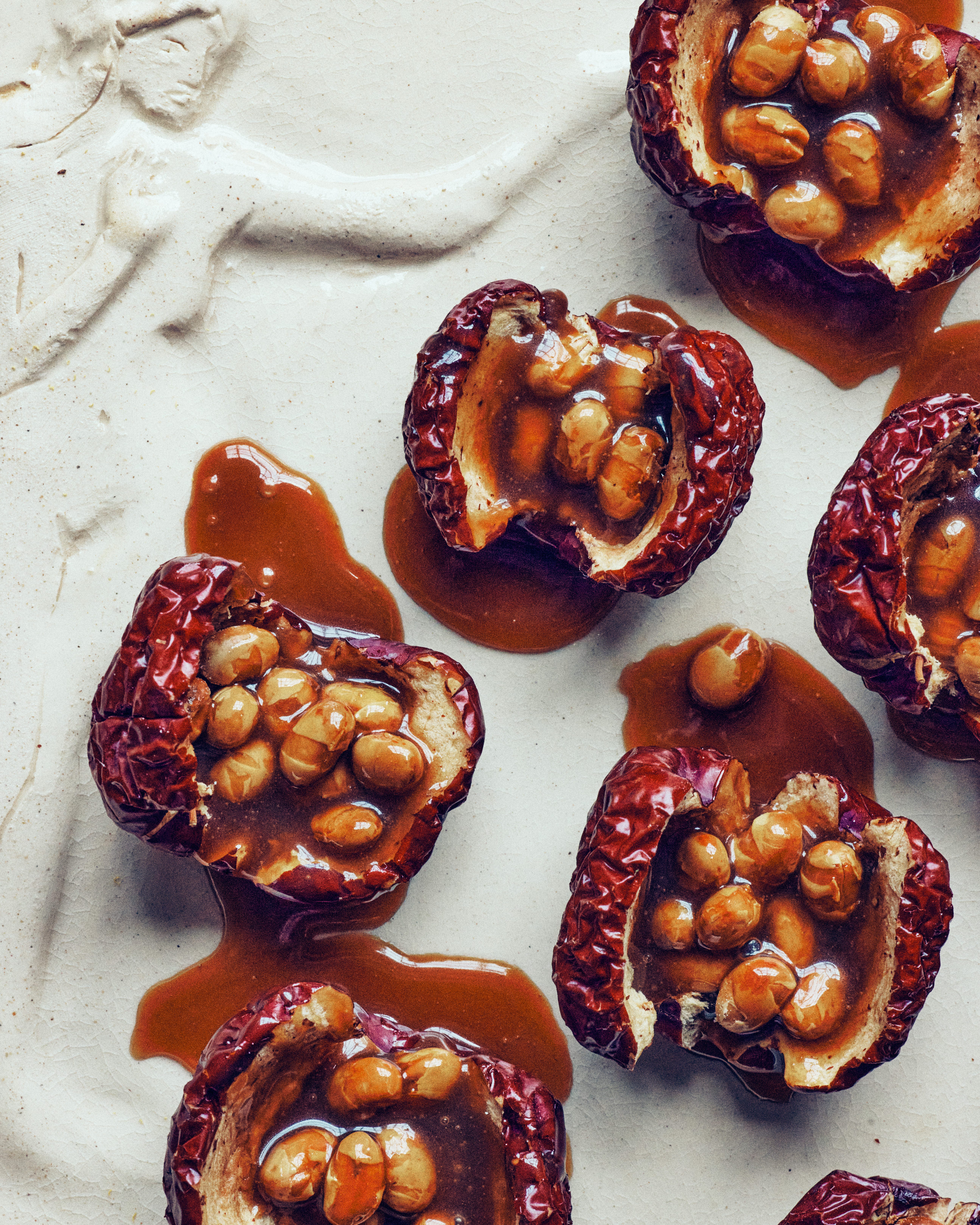
I’m writing a love letter about my love language: fruit. And not just any fruit, but jujubes, the one fruit that bobs to the surface of all my childhood memories, every time I crave porridge, a starchy dessert soup, a mug of tea, or a night of hot pot.
My mother, the artist Li Huai, immigrated to the United States from China shortly after she married my father in the mid-1980s. Having come of age during the violent, heavily isolationist period known as the Cultural Revolution, she didn’t know much about Western cuisine. And she certainly had never seen a Twinkie or a peanut M&M, let alone eaten one.
What my mom knew was fruit. I grew up eating fruits many of my non-Asian friends didn’t know: hawthorn berries, sweetened and compressed into chewy, wafer-like candy; lychees, still gripping to their spindly branches; fresh pomelo, as big as my head, arriving as if by magic every Lunar New Year. It was her love language, and later, when I became a pastry chef, it became mine.
Jujube, or jongzao, is a Chinese red date that isn’t really a date at all, but a small, crunchy, mottled fruit of a leafy tree that grows in many parts of Asia, including in northern China, where my mom is from. As the fruit dries and wrinkles, the skin transforms into a lacquered, deep maroon, and jujubes start to resemble the bruised noses of a clown, round and red.
My parents’ best friends, Perry and Tongi, ship them fresh jujubes from their orchard in Riverside when they still look like tiny, bruised apples. They’d clatter around in a big box, their butterscotchy fragrance pushing through the cardboard walls. My mom used them for everything—to add sweetness to strong-tasting stews or breakfast porridge, or zhou; to brew into herbal or tannic teas—but her favourite way to enjoy them is as a simple snack on their own. Jujubes, especially in their dried state, are tremendously versatile—the fruit can be cooked and pureed into a mash for stuffing into steamed breads, pastries, and rice cakes, or steeped and rehydrated in a broth until chewy and fat.
When I make stock at home, I throw handfuls of jujubes into every pot, so they can release their delicate caramel essence. It’s as non-negotiable for me as the foundation of celery, carrots, and onions—the soup isn’t the same without it. Jujubes add a beautiful decorative flourish at the hot pot table, where they pleasantly bob on the surface of the broth (and make for a deliciously creamy bite—just gnaw around the hard kernel).
In traditional Chinese medicine, jujubes are an important part of herbal remedies and food therapy, where they’re thought to relax the nervous system and have deeply grounding, soothing qualities (that may explain why I feel so blissed out after a night of hot pot). It’s a bit of a miracle fruit: it’s thought to lower blood pressure, improve immune system response, aid digestion, ward off colds and coughs, and strengthen organ function.
Harmony is a huge guiding principle of not just TCM but Chinese cuisine in general. It’s the idea that balance can be achieved through disparate ingredients, temperatures, and textures, either in succession or experienced simultaneously. To that end, jujube is a bit of a people-pleaser: it smooths sharp edges, it calms where other ingredients excite.
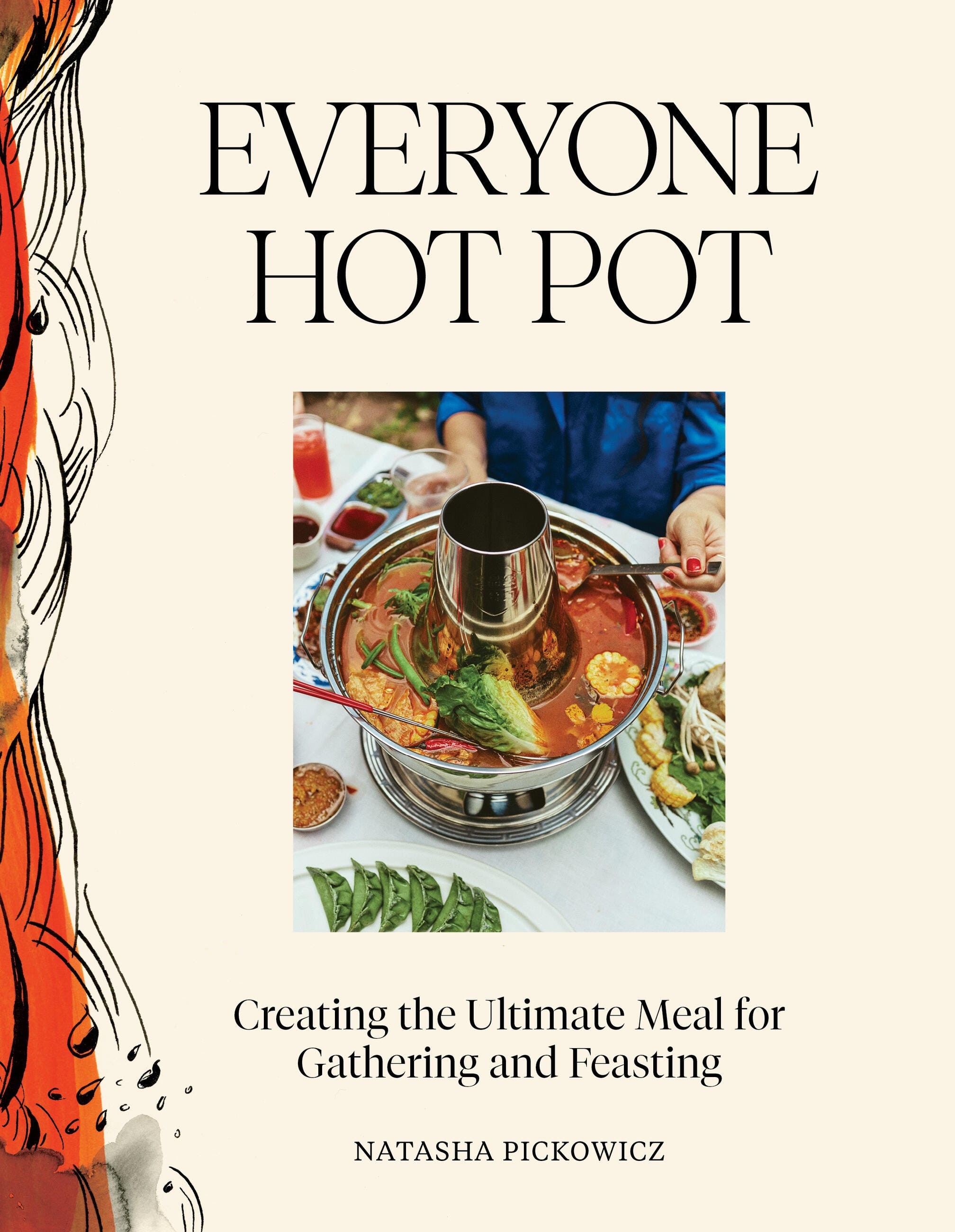
In Everyone Hot Pot, you’ll see jujubes popping up everywhere, as a broth builder, adding mellow sweetness to bitter or cooling ingredients like ginseng and chrysanthemum; as a surprising swap for raisins in my riff on Italian agrodolce; knocking next to fiery, numbing pantry staples like Sichuan peppercorns and chiles; and in not-too-sweet desserts, steamed and draped in a rich soy sauce caramel.
Jujubes keep me grounded and balanced, both in a literal (digestive) sense and a figurative (identity seeking) way—they remind me of who I am and where I came from, and also who I hope to be and where I want to go. Sometimes my recipes surprise my mom, but I think (I hope) in a good way. She grew up with so much structure, so many rules, so many boundaries; I think all my mom really wants for me is agency, or the ability to drum up my own interpretation of things, to make it my own, which of course she’s managed to do through her beautiful art and resilient spirit.
My mom loves the pioneering American spirit, especially that cowboy sense of risk-taking and inventing your own way of doing things and seeing the world. We worked on Everyone Hot Pot together (you’ll see her artwork throughout), and it was a joy to witness her discover all the ways in which I’ve made our beloved family tradition something wholly new, and mine. The jujubes are scattered everywhere in the ingredient lists, like little road signs, leading the way and guiding me home.
Natasha Pickowicz is a Pastry Chef and Author based in New York. Her first book, More Than Cake, was published in 2023, and her second, Everyone Hot Pot, is out now. Click here to order!
You can get Natasha’s recipe for Steamed Jujubes with Soy Caramel, excerpted from Everyone Hot Pot, on KP+ now.
TEA
By Taylor Segnesson-Shakespeare
In my eyes, pastry and desserts encapsulate nostalgia in a way that no other kind of food does. I think so many of my cherished memories, those of my family and caregivers that kept me safe, those from my childhood, those that connect me to my history and ancestry and culture, are tied to a little sweet treat. Ripe mango in my lunchbox, Mr Freeze ice lollies on the streets of Notting Hill and my grandmother’s fresh honey ginger lemon tea. There was love in that tea. Come to think of it, I think there is love in all tea. Because it’s not something you can just grab from the fridge and drink from the bottle. It’s an active process. There’s an investment of time, care and effort; there’s a ritual.
No matter where in the world you are or where in the world you are from, tea has a ritual. The selection of your favourite mug, perusing your options while the kettle boils, the quiet meditation as it steeps, seeing the rich warm tone develop with every swirl of a spoon and finally that first sip that often makes me think “God, I understand why wars were waged over this”.
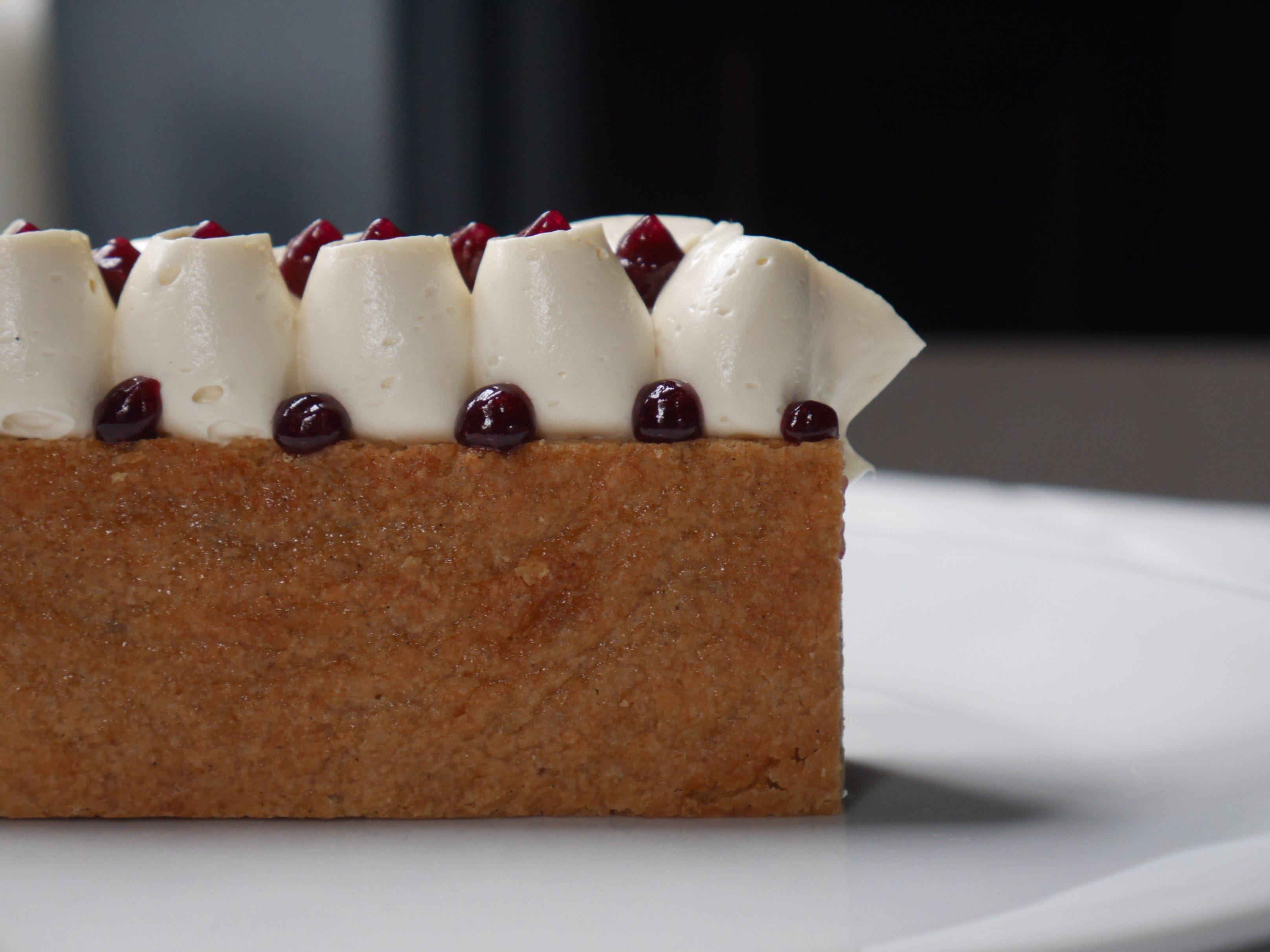
I think subconsciously, our souls are soothed by a cup of tea. And when you use tea as an ingredient, you season your food with nostalgia. It’s almost a little manipulative come to think about it. Love bombing by way of the tastebuds. But ultimately tea bags can be a way of elevating the most mundane of ingredients. Not only are they cheap, but there is so much diversity stemming from variations in the processing of the leaves. Minimal interference white tea is floral and delicate, great with melons, peaches and apricots. Green tea with a little oxidisation is grassy and botanical, pair with citrus and herbs like mint and thyme. And then there’s black tea. Bold and deep, exactly how I like my men. A visceral reward after a hard days work. Earl Grey, black tea blended with bergamot oil, I use to make ice cream. English Breakfast, over steeped in cream until it is orange with bitter tannins is turned into my signature Builder’s Tea Custard Tart. Teabags are these perfect little pre packaged bouquet garnis of complex flavour that sit in our cupboards being underutilised and under appreciated.
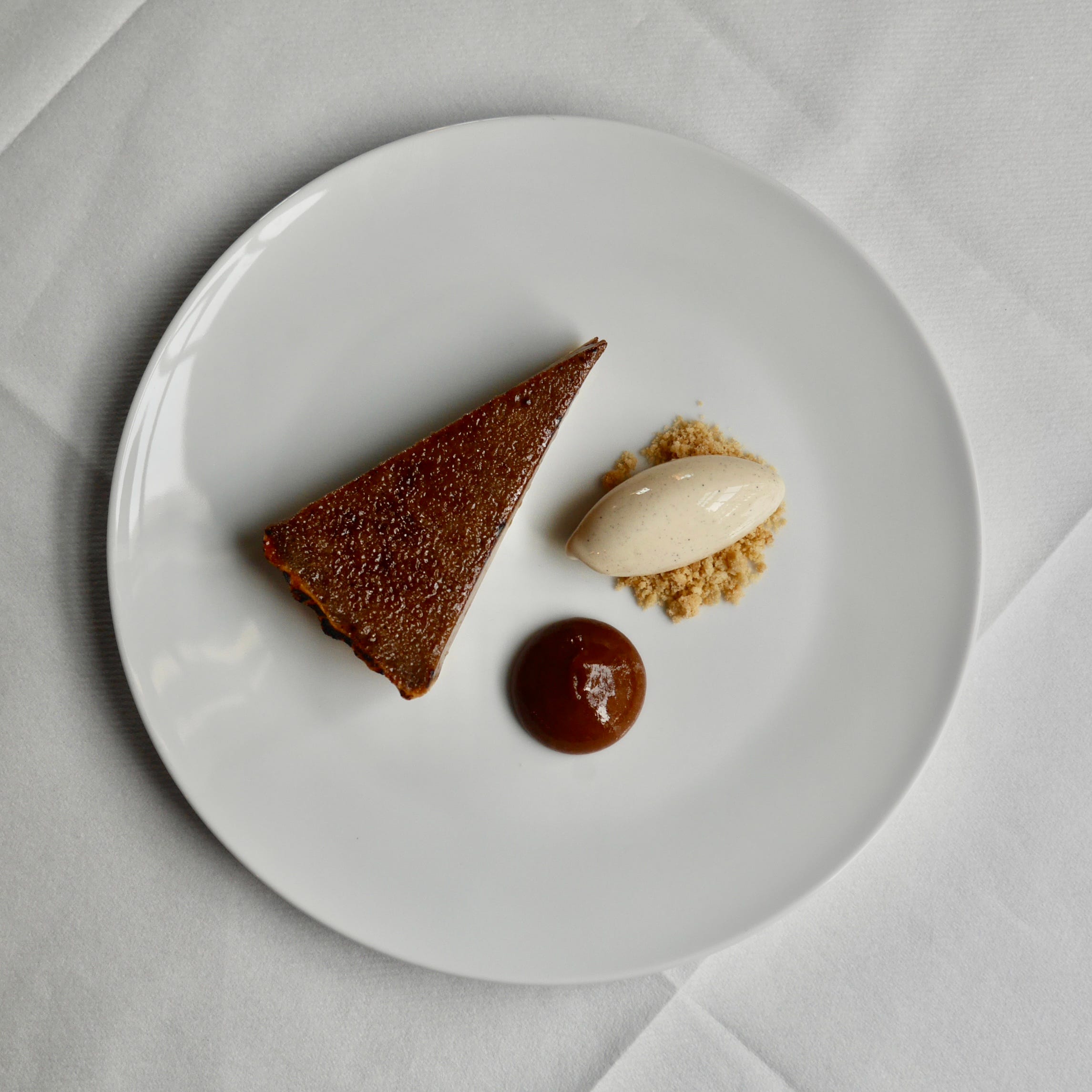
Like with love, the everyday becomes familiar. And with familiarity comes boredom and a wandering eye. We start to overlook the solace of tea. We trade in the benignity and security for the rush of Dirty Martinis and hand-rolled cigarettes by the pool at Shoreditch House. Only to wake up hungover, full of regret, miserably clawing out for absolutely anything to quell the pain behind your eyes and the unease in your stomach. And then you remember, there’s tea. There’s always been tea. The Sunday afternoon nap on the couch. The “I ran you a bath”. The kiss on your forehead as you fall asleep. May we all find our cup of tea.
Taylor Segnesson-Shakespeare is a London-based pastry chef and almost certainly the person behind all your favourite desserts. Follow her on Instagram here.
CHOCOLATE
By Edd Kimber
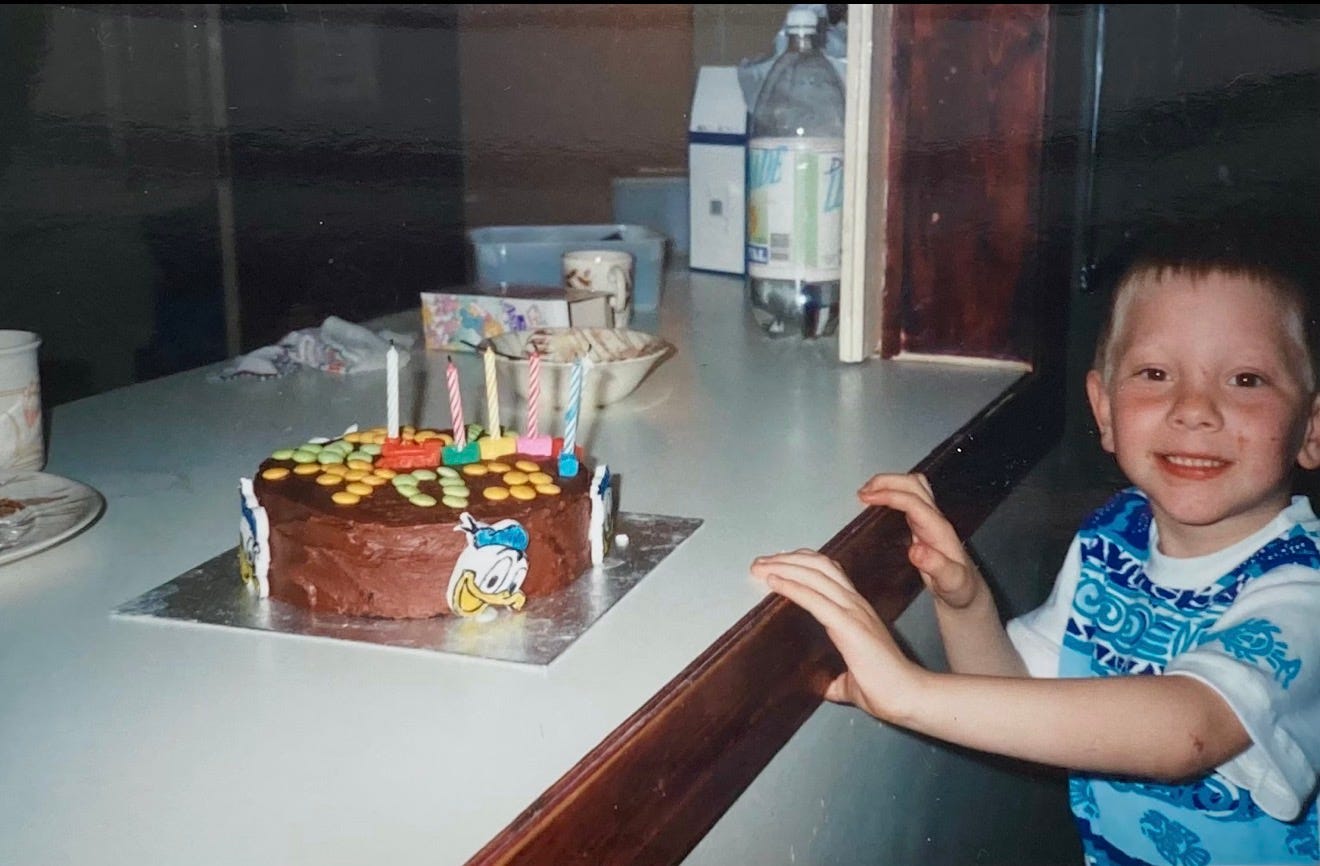
Look, I am a baker and cookbook author. Being obsessed with ingredients is probably the no.1 requirement of the job. Some ingredients come and go in my affections, and some are… chocolate, an obsession that has lasted a lifetime. As far as I am concerned, baking without chocolate is a bleak reality, a life not worth living, a cake not worth baking. Chocolate has been my favourite ingredient since childhood. I can remember being 6 or 7, and my mum made me a birthday cake, a simple chocolate affair decorated with Disney decals, a plastic train and plenty of smarties. You can tell from the picture that I am completely smitten, but what the picture doesn’t show is that I ended up hiding under a table, hidden by the tablecloth, enjoying my slice in peace. It also may have been my second slice. Hiding under tables, enjoying my chocolate in peace, seems to have been a bit of a theme because I can also remember baking a chocolate cake with my sister around the same time. I don’t remember the cake at all, but I do remember hiding under the kitchen table, surreptitiously licking the bowl and the spatula.
Whilst childhood affection is probably easy to understand, my adult love of chocolate has more complexity. Of course, I love the flavour, but I am continually fascinated by the actual ingredient and how we ended up with modern-day chocolate. How did someone look at a cacao pod and think to crack it open? And not just crack it open, but to look at the fleshy insides and think they looked delicious? And how did that eventually become the bars of chocolate I now bake cakes with? It’s completely fascinating to me. Before cacao is turned into chocolate, it can be used in multiple ways. The fleshy coating that protects the bean is a pulp that tastes of tropical fruits, almost lychee-like in its flavour. This can be eaten out of hand, turned into a drink, or even used to sweeten chocolate (the 100% bar from Chocolate Tree in Scotland is a fantastic example). Once the beans are roasted, they can be broken up into two parts: crunchy nibs, which are a delicious addition to granola, to be used as a garnish or even just as a snack, and the husk, the outer shell of the bean, which is very commonly thrown away. Whilst this is often seen as a waste product, sold as mulch or used as animal feed, this papery shell still has plenty of flavour to offer and my favourite way to use it is as a tea, a less caffeinated alternative to coffee and more traditional teas.
But chocolate is also not just one thing; the raw product can be transformed into a world of incredibly delicious ingredients. It gives you cocoa powder, cocoa butter, dark chocolate, milk chocolate, and white chocolate (which, despite what some like to claim, is absolutely ‘real’ chocolate). Beyond the basics, you can also make roasted white chocolate, a subset of chocolate I could easily wax lyrical about for hours, but the short version is I absolutely adore the stuff.
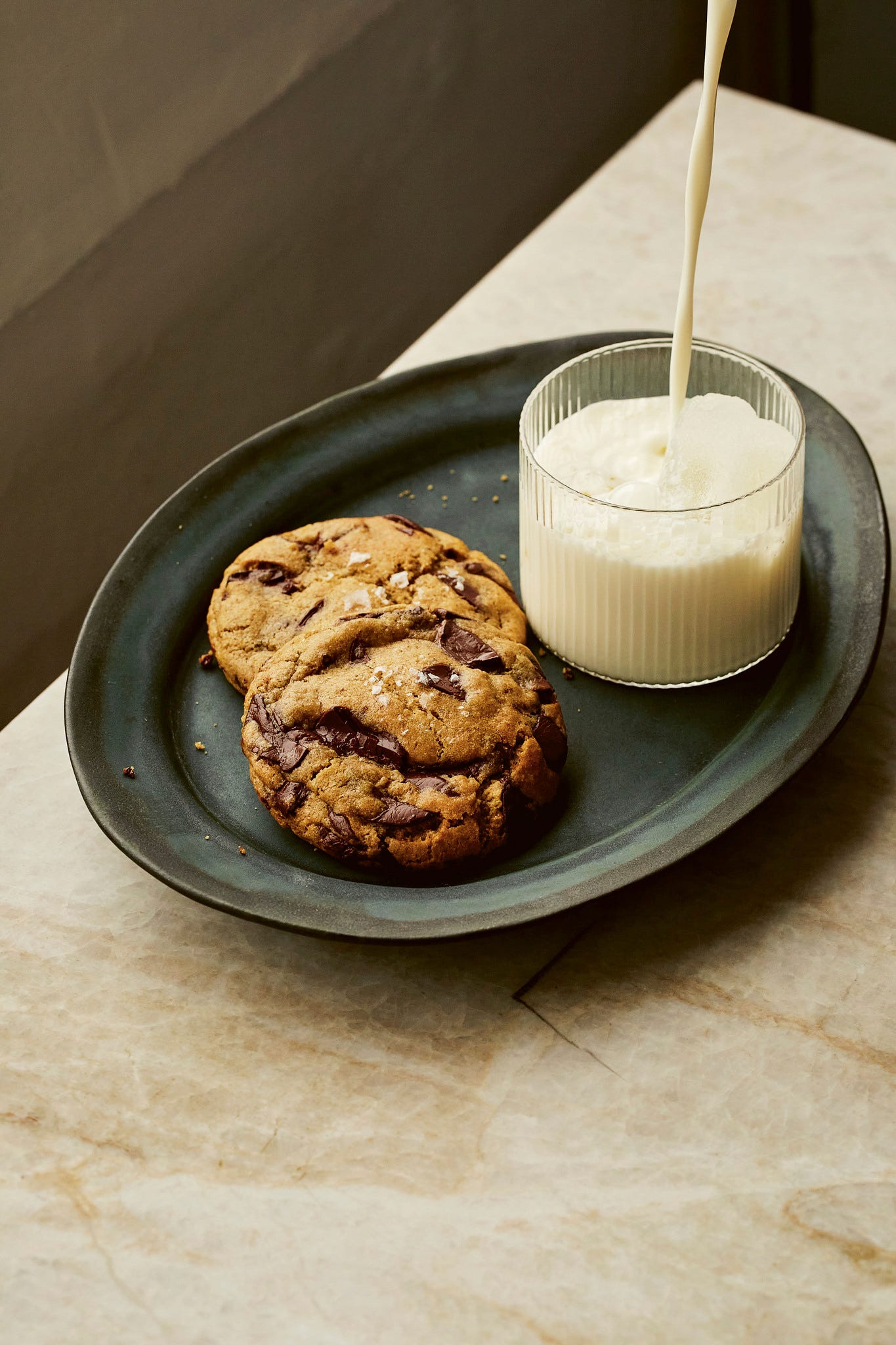
If you were to ask me my favourite things to make with chocolate, I’d genuinely struggle to choose just one thing, but the one thing I probably make the most is a classic chocolate chip cookie. Is there anything better? I would genuinely argue that the chocolate chip cookie is one of the best baked goods to ever exist. My perfect cookie is one made with browned butter, a bit of rye flour and really good brown sugar to give the dough as much depth of flavour as possible. My choice of chocolate is never chips, because they’re made with more sugar and less cocoa butter, which means they hold their shape when the cookies bake, and I want the opposite. I want the chocolate and dough to merge and blend with a variety of textures. To achieve this, I recommend using either a bar of chocolate or feves/discs. Whichever style you choose, you always want to chop the chocolate a bit to create a beautiful range of textures. I also prefer using a chocolate that is around 70% cocoa content, something with a fruity edge. Any less intense and I find the cookie can taste too sweet. Also, when it comes to baking, my biggest piece of advice is use a chocolate you simply love to eat; your baking will thank you.
Edd Kimber is a multiple best-selling author and recipe developer based in London. His latest book, Chocolate Baking will be released on March 3rd. Click here to pre-order.
Cinnamon Toast
By Tanya Bush
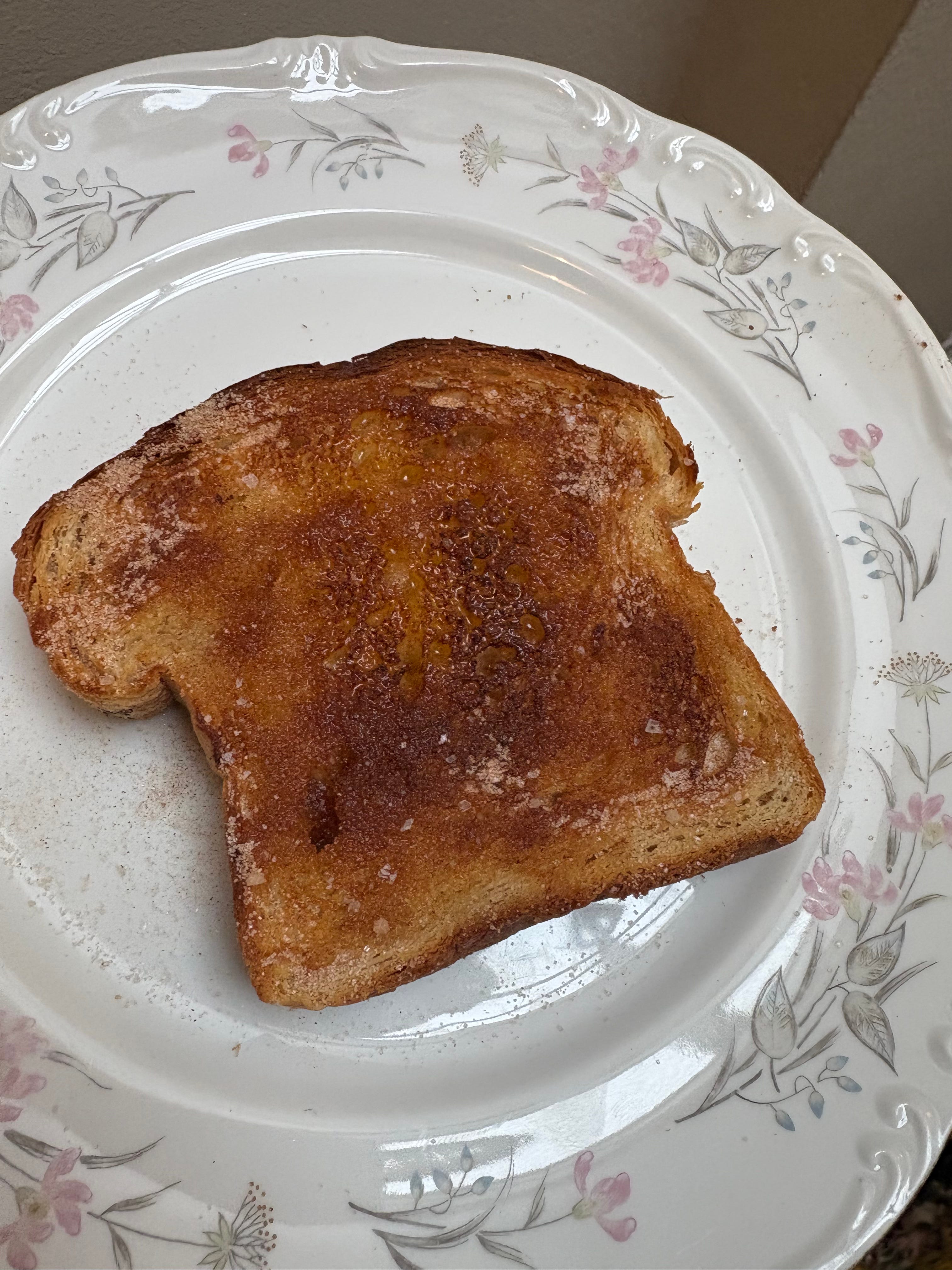
There is a snack waiting for you. It will be assembled in two minutes and requires nothing special beyond ingredients you already have in your pantry. It contains no protein, no greens, no vitamins. It will not carry you nobly to the next meal or stabilize your afternoon slump. It is pleasure embodied: bread—preferably pre-sliced, cottony, and white—toasted or broiled, slathered with butter and buried under a thick layer of cinnamon-sugar until it resembles asphalt.
This is cinnamon toast and growing up it was the apotheosis of pleasure. My mother had eaten it at summer camp, which meant it arrived to us imbued with nostalgia, a bygone era of her life that she was now passing down to her kids as an after-school snack. It is impossible to capture the pleasure of those afternoons, devouring slice after slice, the holy trinity of butter, sugar, and cinnamon commingling in ecstatic union. Yes, it is made from the constitutive ingredients of the cinnamon roll, which has wormed its way back into our hearts as a bloated, mall-era revival. But cinnamon toast is straight to the point; it discards the icing drip spectacle and towering rings in favour of a treat that requires no recipe or technical skill, no special equipment or ambition.
Sometimes I wonder if my love of baking began with cinnamon toast: my first act of culinary autonomy. I remember making it for myself, carefully selecting bread (Pepperidge Farm oat), mashing the butter and the cinnamon and the sugar together until it was a thick paste and sliding it into our toaster oven until it started to drip and scald, then scarfing it down, my fingers sticky with caramelised sugar. Now that I am a professional baker, much of my life feels like a quest to approximate the magic of that experience. I spend most mornings shaping brioche dough, glazing buns, and nibbling pastries. I have tried dozens of viral croissants, custard-stuffed buns, and multi-day doughs. And still, cinnamon toast remains the most consistent and satisfying snack in my life.
There is no right way to cinnamon-toast (it’s a verb in my book): use lo-fi white bread and sugar dumped straight from the box, carmelize artisanal sourdough in ghee on the stove with pre-mixed cinnamon-sugar. Regardless, it will turn out well. The only innovation I reliably offer is flaky salt, which makes it come alive and taste more like itself.
Snacks these days are all byproducts of our culture of optimisation: a chaste handful of almonds, a gluten-free protein puff. I offer up an alternative, a nutritionally void but spiritually restorative pick-me-up, an emotional panacea, a mild but reliable treatment for anxiety, one that is equally appropriate in the morning, at midnight, or standing barefoot in the kitchen post-lunch when you need something sweet. Most often, I think, the simplest things are superior.
Tanya Bush is a baker and writer in Brooklyn. She is the co-founder of Cake Zine and the pastry chef at the Brooklyn-based restaurant Little Egg. Her narrative cookbook, Will This Make You Happy, is available for preorder now, releasing March 3rd.
Tanya knows what’s good: “a nutritionally void but spiritually restorative pick-me-up, an emotional panacea, a mild but reliable treatment for anxiety, one that is equally appropriate in the morning, at midnight, or standing barefoot in the kitchen post-lunch when you need something sweet.” Long live cinnamon toast🤎
The tea section is just beautiful! Brava Taylor!! Please come to Substack and share that Builders tea tart!!!