
Kitchen Project #199: Chocolate Soufflé
A spotlight on The Science of Baking with Matt Adlard

Hello,
Welcome to today’s edition of Kitchen Projects. Thank you so much for being here.
Today I’m thrilled to share this cookbook special with you ft. Matt Adlard and The Science of Baking. You know I love nothing more than lifting up the proverbial ‘hood’ (is that the right thing to say? I can’t drive… yet!) of a baked good and seeing what’s inside, and I’m excited to share a Q&A with Matt as well as extract the recipe for a total classic from his book: Chocolate Soufflé!
On KP+, Matt has developed a recipe especially for the newsletter: A Rhubarb and Custard Soufflé with a crumble top. It’s like a fruity cloud! You can get the recipe here.
What’s KP+? Well, it’s the level-up version of this newsletter. By joining KP+, you will support the writing and research that goes into the newsletter (including the commissioning - and fair payment - of all the writers), join a growing community, access extra content (inc. the entire archive) and more. Subscribing is easy and costs only £6 per month or £50 per year. Why not give it a go? Come and join the gang!
Love,
Nicola
Is Baking Really A Science?
If you're reading this newsletter, I’m confident that you’re at least relatively invested in the technical side of baking. I don’t need to convince you that it is genuinely exciting to mess around with the balance of whites and yolks in a recipe. And I know you are not going to switch off if the words “mouthfeel” or “starch gelatinisation” pop casually into a paragraph – we are kindred spirits in search of not just the “how” of baking, but also the “why.” There’s a collective professional nosiness about the inner workings of cakes, pastries and everything in between; You’ve probably questioned whether a split batter is really “fine”, or why croissants are the Mount Everest of hand-lamination… or why something as simple as a sponge cake can rise so valiantly just so fall so miserably (rude!).
Anything that lives in that middle section of that ‘Baking’ and ‘Technique’ Venn Diagram immediately earns a place on my bookshelf. So, it’s no surprise that ‘The Science of Baking’ by Matt Adlard immediately piqued my interest.
If you aren’t familiar with Matt Adlard… do you even have a phone?! Let me fill you in: Matt Adlard is a self-taught pastry chef from Norwich and the author of two books, ‘Bake it Better’, published in 2023 and ‘The Science of Baking’, published just last week. Matt grew up above a restaurant (Michelin-starred, no less!) owned and run by his chef dad and has, over the last decade, amassed millions of followers across social media. Matt is known for his highly detailed, architectural desserts that have been engineered to perfection. You are just as likely to see a palette knife put to work in Matt’s process as you are an 80mm pipe from B&Q.
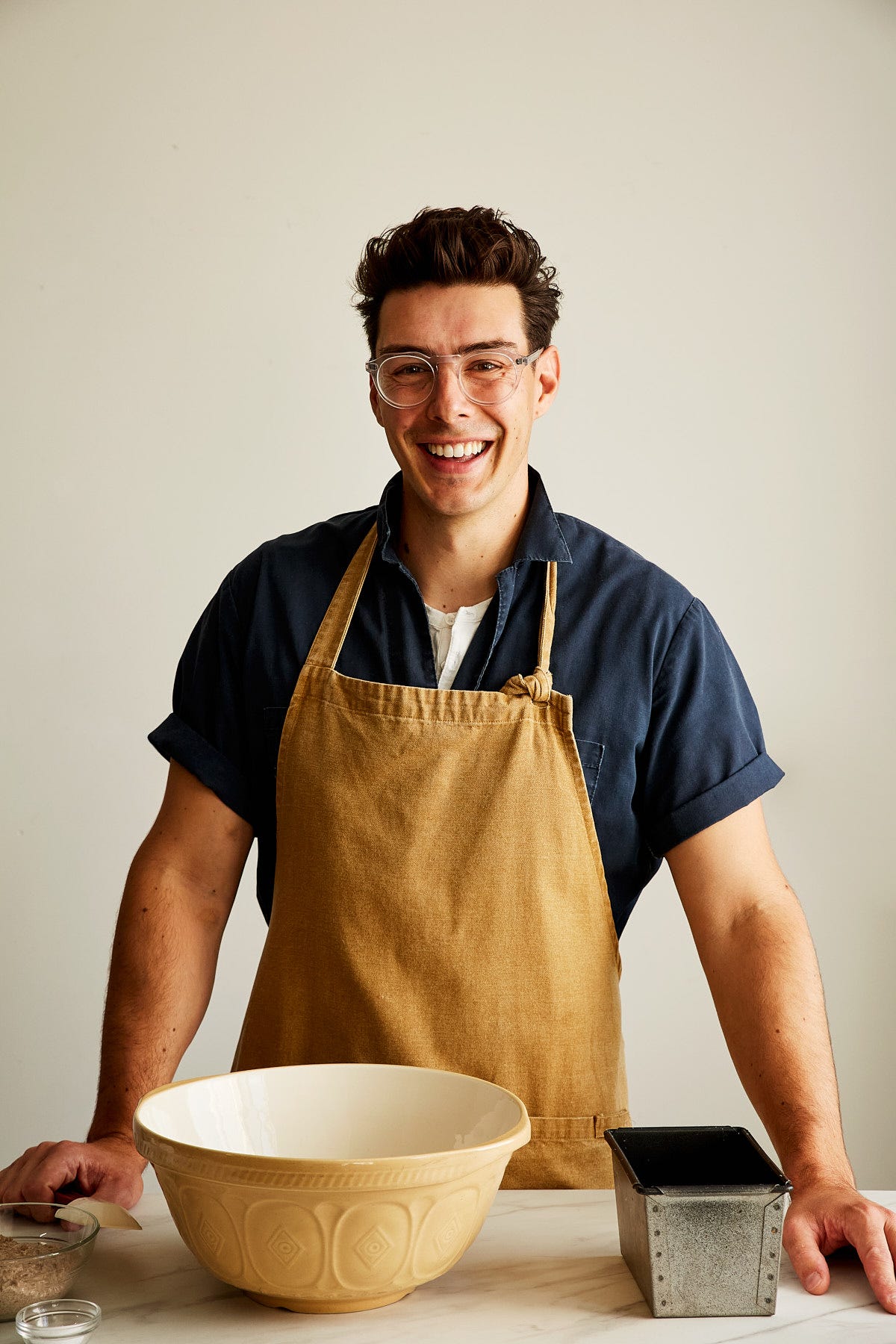
But it wasn’t always 3D printers and latticed mille-feuilles; By his own admission, Matt’s journey into baking has been “a long journey” that began with “taking my shirt off… filtering the life out of Instagram pictures” and “making wonky cakes” photographed “against my bathroom wall.” This candid approach to failure and humble beginnings has always appealed to me – I certainly feel like a perma-student, and this newsletter is built on the idea that the journey of recipe development (and, I guess, SKILL development?!?) is just as important as the final product. Matt hopes that he “can put all the failures to use”, a sentiment I wholeheartedly agree with.
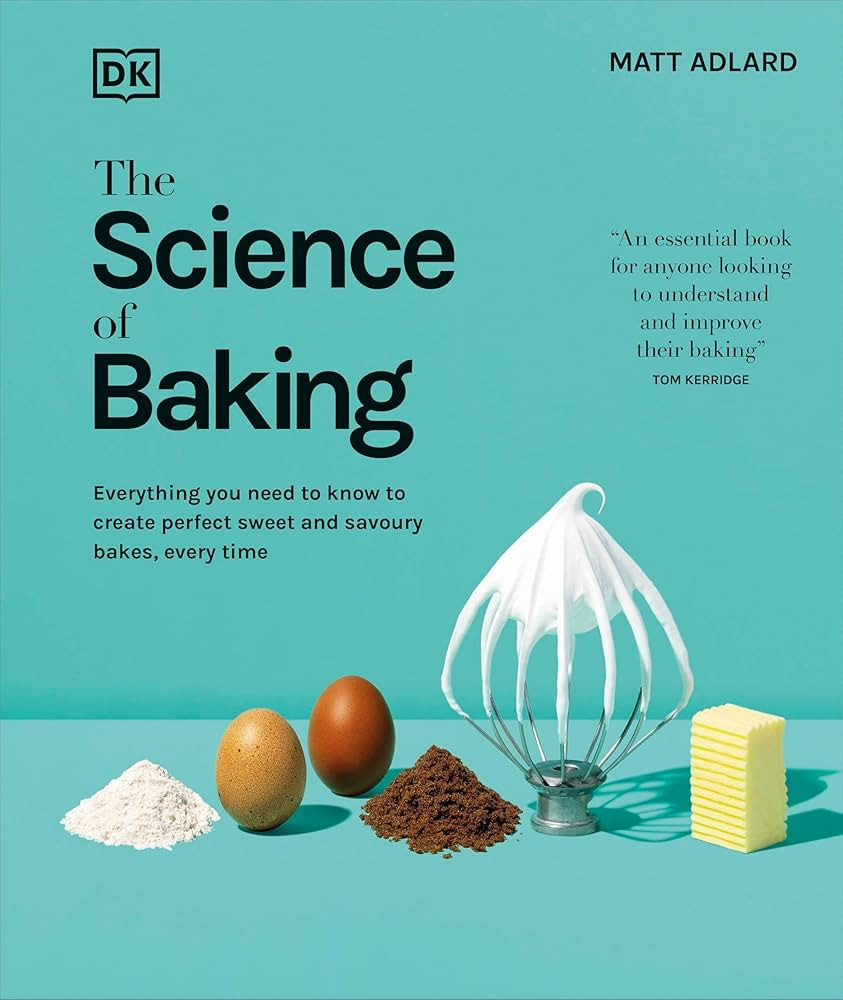
The Science of Baking is the latest in DK Books’ “The Science of…” series, a collection of illustrated informational guides to topics ranging from Yoga to Spice to Reading. The baking edition is packed with information, with breakout ‘in focus’ double-page spreads penned by Food Scientist Dr Josh Smalley, as well as recipes for 50 baking classics, each supported with clear step-by-step photography (Shout out Matt Hague and Holly Cochrane, dream team!) to guide you through everything from Rye Bread to Macarons.
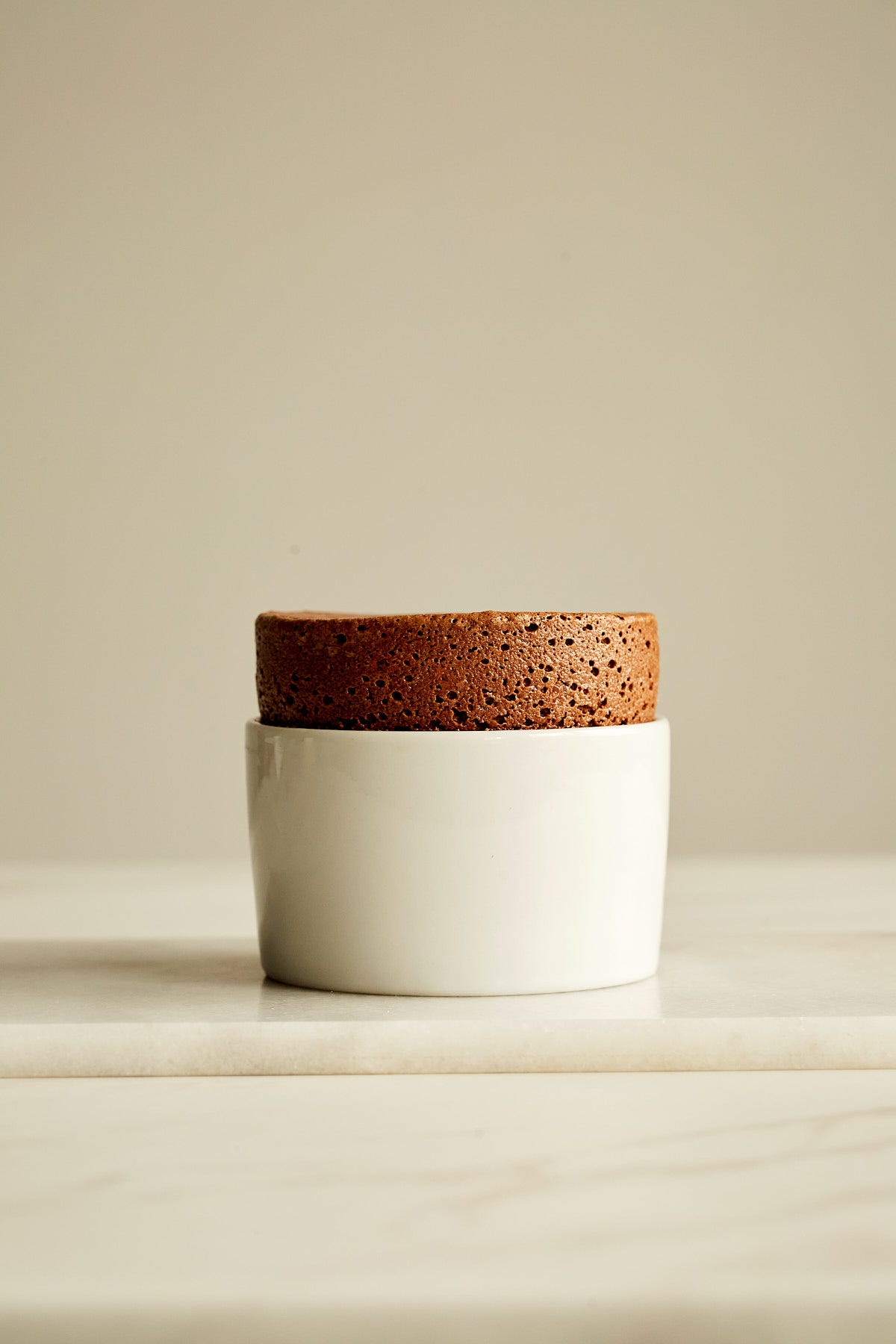
I sat down with Matt to learn about his approach to writing this book, find out which recipes caused him the most grief (and joy!) and discuss the kitchen tools we rely on to solve pretty much any problem that comes our way. I’m also thrilled to extract the recipe for chocolate soufflé, which, I can confirm, rises in such a confident and upright manner that any fears you might have about the dish (and we’ll talk more about that in a bit) will be quashed.
Over on KP+, Matt has developed a recipe especially for the newsletter: Rhubarb Soufflé with a Crumble topping – it is a cloud of rhubarb joy!
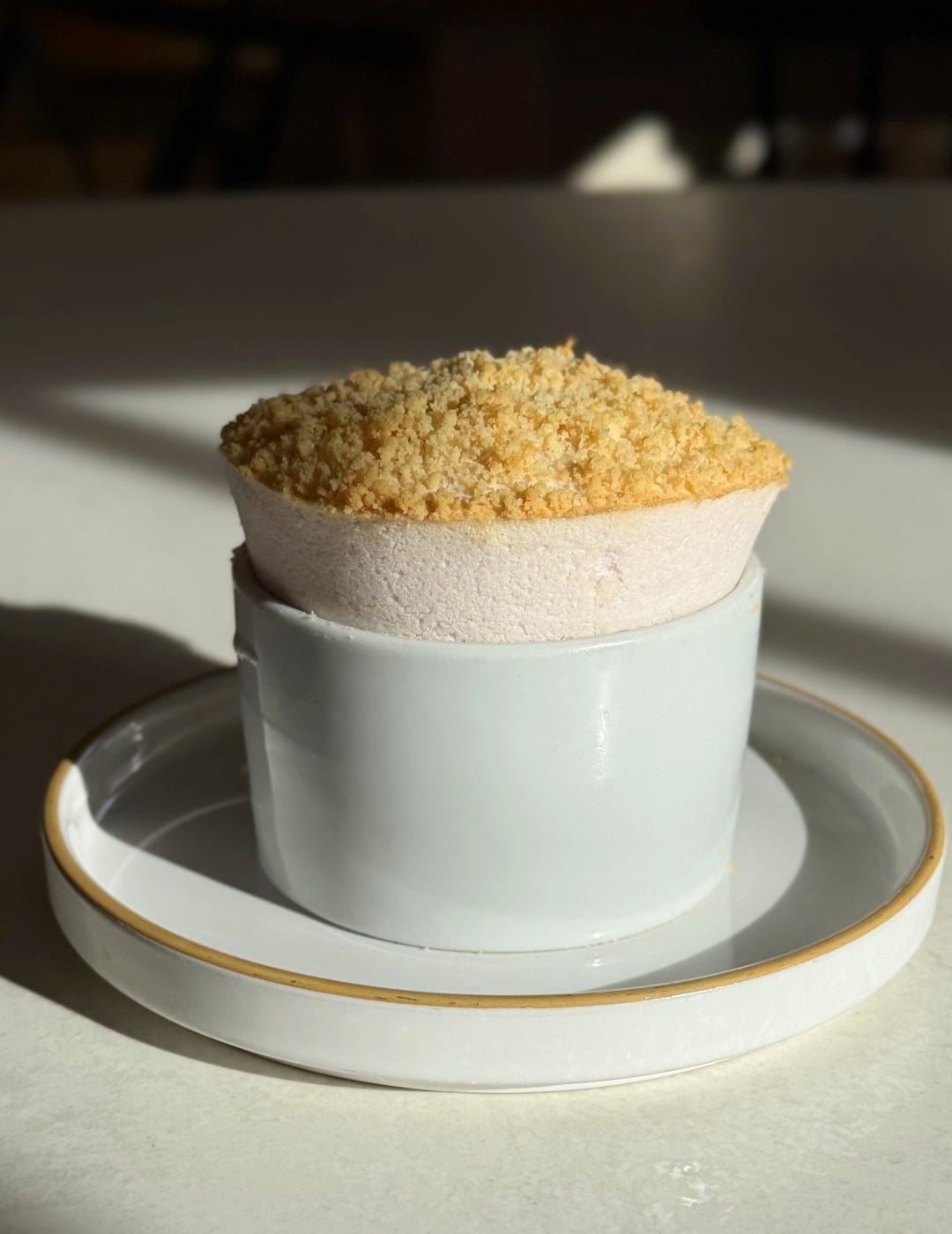
Click here for the recipe and to learn about the brilliant trials and tribulations of developing the recipe.
THE Q&A
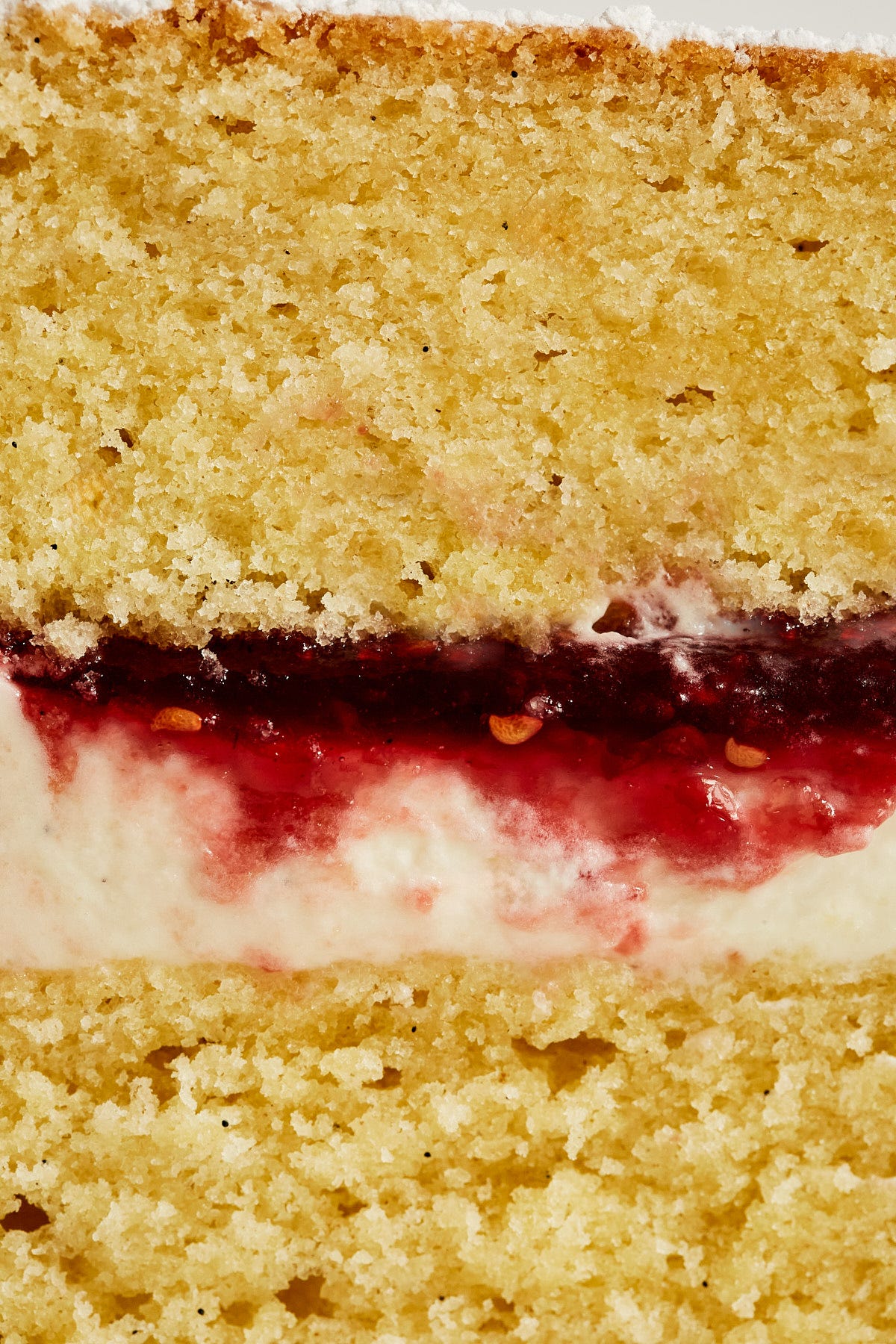
Nicola: You’re obviously very well known for your videos on social media — these extraordinary, very detailed bakes. What was it like applying that level of detail to something as simple as a Victoria sponge? Did it feel like a step-down?!
Matt: No! The Victoria sponge was one of the most interesting ones that I enjoyed doing. Because, truth be told, I always worked off the Women’s Institute recipe. Years ago I converted it all to grams and worked it out. But the thing with a Victoria sponge is everyone says, “Oh, your batter will split and you just add a tablespoon of flour and that will fix it.” And after all the research we did with Dr. Josh Smalley [the collaborator on The Science of Baking], it’s like — that batter is split. You have not emulsified it correctly. Yes, you can bake it, and it will be a nice cake, but technically, you’ve split that batter.
So it was really fun to work on a really simple recipe and work out what techniques we needed to introduce to make sure that batter didn’t split.
Nicola: What’s the secret?
Matt: It’s just about the temperature of the eggs and the butter. You’re beating the butter and sugar to quite a specific temperature range, and the eggs aren’t cold or room temperature — they’re slightly warmer. So you warm the eggs, and you heat the butter-sugar mixture with a hairdryer or heat gun, and then you slowly drizzle the eggs in. You should get a perfectly emulsified cake batter that doesn’t split.
Nicola: So many problems in the pastry kitchen can be solved by just putting a blowtorch on it.
Matt: A blowtorch or a hand blender solves everything. I make mistakes all the time… I’m just like, I’m going to heat the life out of it, melt it, blend it, anything to try and fix it.
Nicola: That feels like a big part of why books are useful and why we do what we do! We are trying to teach principles. If people want to just throw everything together, they can. But if they want to understand what makes something better, this gives them that.
Matt: Exactly.
Nicola: What was it like collaborating with [Food Scientist and co-author] Dr Josh Smalley?
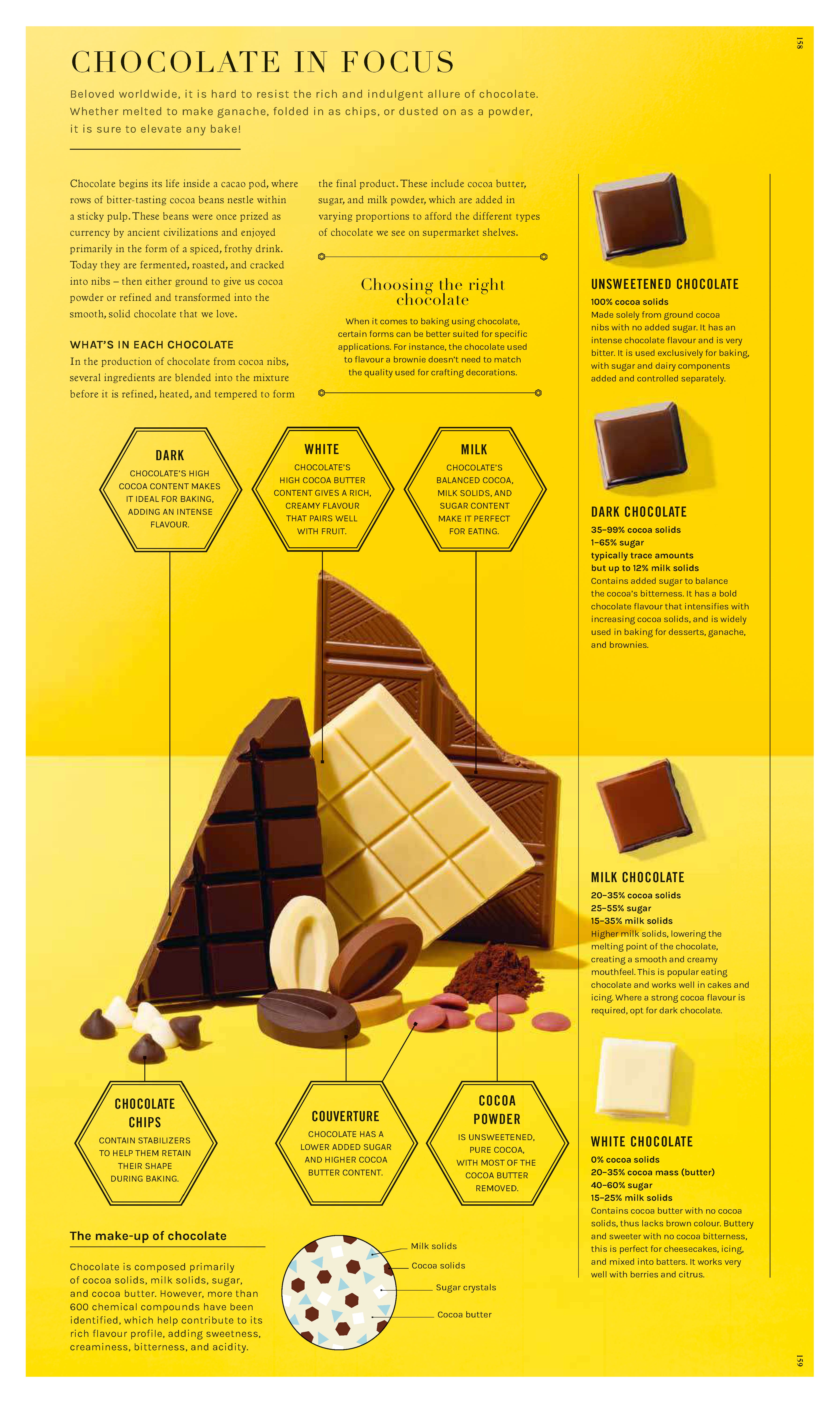
Matt: I’d write up my scientific text and intros, and he would go through and check that I hadn’t fibbed, basically. Or he’d add a layer of depth if something was missing. [Smalley] wrote a lot of the more in-focus sections on things like dairy, fats and chocolate. So we sort of swapped roles there – I’d sense-check what he was doing from a baker’s point of view. He also had access to this microscope at the University of Leicester – a 30,000-times zoom microscope — so those ingredient images in the book came from that!
Nicola: Are there any other baking “fake news” things that annoy you?
Matt: Croissants are quite interesting. When I started making them, I was just using supermarket butter, which is fine… You can make a croissant with that. But I went to France and saw how they manufacture butter specifically for lamination. It has these beta crystals that make it really flexible.
We did a demonstration, and someone took a block of their butter straight from the fridge and laminated it, and I was like, what? And that’s why you see bakeries doing it so easily. At home, when you’re using standard butter, it cracks and splits — it’s really difficult.
So the cheat code is really that fancy butter. It makes a world of difference.


Nicola: Did you learn that the hard way?
Matt: Completely. I remember seeing this marbling in the dough and just being so upset because it was ruined. It is one of the most challenging things – that’s why when I go to a bakery, I’ll always order a plain croissant. Once you’ve made a croissant, you’ll eat one at every bakery!
Nicola: Cookbook writing can be very personal. How did you balance the fact that this is your book, but it’s not exactly a memoir with recipes like most cookbooks tend to be?
Matt: It’s different to my first book, which was very much about me. This is part of a series. My name is on it, but it’s about the book working globally. That said, I think anyone who follows me will still see my style — the design, the finish, the level of detail, the way I write recipes.


Highs & Lows
Nicola: Sorry to bring it up, but I remember all the trauma you went through with developing the chiffon cake…
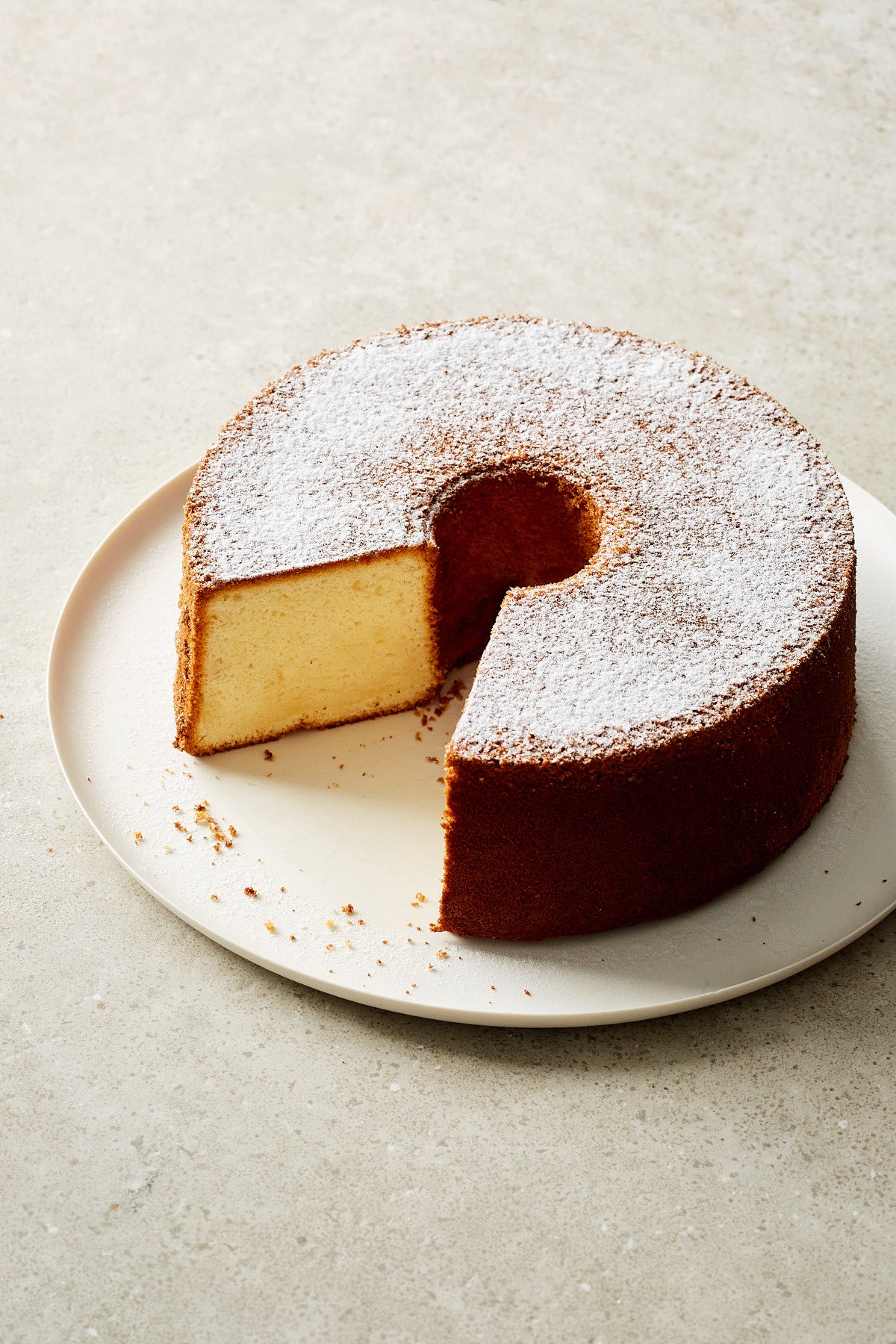
Matt: I think it was thirteen fails in the final count. It was collapsing, or I was underbaking it, or as I inverted it, it was falling out of the tin. And then, once I got closer, I kept getting this very thin gummy line through it. The whole thing looked beautifully baked, but there was this one strip where it was just slightly underbaked, and it was infuriating.
Nicola: What was the fix in the end?
Matt: It was to do with the oil and lemon juice ratio being off. Helen Goh [Editor’s Note: You can get Helen’s recipe for Pandan Chiffon on the newsletter, here] actually messaged me and we spoke on the phone for an hour. She gave me loads of tips. And I was looking at Rose Levy Beranbaum, too. It was really one of those recipes where I had to just force it into existence.
Nicola: And then once you’ve got it working at home, you have to shoot it in a studio oven.
Matt: Exactly. That’s the other problem. You do all this development in your home oven, and then you get to the studio, and it’s completely different. And with a book called The Science of Baking, there’s a lot of pressure. It can’t be wrong!
Nicola: If someone was going to bake just three recipes from this book (obviously, other than the Soufflé, which you can find below!), which should they be?
Matt: Definitely the Lemon Tart. And the Tart Tatin and then the shortbread.
Nicola: What do you hope people will take away from this book?
Matt: I just want to inspire people. I want someone to make a cake and say, ‘That is the best chocolate cake I’ve ever had,’ or, ‘That’s as good as the bakery.’ When you give somebody a recipe that gives them that moment… that little bit of joy, that sense of pride, that smile on somebody’s face when you serve it — that’s amazing. And that’s really what I want to do, whether it’s through books or social media or anything else.
The Science of Baking by Matt Adlard (DK Books, £25) is out now. Click here to order a copy.
SOUFFLE: IN FOCUS
Soufflé is one of those desserts that has become a synonym for ‘difficult’; in a TV show or book, you’d learn a lot about a character if they were attempting to serve soufflé at a dinner party. It’s one of those dishes that comes with inherent stakes. How many dishes are paired with timing warnings on restaurant menus?!
We’ve dipped our proverbial toe into the soufflé pool here on Kitchen Projects in the past - first there was the birthday cake soufflé, and then there was the sticky toffee soufflé. But today, I’m very excited to share an extract from Matt Adlard and The Science of Baking, a veritable deep dive into soufflé.
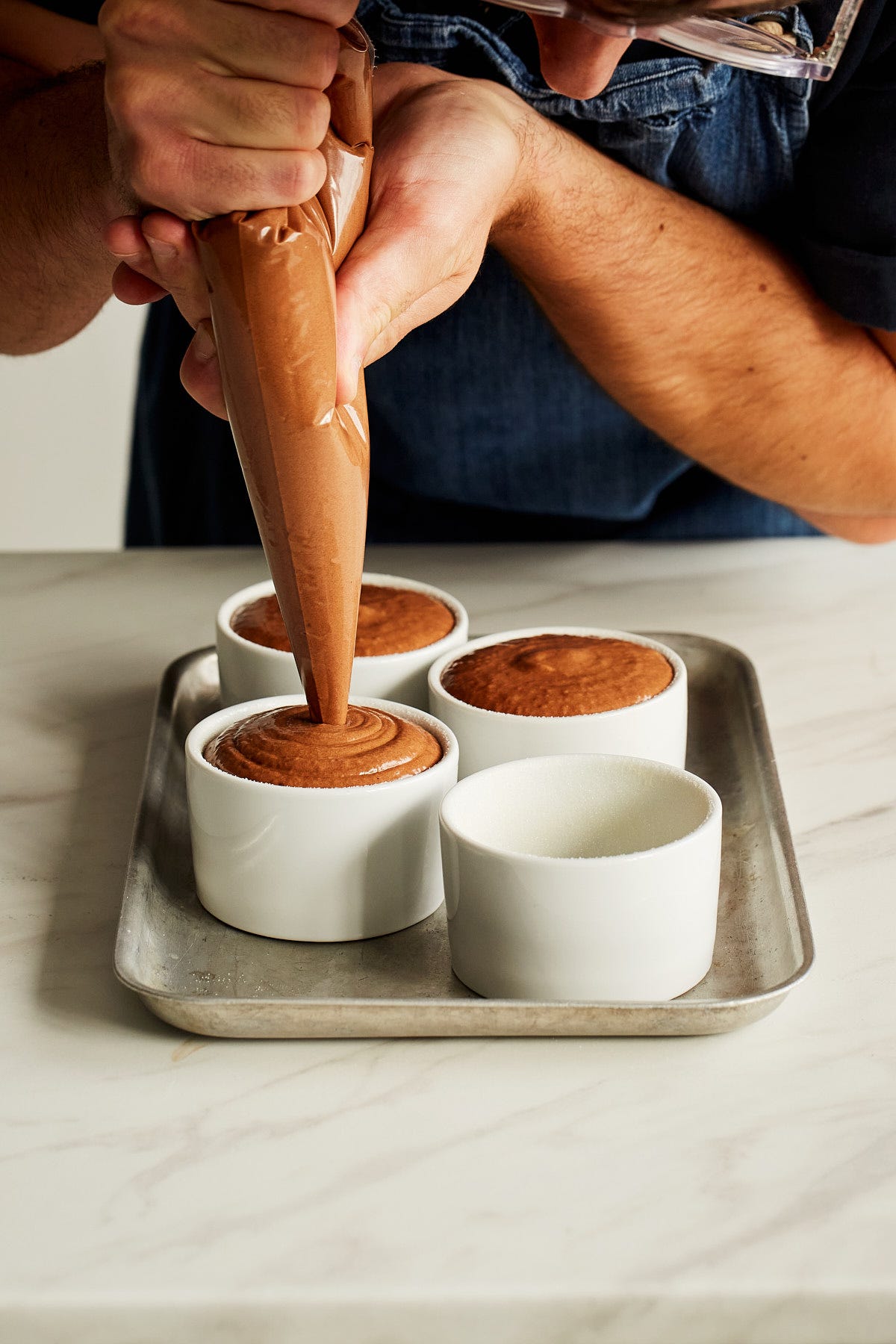
During our conversation, I asked Matt about his pursuit of the soufflé — chocolate for the book and, excitingly, rhubarb, which he developed especially for this newsletter (and is available now on KP+). Despite its tricky reputation, you may be happy to hear that Matt describes it as surprisingly reliable once you understand it (and have a good recipe).
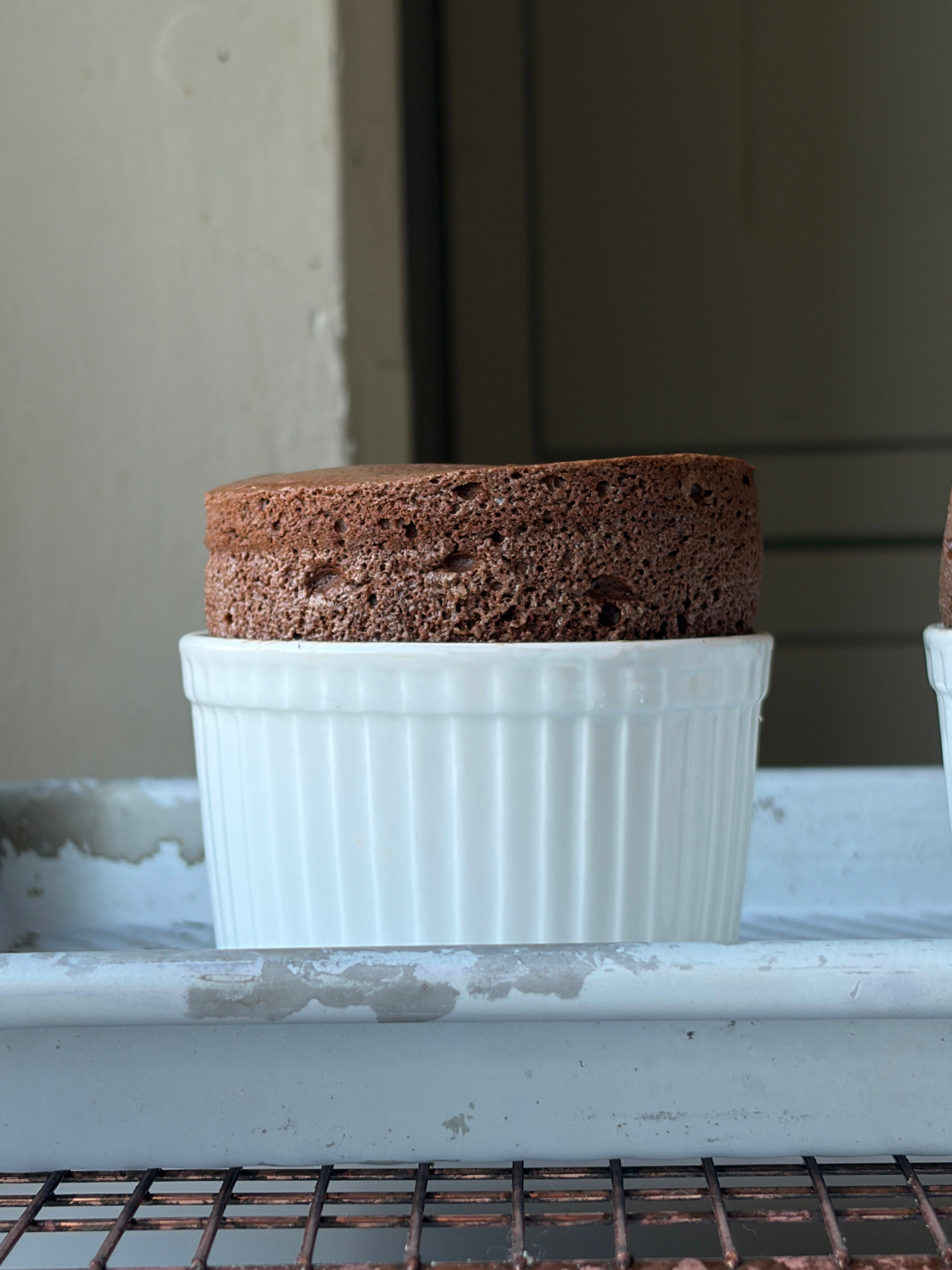
“I’d only really done chocolate soufflé for years…” Matt tells me, “and I developed this recipe that has never failed me.” I can attest to that – I made the recipe and they, as promised, rose impressively.
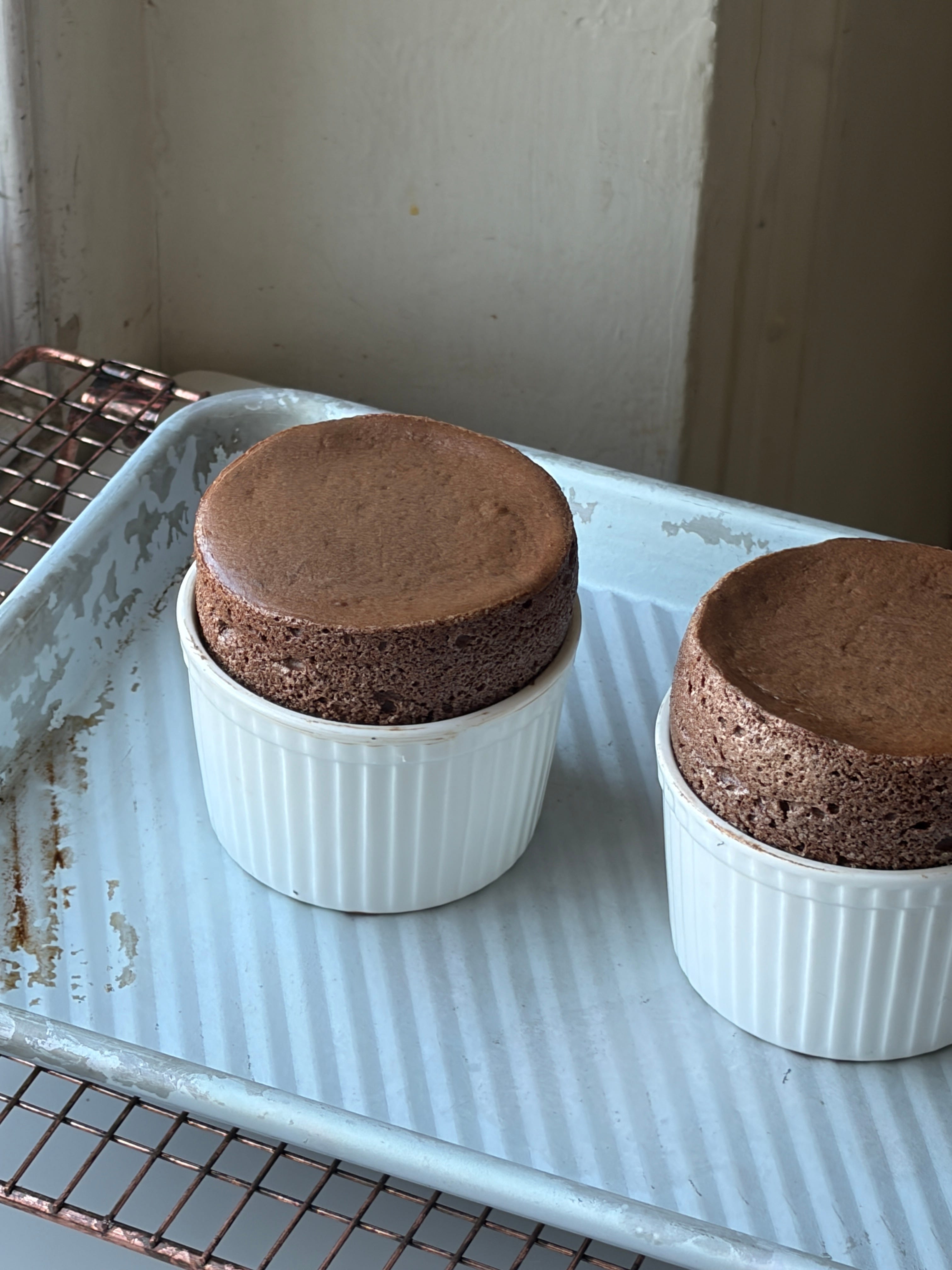
It was the fruit versions that proved more elusive. Without the stabilising effect (and flavour) of chocolate, they can feel “a little bit meh” if not carefully balanced. Getting there meant working through different purées and thickening methods until the texture held.
“Fruit soufflés are just a bit lighter and a bit weaker… it took a while to balance.” While the chocolate soufflé stands alone (with a suggested serving of warm crème anglaise), the rhubarb version comes topped with crumble, alongside custard.
So what of timing? How long do we really have to get it onto the table?
“About four minutes.”
Now that is the kind of honesty in baking I can get behind. Timers on, let’s bake Soufflé!
SOUFFLÉS
Extracted from The Science of Baking by Matt Adlard (DK, £25)
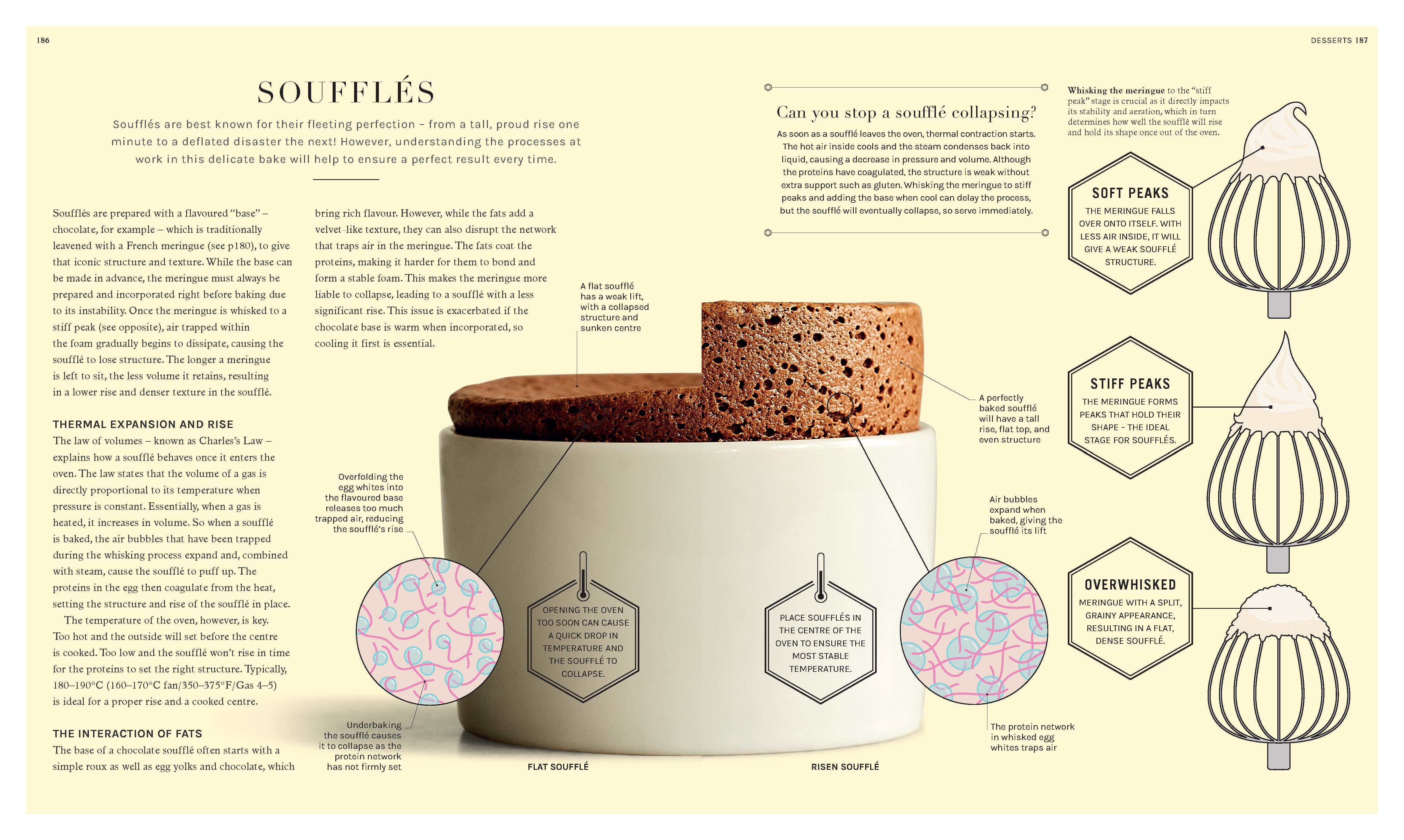
Soufflés are best known for their fleeting perfection – from a tall, proud rise one minute to a deflated disaster the next! However, understanding the processes at work in this delicate bake will help to ensure a perfect result every time.
Soufflés are prepared with a flavoured “base” – chocolate, for example – which is traditionally leavened with a French meringue (see p180), to give that iconic structure and texture. While the base can be made in advance, the meringue must always be prepared and incorporated right before baking due to its instability. Once the meringue is whisked to a stiff peak (see opposite), air trapped within the foam gradually begins to dissipate, causing the soufflé to lose structure. The longer a meringue is left to sit, the less volume it retains, resulting in a lower rise and denser texture in the soufflé.
THERMAL EXPANSION AND RISE
The law of volumes – known as Charles’s Law –explains how a soufflé behaves once it enters the oven. The law states that the volume of a gas is directly proportional to its temperature when pressure is constant. Essentially, when a gas is heated, it increases in volume. So when a soufflé
is baked, the air bubbles that have been trapped during the whisking process expand and, combined with steam, cause the soufflé to puff up. The proteins in the egg then coagulate from the heat, setting the structure and rise of the soufflé in place.
The temperature of the oven, however, is key. Too hot and the outside will set before the centre is cooked. Too low and the soufflé won’t rise in time for the proteins to set the right structure. Typically, 180–190°C (160–170°C fan/350–375°F/Gas 4–5) is ideal for a proper rise and a cooked centre.
THE INTERACTION OF FATS
The base of a chocolate soufflé often starts with a simple roux as well as egg yolks and chocolate, which bring rich flavour. However, while the fats add a velvet-like texture, they can also disrupt the network that traps air in the meringue. The fats coat the proteins, making it harder for them to bond and form a stable foam. This makes the meringue more liable to collapse, leading to a soufflé with a less significant rise. This issue is exacerbated if the chocolate base is warm when incorporated, so cooling it first is essential.
Can you stop a soufflé collapsing?
As soon as a soufflé leaves the oven, thermal contraction starts. The hot air inside cools and the steam condenses back into liquid, causing a decrease in pressure and volume. Although the proteins have coagulated, the structure is weak without extra support such as gluten. Whisking the meringue to stiff peaks and adding the base when cool can delay the process, but the soufflé will eventually collapse, so serve immediately.
RECIPE: Chocolate Soufflé
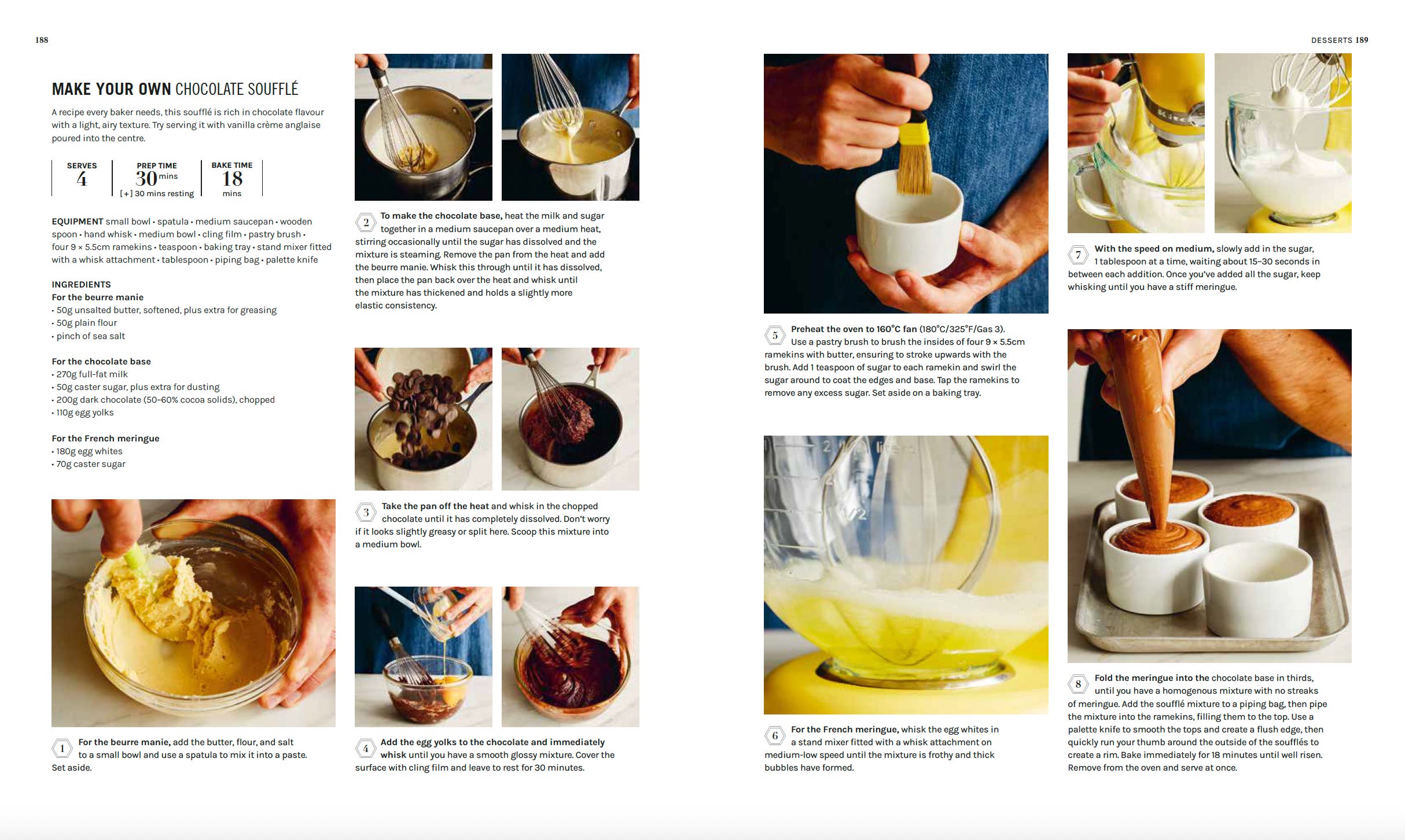
A recipe every baker needs, this soufflé is rich in chocolate flavour with a light, airy texture. Try serving it with vanilla crème anglaise poured into the centre.
Serves 4
Equipment: four 9 x 5.5cm (3.5 x 2.2 inch) ramekins
Beurre manie
50g unsalted butter, softened
50g plain flour
pinch of sea salt
Chocolate base
270g full-fat milk
50g g caster sugar
200g dark chocolate (50–60% cocoa solids), chopped
110g egg yolks
French meringue
180g egg whites
70g g caster sugar
Beurre Manie
Into a small bowl, add the butter, flour and salt and use a spatula to form it into a paste. Set aside. It’s important to have soft butter here, otherwise it can be a pain to get it to form into a paste!
Chocolate Base
Heat the milk and sugar in a medium saucepan over a medium heat and stir occasionally until the sugar has dissolved and the mixture is steaming.
Remove it from the heat and add in the beurre manie. Whisk this through until it has dissolved, then place the pan back on the heat and whisk constantly until the mixture has thickened and holds a slightly more elastic consistency.
Remove it from the heat and whisk in the chocolate until the chocolate has completely dissolved. Don’t worry if it looks slightly greasy or split here. Scoop this mixture into a medium bowl.
Add the egg yolks and immediately whisk until you have a smooth, glossy mixture. Cover the surface with cling film and let it rest for 30 minutes.
French Meringue & Assembly
Preheat the oven to 160C/320F fan-assisted. Lightly grease the ramekins with soft butter, using an upwards stroking motion. Tip in a few tablespoons of sugar and swirl this around, tipping out the excess. Place these on a tray and set to one side.
Add the egg whites to a stand mixer fitted with a whisk attachment and whisk on medium-low speed until the mixture is frothy and thick bubbles have formed.
With the speed on medium, slowly add in the sugar, 1 tablespoon at a time, waiting about 15–30 seconds in between each addition. Once you’ve added all the sugar, keep whisking until you have a stiff meringue.
Take the first third of meringue and fold this through with a whisk to balance the two textures, then fold the remaining 2 parts in with a rubber spatula, until you have a homogenous mixture with no streaks of meringue.
Add the soufflé mixture to a piping bag, and pipe the mixture into the ramekins, filling them to the top.
Use a palette knife to smooth the top and create a flush edge, then quickly run your thumb around the outside of the soufflé to create a rim.
Place them into the oven immediately and bake for 18 minutes. Remove from the oven and serve immediately. They should be well risen!
Such an interesting set of recipes, and lovely to see a shout-out to Rose Levy Beranbaum, she was my first baking-as-science cake guru!