
Kitchen Project #198: Guinness Bread
On Irish Stout Bread with Cissy Difford


Hello,
Welcome to today’s edition of Kitchen Projects. Thank you so much for being here.
With St Patrick’s Day just around the corner, I am very excited to welcome writer & baker extraordinaire Cissy Difford back to the newsletter to tell us all about Guinness Bread. Interweaving her experiences of living in Dublin and her years baking, Cissy gives us a delicious, damp yet crusty loaf that is literally good with everything.
On KP+, Cissy has taken her stout bread to new dimensional planes, creating a granola from the crumbs — waste not, want… very much! Click here to read it! You can also follow Cissy on Instagram here.
What’s KP+? Well, it’s the level-up version of this newsletter. By joining KP+, you will support the writing and research that goes into the newsletter (including the commissioning - and fair payment - of all the writers), join a growing community, access extra content (inc. the entire archive) and more. Subscribing is easy and costs only £6 per month or £50 per year. Why not give it a go? Come and join the gang!
Love,
Nicola
On Guinness Bread
It feels wrong to be writing about Guinness bread as an English woman, let me just begin there. It feels especially wrong as there are so many talented female Irish bakers out there: Fiona Fitzpatrick, Ciara Ó hArtghaile, Cherie Denham, Charlotte Leonard-Kane, Sarah Richards, Katie Smith, Sarah Fox and Beth O’ Brien, to name just a few. There’s also 800 years of oppression to contend with, and the continual fetishization of being Irish by those who have little connection to the country. In fact, it feels as if it’s never been cooler to be Irish, especially in London: Claddagh rings, GAA shorts and splitting the G are rife.
But despite all that, here I am writing about Guinness bread.
Yes, I am lucky enough to own a burgundy, harp-embossed passport that might fool the European passport control; but ultimately, I’m not really Irish. And sure, it’s in my blood - thanks Granny Isobel - but I didn’t actually grow up scoffing potato farls, singing Ra songs at lock-ins, or watching the hurling. No, these are all things that have just become part of my DNA by living in the country for a number of years, natural adoptions to my character to help me fit in. These feel like wearing a gold medal for the place I love. How beautifully hypocritical I am!
When I lived in Dublin, I worked at Scéal Bakery. Before they opened their seaview site in Greystones, we operated out of a tiny commercial unit in Smithfield, a now trendy (according to various articles) area in the Northside of the city (according to various articles) but which was once very working class. My commute to work saw me weaving through the cobbled backstreets of The Liberties on my blue racer bike with pink-taped handlebars. In the wee hours, my tires would bounce across the stones, reverberating into my soul. The area was dyed black in the dark. The only other real sign of life at this hour being the wafts of brewing hops that breezed out of the Guinness factory, following me through the streets and across the river. Each week, the smells would shift from dank and mealy, to deeply toasted, to something sweet. An echo of the different stages of brewing happening inside.
At a more normal time of the day, the cobbled streets are ranked by horses and carts. The owners, mostly young teenage boys, sit slouched in the carriages, puffing on plastic vapes, waiting for the swarms of tourists to shuffle out of the Guinness Storehouse. Their presence adds to the old-fashioned theatrics of this cultural Irish institution.

The legacy of the stout (which you can learn all about at the Storehouse) comes from watching a tulip-shaped glass fill with a dark, ruby liquid that, whilst briefly resting on top of the bar, magically forms a creamy head. The performance of pouring a pint of Guinness is as mesmerising as it is delicious. To sip a pint of the “black stuff”, wherever you are in the world, is an unwavering symbol for Irish culture.
For a baker, using Guinness as an ingredient, rather than an enjoyable drink to scull, isn’t any less fraught with feeling. In cooking, the stout can be used to deepen the richness of stews, to glaze and braise thick cuts of meat, as well as lend moisture to decadent cakes. It’s no surprise then that it would eventually marry another Irish icon: soda bread.
Maura Laverty (one of the first Irish female celebrity chefs, but also novelist and playwright) wrote in her 1960 cookbook Full & Plenty, “we have given a four-leaved shamrock to the world. One leaf is W.B. Yeats, another is boiled potatoes in their jackets, another Barry Fitzgerald. The fourth is soda bread. And the greatest of these is soda-bread. Spongy white soda-bread with a floury, brown, crossed crust…”
Laverty isn’t wrong.
ON KP+ TODAY
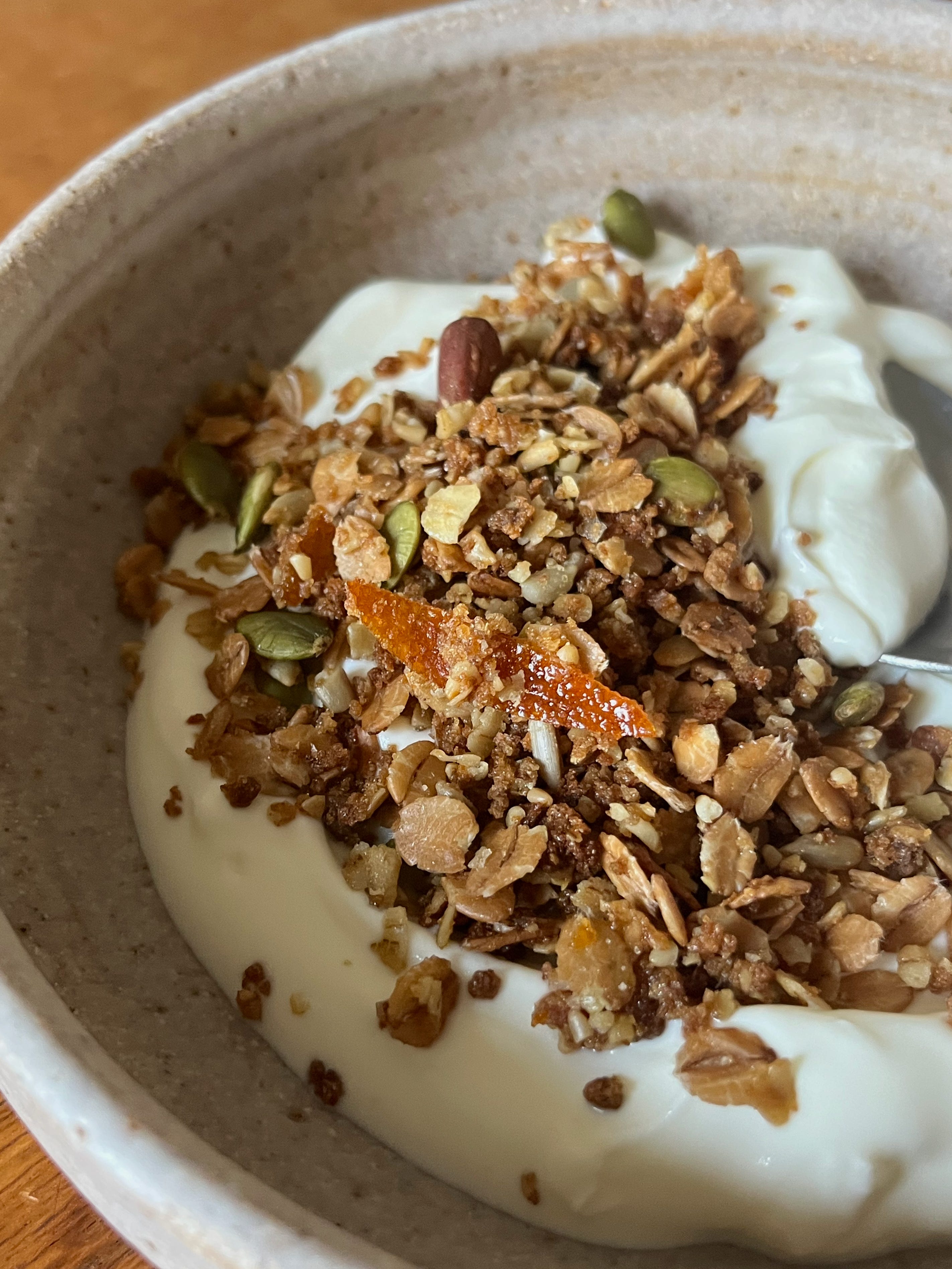
Cissy Difford shares a recipe for Marmalade Toast Granola using the crumbs of the soda bread — possibly the most genius double down on breakfast ever.
Soda Bread
Soda bread: a type of quick bread that is, as the name suggests, bread that can be mixed and baked immediately. Unlike the painstaking labour of love that is sourdough starter, soda bread rises from the wizardry of chemical leaveners. This is because when you mix bicarbonate of soda or baking powder with an acidic ingredient, like buttermilk, yoghurt or kefir, carbon dioxide is produced. This creates lots of small air bubbles inside a batter that expands in the heat of the oven, causing it to rise.
My first experience with this type of bread was at another Irish institution, The Ballymaloe House Hotel kitchen, where I worked as an apprentice before becoming a baker. Here, mis-en-place jobs included the classic Ballymaloe staples like Carrageen Moss Pudding, turning out ice bowls for the ice cream display, poaching whole pears in a golden saffron liquid and making soda bread. Here the soda bread is soft, sweet and spongey. And there was always a basket lying around to nibble on.
What made the baking of this bread feel so special, was the fact that tangy curds of buttermilk arrived straight from the dairy (only a stone’s throw away) in clunky milk churns. We ladled straight from these churns into bowls of flour, then mixed everything by hand. Without the facades of modern-day equipment, the simplicity of the dough - flour, salt, bicarbonate of soda and buttermilk - and the omission of perfection often found in other dishes, I felt deeply rooted to all those who had practiced this craft before me.
Although my nostalgia might make soda bread out to be some sort of primal act, its history is surprisingly recent: itself only existing since around the 1850s when bicarbonate of soda was first industrially produced. For people living in remote areas like rural Ireland and the Scottish highlands, breads like these (soda, potato farls and oatcakes) were ‘invaluable’ to the home cook, because they required very little from you. No forward planning, proving or kneading is necessary. They could be baked in a bastible (a flat bottomed cast-iron pot) over the hearth, or on a griddle too. A perfect method for cottages that didn’t have ovens.
The other ingredients in soda bread similarly reflect what was accessible and affordable at the time. We’re talking about the years of the Famine (An Gorta Mór literally meaning The Great Hunger), when high-quality ingredients, like strong flour and yeast were impossible to source. Families were forced to be inventive and survive off the little local ingredients they had. At the time, Irish wheat was naturally soft and low in gluten, making it excellent for this type of tender crumbed loaf. It put soda bread on the map as ‘a symbol for ingenuity in the face of hardship’ in post-Famine Ireland, asserting its symbolic ties with Irish identity.
(Today, both Irish wheat and our understanding of how to work with lower protein flour is very different, and beautiful loaves can be produced. But that’s a story for another time).
Another ingredient not to be overlooked in soda bread is superstition. Like Maura Laverty’s image of a four-leaved shamrock, soda bread dough is flattened into a disc then cut into four before baking. Irish superstition would have you believe the cross in the top of the loaf is to ‘let the fairies out’. These fairies, notoriously cheeky, were blamed for loaves falling flat. By letting them fly free, you’d ward off evil to ensure a well-baked loaf. Whatever you believe, scoring dough has a practical purpose too. It helps guide the loaf’s expansion in a controlled way, preventing it from bursting into a random, jagged shape.
It’s no surprise, then, that to make a loaf of soda bread means more than just the sum of its parts.
For me, folding stout and treacle into soda bread feels inevitable; a way of capturing those intoxicating, malty Dublin streets I knew so well in a loaf. Dark stout breads have long sat alongside traditional soda bread, shaped, like all baking, by whatever the cupboard could offer. Here, the stout lends a deep bitterness that melts into the sweetness of treacle, producing something rich, almost honeyed, and faintly indulgent. It’s the kind of bread best eaten in thick slices with salty butter. Ideally in the snug of a coastal pub, surrounded by a buffet of Tayto packets, a bowl of hot chowder, and creamy pints. This recipe is for when that place, and the people in it, feel impossibly far away.
I secretly slipped a small slice of Guinness bread into my handbag at the end of a dinner in Lahinch. Miraculously, it survived the journey - via a pub stop and Shannon Airport - and made it safely back to London the next day. A triumph against all odds!
Experimentation
My kind of Guinness bread isn’t really bread at all, it’s cake. It’s tender, moist and deeply dark. Sometimes though I crave something in between. Something that has a soft crumb and an audible crunchy crust. That’s where this sits.
Testing almost felt at odds with the spirit of soda bread itself. A bread that is built around resourcefulness, trusting instinct and saying goodbye to perfection. However, I already had in mind a few variations I’d like to test, including whether to enrich the dough with butter or eggs, and if a hotter oven that dropped down would be better than a steady medium heat. For me, adding eggs felt like something I didn’t want to explore. I’m on a quest for crust, and yolk would only tenderise it. That said, my favourite Guinness bread in London has to be Max Rocha’s at Café Cecilia. A deeply moist loaf that does use eggs, and does so deliciously. I did, however, add a little bit of butter to help keep the loaf moist, as I found versions without it went stale more quickly.
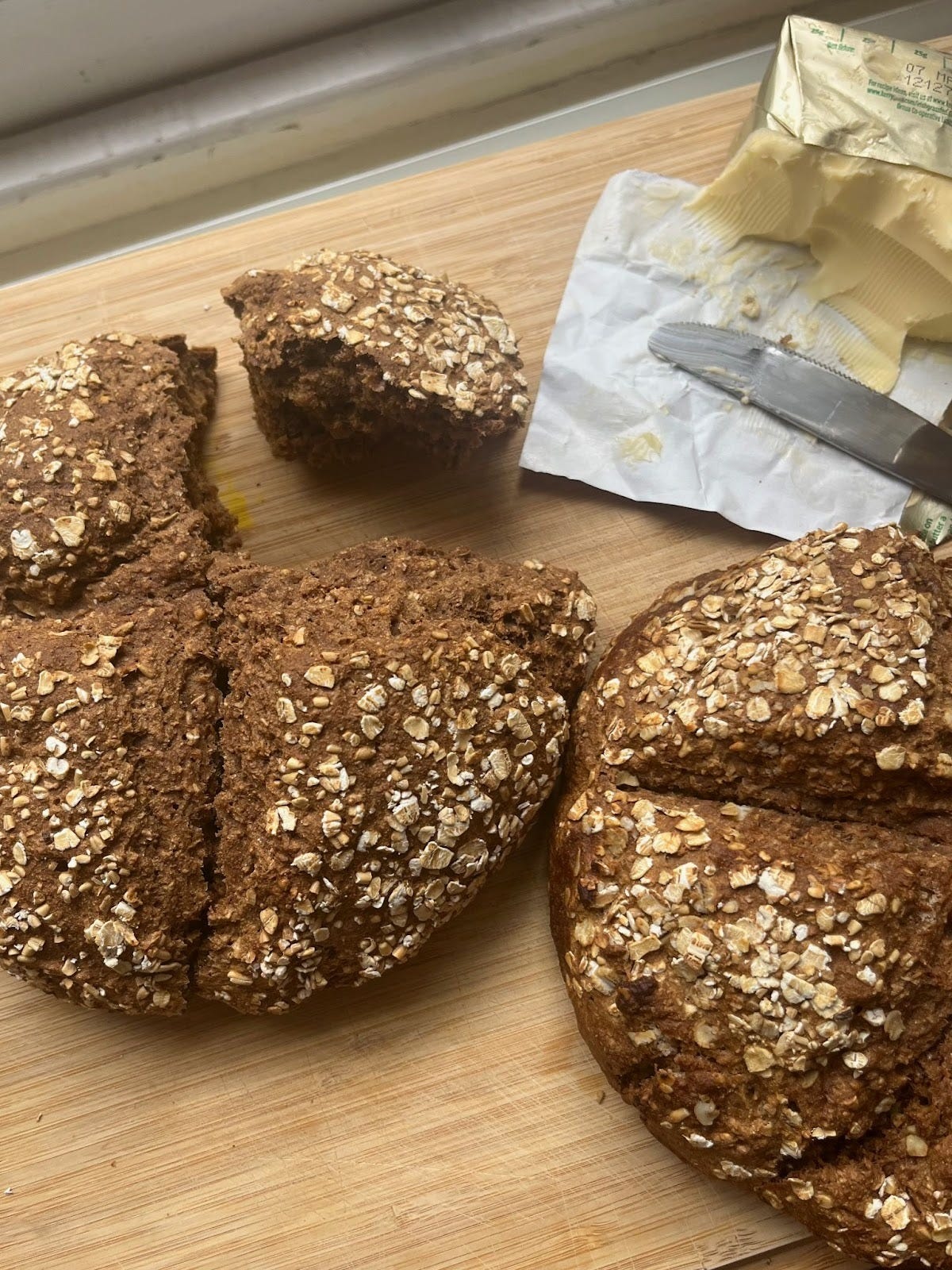
To test the loaves, I shaped the traditional way, freeform rounds, so that I could keep them small and reduce waste. Each time, more treacle, more salt, an accidental heavy hand with oats, a hotter oven, a cooler oven, until I got closer to what I was searching for.
Today’s version
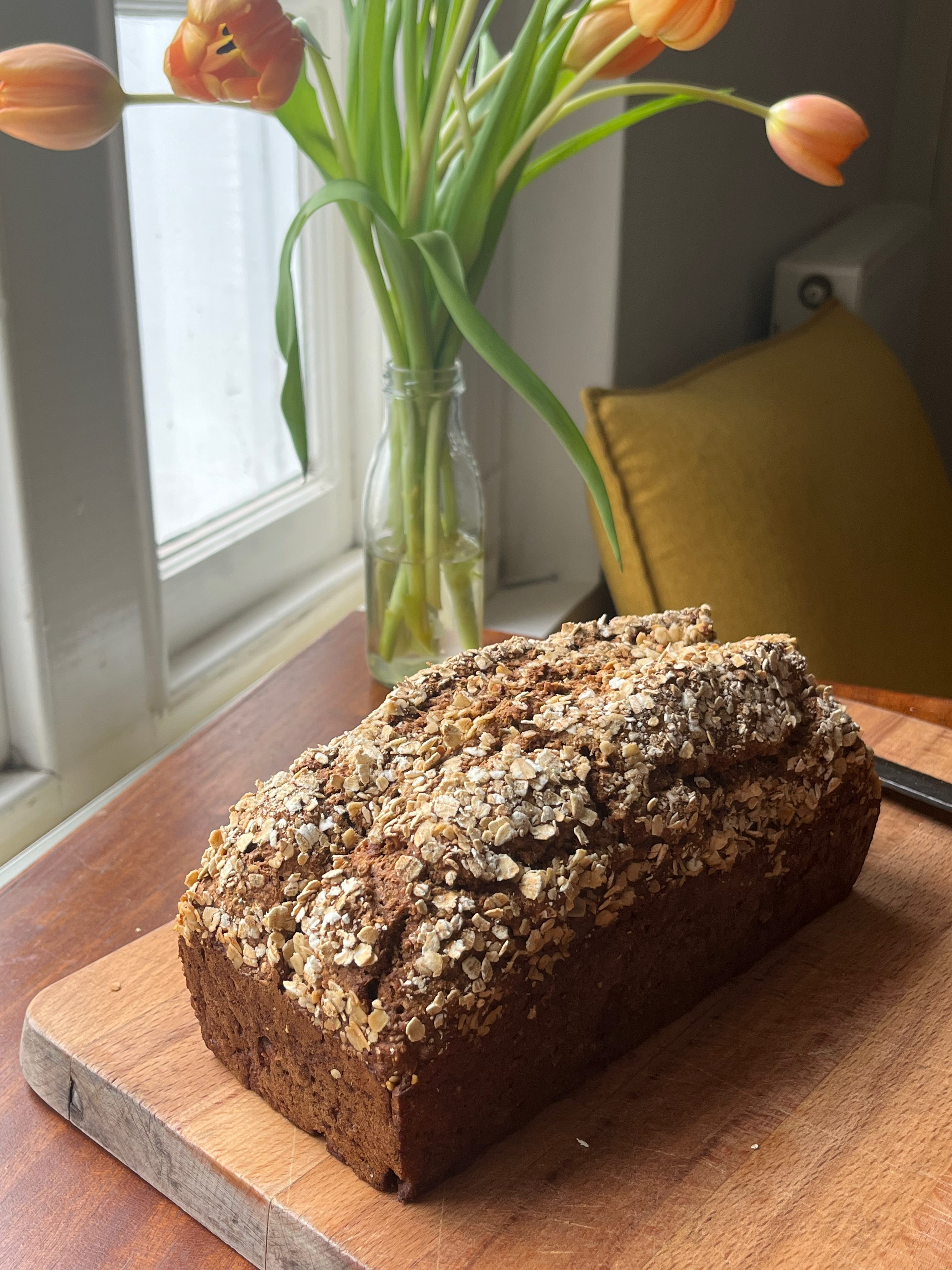
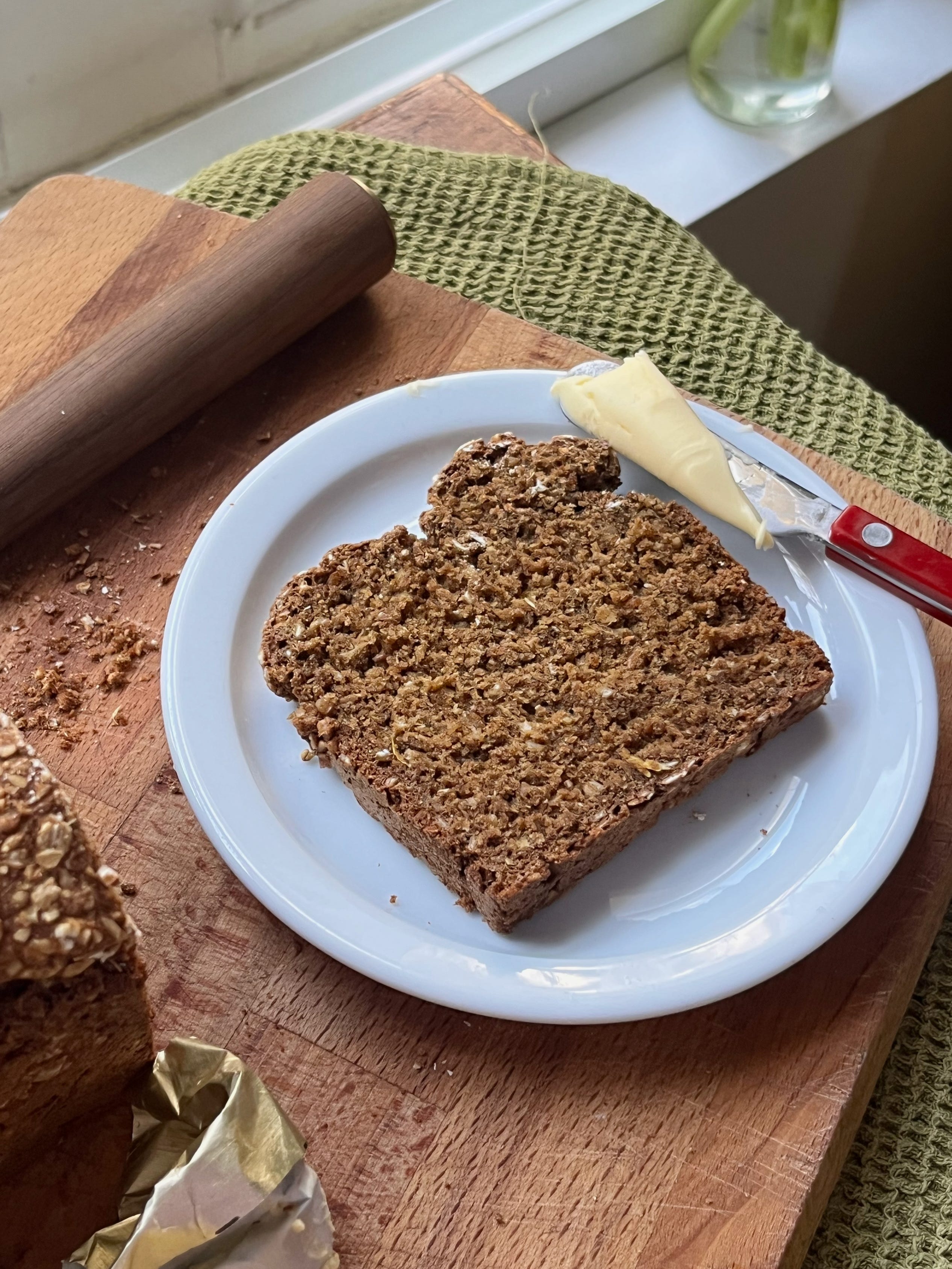
There are many versions of Guinness bread. The one you make, the one your Granny makes, the one I make. Some are so tender they border on cake, others are more traditional, unsweetened and slightly dense. This one sits in between. Made with treacle, stout and oats for a malt-forward depth and sweetness.
It can be baked in a loaf tin, or without (though the bake time will be reduced). And must be eaten with a thick layer of Irish butter, so thick you can see teeth marks.
Notes and substitutions:
Buttermilk - Buttermilk is a sour liquid, originally a byproduct leftover after churning cream into butter. Although these days most shop-bought buttermilks are milks cultured with lactic acid bacteria. If you can’t find it you can make it yourself by mixing 1 tablespoon of lemon juice (or vinegar) into 250ml whole milk and leave to stand for 15-20 minutes. It won’t be as thick as traditional buttermilk but it’s a close enough substitution.
Flour - In an ideal world we would use local, freshly-milled stoneground flour in this recipe. If this isn’t feasible (which is likely) go for the best next thing. Avoid ‘strong’ flour, we want soft flour for that soft crumb. I used a variety of soft wheat called Holdfast, grown in the South-West UK and milled at Landrace Milling. I love seeing the husks of wheat kernels dotted through this dough. Can you see the bran too?
Stout - Guinness isn’t the only delicious stout on the market, but this recipe is designed to the volume of a standard can. You’ll use half, which conveniently gives you the perfect excuse to double the recipe, because if you’re going to the trouble, you may as well bake two gorgeous loaves. Perhaps one in a tin, one freeform.
Oats - Pinhead oats (also known as steel-cut oats), have a rough texture and nutty flavour. If you can’t find them, use all porridge oats.
Oven - Starting hot, then reducing the temperature, maximises the reaction between the bicarbonate of soda and acidic buttermilk, giving the loaf a strong oven spring and a well-formed crust.
Recipe: Guinness Bread
Makes 1 loaf
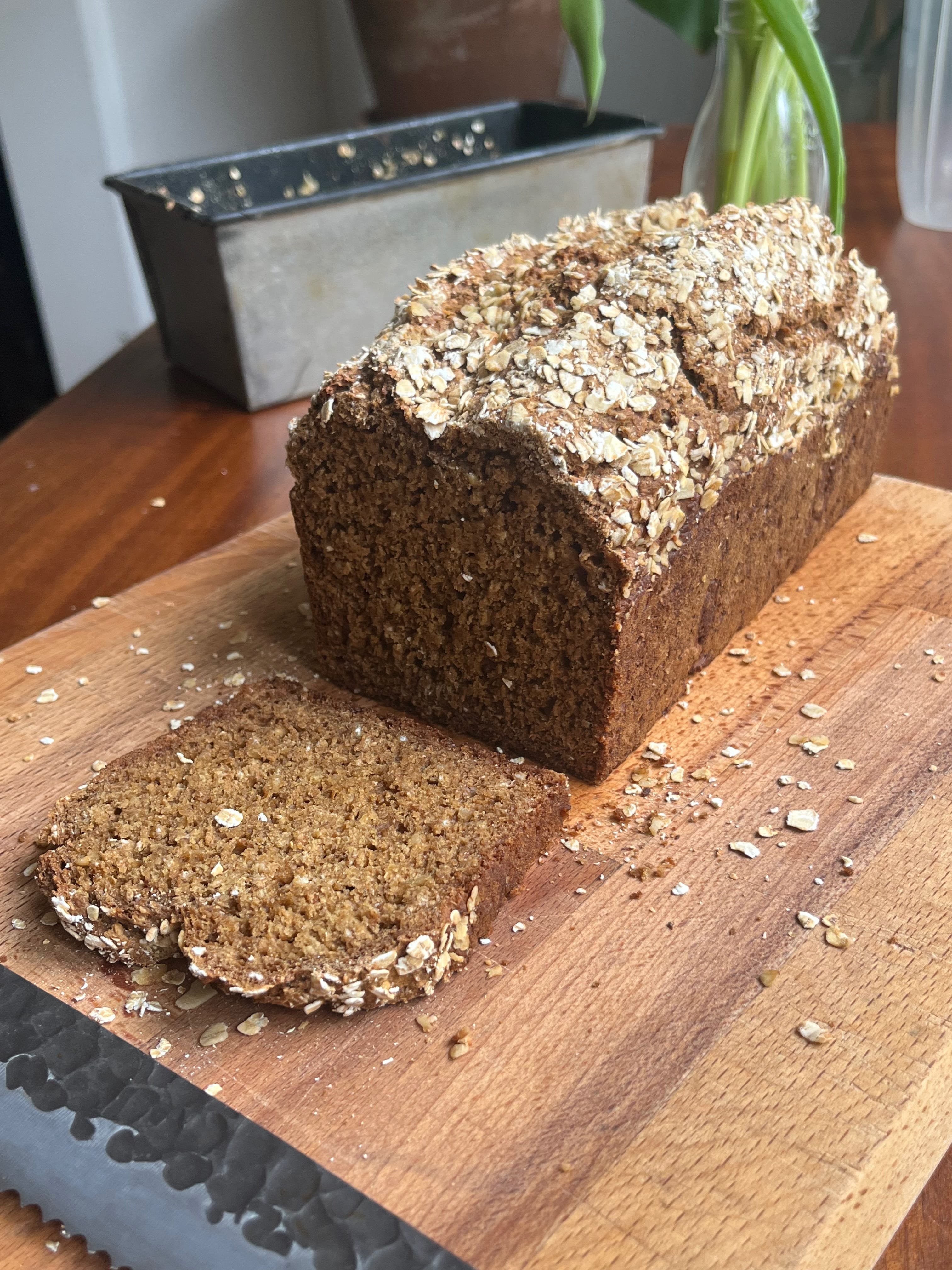
Equipment
2lb or 3lb loaf tin. This recipe has been tested in various tin sizes, including 9inch x 4.5 inch, which worked well.
NOTE: You could also shape this as a freeform loaf, gently guiding the dough into a ball then flattening it into a disc, around 1-2” thick. Place on a baking tray lined with paper, dust with oats, then score the top with a deep cross using a sharp knife. Bake times may be reduced slightly.
Ingredients
95g plain flour
380g coarse wholemeal flour
50g porridge oats, plus extra for coating
40g pinhead oats
12g fine sea salt
10g bicarbonate of soda
30g unsalted butter, cold, coarsely grated
210ml buttermilk
210ml stout, like guinness
75g treacle
Method
Before you start anything, set yourself up:
Preheat the oven to 220c fan.
Grease your tin with a wash of neutral oil, making sure to get into all four corners, as this is normally where baked dough can get stuck. If you’re particularly nervous, you can line the tin with parchment.
Fill a small bowl or jug with tepid water and fling in a flexible dough scraper, so it’s bobbing about.
To mix your dough:
Combine the flours, oats, bicarbonate of soda and salt in a large bowl.
In a jug, whisk the buttermilk, treacle and stout until the treacle has dissolved and it is a muddy colour. To prevent silly string-like laces of sticky sugar all over your counter, use a spoon that’s been sitting in a mug of boiling water to scoop the treacle from the jar.
Add in the coarsely grated butter to the dry ingredients.
Use one hand (your dominant), to gently mix the butter into the flour (just so that it is evenly dispersed, not rubbed in) whilst your other clean, free hand holds the bowl, or as my friend Shane used to say, just in case you need to pick up the phone.
Create a little well in the dry ingredients then pour in your wet ingredients.
Gently squelch the wet and dry together with one hand, until there are no visible pockets of flour. The key here is to not overwork the dough. You want to see the grated butter as flecks in the mixed dough.
Grab your wet dough scraper and scrape down the sides of the bowl.
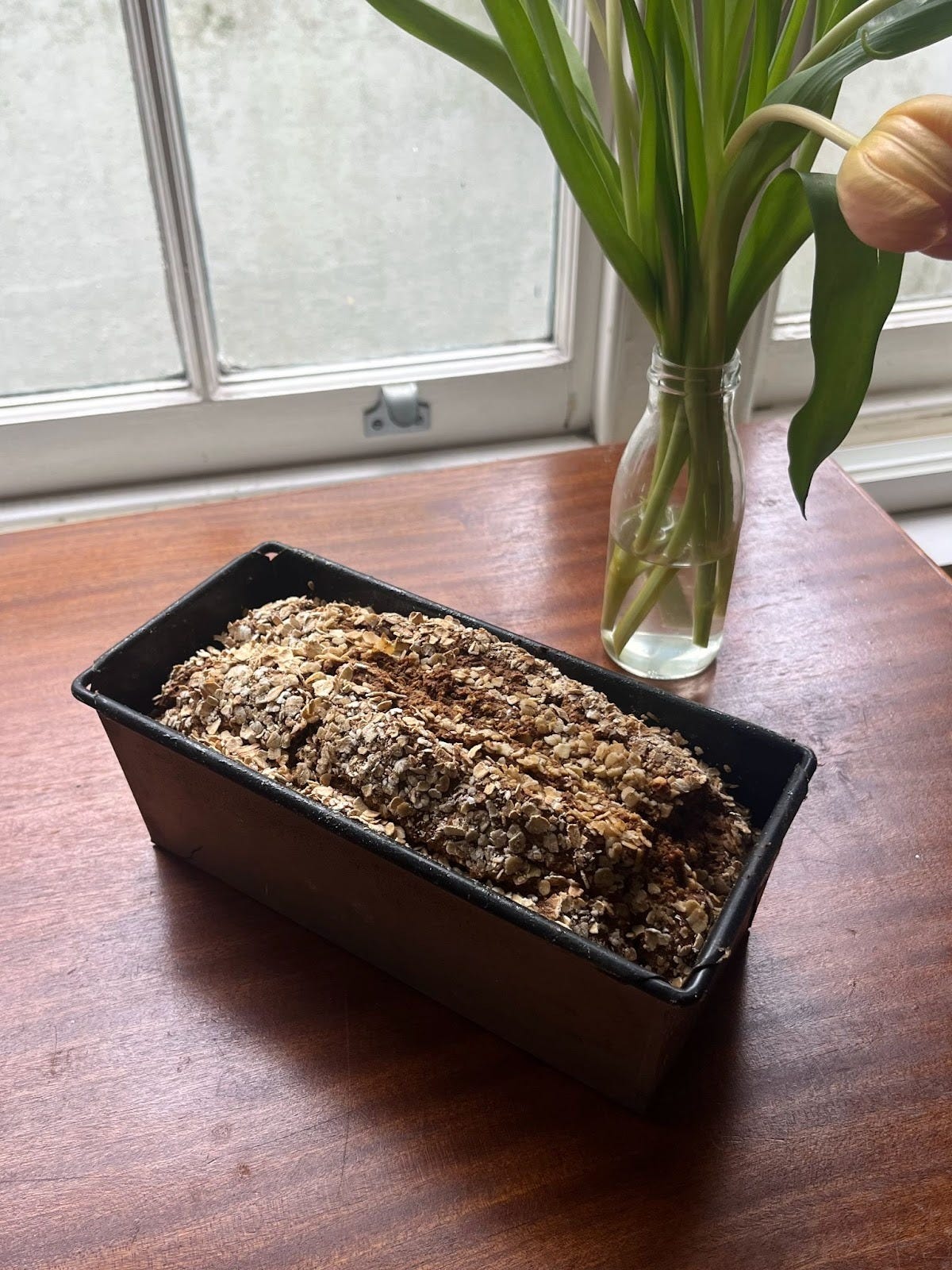
Use the scraper and your hands, to help you lift the wet dough out of the bowl and into your prepared loaf tin. If you feel confident, you can gently shape the dough into a rough brick, which will help it fit snugly into your tin. Don’t be afraid, this is quite a wet dough.
Using wet hands or a wet dough scraper smooth the surface of the dough, pushing it into each corner of the tin, until it is flat.
Generously sprinkle the top of the dough with oats.
Using a sharp knife, ‘let the fairies out’ by pushing the knife into the centre of the dough, creating a shallow line.
Pop into the oven and bake for 15 mins, then lower the temperature to 180c. Continue baking for 30 mins. Carefully remove from the oven and tap it out of the tin. Return to the oven for a few more mins, until the loaf is deeply burnished and sounds hollow when tapped on the bottom.
Remove from the oven and allow to cool on a wire rack
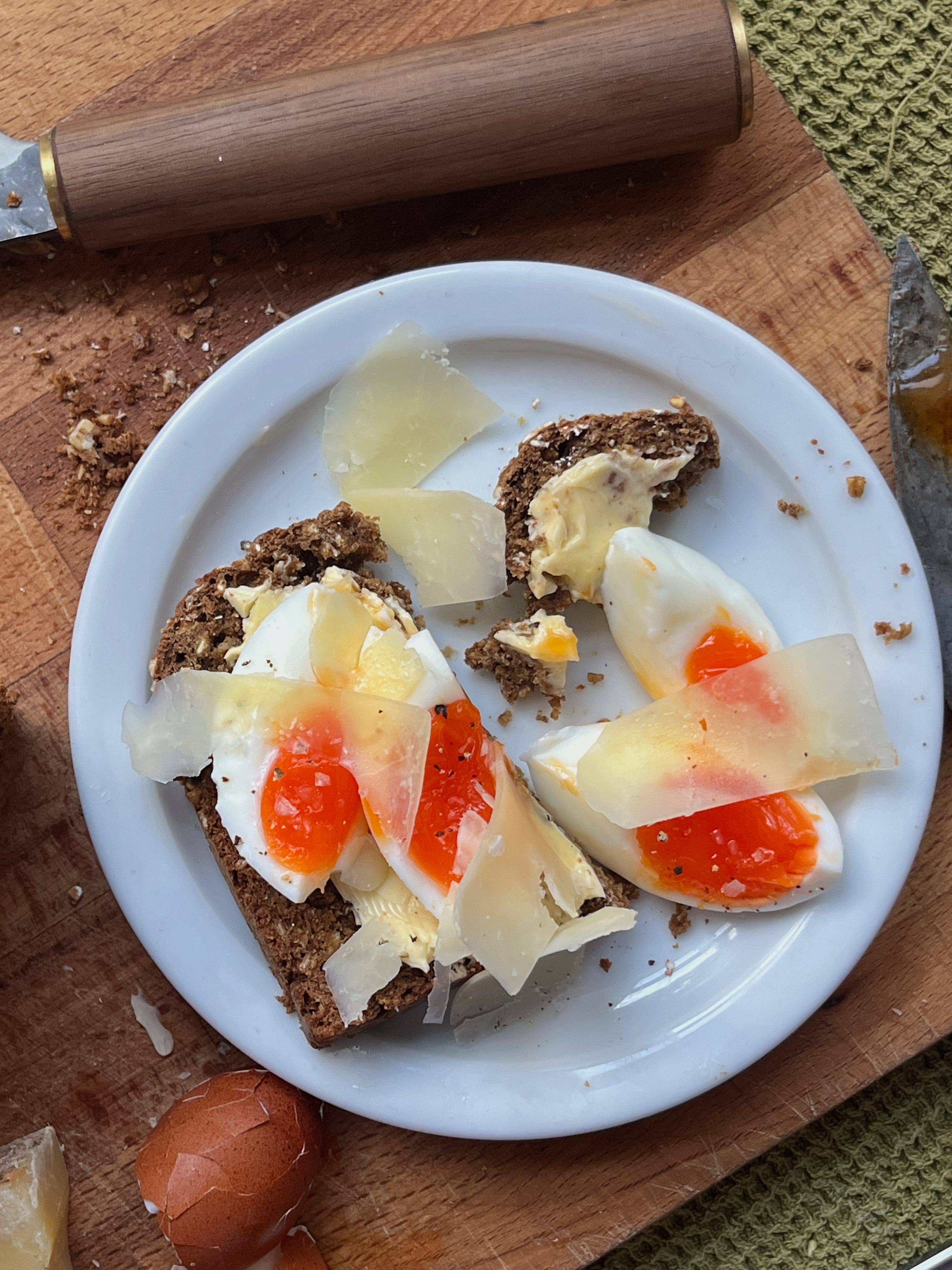
This bread will keep for 3 days, but is best eaten on the day of baking. Serve with butter, or my favourite way is with 6-minute jammy eggs and shavings of a hard cheese, like Coolea.
 | A guest post by
|
I’ve been making soda bread for years, now use mostly spelt flour. I’ve often had to sour the milk with lemon juice as buttermilk is not always available. I shall so make this! Round, though, saves all the faffing about with tins. It sounds lovely! Thank you!
I am really excited to make this for dinner tonight - I have fond memories of eating brown bread and seafood chowder all throughout Ireland. Also, why am i getting emotional about the whimsy of "letting the fairies out"???