
Kitchen Project #184: An Introduction to Plant Based Baking 🌱
With Philip Khoury, author of Beyond Baking and A New Way to Bake

Hello,
Welcome to today’s edition of Kitchen Projects. Thank you so much for being here.
Today, we’re diving headfirst into plant-based baking with pastry chef and author Philip Khoury. If you’re unfamiliar with Khoury’s work - welcome! He has been revolutionising the plant-based baking world, and his second book, Beyond Baking, is out this week. I spent a few hours discussing the craft with him, and I’m delighted to share an excerpt from his book.
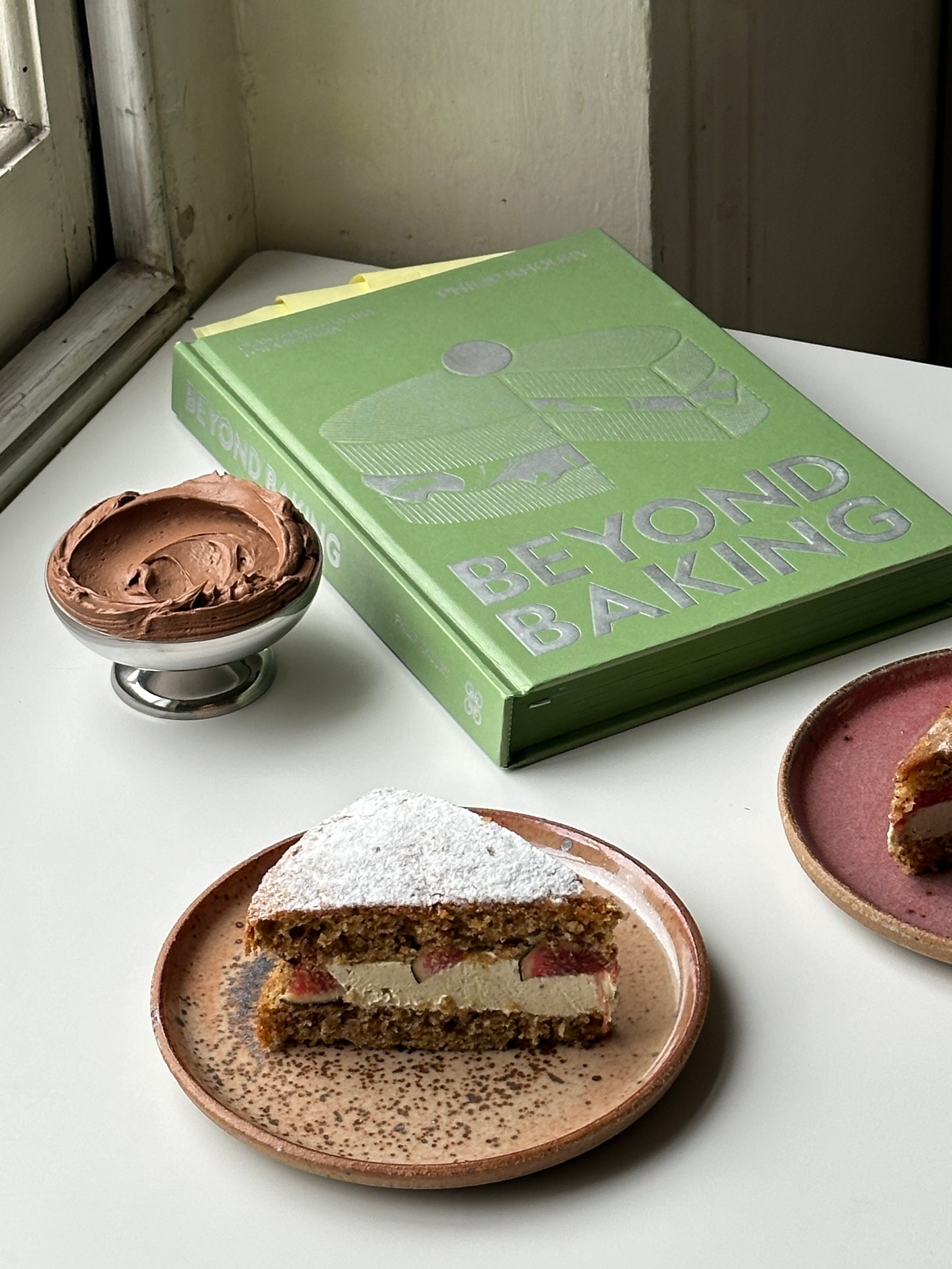
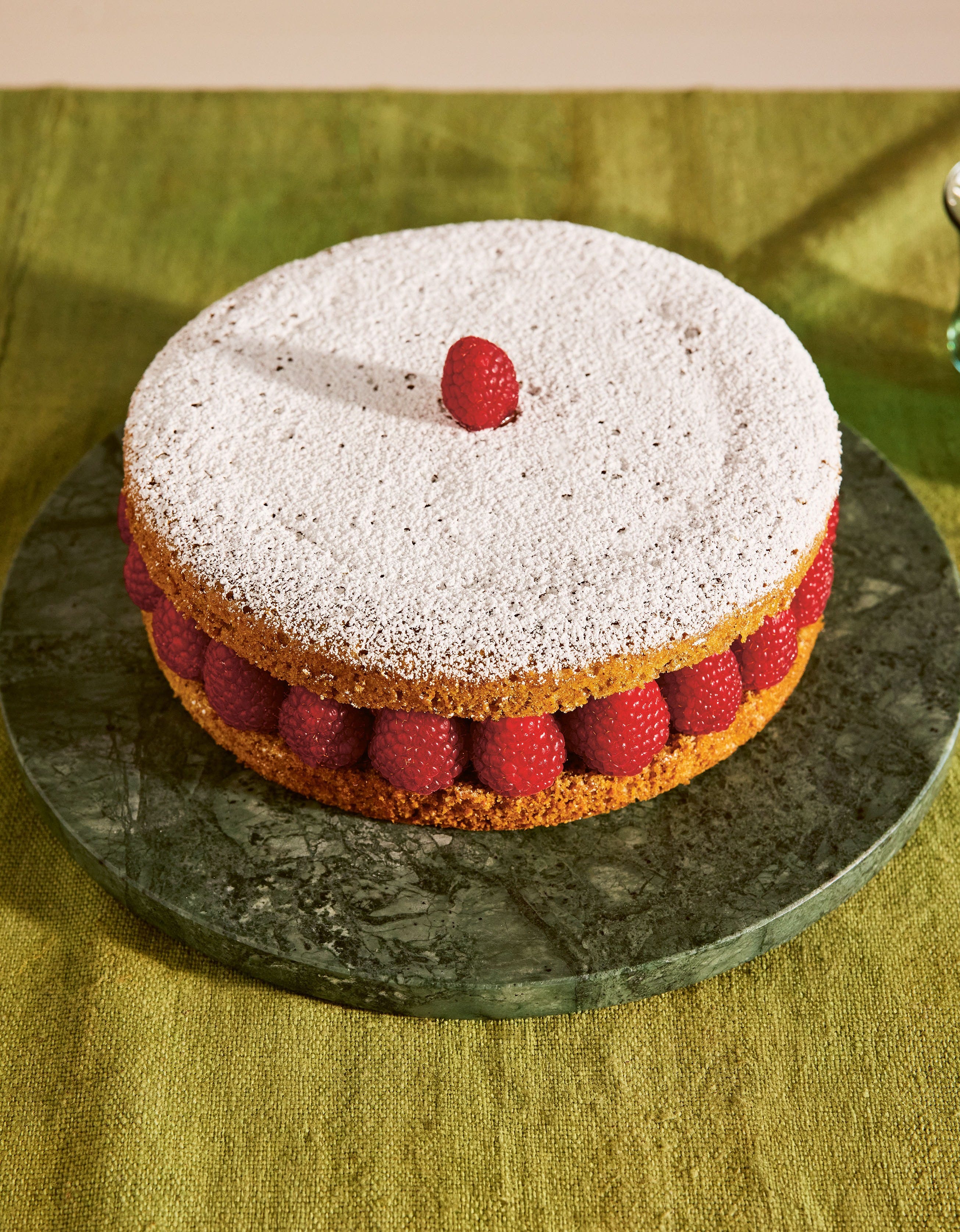
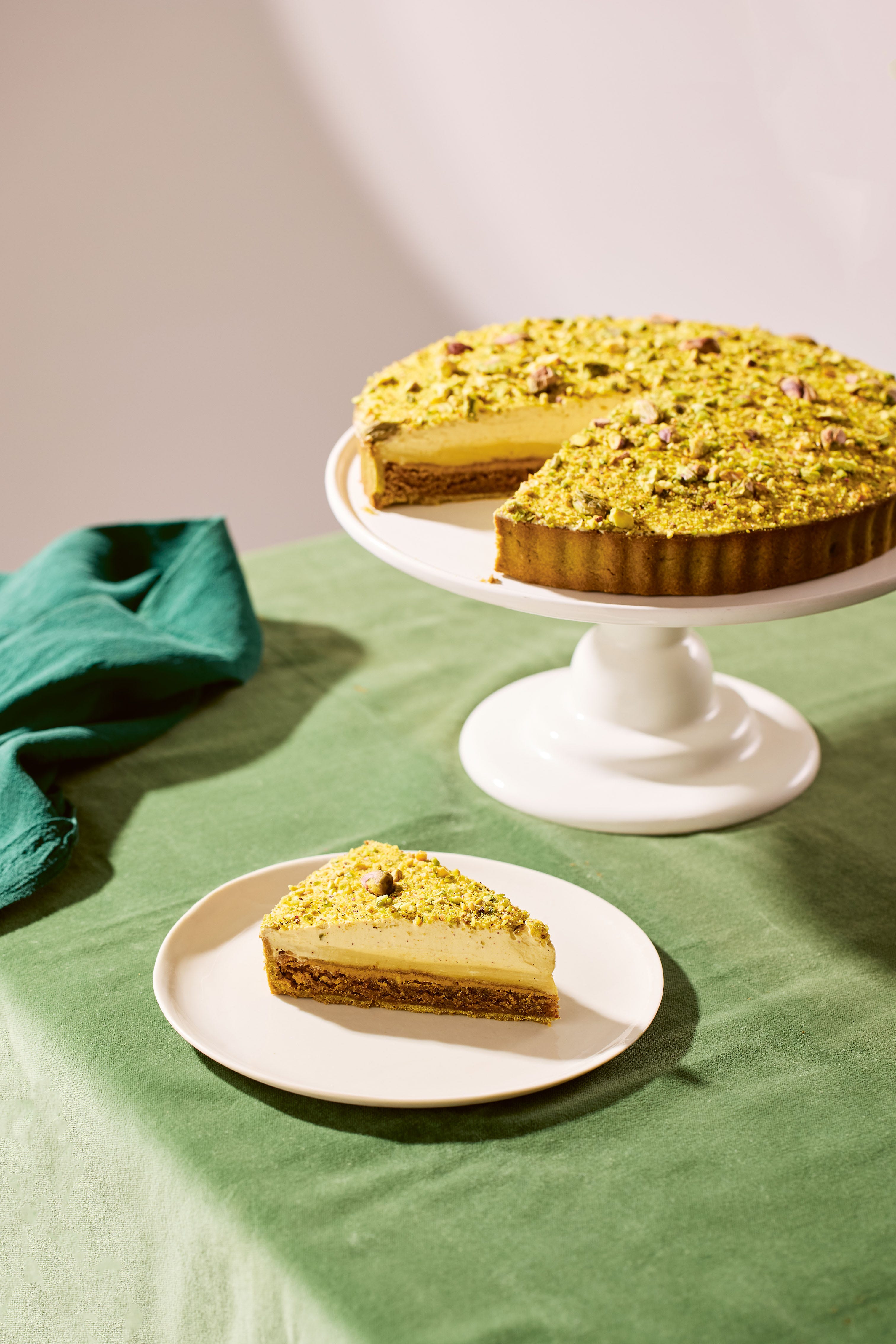
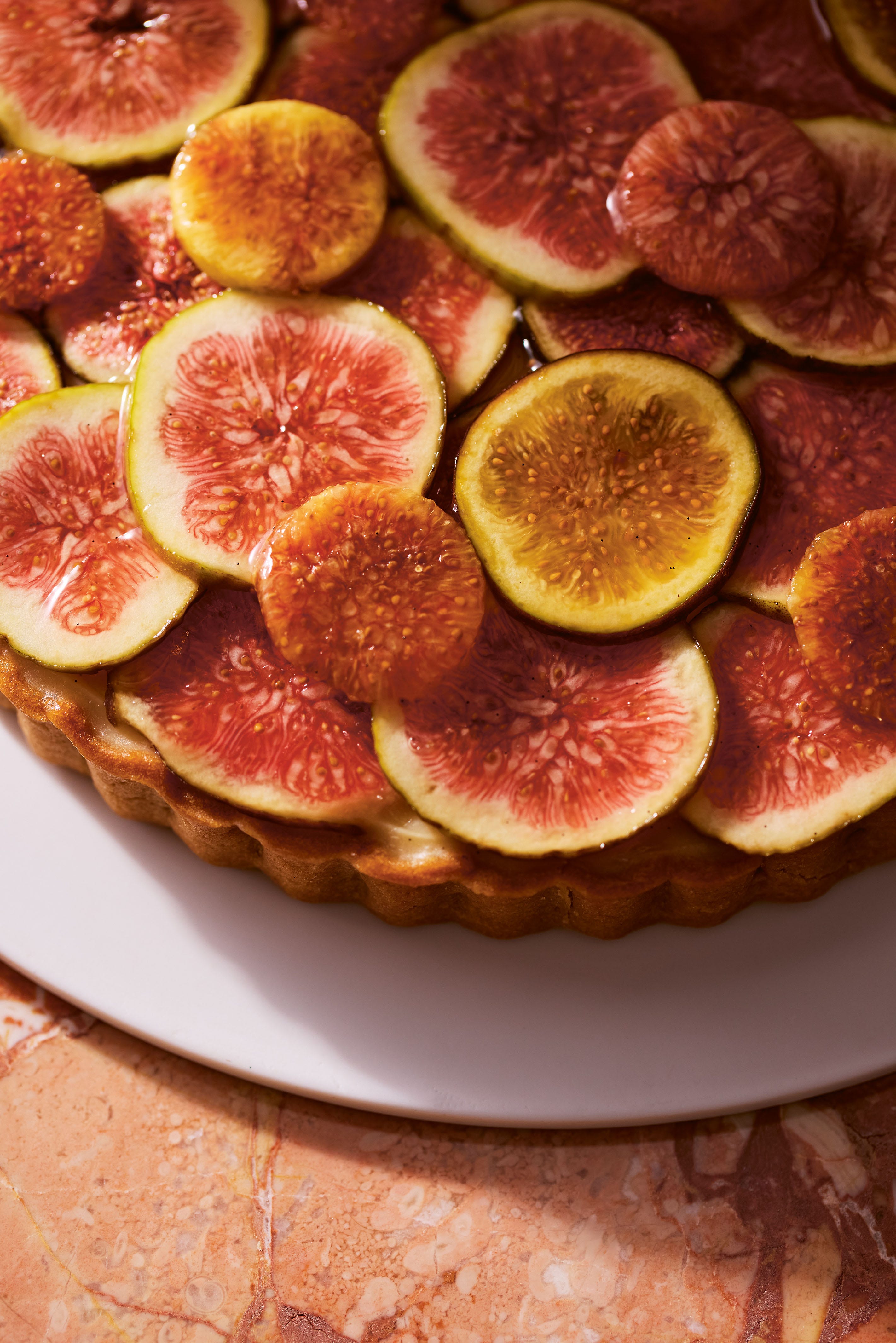
Over on KP+, I get to share another brilliant plant-based baking recipe from Beyond Baking: Pistachio Cream Dream Cake. Originally with raspberries, I’ve tried it with figs, and it is GREAT. There are also a couple of aquafaba performance tests. Click here for the recipe.
What’s KP+? Well, it’s the level-up version of this newsletter. By joining KP+, you will support the writing and research that goes into the newsletter (including the commissioning - and fair payment - of all the writers), join a growing community, access extra content (inc. the entire archive) and more. Subscribing is easy and costs only £6 per month or £50 per year. Why not give it a go? Come and join the gang!
Love,
Nicola
To Cake Infinity… And Beyond!
Imagine a world where eggs and dairy don’t exist.
There are still cakes there - lots of them! Creamy mousses, croissants, puddings and ice cream galore. And when you taste them, they are rich, flaky, soft, airy, tender and lovable in all the ways you expect. But no butter, no eggs, no cream and no milk went anywhere near them. Is that a world you want to live in? Because PLOT TWIST, we already do! Okay, not the part about eggs and dairy not existing. But plant-based desserts that rival their traditional counterparts - they are very much here.
This is the place where Philip Khoury, an extraordinary patissier, chocolatier, and award-winning author, works. Over the last 7 years, Philip has been entirely rewriting the script of baking. It’s not so much learning a new language as creating one. From developing recipes to launching the delectable Khoury’s, a London-based chocolate studio that produces masterwork chocolate bars like the Beirut Bar (almond milk chocolate layered with orange blossom caramel, baklava, and cashew crème developed initially for a charity bake sale) inspired by his Lebanese heritage, he practices all he preaches whilst generously sharing (in edible and readable forms) all of his research.
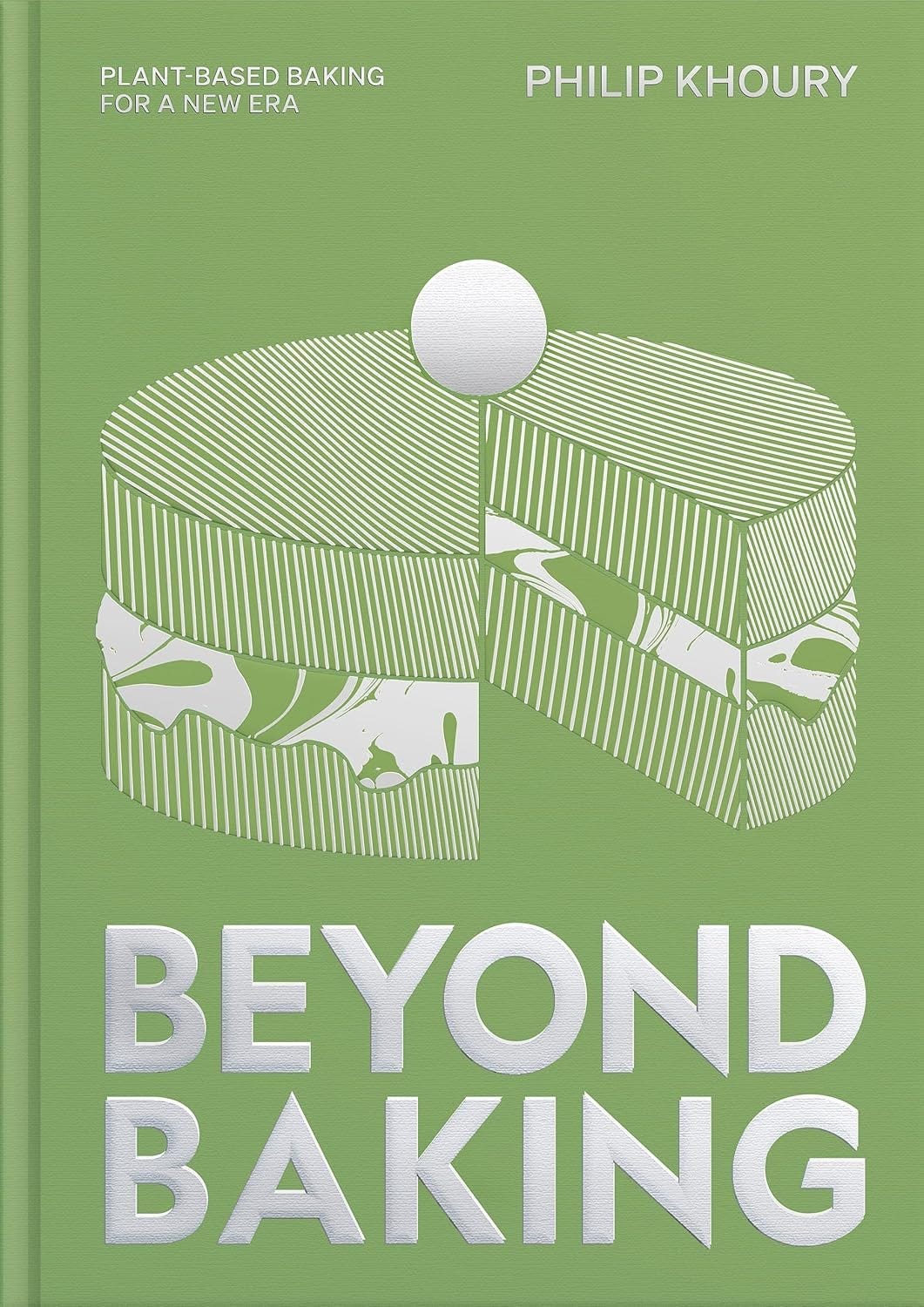
Khoury’s second book, Beyond Baking: Plant-Based Baking for a New Era (Quadrille, 2025), which is out in just a few days, follows his award-winning debut, A New Way to Bake. While the first book introduced plant-based takes on familiar favourites - think fluffy scones, lemon loaves, tiramisu, and crème brûlée - Beyond Baking ventures further into the baking multiverse with laminated pastries, savoury bakes, and more complex desserts. It is a true resource and, honestly, a gift to bakers. It’s rare to find a book that challenges and enhances your understanding of ingredients. I can literally feel my mind expanding when I read Philip’s recipes.
Despite having no eggs or dairy, the ingredient lists are all… shockingly familiar! No unusual gums, pastes or powders, just good quality, pantry-based staples that you - mostly - wouldn’t have to visit a speciality shop to get. This is at odds with what most of us, unfamiliar with plant-based baking (and, honestly, a little bit cynical about it), might imagine.
Intrigued, I visited Philip at his East London production kitchen to learn more about his world — from laminating croissants with olive oil to the alchemy of chocolate, and to understand why so many of us still misunderstand (and perhaps overcomplicate) plant-based baking.
Know the rules, then break the rules.
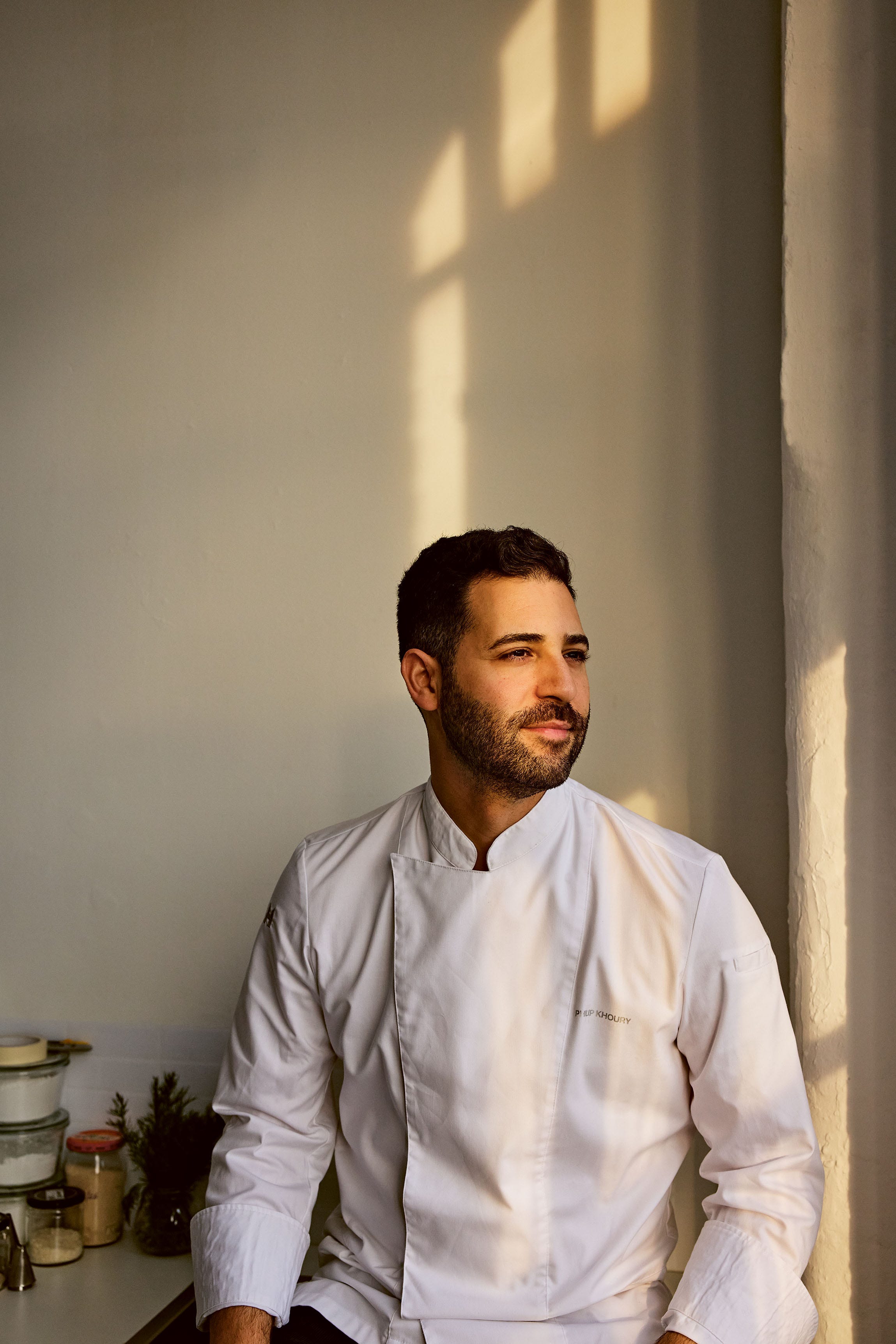
Traditional baking is a language that Philip Khoury speaks fluently. After graduating from university in Sydney, he deviated from this initial path and trained in some of Australia’s most prestigious kitchens, including Quay with Peter Gilmore and the Shangri-La with Anna Polyviou. He eventually became head of research and development for Adriano Zumbo, the pâtissier famed for his wildly inventive and intricate desserts.
It was under Zumbo that Khoury honed his rigorous approach to recipe testing and innovation. “Adriano wasn’t textbook scientific, but he had an incredible intuitive grasp of ingredients,” Khoury recalls. “He’d sketch an idea, and I’d have to make it real. That’s where I learned to trust repetition, to test something over and over until it worked.”
After three and a half years in the role, Khoury took a trip to London, where he accepted the job of Head Pastry Chef for Harrods. It was around this time that his interest in plant-based baking began. “A friend said, what about vegan pastry?” he recalls. “I dismissed it straight away. I thought about it for a second and said, no, it’s not possible… Everything has eggs and dairy.” But the question lingered. “That statement haunted me,” he says. “Was that really the only way?”
It makes sense - off the back of working with Zumbo, known for desserts that defy gravity, as well as combining multiple elements like mousse, ganache, chiffon, syrup, crème brûlée, water gel and dacquoise in one dessert (the famous V8), how hard could it really be to create a pastry without butter?
At first, his experiments leaned towards the professional sphere: recipes built with additives, emulsifiers and specialist ingredients that only industry chefs (or the most obsessive home bakers) would ever track down. But as a book concept, it didn’t work. Spurred on by his (and my!) agent, Emily Sweet, Khoury pivoted towards accessibility.
What if the recipes used only the kinds of ingredients a home baker might already recognise? It was a light-bulb moment. “It made me question whether all this ‘stuff’ is necessary. And is this the reason why so many people are getting turned off? It’s like we’re going down this ultra-processed, ultra-refined, ultra-manipulated path.”
Once he was forced to use the simple ingredients available in any home baker’s pantry, he started to make massive breakthroughs. ‘We have so many naturally plant-based ingredients that have functionalities that we’re just not using, because we’ve always stuck to the framework that is provided by traditional pastry and traditional ingredients. I just needed to find new ways to combine them.”
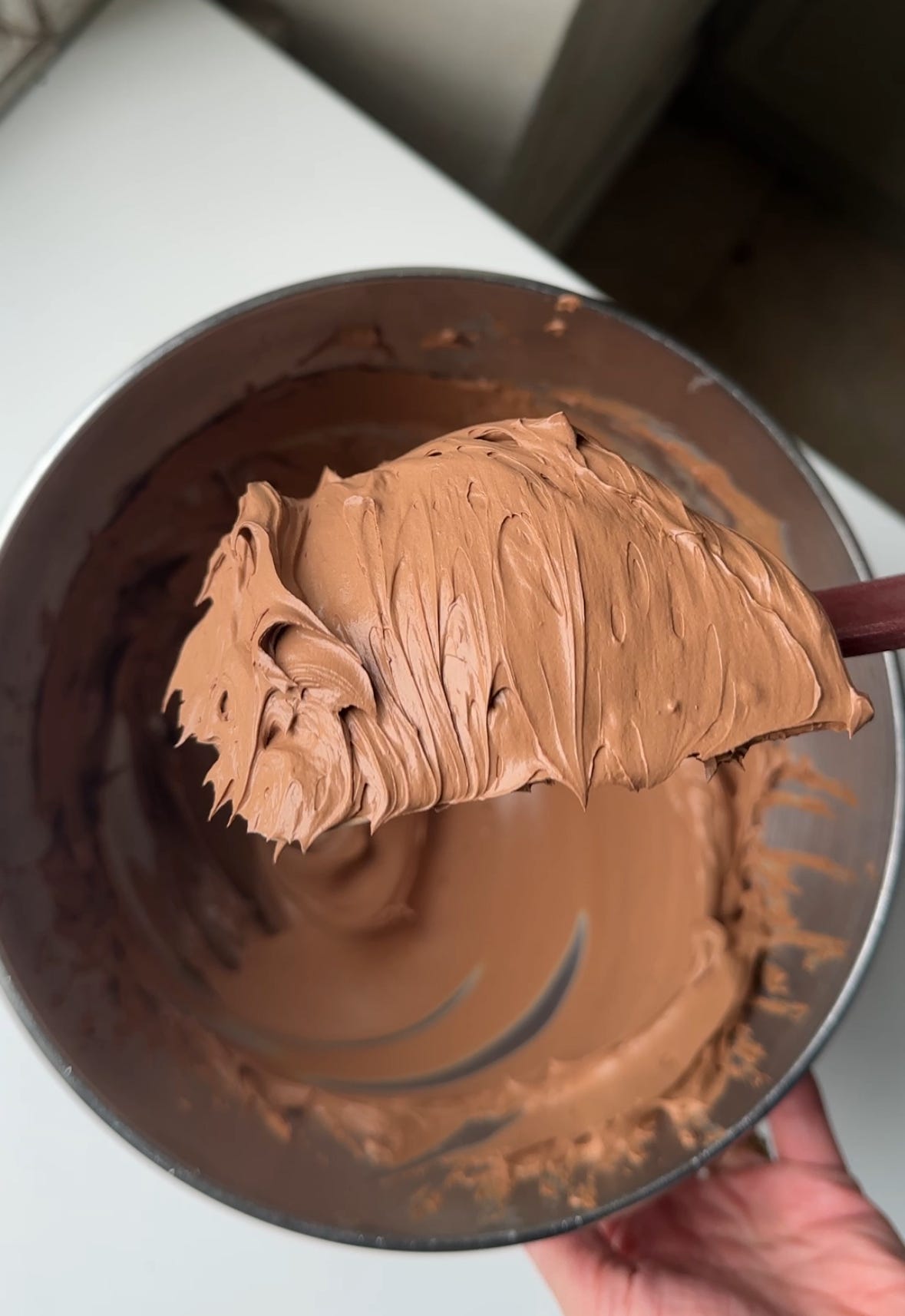
One of the most striking things about the recipes in ANWTB and Beyond Baking is their simplicity. You open up a plant-based baking book and expect to see a list of ingredients as long as your arm. Not so. Most of the recipes in Khoury’s books have fewer than 10 ingredients (standard for baking books) and are all easily recognisable. This is - of course - by design! “People assume plant-based baking will mean expensive replacements and additives,” says Khoury. “I wanted to show you can achieve texture and flavour with simple, recognisable ingredients. Chocolate, for example, is mostly fat. If you mix it with water or plant milk, you can create mousses, creams, or even ganaches. No egg substitutes needed.”
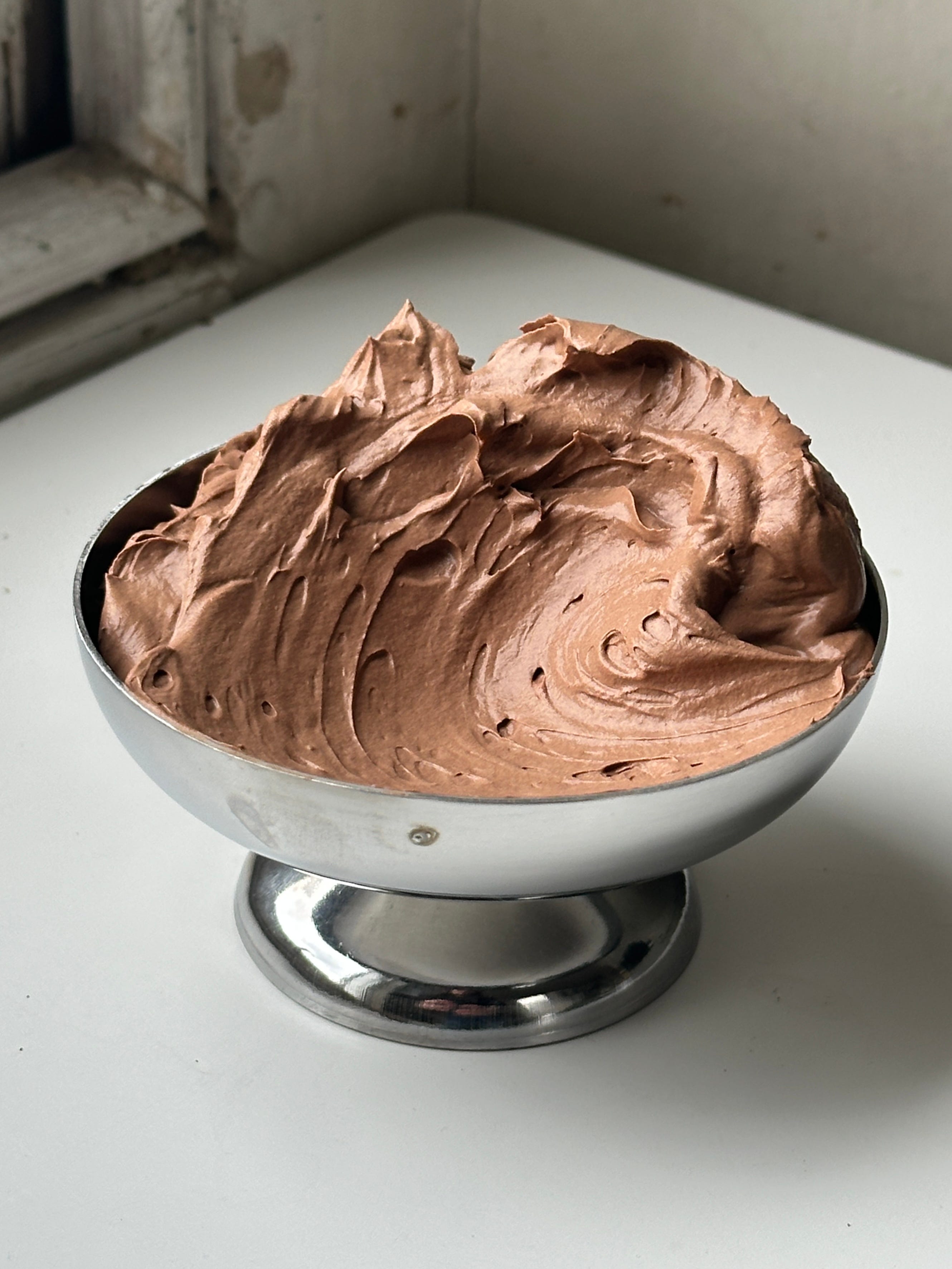
So, I ask, how does one code-switch from decades of traditional baking to suddenly using all plant-based ingredients? “I’d been developing recipes for years, so I already thought in proportions; How much sugar, how much fat, how much liquid. Switching to plant-based was about reframing those ratios.”
A lesson in pound cake
It was at this point, about an hour into our conversation, that I had a real aha moment. Discussing traditional baking, Khoury used the example of Pound Cake, a cake that uses equal parts of sugar, butter, flour, and eggs.
“When you have all that egg and flour gelling, you have to offset it. That’s why you end up needing a pound of butter to soften it,” he begins. I started to become the math lady meme. Go on… “So when you take out the egg and just hydrate with water or milk, you don’t end up needing all of that fat. I’ve reduced the fat in my recipes by about 60%.”
Suddenly, my brain has a breakthrough moment. Here’s how it went: Consider that our four main pillars of baking are Flour, Eggs, Sugar and Fat. The first two are structure builders (hardening proteins in flour and eggs act as scaffolding), whilst the sugar and fat are tenderisers. In plant-based baking, you remove eggs entirely, which throws the traditional ratios completely off balance. So, trying to replace or mimic ingredients is a total waste of time. Instead, Philip has mastered the art of rebalancing. It is genius.
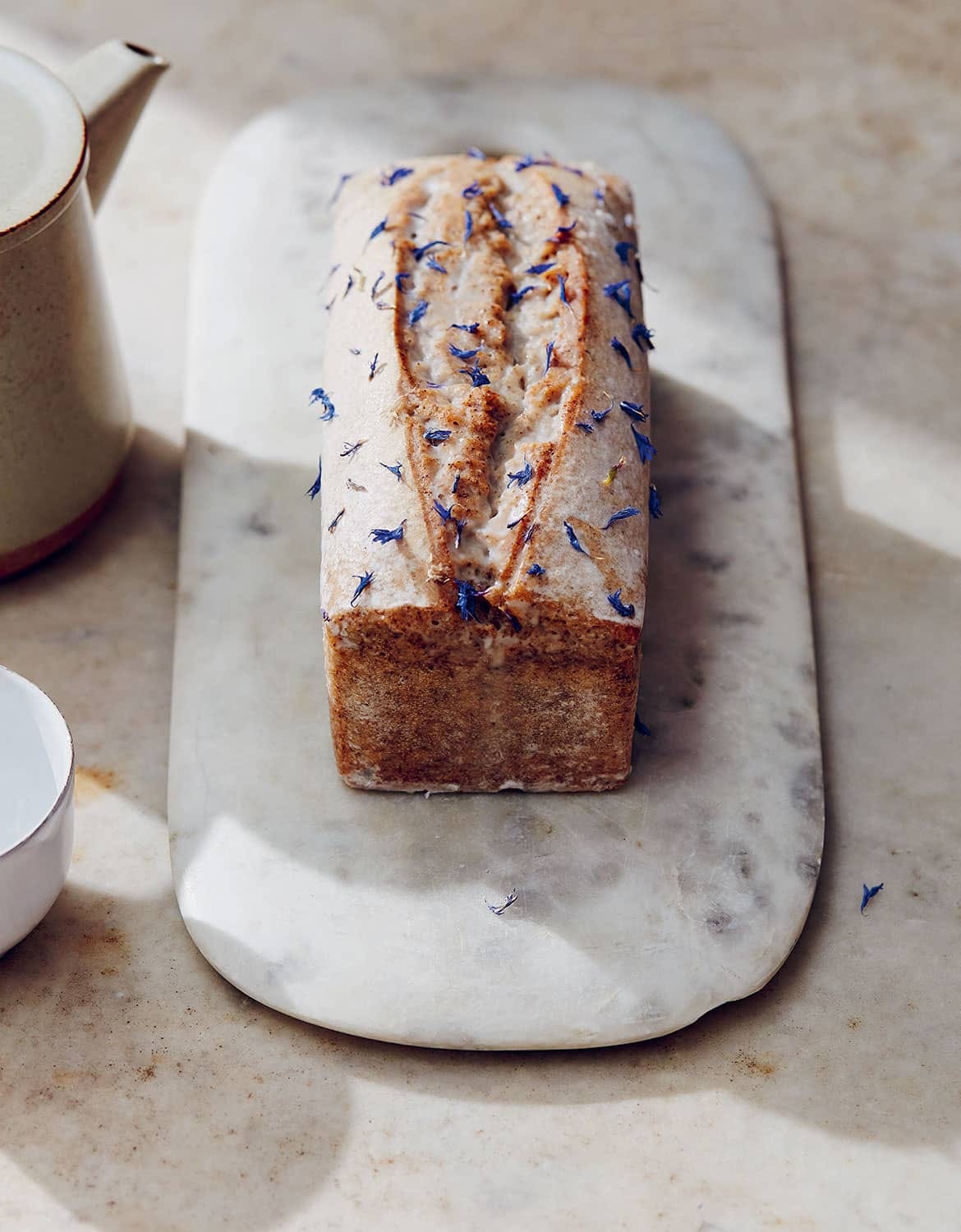
Khoury has no interest in replacing eggs. He knows there is no 1:1 substitute for all that an egg can do - coagulate, whip, hydrate - and we both have similarly cynical reactions to the ‘flax egg’ (flax seed mixed with water to form a goopy texture - though useful in some gluten-free applications, it is certainly not a be-all end-all).
We return to the example of the pound cake. “If you just swap butter for margarine,” Khoury explains, “you’d have to add a bunch of methyl cellulose and other gums to replace the [gelling abilities of the] egg. You don’t need to do all that! You can take those ingredients that we already have and tweak the formula to let them breathe and perform in different ways.”
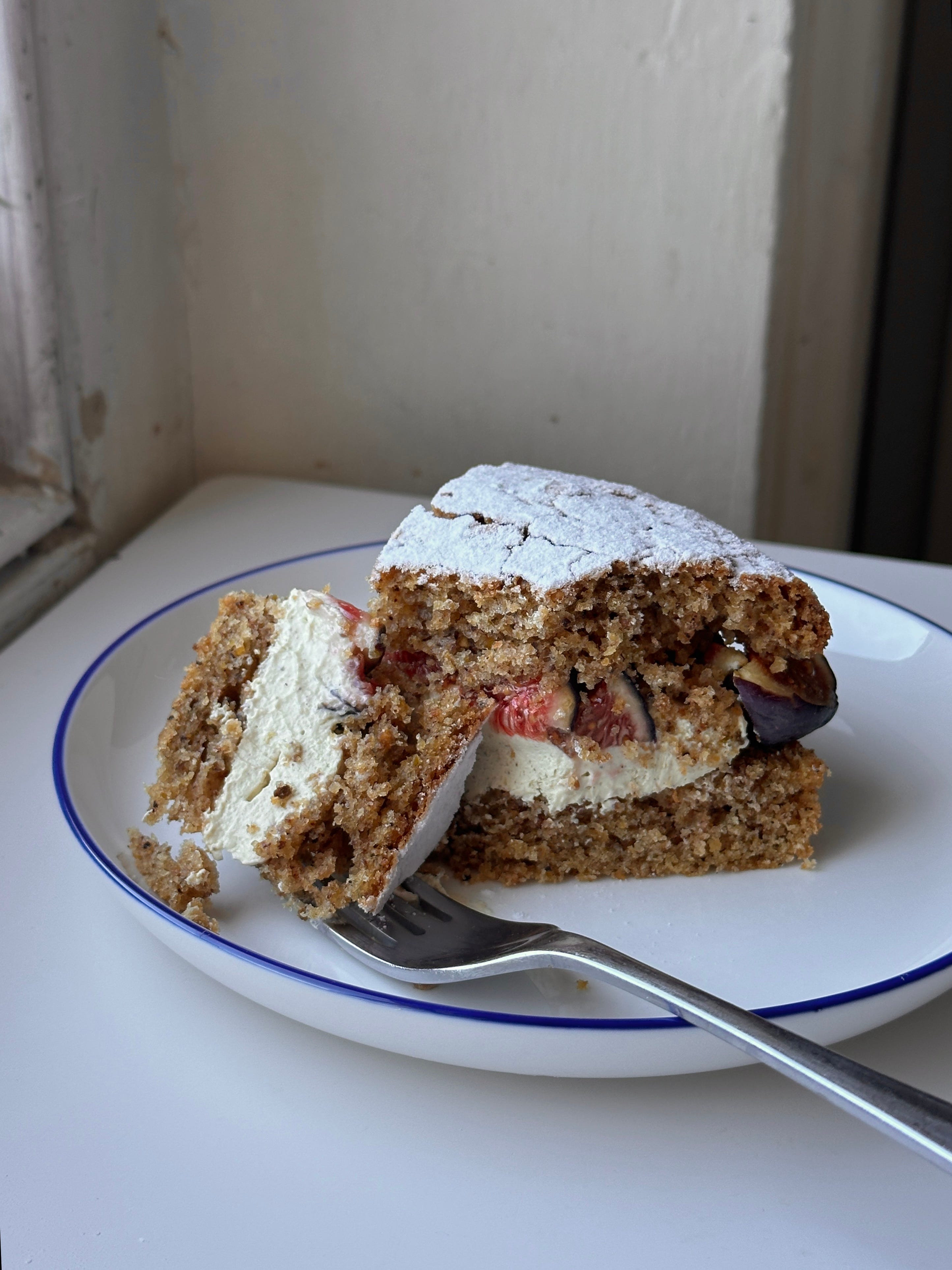
I think I may finally get it - the tools are the same, but the scaffolding just looks different to what we’re used to. Over on KP+, you can try one of the magical cakes from Beyond Baking: The Pistachio Cream Dream. I tried it out myself this week, and instead of raspberries, I adorned the cake with figs:
Chewing the Fat
In Khoury’s first book, A New Way To Bake, the focus is very much on olive oil. In Beyond Baking, one of the main innovations is a plant-based solid fat made from a blend of cocoa butter and olive oil, specifically designed for applications such as laminated pastry.
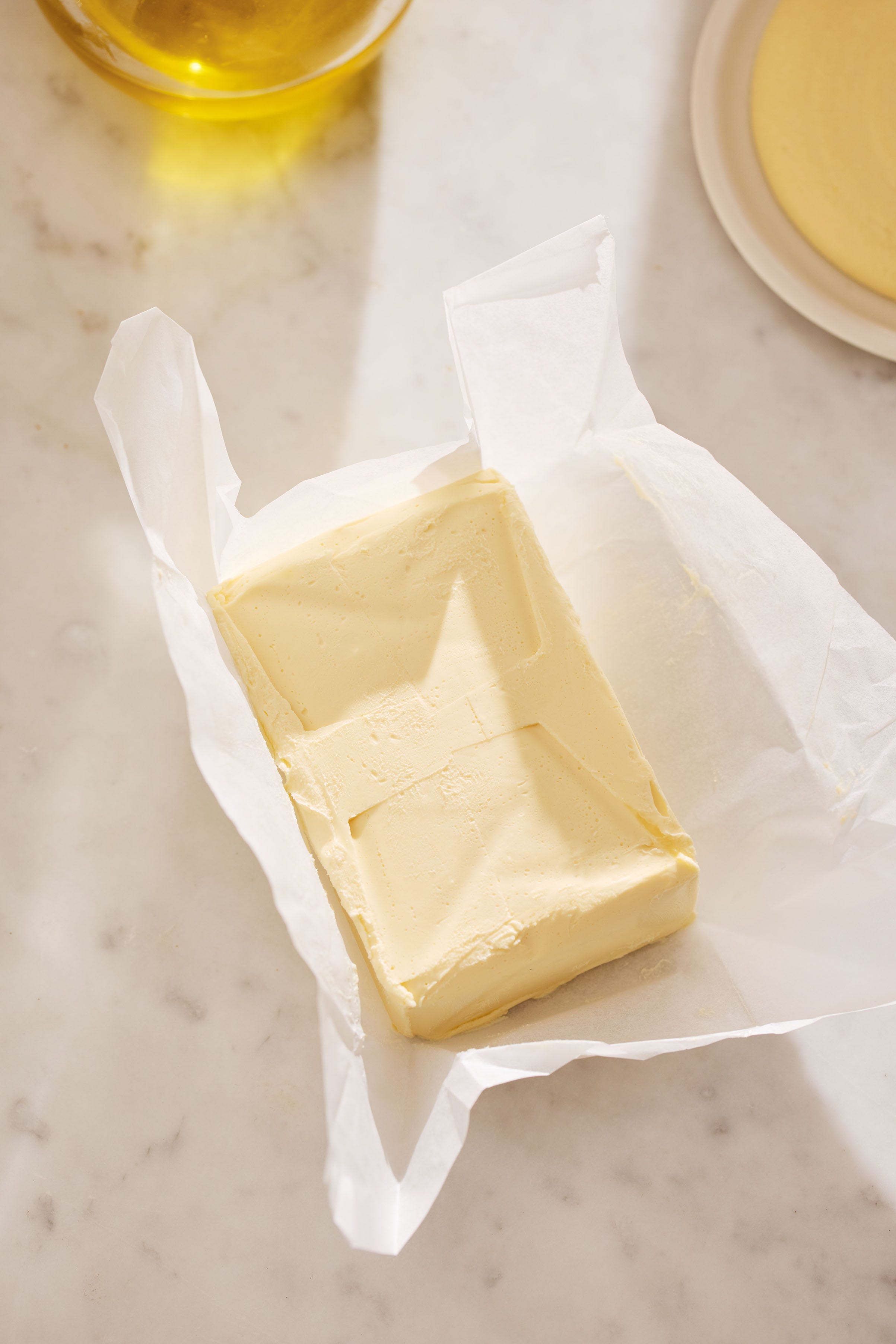
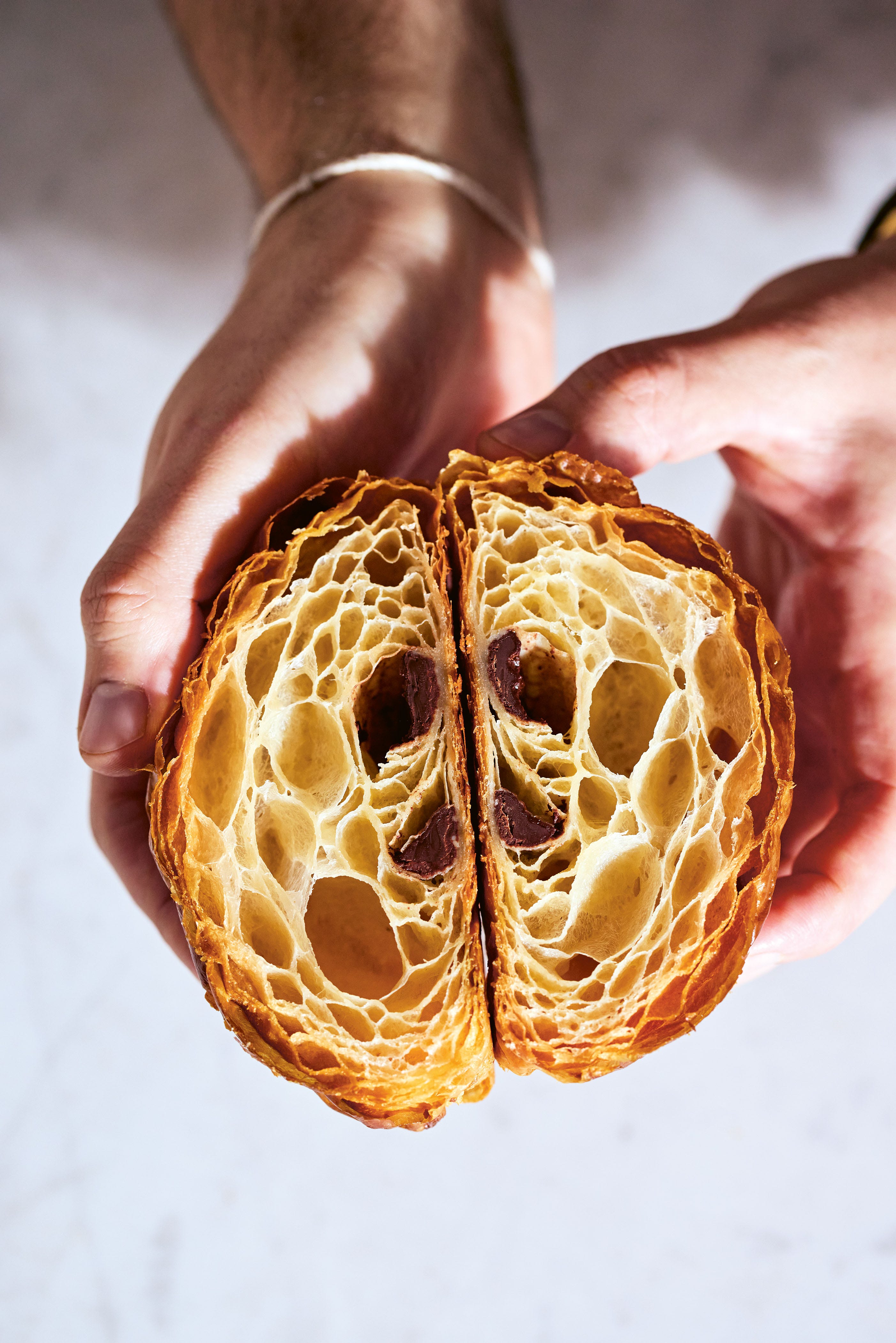
When laminated into dough, the block behaves surprisingly well. “Fresh, it tastes like olive oil, and it’s quite jarring. But once baked, most of those volatile aromas burn off and you’re left with something faintly olive, faintly buttery, but mostly just delicious.”
How did he decide on the formulation, I ask, and what are the stats of his “butter”? “I went for about 80 to 82 per cent”, he tells me, deliberately aiming at the industry benchmark. “Not just to make it recognisable, but because it gave the best texture. Cocoa butter on its own crystallises too hard, but if you mix it with olive oil in the right proportions, you can soften it and control the structure. It becomes a technical fat that you can actually work with.”
In fact, he says, it can even make croissants more approachable for bakers. “Because I’ve matched the texture of the dough to the butter as closely as possible, they roll out together really easily. In some ways, the plant-based croissant is actually simpler to make than a traditional one.” You heard it here first!
The Future
Veganism can be a charged subject, and Khoury doesn’t shy away from the hard-to-hear realities that underpin the intensive farming industries that traditional bakers rely on. I admit that it is difficult for me to read them as well, given my line of work. “The ancestors of the egg-laying hens used to lay 20 eggs a year”, he explains in the introduction of his books. “Now the modern broiler chicken will lay almost one per day.”
Hard truths aside, Khoury knows the ‘v’ word can be polarising. “It can turn people off before they’ve even tasted anything,” he says, “And I’d rather the pastry speak for itself. You wouldn’t write, ‘made with eggs and butter’ on a menu… so why should I flag that it’s plant-based?”
At the end of the day, Khoury just wants to create. “For me, it’s about expanding pastry horizons. Butter and eggs are incredible, but they’ve also locked us into certain intensive industries. I don’t think switching everything to plant-based is the solution - but diversifying where our food comes from, and showing that pastry can be delicious in other ways, is a step forward.”
So what’s next? (or should I ask, what is beyond BEYOND baking?)
“I’d love to open a patisserie that imagines what pastry would look like if it had evolved in a parallel universe - one where we didn’t rely on eggs and butter. But for now, it’s about books, chocolate, and keeping the business sustainable,” He says. “I think there’s still so much more to do - I’m just at the start of it.”
Philip Khoury is the author of A New Way to Bake (2023) and Beyond Baking (out on - PRE ORDER NOW!), both published by Quadrille. He is also the founder of Khoury’s, an East London–based chocolate studio with regular restocks and flavour drops.
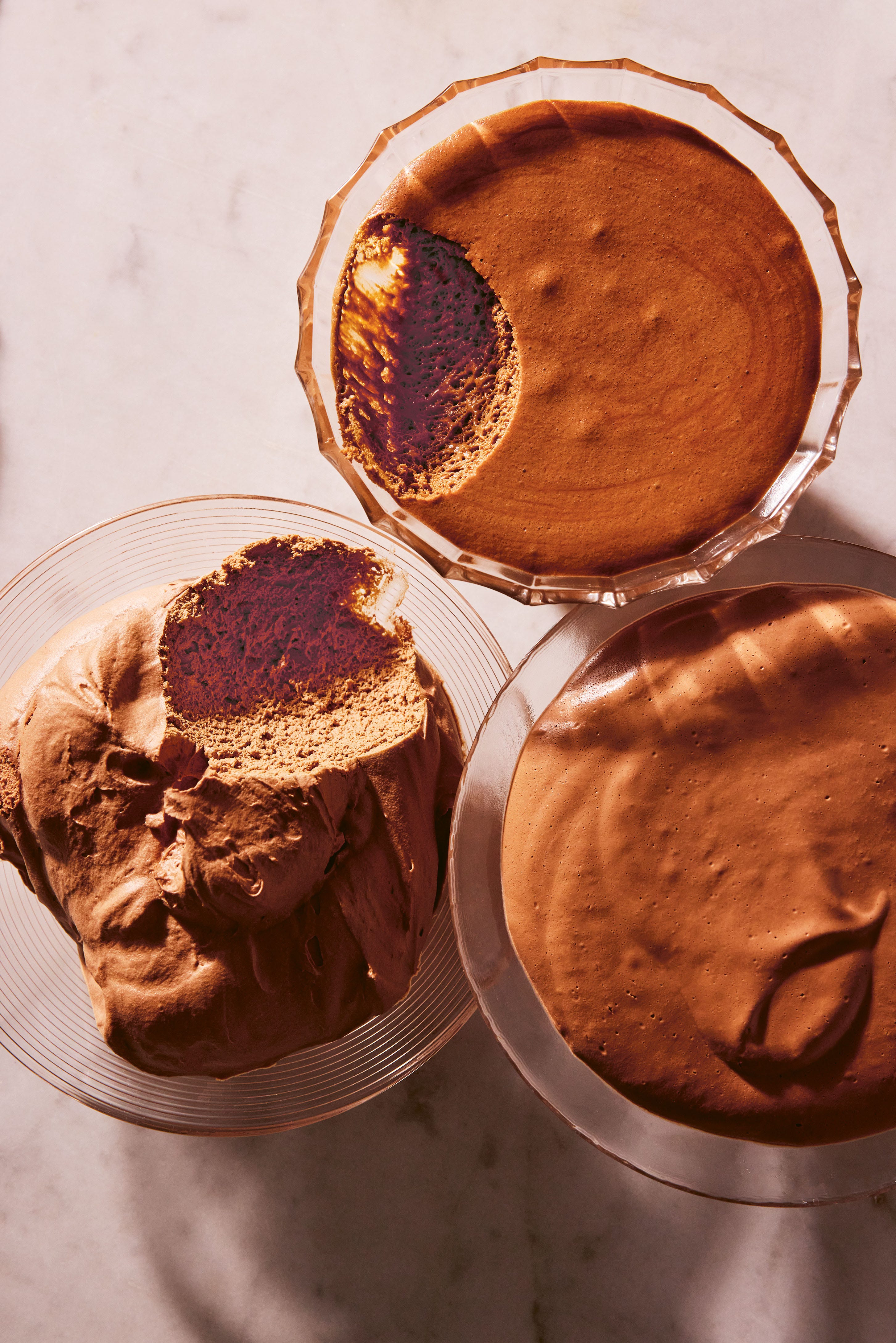
RECIPE: CHOCOLATE MOUSSE
Extracted from BEYOND BAKING (Quadrille, 2025) by Philip Khoury. Photography by Matt Russell
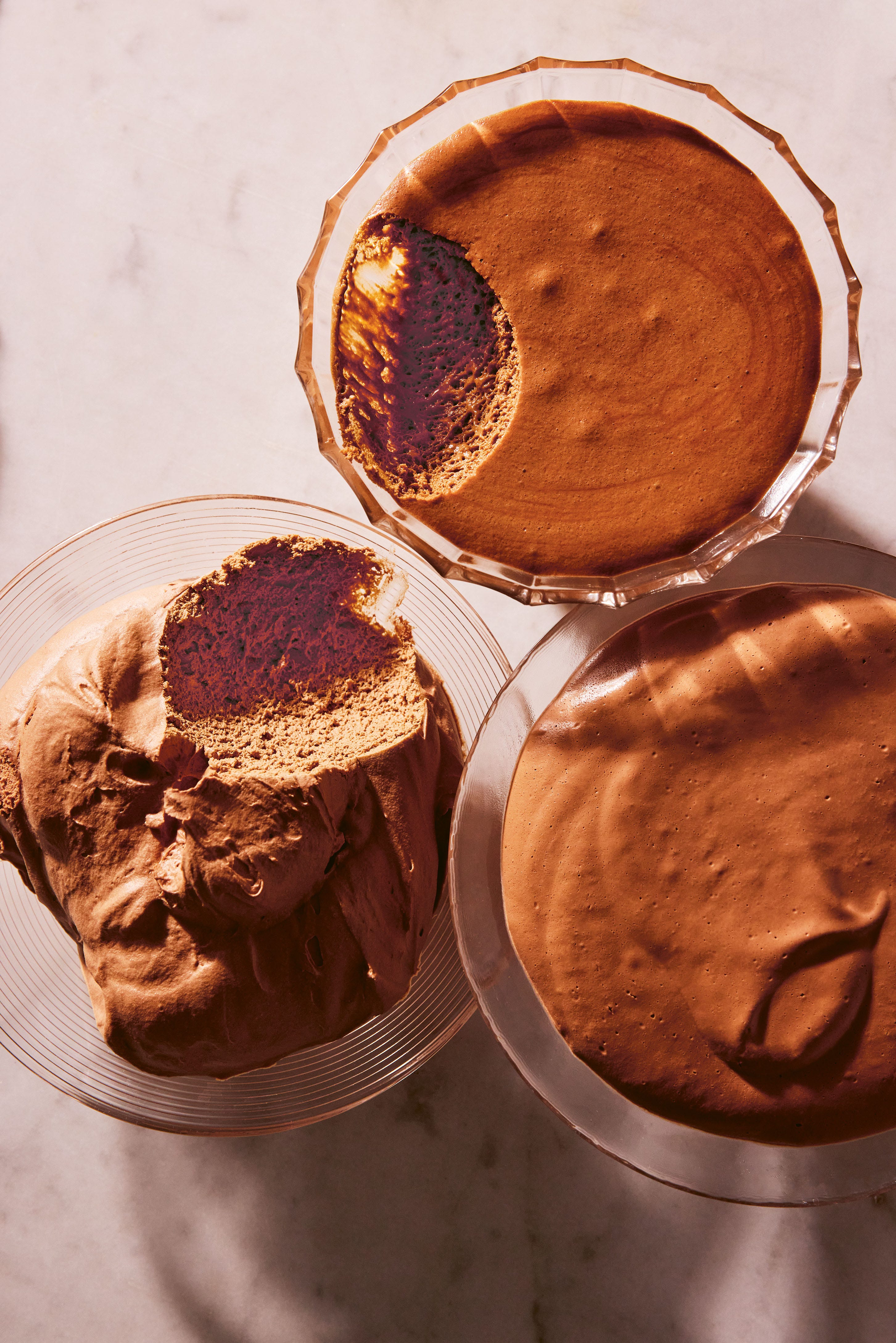
Mousse au chocolat is one of the most exquisite ways to enjoy chocolate. It works beautifully with dark chocolate containing 65–80 per cent cocoa solids. Choose one you love the flavour of. Blends with no specific origin can be further rounded out with 1 teaspoon vanilla paste or the seeds from a vanilla pod (bean). The soya milk in this recipe (although any plant-based milk can be used) can also be infused with tea, coffee, spices or citrus zest for more adventurous flavours. Once the mousse has been prepared, it can be frozen and gently defrosted in the refrigerator. Top with chocolate shavings, cocoa nibs or a dusting of cocoa (unsweetened) powder for texture and contrast.
Ingredients
A rich and pure-tasting mousse that whips directly from a blended chocolate ganache. It has a luxurious, truffle-like texture.
soya milk* (1) 200 g | 7 oz
dark chocolate min. 65% cocoa solids 250 g | 8.8 oz
soya milk* (2), chilled 250 g | 8.8 oz
*or any plant milk
Ingredients
Heat the milk (1) in a small saucepan over a medium heat until just steaming.
Chop the chocolate and place it into a heatproof jug (pitcher). Pour the hot milk over the chocolate and let it sit for 1 minute.
Blend with a hand-held blender, scraping down the sides of the jug if needed, until completely smooth.
Add the chilled milk (2) and blend again until glossy and emulsified.
Pour into a container, place a layer of cling film (plastic wrap) on the surface, and chill for at least 4 hours.
Once chilled, transfer the ganache to the chilled bowl of a stand mixer fitted with the whisk attachment and whip for 2–4 minutes until light and aerated.
Spoon or pipe the mousse into bowls or glasses and chill in the refrigerator for 20 minutes, or up to 1 day, before serving.
I’m a former vegan and used to be a pastry chef. I had a hard time recreating desserts to make them vegan so Philip’s simple approach is fantastic. A number of his recipes were published here in Australia so I got to try a few -the chocolate chip cookies are amazing - i think I better put this book on the xmas list.
I have his first baking book and it is wondeful! Although I love the taste of dairy, I love the idea of using less dairy more.