
Kitchen Project #170: Black Forest Cake
And why on earth is it ever called a Gateau?! with Camilla Wynne


Hello,
Welcome to today’s edition of Kitchen Projects. Thank you so much for being here.
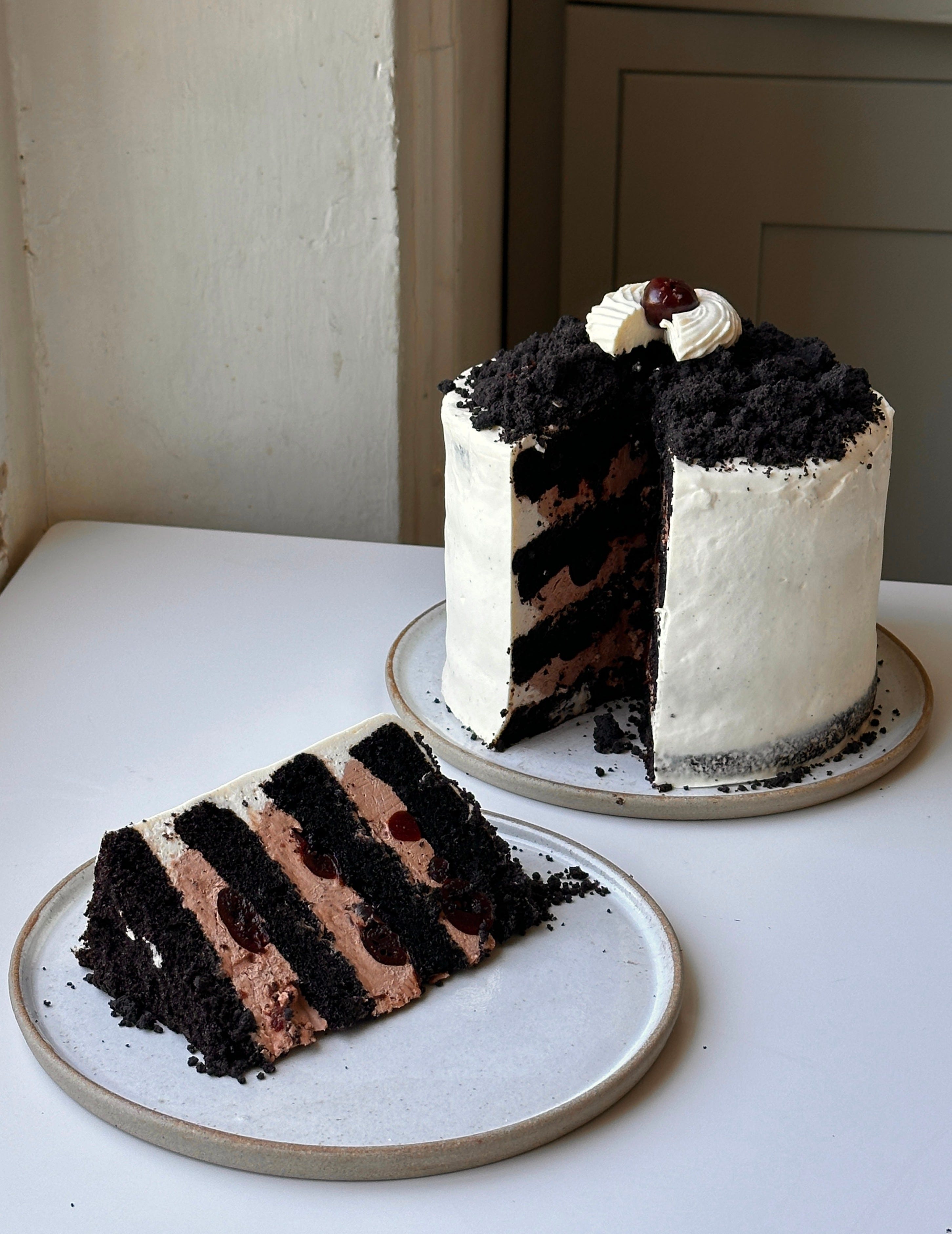
Today the brilliant Camilla Wynne is back to tell us all about the mythical Black Forest Cake. From it’s lore (authentic and commercial) to a dive into the ingredients that make it the beloved combination it is today, Camilla is also treating us to her updated version of the Black Forest, featuring gorgeous Amaro. It really is a hit.
Over on KP+, the delights continue (do they ever stop when Camilla is involved? I don’t think so!) with her more classically flavoured ‘Improved Grocery Store Black Forest Cake’ as well as an ingenious way to use up any scraps leftover from domed (on purpose!) cakes: Black Forest Rum Balls. Click here for the recipe,
What’s KP+? Well, it’s the level-up version of this newsletter. By joining KP+, you will support the writing and research that goes into the newsletter (including the commissioning - and fair payment - of all the writers), join a growing community, access extra content (inc., the entire archive) and more. Subscribing is easy and only costs £6 per month or £50 a year. Why not give it a go? Come and join the gang!
Love,
Nicola
Celebrating One Year of SIFT: Book Talk (with Cake!) on Wednesday 11th June At Toklas Bakery, London
I’m VERY excited to announce that on Wednesday 11th June, I’ll at Toklas for a very special SIFT / Pastry themed talk… with cake! It’s hard to believe that I’ve never actually done a book talk / SIFT official event in London (other than the launch, which was at Toklas) since publishing SIFT last year.
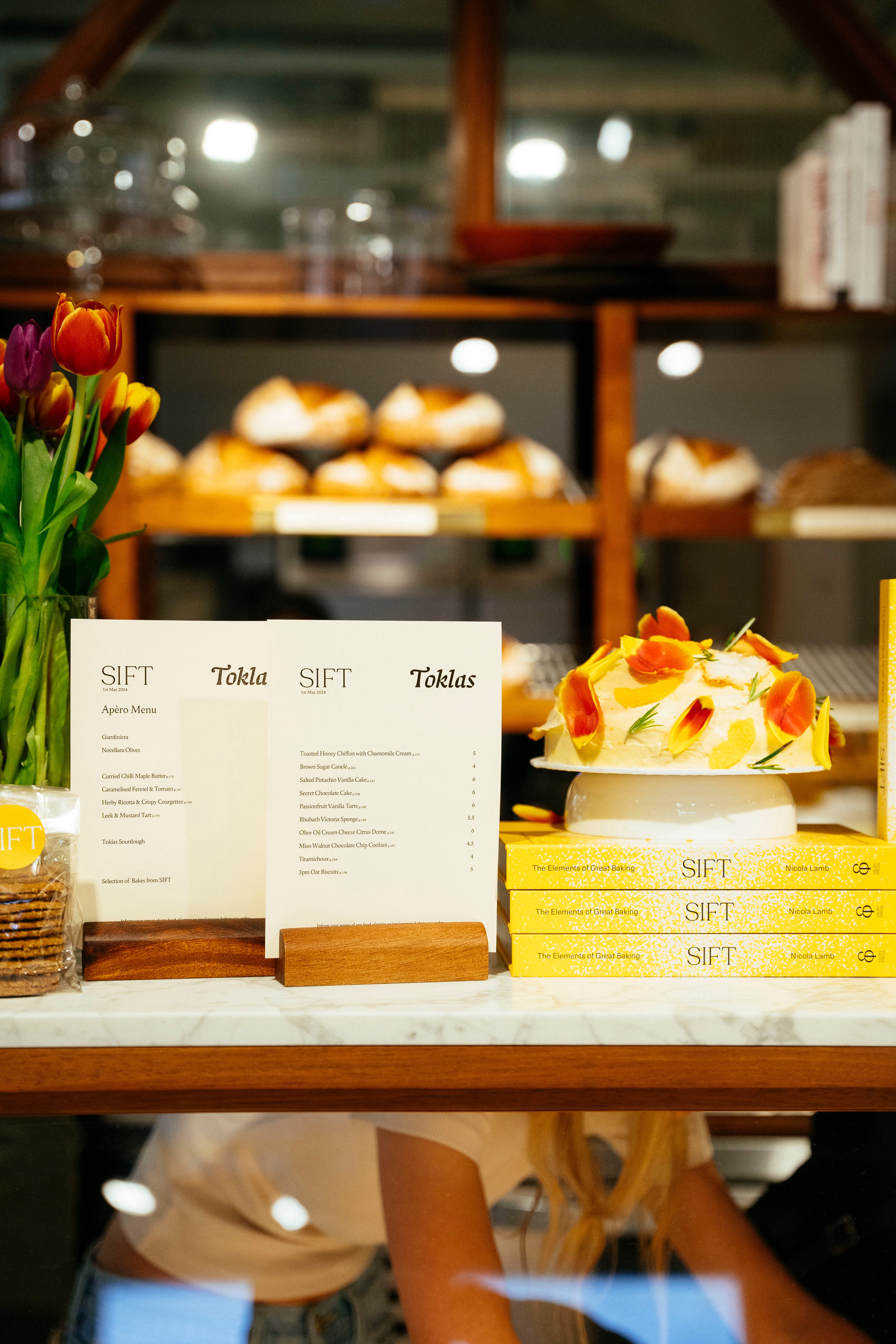
So, for its first birthday, we’re hosting a book talk with a SIFT inspired treat prepared by the amazing Toklas bakery team (and obvs I’m going to make extra tasters for everyone - maybe some savoury bites for when you arrive?! Excited to plan this). I’m THRILLED, too, that Adam Sellar - my former head baker and my bread hero - will be joining me in conversation.
Tickets are £15 and include the talk and the bake. Availability is limited so click here to get your ticket. Doors open at 6pm, talk starts at 6:30 and you’ll be out, with cake in hand, by 8pm.
Black Forest Cake: Who Is She?
Schwarzwalder Kirschtorte, or Black Forest cake in English*, is a creamy layered delight composed of chocolate sponge moistened with kirsch, sour cherries and whipped cream, cloaked in chocolate shavings. Or so I’ve been told. I’ve never actually had the real thing! Described as a “baroque confection” in the Penguin Companion to Food, its origins are, like many a famous dish, disputed. Was it created in 1930s Berlin? Tubingen? Or back in 1915 in Bad Godesberg? None of those are actually in the Black Forest region of Germany. No doubt the name instead refers to the region where the cherries featured in the cake were harvested—both in their original form and distilled into kirsch, a cherry brandy. Either way the cake is around a century old and likely one of Germany’s most recognizable culinary exports—though just how recognizable is up for debate.
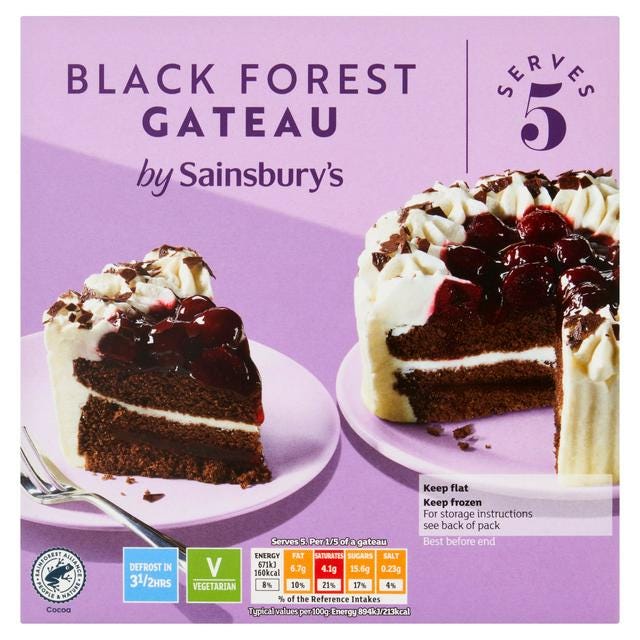
*It’s unclear to me why it’s often called Black Forest Gateau in English. While, as a former Montreal, I do enjoy a bit of franglais, it makes no sense to me to call a German cake by the French word for cake, though I suppose it does make it sound fancier.
I Knew Her Sister
Having introduced you to the original Black Forest, I think it’s important to make clear here that my reference point is not at all the kirsch-laced German original, but the North American supermarket variety that adopted the highlight reel of flavors and dumbed them down. This was actually a global phenomenon, starting with the dissemination of the cake by German immigrants during the Nazi era, and ultimately becoming wildly popular worldwide, while apparently losing popularity in its home country.
Of course, when a recipe begins to change hands, travelling far and wide, it inevitably morphs and changes in service of its environment. In Muslim countries, the kirsch is omitted, while rum is substituted in Trinidad and Tobago. In Singapore, blueberry jam takes the place of cherries.
Where I grew up, in the Canadian Prairies, Black Forest was a cake you could always find in almost any grocery store. It was decidedly kirsch-less, barely a cherry to its name save the bright maraschinos on top, made in some industrial kitchen, often packaged in a plastic cake dome, ready to be carried home. I LOVED it. It looked how I, a child, felt the best cake should look—over the top and covered in chocolate. Decades later, it’s still true of Canadian children. My friend, a talented cook, told me recently that her 10-year-old son must have a Black Forest cake every birthday and that it must absolutely not be homemade but from the open refrigerator case at the local Thrifty’s grocery store.
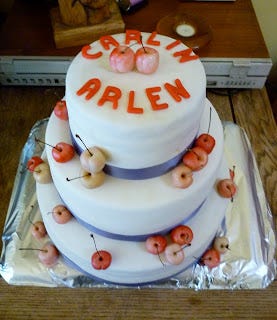
Many years ago, I actually made that same friend a Black Forest wedding cake, covered in fondant and decorated with marzipan cherries. It was so unrelated to the original except, again, in its primary chocolate and cherry flavors, that I probably shouldn’t have called it that at all. I used sweet cherry brandy and salted butter for the buttercream, because it turned out the little island I was baking on had very little variety in its grocery offerings. Just goes to show that Black Forest is really truly in the public domain now.
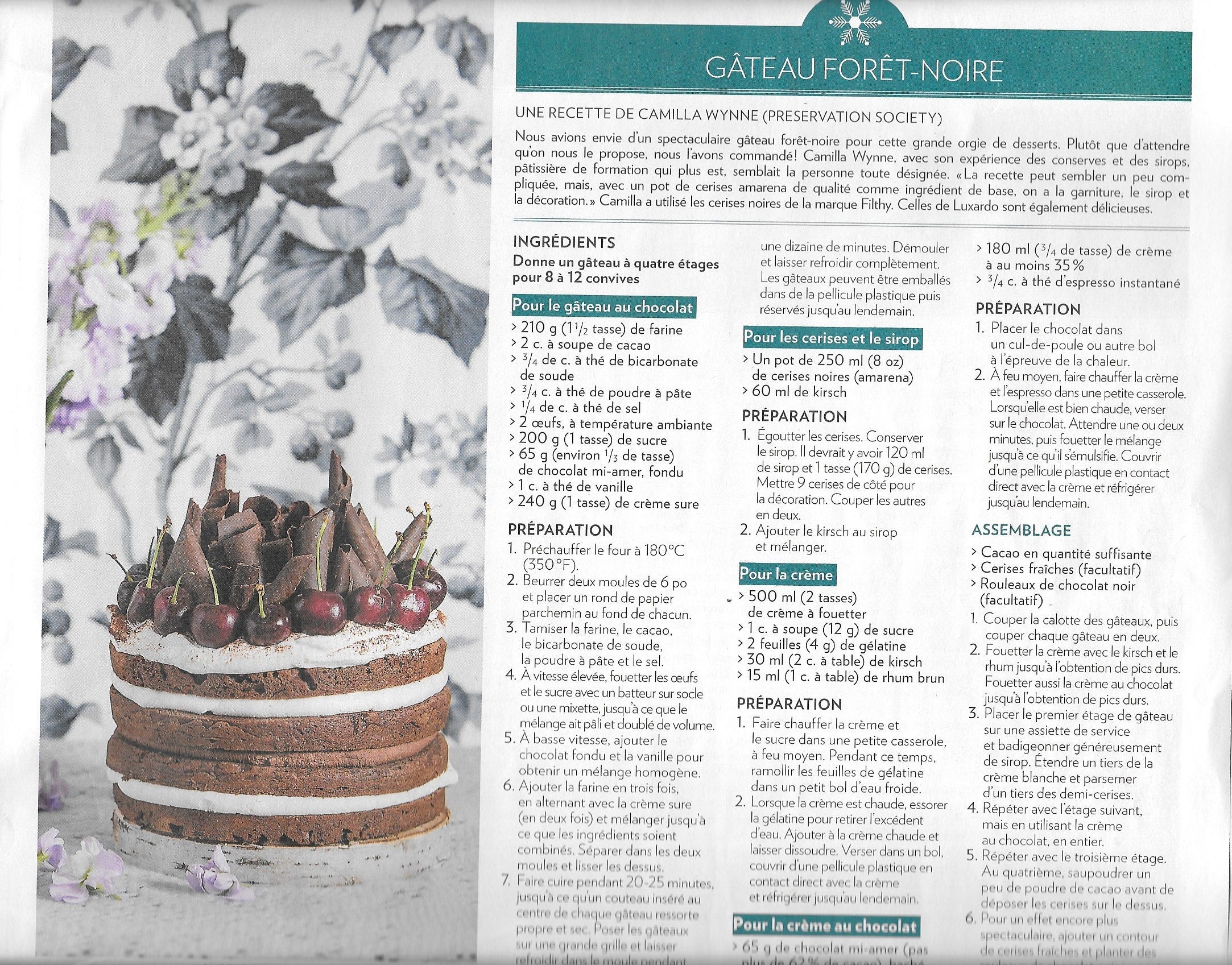
In fact, I’m pretty sure my first published recipe was for a Black Forest cake, and frankly it was terrible. I’m so happy to be able to redeem myself today.
A Tale of Two Black Forest Cakes (Both Only Loosely Related to the Original)
When I started developing my Black Forest cake recipe, I knew it would be somewhere in between the fabled original and the one I grew up with. I didn’t want to reinvent the wheel but I also wanted to put my own spin on it. Lucky for me, there’s currently a shortage of kirsch, the alcohol traditionally used in Black Forest cake, and thus the Amaro Black Forest was born.
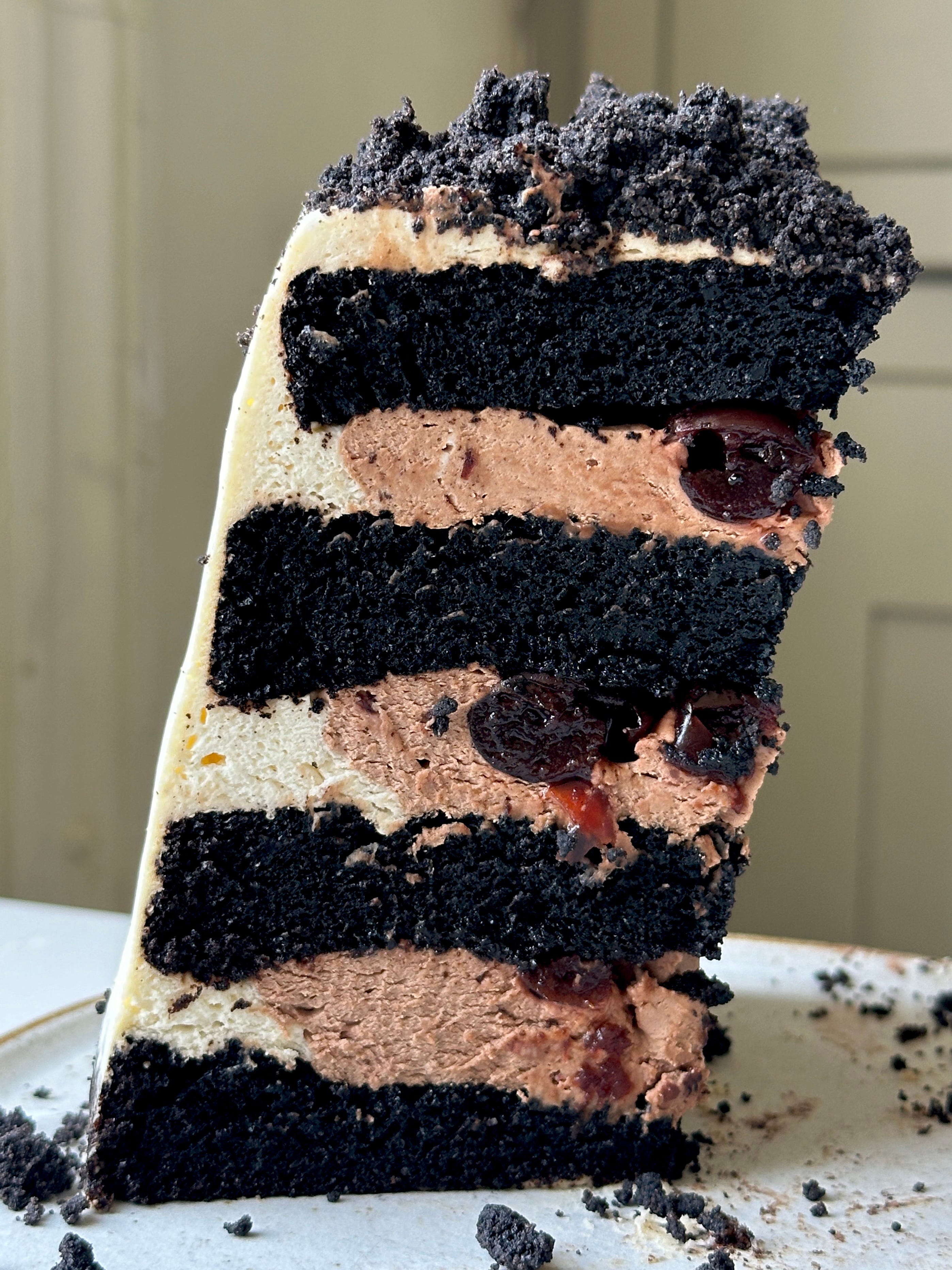
Frank Marrenbach, the manager of a Black Forest hotel, certainly wouldn’t think much of me. When asked about Delia Smith’s use of brandy rather than kirsch in her recipe, he called it “a crime to violate such a beautiful cake.” (It seems not every German considers Black Forest a boring cake! To quote culinary store owner and German native Andreas Klöckner, in the NY times “It is basically just a standard, not-so-interesting cake,”) However, I often enjoy adding a little bitterness to balance something sweet, so the bitter aperitif seemed like a natural choice. The recipe came together quickly, but I couldn’t help but feel I wanted to pay more homage to one of my favorite childhood cakes. I had a nice chocolate cake and a stable cream ready to go—I would just need to tweak a few things to make something a little more nostalgic and family friendly. It would be just as delicious but a little less pastry nerd, a little less sexy. I would call it the Improved Grocery Store Black Forest.
The Cake
When I sat down to plan my first test bake, it was natural to use my back pocket chocolate cake recipe that I always use when building chocolate layer cakes. While the original Black Forest was most certainly a cocoa sponge cake, we North Americas don’t have much of a tradition of baking sponge cakes, with the exception of chiffon. Sponge cakes are light due to their whipped egg base—perfect for layering with cream. My chocolate cake is denser and richer, tender even when cold because it’s oil-based, with hints of bitterness from the cocoa and coffee, and with a slight buttermilk tang. And you can make it by hand in one bowl! To be honest, I might’ve tried a lighter cake for the sake of comparison, but then Nicola visited and tried my first test and declared it successful, so I moved on to tweaking other components, like the too-soft whipped ganache filling.
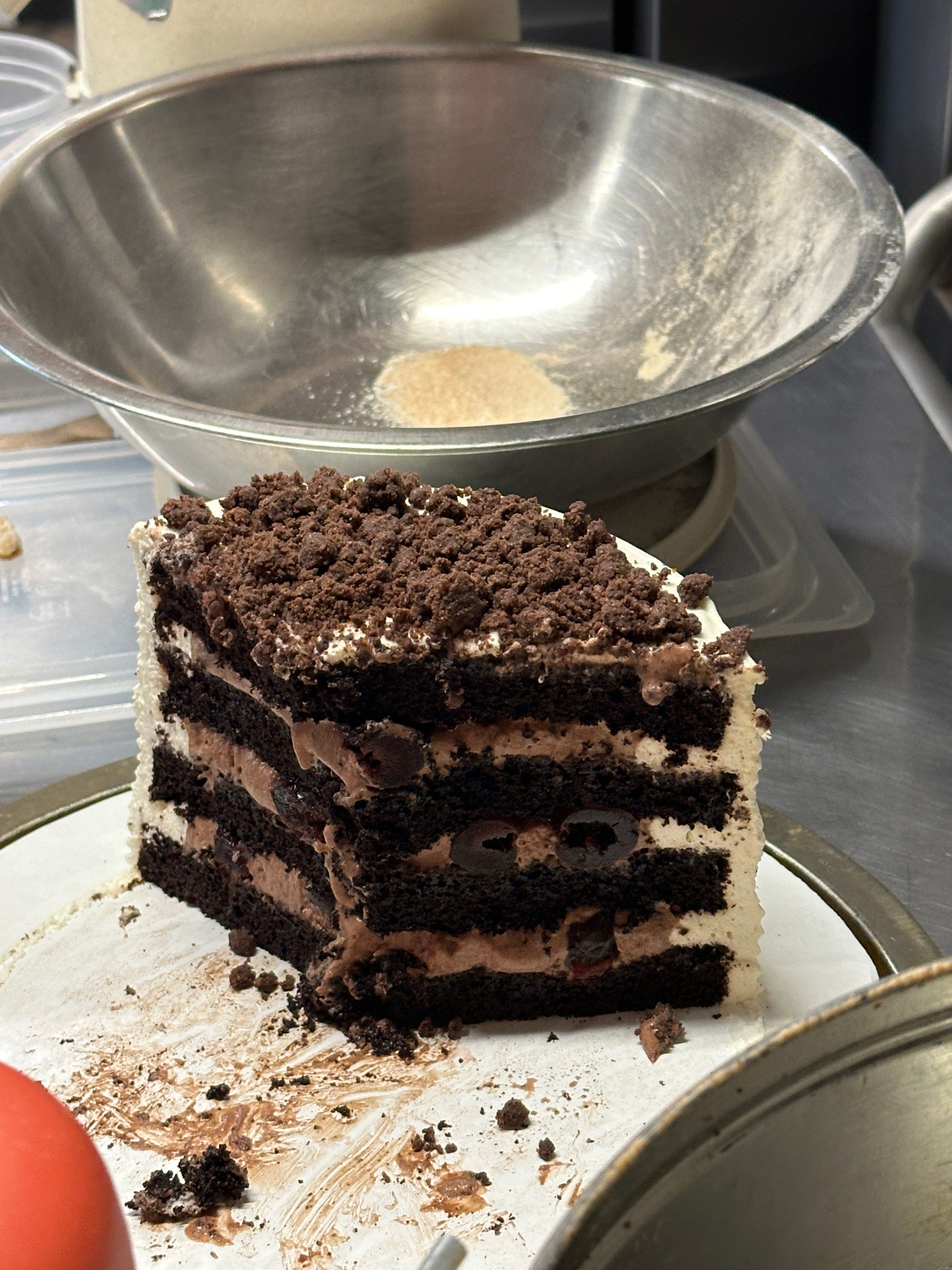
I wanted to use black cocoa, an ultra-Dutch processed cocoa that is treated with extra alkaline solution to produce a darker, less acidic cocoa, for the crumble topping the Amaro cake to give a stark black and white contrast with the cream.It occurred to me that it might be nice to use half black cocoa in the cake to dial back the acidity slightly, as the amaro was bringing in plenty of complex flavor. (That said, if you can’t easily track down black cocoa, the recipe is just as delicious without!) For the Improved Grocery Store cake, I used all regular dutched cocoa and replaced the coffee with hot water to simplify the taste a little.
The Cherries
If I was trying to recreate Schwarzwälder Kirschtorte, I’d first and foremost be frustrated by which cherry to use. The Larousse Gastronomique says Schmidt cherries, while most other sources cite Morello cherries, which hail from the Black Forest region of Germany. The latter are also the cherries used to make kirsch, the cherry brandy that flavors the original cake. Both are sour cherries, which tend to be used for baking and preserving rather than eating out of hand, as they are smaller, more acidic than sweet (as the name would suggest), and sometimes even a little astringent. The Morello is darker, while the Schmidt is bright red and less firm. What’s more, were they fresh? Poached? Soaked in brandy? First preserved in syrup? Made into jam?
Fortunately, I’m almost certain of what was in the cake I grew up eating: cherry pie filling. Cherries, bolstered with sugar and thickened with starch, so that you were likely to get a bite that was all goo and no flesh. Frankly, it was my least favorite part of the cake, while the neon red maraschino cherries, with their jaunty stems that garnished the cake, were my favorite. Sure, it brought an ever so slightly acidic tang to help balance the dish, but only just.
Like my inspiration, I wanted both my Black Forest cakes to be reproducible out of cherry season, which where I live is horribly short and not at all the weather in which one wants to make or eat a great towering pile of cream and chocolate. So, I leaned on preserved cherries, as perhaps even the original once did.
To create my Amaro Black Forest, I used my sweet muse the amarena cherry, frankly one of the finest (and affordable!) expressions of commercial candied fruit that exists. I rarely bother to candy cherries, even though I wrote the book on it, because amarenas are so good. They’re made with a dark and flavorful cherry that we just don’t see the likes of in Canada. But to temper their sweetness, as well as to pay homage to the booziness of the original kirsch-soaked cake, I drained them then soaked them in amaro, a bittersweet herbaceous Italian liqueur. This is partly because I really like to drink amari—in spritzes, in cocktails, on the rocks—but also because I haven’t been able to get kirsch in Toronto for at least the last two years. Shortages are a bummer (though not a huge surprise for products made traditionally with short-season fruit), but sometimes necessity really is the mother of invention. While kirsch is bright and bracing and very cherry, the bitterness and herbal complexity of an amaro bring a deep dark woods fairy tale mystery to the Black Forest. Varieties abound, but I chose Amaro Nonino, which brings some bitterness but is also quite smooth. It seemed to me that something more assertive like Averna might be a step too far. But it all depends on you and your relationship to bitterness and amari in particular! Another excellent choice would be Poli Vaca Mora.
The Improved Grocery Store Black Forest Cake, on the other hand, mustn’t have a drop of booze. Instead, I set out to improve the cherry pie filling I remembered, and I started with a big jar of Polish sour cherries in light syrup. I drained off most of the syrup, reserving some for moistening the cake layers, then thickened what was left with cornstarch, along with the and a little sugar, cooking until glossy. Crucially I opted for a far higher ratio of cherries to goo, which I think is texturally important. Though I made it less sweet than the filling I remember, I still balanced it with a little lemon at the end.
The Cream
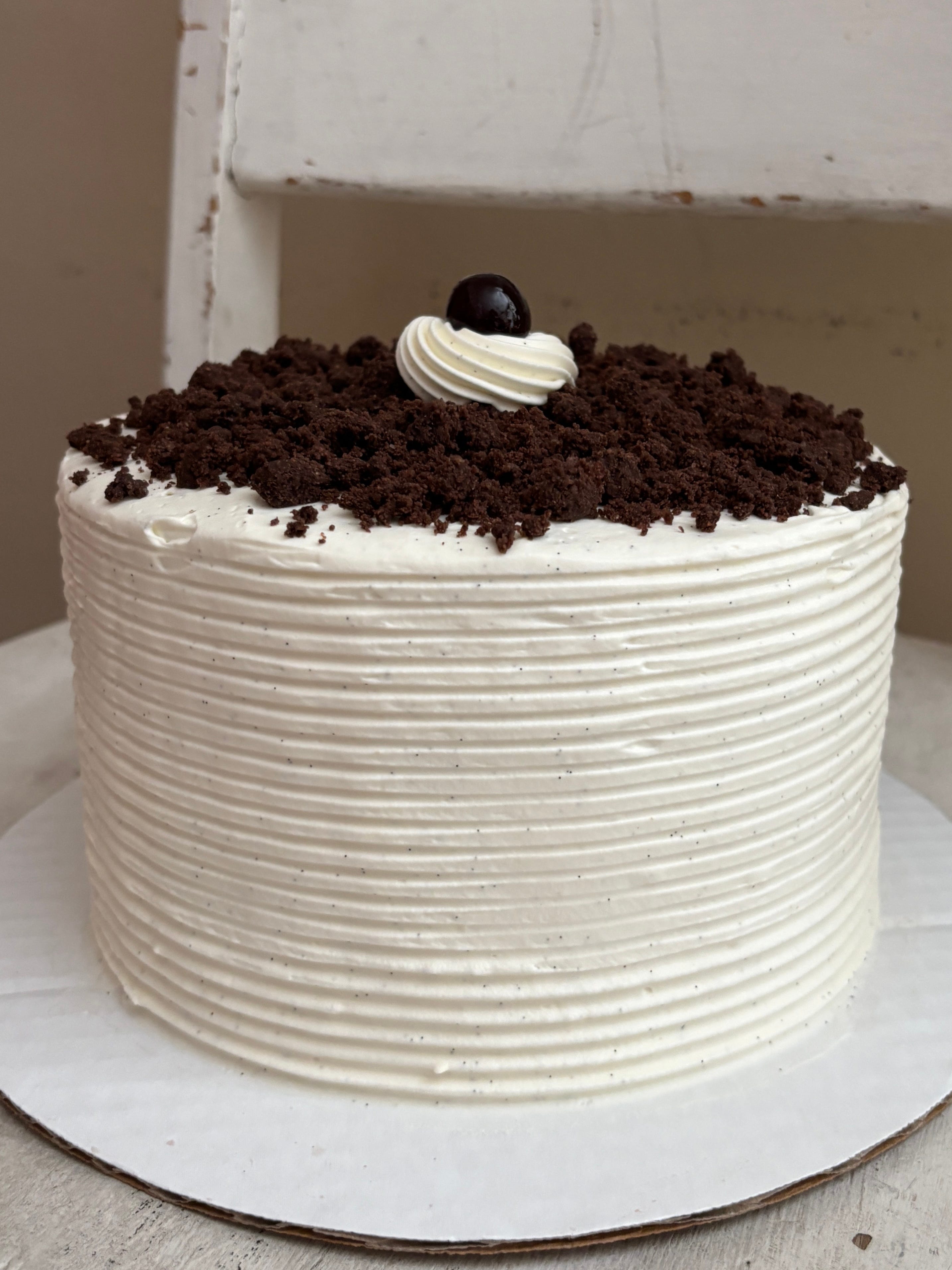
I’m unsure if the Black Forest cakes I grew up eating were frosted with actual whipped cream or an edible oil product akin to Cool Whip. It seems to me that if it were indeed the former, it had to have been somehow stabilized in order to keep steady for potentially many days in the bakery case. If it’s not clear yet, these cakes were not made to order, but were made in bulk, ready to hang around until a customer picked one up—though to be fair back then I think many grocery stores did have their own in-house bakers.
As we’ve established, the kind of cake in this style of Black Forest is not a light, airy sponge, the layers of which would’ve been more easily supported by lightly sweetened whipped cream. The cream for my cake, much like the one of my youth, needed a little help. Stabilizing whipped cream is a pretty common modern practice, even in the finest pastry shops. It helps the cream hold its shape presentably from creation to degustation. This is especially required by the less fatty cream we use in North America, a distinction between whipping cream and double cream.
The many methods of stabilizing cream include cornstarch, thicker dairy products like mascarpone or crème fraiche, dry milk powder and even instant pudding powder, but I prefer gelatin. All of them hold tight to the water in the matrix of fat and protein, but gelatin is the first stabilizer I used, and it works so well I’ve never found any reason to stray. It seems to me it would be the least likely of the bunch to alter the flavor or to potentially negatively affect the texture by clumping or otherwise mixing improperly.
I like to mix the cream the night before, dissolving 10% sugar into a small amount, then adding the gelatin before mixing the lot back into the cold cream. It kind of glops out of a litre container like the contents of a can of cream soup the next day, but it whips up beautifully, pipes like a dream, is tough enough to support multiple rich cake layers, and tastes especially lovely with a vanilla bean infusion (though I left that out of my Improved Grocery Store cake, of course.)
The Décor
Beyond the basic flavors of chocolate, cherry and cream, what the grocery store Black Forest Cake has in common with the German original is décor. Fully bedecked in chocolate shavings and garnished with rosettes of whipped cream and cherries, it’s a truly iconic cake. Whether the décor is meant to represent the Black Forest region’s traditional black, white and red costume; or just the Bollenhut headdress, heavy with red woolen pompoms, worn by unmarried women; or it’s just that the chocolate shavings resemble a black forest, no one’s sure. Perhaps the cake’s true inventor just thought it looked good—or the chocolate shavings covered a rough frosting job!
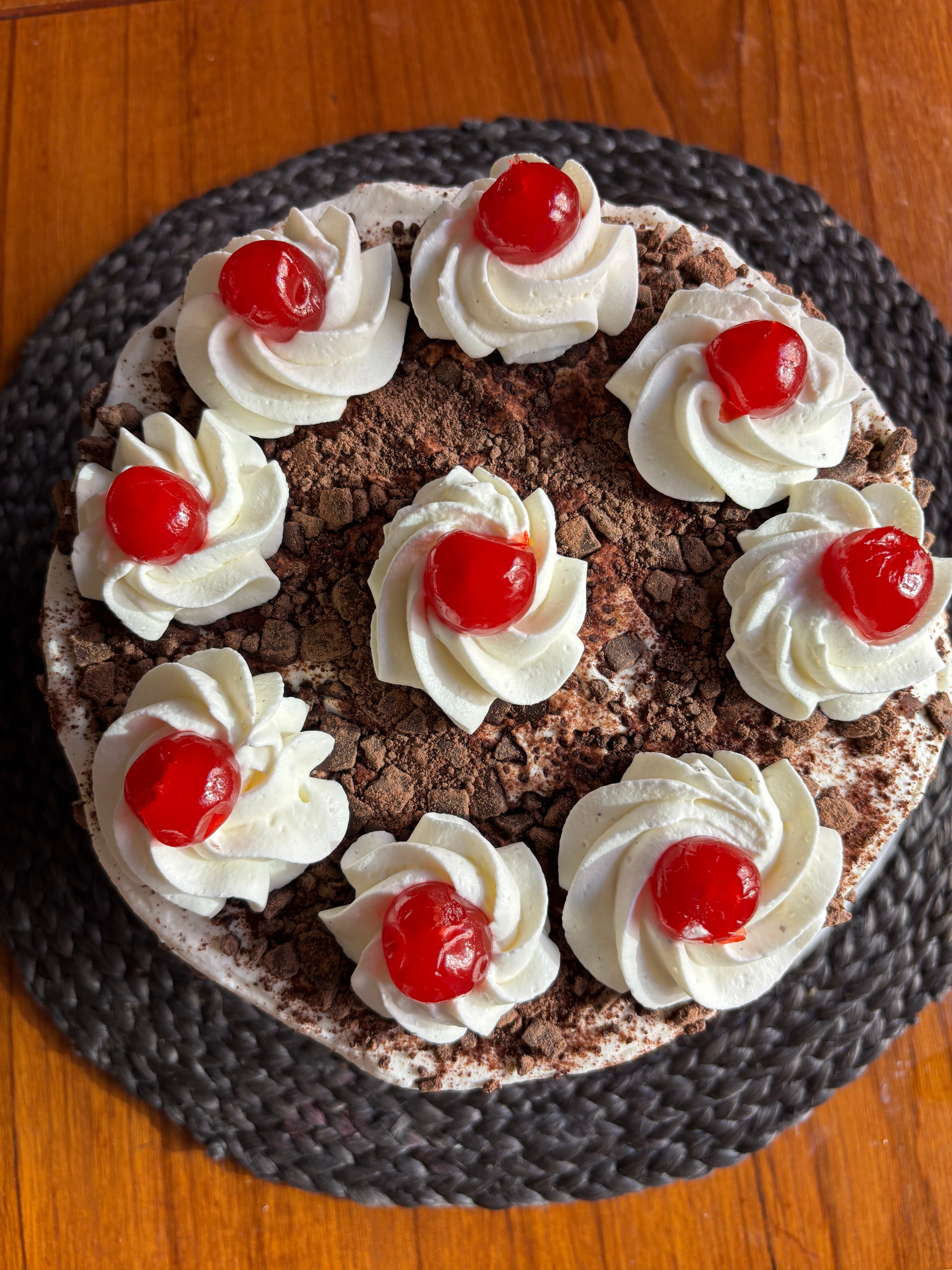
I went as traditional as possible for the Improved Grocery Store Black Forest, the only difference from the original being that the cherries on top are maraschino. While you certainly can make chocolate shavings yourself (by all means, do!), I wanted to keep some of the spirit of my inspiration and use a commercial variety. In my opinion, the best choice is Dutch chocolate flakes (or vlokken. These are usually easy to find in “European” style stores or delis. Whether that means they are readily available in Europe itself is to be seen) I also think the Dutch make the best chocolate sprinkles, which are a good alternative here (and what I use for the Black Forest Rum Balls). They make them to eat on toast (don’t knock it until you’ve tried it—I think they’re especially good on peanut butter toast), and you can get extra dark chocolate varieties with a nicer ingredient list than other commercial chocolate flakes.


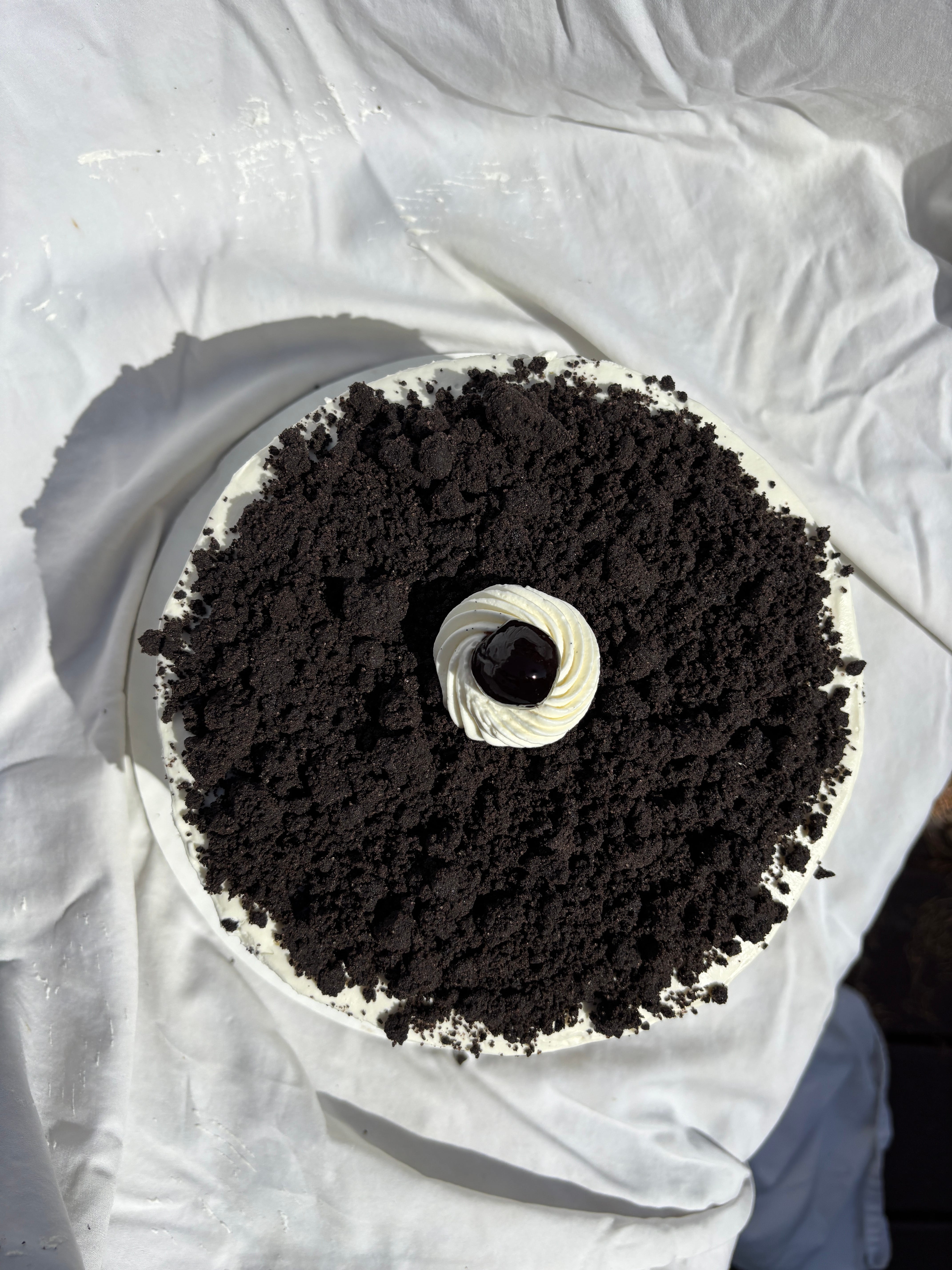
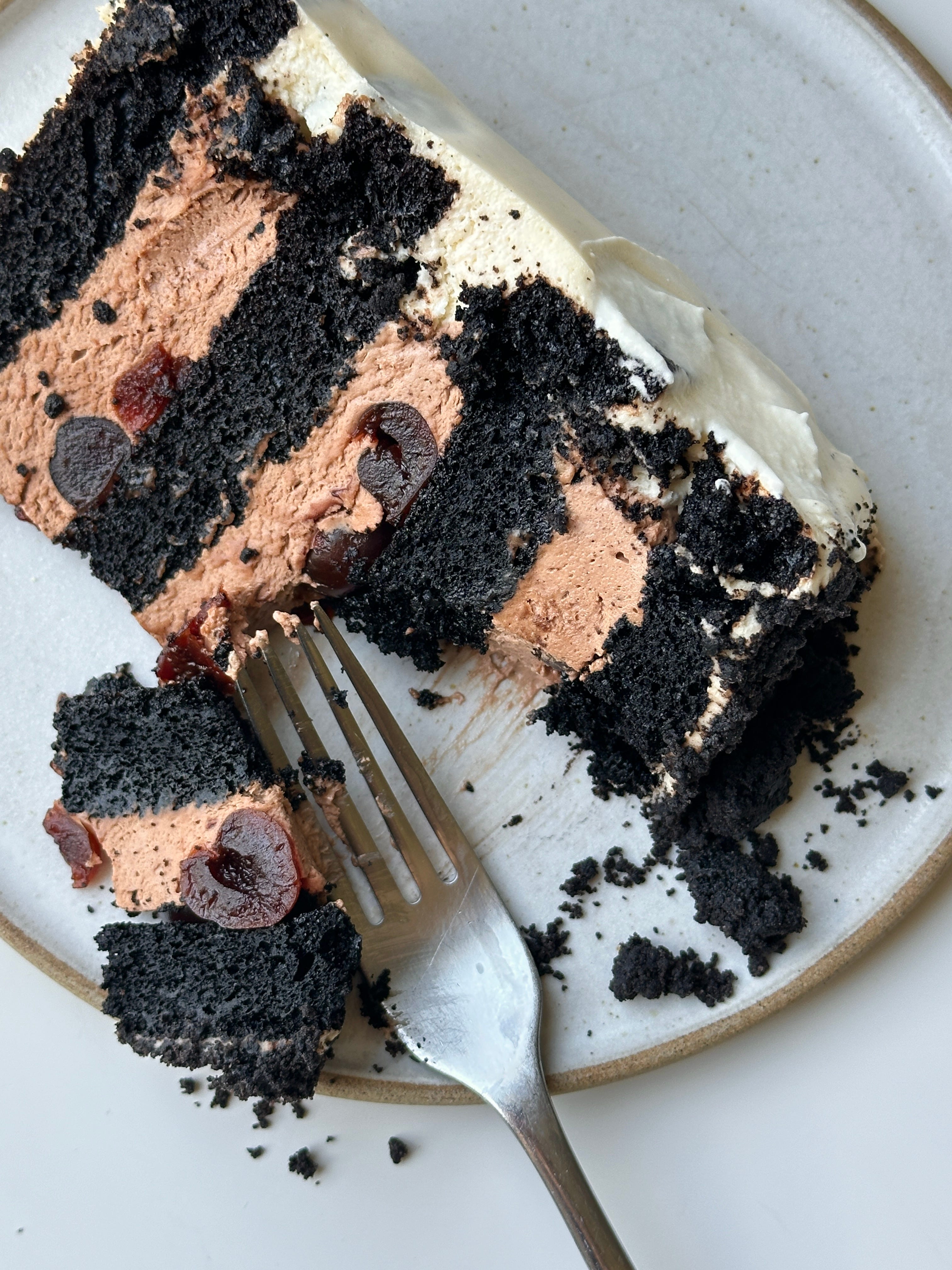
For the Amaro Black Forest, on the other hand, I needed to reflect its more sophisticated nature in the décor. I chose clean white whipped cream sides, cake comb lines optional, then loaded a crunchy, salty heap of black cocoa crumble on top, with a single rosette and amarena cherry perched in the center. The result is more modern, sleeker, and still incorporates a chocolatey textural element.
The Scraps
While cakes typically dome when ovens are too hot, most of my trusty cake recipes don’t dome, so I wouldn’t say that’s the issue. Rather, there’s just a little too much batter in this chocolate cake recipe for two 7-inch pans. (I do realize 7-inch is not a common cake tin size, but I feel very strongly that it’s the best size for a layer cake, unless you’re having a huge party! Half a recipe for an 8-inch layer cake is perfect for 7-inch pans and can easily serve 10-12 in my opinion.)
I’ve never made any attempt to slightly scale down and fix the problem, however, because I like the cake scraps a dome affords. You always want to level out a cake before cutting it into layers, and this recipe results in at least 200 grams of cake scraps levelled off. That’s not a problem for me because cake scraps are so fun to play with. Usually, I don’t make a layer cake unless it’s for a big celebration event or to give away as a gift, so when I make one I rarely get to eat as much cake as I’d like.
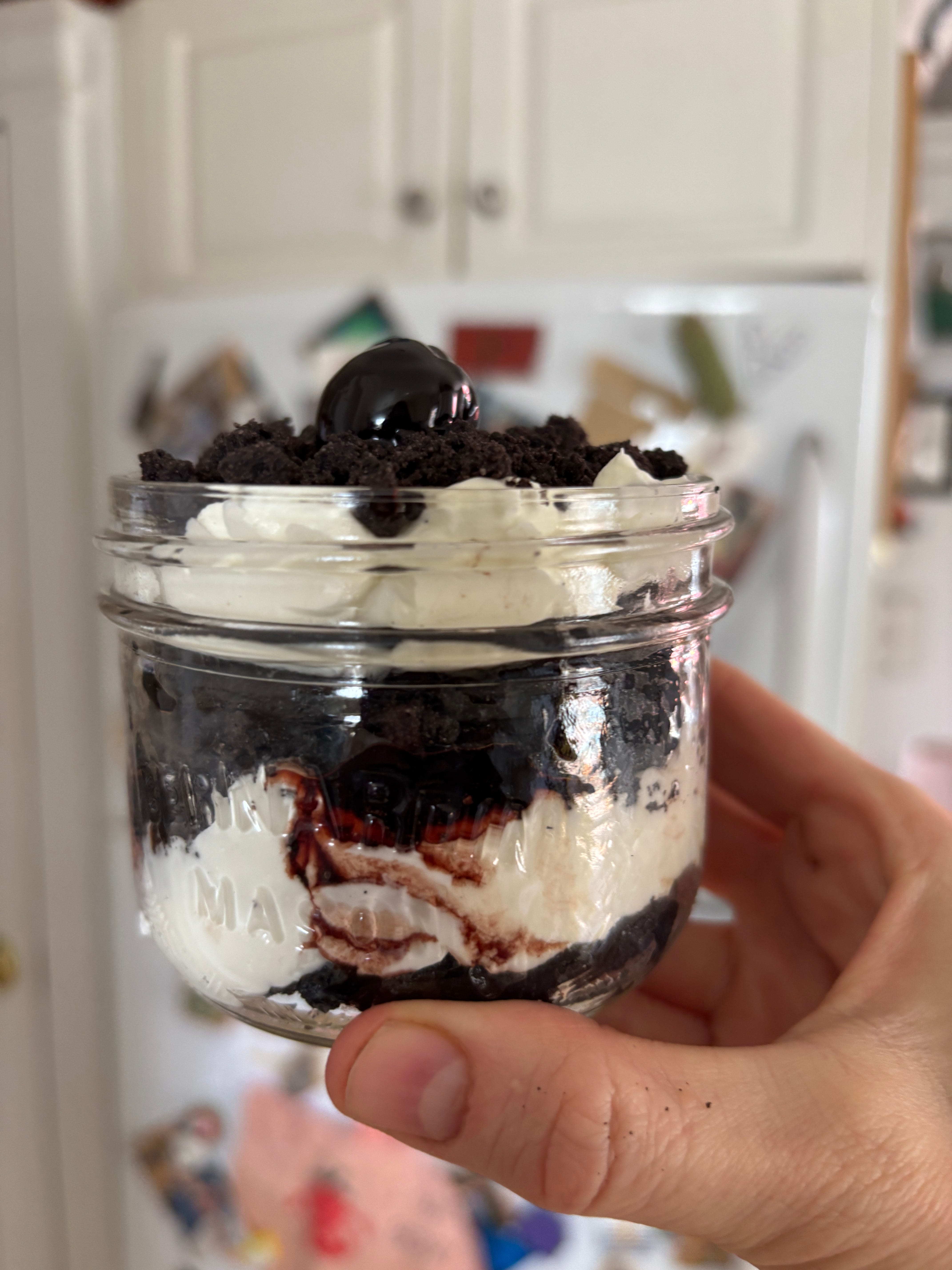
The scraps can be turned into a trifle by layering cake scraps with any other leftover components in a glass or a jar (I favor the latter for easy transport). After making one test of the Amaro Black Forest I had enough chocolate cake trimmings, amaro cherry syrup, cocoa crumble and whipped cream to make two 250 mL jars of trifle—one to keep and one to share. I did add a few amarenas from a newly opened jar, but otherwise it was a delight made almost entirely out of leftovers. To be honest, if the idea of making a layer cake fills you with fear and loathing, just halve the recipe and turn it into trifle! Go heavy on the cocoa crumble.
What I most frequently make from chocolate cake scraps, however, is one of my favorite things in the world: Rum Balls (if you aren’t familiar, here’s the piece and original recipe I wrote for King Arthur Baking). A confection born of thrift, they are rum-laced chocolate cake balls made entirely from bakery off cuts and scraps. It occurred to me that a Black Forest version would be sublime, made by subbing dried sour cherries for raisins and kirsch for rum. But one of the essential components of the Black Forest would be missing—cream.
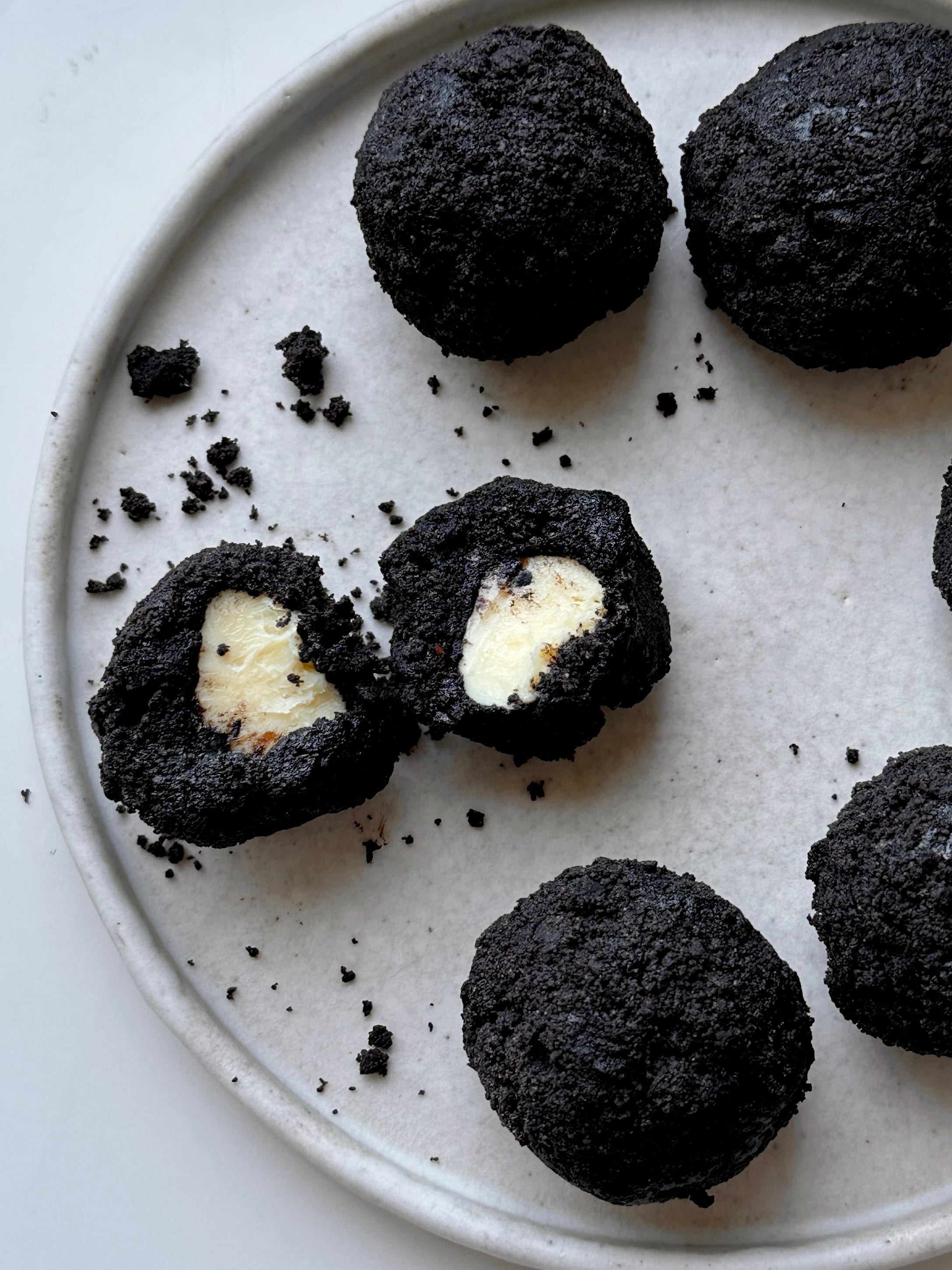
I solved the problem by making a small batch of white chocolate truffles and concealing them in the center of the rum balls. An inverted Black Forest! You could go one step further and turn it into a real sophisticated sweet turducken by concealing an amarena cherry in the center of each truffle… Finally, they are finished with, ideally, a mix of dark and white chocolate sprinkles, flakes or the cookie crumb to differentiate them from the traditional rum ball. Click here to make them.
Amaro Black Forest Cake
Serves 10-12
Equipment: 2 x 7 inch tins.
Notes on sizes: If you don’t have 7-inch tins, you can still make this recipe!
For 6-inch (serves 8): Make the full batch of cake, but do 480g per tin and bake the rest on a tray, or in a separate tin, for scraps to use in rum balls, recipe here. Keep fillings the same size - you’ll just have more generous layers and may have some leftover crumbs. Or you can use the extra to make Black Forest Trifles in jars, see above!
For 8-inch (serves 16-18): 1.5x the whole recipe
For 9-inch (serves 20+): 2x the recipe
Amaro Cherries
200 g drained amarena cherries
150 g amaro (I used Amaro Nonino)
Chocolate Cake
300 g (sugar
210 g all-purpose flour
50g black cocoa powder (Editors Note: I used all black cocoa when I tested this and it worked great. Equally, another tester used all regular cocoa - also great)
50 g cocoa powder
1 ½ tsp baking soda
¾ tsp baking powder
¾ tsp salt
2 eggs
180 mL buttermilk
180 mL coffee
80mL neutral oil
1 tsp vanilla
Cocoa Crumble
100g all-purpose flour
65g sugar
20g black cocoa
3 g flaky salt
75 g unsalted butter, cold, cubed
Note: This makes more than you need for the recipe, but it keeps well in an airtight container and can be used to coat the rum balls or to top ice cream, or anything that needs a scattering of salty, chocolate-y goodness.
Choco-Cherry Whipped Ganache
40g milk chocolate
30g dark chocolate
190g whipping cream, divided
1 sheet leaf gelatin*, soaked (I used Dr Oetker platinum)
40g cherry jam
Whipped Cream
500g whipping cream, divided
50g sugar
1 vanilla bean, split and scraped
4 sheets leaf gelatin*, soaked (I used Dr Oetker platinum)
*You can omit the gelatin from both these fillings if you are vegetarian, though I suggest using double cream if you are in the UK as this has a higher fat content and is more stable.
Method
To make the cherries, place them in a container and cover with amaro. Let soak at least overnight. Before using, strain cherries, reserving soaking liquid. These will keep indefinitely in an airtight container at room temp.
To make the cake, preheat oven to 180°C/350°F. Spray two 7-inch round pans with cooking spray and line the bottoms with parchment.
Sift together dry ingredients. Whisk in eggs, followed by buttermilk, coffee, oil and vanilla.
Divide batter evenly between pans and bake until toothpick inserted in the middle comes out clean, about 35 minutes. Leave oven on to bake crumble.
Cool the cakes for 10 minutes on a wire rack, then unmold and allow to cool completely. Wrap in plastic and refrigerate overnight or up to 2 days (can also freeze up to 1 month).
To make the cocoa crumble, in a medium bowl combine flour, sugar, cocoa and salt. Add butter and rub in until breadcrumb-like crumbles form. Line a rimmed baking sheet with parchment and spread out the crumble evenly. Bake for 9-12 min, stirring halfway through, until firm and set. Cool completely on a wire rack before storing in an airtight container for up to 1 month.
To make the whipped ganache, melt both chocolates together, either over a bain-marie or in the microwave in 30 second bursts. In a small pot set over medium heat, warm 135 grams cream until steaming. Remove from heat and stir in gelatin to dissolve. Whisk cream into melted chocolate until emulsified. Whisk in remaining cream, followed by cherry jam. Place a piece of plastic wrap directly on the surface of the mixture and refrigerate overnight. Just before using, whisk by hand until stiff peaks form.
To make whipped cream, in a small pot set over medium heat, combine 150 grams of cream with the sugar and vanilla bean. Heat until steaming, stirring to dissolve sugar. Remove from heat and stir in gelatin to dissolve. Fish out vanilla beans, then add remaining cream. Transfer to a container and cover the surface directly with plastic wrap. Refrigerate overnight. Before using, whip until stiff peaks form. Transfer about 200 g into a pastry bag fitted with a large French (star) tip.
To assemble the cake, use a serrated knife to trim the dome off the chocolate cakes, then split each in half horizontally. Remove parchment from bottom layers.
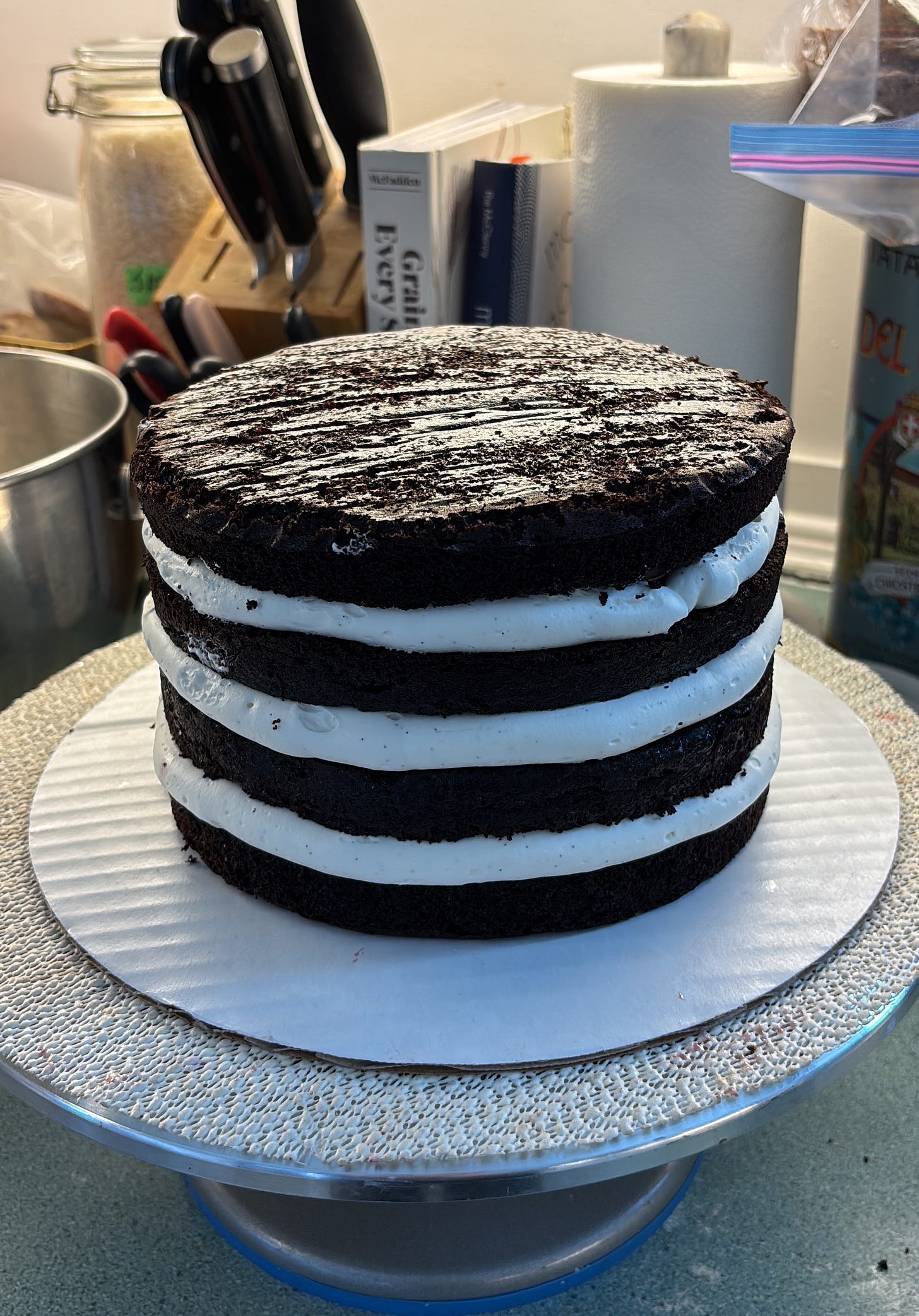
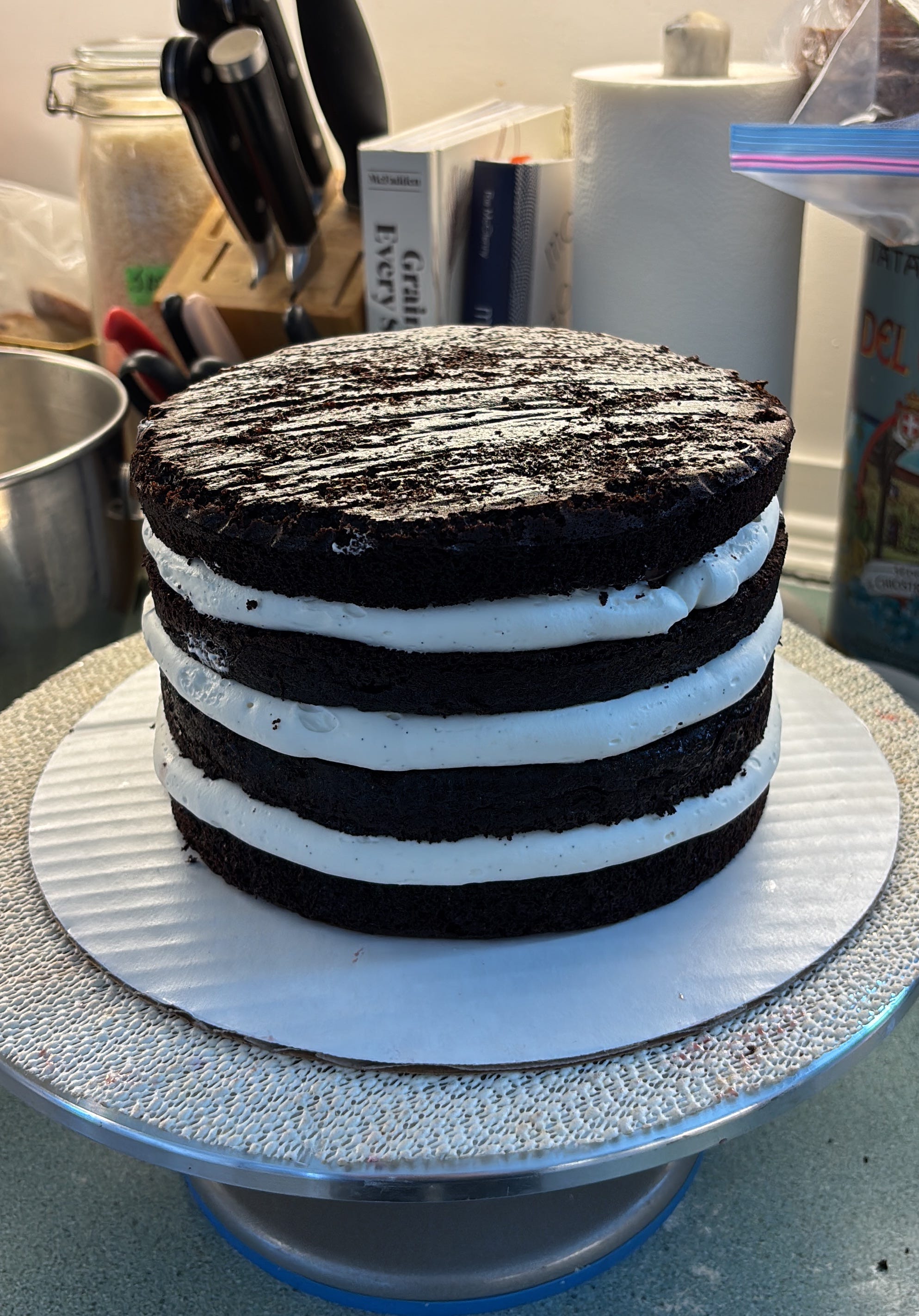
Place a bottom layer on a cake board or plate, using a little whipped ganache to affix it there. Brush liberally with cherry soaking liquid, then pipe a border of whipped cream around the edge. Fill the center with a third of the whipped ganache then top with a third of the drained cherries. Place the other half of the cake on top cut side up. Pat down gently. Repeat brushing, piping and filling twice more, reserving one cherry for garnish and finishing with the bottom layer of the second cake cut side down. Brush with soaking liquid, then frost entire cake with whipped cream, finishing the sides with a cake comb, if desired. Cover top with cocoa crumble, then pipe one rosette in the center and top with a cherry. Refrigerate at least 2 hours before serving, or up to overnight. For the best texture, serve close to room temperature if you can.
I expect it's called a gateau because Torte in German specifically refers to a layer cake, as opposed to Kuchen, which translates to cake. Kuchen also refers to lots of things that in English would be a tart, because there's no separate word for that. There's also only one word for both batter and dough...
Just booked my ticket for Toklas, so excited ☺️ now, to properly read the newsletter!!